Red Light Therapy Eyes Open or Closed? The Complete Eye Safety Guide
Should you keep your eyes open or closed during red light therapy? Learn the science of eye safety, when you need goggles, and how red light can actually help your vision.
You just unboxed your first red light therapy panel. You plug it in. The warm red glow fills the room, and you're ready for your first session. Then you hesitate.
Should you close your eyes? Keep them open? Stare directly at the LEDs? Look away? Nobody told you what to do with your eyes, and now you're standing there feeling slightly ridiculous, squinting into what looks like a miniature sunset mounted on a door.
You're not alone. This is the single most common question people ask when starting red light therapy. And the answer isn't as simple as "just close them" or "it doesn't matter." Your eyes interact with red and near-infrared light in ways that are genuinely fascinating, sometimes beneficial, and occasionally worth being careful about.
Here's what the science actually says about your eyes and red light therapy, including when closing them makes sense, when it doesn't matter at all, and why red light might actually be one of the best things you can do for your vision. SeekRedLight put together this complete guide so you can treat confidently and safely from your very first session.

The short answer (before we go deep)
For most home red light therapy sessions using LED panels, you can keep your eyes closed during facial treatments and open during body treatments. That's the quick version.
But "most" isn't "all." And the details matter. The right approach depends on your device type, its power output, how close you are, which wavelengths it uses, and what you're trying to treat. Some situations call for proper eye protection. Others don't require any precaution at all. And in certain cases, letting red light reach your eyes is actually the whole point.
So let's break this down properly.
How red and near-infrared light interact with your eyes
Your eyes are remarkable organs. They're also the only part of your body where light has a direct, unobstructed path to sensitive tissue. That's what makes this conversation important.
Red light therapy devices typically emit two wavelength ranges. Visible red light sits between 620 and 700 nanometers. Your eyes can see this. It's the warm glow you notice when you turn on your panel. Near-infrared (NIR) light ranges from 700 to 1100 nanometers, with most therapy devices using 810 to 850nm. You can't see this at all.
That distinction matters enormously for eye safety.
Visible red light (620-700nm) enters your eye through the cornea, passes through the lens, and reaches the retina. Your retina absorbs it. At moderate intensities, like what you'd get from a therapy panel at normal treatment distance, this absorption is well within safe limits. Your pupil naturally constricts in response to bright visible light, which acts as a built-in safety mechanism. You'll squint or look away instinctively if the light is too bright.
Near-infrared light (810-850nm) is invisible. Your pupils don't constrict in response to it because your eyes can't detect it. This means more NIR light can reach your retina without triggering your natural protective reflexes. The cornea absorbs between 53% and 98% of infrared light in the 750-900nm range, which provides significant natural protection. But that still leaves a percentage getting through.
Here's the thing that confuses people: your eyelids are not blackout curtains. They're thin tissue, roughly 1mm thick. A 2011 study in the Journal of Biomedical Optics measured eyelid spectral transmittance and found that closed eyelids transmit about 5.6% of red light around 630nm. Compare that to just 0.3% for blue and green wavelengths. Your eyelids act as a natural red-pass filter, blocking most visible light but letting a meaningful fraction of red through. NIR light penetrates eyelids even more readily, with estimated transmittance of 10-15% depending on individual eyelid thickness and pigmentation.
So closing your eyes reduces the light reaching your retina substantially, but it doesn't eliminate it entirely. And the light that does get through scatters as it passes through the tissue, spreading more evenly across your eye rather than hitting focused spots.
Think of it this way. Closing your eyes is like putting on a light pair of sunglasses. Not blackout goggles. It helps. It's often enough. But for high-intensity situations, you might want something more.
LEDs versus lasers: why your home device is probably safer than you think
A huge amount of eye safety fear around red light therapy comes from laser research. And lasers are genuinely dangerous for eyes. But here's the critical difference that most articles gloss over: home red light therapy panels use LEDs, not lasers.
Lasers emit coherent light. Every photon marches in the same direction, in phase, creating a concentrated beam that can focus enormous energy onto a tiny point. A laser pointer can damage your retina in milliseconds because all that energy hits one microscopic spot.
LEDs emit non-coherent light. The photons scatter in different directions, similar to natural sunlight in the red spectrum. The light diverges and spreads. Even at the same total power output, the energy density hitting any single point on your retina is dramatically lower with LEDs compared to lasers.
This doesn't mean LEDs are risk-free at any intensity. Very bright LED panels at point-blank range can still deliver uncomfortable or potentially problematic light levels to your eyes. But the risk profile is fundamentally different from lasers.
An important study from 2024 by Ostrin and colleagues tested low-level red light (LLRL) devices used for myopia treatment in children. These were laser-based devices at approximately 650nm. They found that just three minutes of continuous direct viewing exceeded the maximum permissible exposure for photochemical retinal damage under ANSI Z136.1 safety standards. That's a laser-based device designed to be looked into directly. Your home LED panel is a different animal entirely.
The takeaway: don't panic about your LED panel. But do respect it.
When you should keep your eyes closed
Some situations call for closed eyes. Not because the light will hurt you, but because it's the smart, conservative approach.
Facial treatments at close range. If you're treating your face and the panel is within 6 to 12 inches, close your eyes. You're getting the highest possible irradiance at this distance, and your face points directly at the LEDs. Closing your eyes reduces the light reaching your retina significantly while still letting your facial skin absorb the therapeutic wavelengths. Your skin doesn't need your eyes to be open.
High-power panels. Some panels deliver over 100 mW/cm2 at 6 inches. That's a lot of light. The higher the irradiance, the more conservative you should be with eye exposure. If your panel makes you squint reflexively, that's your body telling you something. Close your eyes.
Dual-wavelength devices with NIR. If your panel combines 660nm red with 850nm near-infrared, you've got invisible light reaching your eyes that you can't gauge by how bright things look. The visible red might seem moderate while the invisible NIR component adds substantially to total eye exposure. When both wavelengths are running simultaneously, closing your eyes is the safer bet.
LED face masks. These sit directly against your face. There's virtually no distance between the LEDs and your eyes. Always keep your eyes closed with face masks. Most come with this instruction explicitly in their manual. Some include opaque eye coverings as well.
If you have any eye condition. Glaucoma, macular degeneration, diabetic retinopathy, recent eye surgery, or any other active eye condition: close your eyes and consider wearing proper eye protection. Not because red light is necessarily harmful for these conditions (it might actually help, which we'll cover later), but because altered eye health can change how your eyes respond to light exposure.
If you're taking photosensitizing medications. Certain medications increase light sensitivity in your eyes and skin. Tetracycline antibiotics, certain psychiatric medications, some blood pressure drugs, and several others fall into this category. If you take any medication that lists photosensitivity as a side effect, close your eyes during treatment and consider goggles.
When keeping your eyes open is perfectly fine
Not every session requires eye precautions. Here's when you can relax.
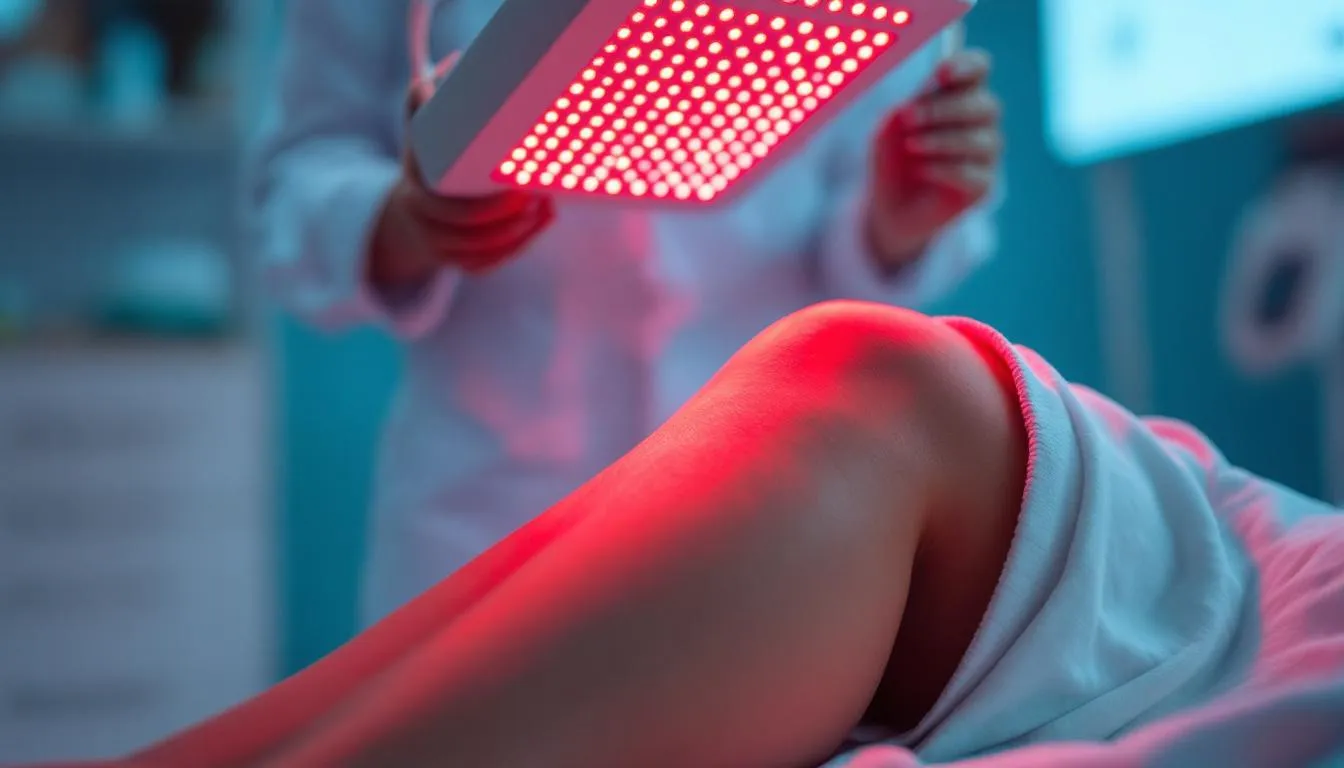
Body treatments. Treating your back, legs, arms, shoulders, joints, or any body area that isn't your face? Your eyes aren't pointed at the device. The light reaching your eyes is indirect, reflected, and at a fraction of the panel's direct output. Open eyes are completely fine.
Panel is 18+ inches away. Light intensity drops rapidly with distance. The inverse square law tells us that doubling your distance reduces irradiance by roughly 75%. A panel that delivers 100 mW/cm2 at 6 inches might deliver only 25 mW/cm2 at 12 inches, and around 11 mW/cm2 at 18 inches. At these lower intensities, even direct eye exposure falls within comfortable and safe ranges for LED sources.
Low-power devices. Tabletop panels, small handheld wands, and low-irradiance devices (under 30 mW/cm2 at treatment distance) pose minimal eye concern even for facial use. Your eyes handle this intensity level in normal outdoor conditions routinely.
Red-only devices (no NIR). If your device only emits visible red light (620-700nm) without a near-infrared component, your pupils will naturally constrict to regulate how much light enters. Your eyes' built-in protection works because the light is visible. This doesn't mean you should stare directly into the LEDs, but incidental exposure during treatment isn't a concern.
You're treating your eyes intentionally. Yes, this is a real use case. Research on red light therapy for eye health involves controlled exposure to specific wavelengths. We'll cover this in detail below.
Eye protection: what actually works and when you need it
If you decide you want eye protection, you've got options. But not all options are equal, and some are better suited for specific situations than others.
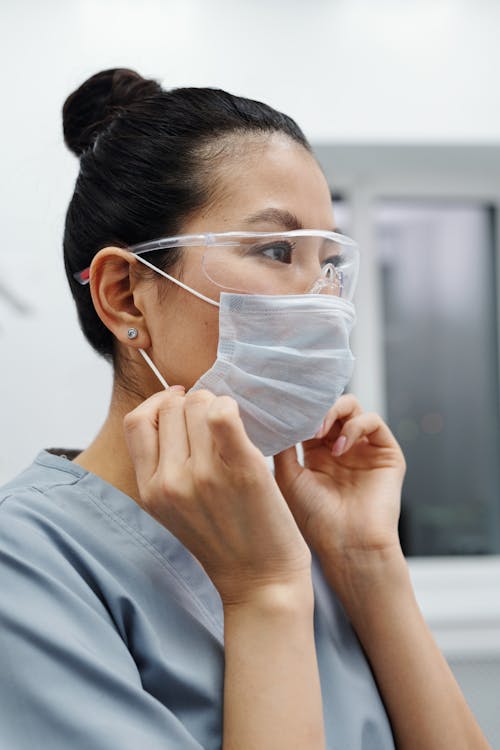
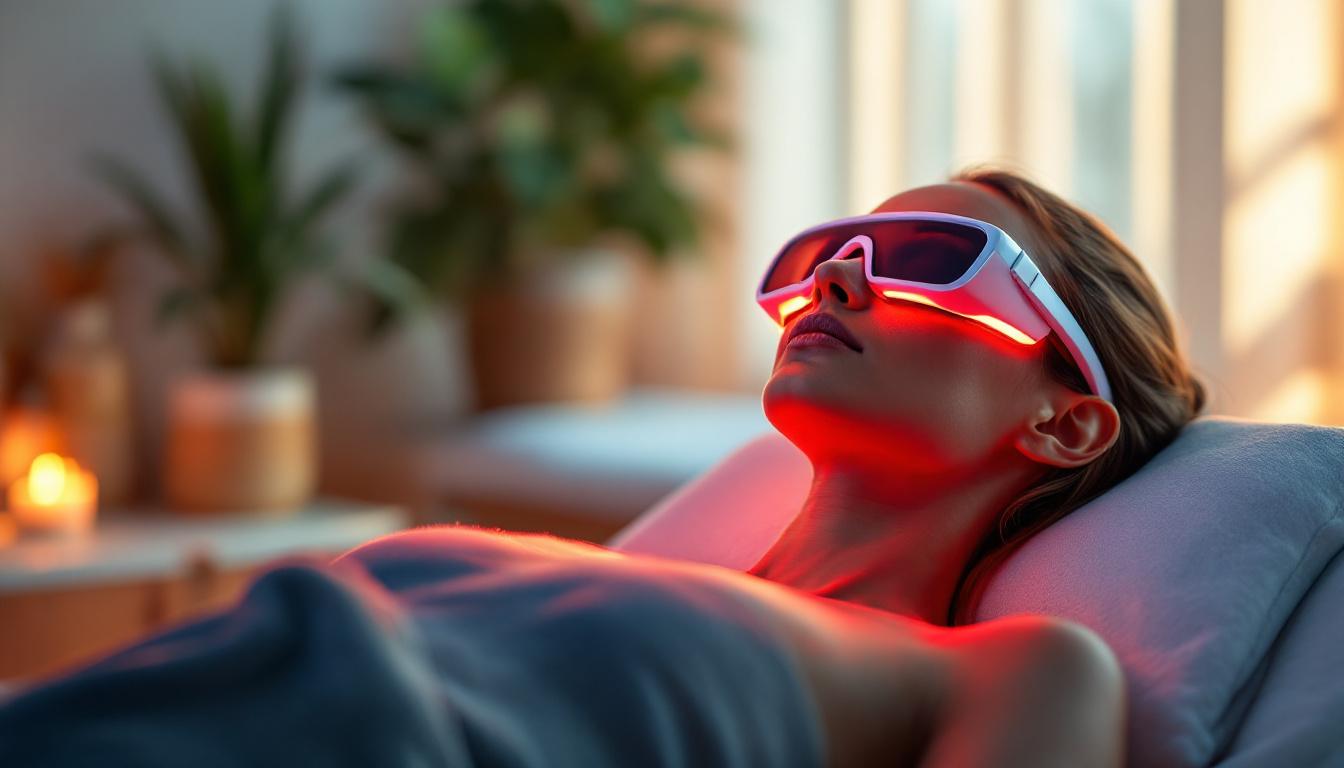
Opaque goggles or blackout eye cups. These block all light from reaching your eyes. They're the nuclear option. You'd use these for very high-power panels at close range, for face masks with NIR components, or if you have a medical reason to avoid all eye exposure. Most red light therapy companies sell these for a few dollars. They look like small rubber or silicone cups that fit over your eye sockets.
Tinted safety glasses (red/orange lens). These reduce the overall intensity while letting you see your surroundings. They don't block red and NIR wavelengths specifically (they're the wrong color for that), but they reduce total light transmission. Good for moderate-power panels at reasonable distances.
Wavelength-specific goggles. These are engineered to block particular wavelength ranges. If you want protection from 660nm and 850nm specifically, look for goggles with an OD (optical density) rating at those wavelengths. OD3 or higher blocks 99.9% of light at the rated wavelength. These are the most targeted solution but also the most expensive, typically $20-50.
Simply closing your eyes. For most home LED panel sessions at normal treatment distances, this is sufficient. Your eyelids reduce light transmission substantially, and the remaining scattered light that gets through is at levels your retina handles comfortably.
The brightness test. Here's a practical approach: turn on your device at treatment distance. If the light is comfortable to glance at briefly without squinting, closing your eyes during treatment is plenty of protection. If the light makes you squint hard or look away, use goggles or increase your distance.
What doesn't work
Regular sunglasses. Most sunglasses reduce visible light but don't block near-infrared at all. You'd reduce the visible red while NIR passes through unfiltered. This could actually be worse than nothing because your pupils may dilate behind the dark lenses, letting more NIR in.
Random sleep masks. Fabric sleep masks reduce light but aren't designed to block therapeutic-intensity sources. Better than nothing, but don't rely on them for high-power panels.
Red light therapy can actually help your eyes (the surprising research)
Here's where the conversation gets interesting. While we've been talking about protecting your eyes from red light, a growing body of research suggests that controlled red light exposure might actually improve eye health and vision.
This isn't fringe science. Major clinical trials are investigating photobiomodulation for serious eye conditions.
Age-related macular degeneration
The LIGHTSITE III trial was a landmark study. This randomized, controlled trial tested multiwavelength photobiomodulation using the LumiThera Valeda system on patients with dry age-related macular degeneration (AMD). The treatment used three wavelengths: 590nm (amber), 660nm (red), and 850nm (near-infrared).
The results were remarkable. PBM-treated eyes showed a mean improvement of 5.4 letters on the eye chart, compared to 3.0 letters in the sham group. About 55% of treated eyes gained at least 5 letters of visual acuity. That's a clinically meaningful improvement.
Even more striking: new geographic atrophy (a serious progression of AMD) appeared in 9.8% of sham-treated eyes but only 1.1% of PBM-treated eyes. The treatment didn't just improve vision. It appeared to slow disease progression.
How it works in the eye
The mechanism is the same one that makes red light therapy work for skin, joints, and muscles. Mitochondria. Your retinal cells contain mitochondria, and those mitochondria have cytochrome c oxidase, the enzyme that absorbs red and near-infrared photons.
When retinal mitochondria absorb these wavelengths, they produce ATP more efficiently. For aging retinal cells, this energy boost can be the difference between functioning well and declining. The retina is one of the most metabolically active tissues in your body. It's hungry for energy. And red light feeds that hunger directly.
A 2020 study by Shinhmar and colleagues at University College London found that just three minutes of exposure to 670nm light improved color contrast vision in participants over 40 by an average of 17%. The improvement was greater in older subjects, suggesting the therapy was most beneficial where age-related mitochondrial decline was most pronounced.
Myopia management
Low-level red light therapy is being actively studied for myopia control in children. Multiple clinical trials in China have shown significant reduction in axial elongation (the eyeball growing too long, which causes nearsightedness). One large study found a 54.2% reduction in myopia progression compared to single-vision spectacles.
But there's a caution here. These treatments use laser-based devices that deliver light directly into the eye, not LED panels used at a distance. The Ostrin 2024 study found that some of these laser devices exceeded maximum permissible exposure limits. The field is still working out the right dosing and safety parameters for direct-to-eye laser treatment.
This distinction matters. The benefits of red light for eye health are well-documented. But delivering that light safely requires the right dose at the right intensity through the right device. Your home LED panel isn't a replacement for a clinical eye treatment device, and a clinical laser device isn't comparable to your home panel in terms of risk.
Dry eye and eye fatigue
Multiple studies have explored red light therapy for dry eye syndrome. The theory is sound: red light can reduce inflammation in the meibomian glands (which produce the oily layer of your tear film), stimulate cellular renewal, and improve gland function. People who spend long hours in front of screens and experience digital eye strain may find some relief from controlled red light exposure.
The meibomian glands line the edges of your eyelids. When they're inflamed or blocked, your tears evaporate too quickly, leading to that gritty, dry feeling millions of people know too well. Red light at 630-670nm penetrates the eyelid tissue and reaches these glands, reducing inflammation and encouraging healthier lipid production. Some eye clinics now offer intense pulsed light (IPL) treatments for meibomian gland dysfunction, which works on similar principles.
For digital eye strain specifically, the connection is more indirect but still relevant. Red light therapy can improve blood circulation in the tissues around the eyes, reduce oxidative stress, and support cellular energy production. If your eyes feel fatigued after long screen sessions, a brief red light exposure (eyes closed, 5-10 minutes) can help the surrounding tissues recover. It won't fix the underlying cause (too much screen time), but it supports the biology of recovery.
What about cataracts and lens opacity?
One question that comes up frequently is whether red light therapy affects the lens of the eye. The lens sits between the cornea and the retina, and it becomes less transparent with age. That's what cataracts are: a clouding of the lens.
Animal studies have shown that red and near-infrared light can reduce oxidative damage in lens tissue. The retinal pigment epithelium (RPE), which sits behind the retina and supports photoreceptor health, responds particularly well to 670nm light. By reducing oxidative stress in these critical structures, red light therapy may help preserve lens clarity over time. This research is still in early stages for humans, but the biochemical pathways are well-understood.
The point isn't that your home panel will prevent cataracts. It's that the light isn't inherently damaging to the lens at therapeutic intensities. Your lens has been filtering red and infrared light from the sun your entire life. The intensities from home LED panels are well within the range your ocular structures evolved to handle.
Wavelength-by-wavelength eye safety breakdown
Different wavelengths interact with your eyes differently. Here's a practical breakdown of the most common ones found in red light therapy devices.
620-630nm (orange-red): Visible. Lower therapeutic potency than 660nm but very safe for incidental eye exposure. Your pupils constrict normally. Used in some anti-aging devices and clinical photobiomodulation systems for eye health.
660nm (deep red): The workhorse wavelength for visible red therapy. Well-absorbed by cytochrome c oxidase in mitochondria. Your eyes can see this clearly, so natural protective reflexes work. Clinical studies on eye health often use wavelengths near 670nm. At standard panel distances, this is the most eye-friendly therapeutic wavelength.
810nm (near-infrared): Invisible. Penetrates deeper than visible red. Used for joints, muscles, brain, and deeper tissue. Your pupils don't constrict for this wavelength. The cornea absorbs a substantial portion, providing natural protection. Close your eyes during facial treatments when this wavelength is active.
830-850nm (near-infrared): Similar to 810nm but with slightly different tissue interactions. The most common NIR wavelength in home panels. Same eye safety considerations as 810nm. Invisible, so you can't gauge intensity by looking. Used in the LIGHTSITE AMD trial alongside visible wavelengths.
940nm (deep near-infrared): Less common in home panels. More strongly absorbed by water in tissue, which means less reaches the retina. Still invisible. Your cornea and lens absorb more at this wavelength compared to 810-850nm, providing greater natural eye protection.
Combination panels (660nm + 850nm): The most popular configuration for home devices. Both wavelengths active simultaneously means you've got visible plus invisible light hitting your eyes. The visible component looks moderate while the invisible component adds significantly to total exposure. This is the configuration where closing your eyes matters most during facial treatments.
Device types and their eye safety profiles
Not all red light devices create the same eye safety situation. Here's how the most common device types compare.
Full-body panels
These are the large panels (typically 300+ LEDs) that mount on a wall or door. Treatment distance is usually 6 to 24 inches. For facial treatments, close your eyes. For body treatments where your face isn't aimed at the panel, no special precautions needed. If the panel offers separate red and NIR channels, you can turn off NIR during facial treatments for extra safety.
Eye safety approach: Close eyes for face treatments. Open eyes fine for body. Consider goggles if using at less than 6 inches from face.
LED face masks
These sit directly on your face with LEDs millimeters from your skin. The intensity at this distance can be high despite the individual LEDs being relatively low-power. Always close your eyes. Most quality face masks include opaque eye shields or coverings.
Eye safety approach: Always close eyes. Use included eye protection. Never modify the mask to expose your eyes.
Handheld wands and targeted devices
Small devices meant for spot treatment. Lower total power output. If you're treating near your face, close your eyes when the device passes over the eye area. For treating other body areas, no eye precautions needed.
Eye safety approach: Close eyes when treating near orbital area. Otherwise relaxed approach is fine.
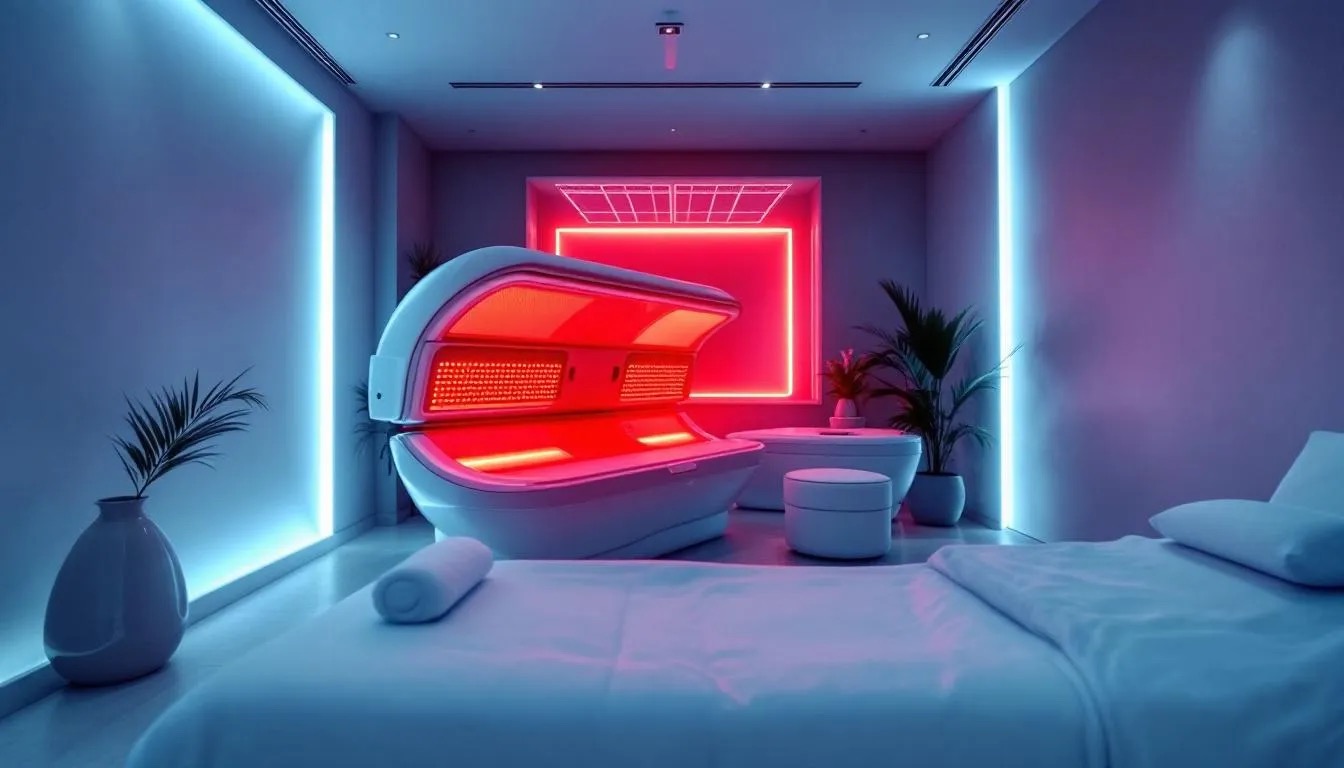
Red light therapy beds
Professional tanning-bed-style devices with red light panels. These typically have lower irradiance spread over a larger area. Most provide goggles as standard equipment. Use them.
Eye safety approach: Wear provided goggles. These are high-powered professional units.
Infrared saunas with red light
Some infrared saunas incorporate red light panels. The heat plus light combination doesn't change the eye safety profile of the light itself. If red light panels face your head area, close your eyes or use goggles. Many sauna setups have the lights positioned for body exposure, making eye precautions unnecessary.
Eye safety approach: Same rules as standalone panels. Position-dependent.
Distance, intensity, and the inverse square law
Distance is your best friend when it comes to eye safety. Here's why.
The inverse square law dictates that light intensity decreases proportionally to the square of the distance from the source. In practical terms:
- At 6 inches: Full irradiance (let's call it 100%)
- At 12 inches: About 25% of the irradiance at 6 inches
- At 18 inches: About 11% of the irradiance at 6 inches
- At 24 inches: About 6% of the irradiance at 6 inches
So if your panel delivers 100 mW/cm2 at 6 inches (that's a powerful panel), at 24 inches you're getting roughly 6 mW/cm2. That's less than you'd get from bright outdoor sunlight.
This creates a simple strategy: if you're ever concerned about eye exposure, just move back. A few extra inches of distance dramatically reduces the light reaching your eyes while still delivering therapeutic doses to your skin and deeper tissues (you may just need to treat for a bit longer to compensate).
Beam angle also matters. Panels with narrow beam angles (30 degrees) concentrate light more than wide-angle panels (60+ degrees). Narrow beam panels maintain higher irradiance at greater distances, which is great for therapy but means the intensity drops less steeply with distance. Factor this in when choosing your treatment distance for facial sessions.
The dose matters more than the intensity
Here's something most eye safety articles miss: a brief exposure to higher intensity is often less concerning than prolonged exposure to moderate intensity. Your retina can handle quite a bit of light for short periods. Problems arise with sustained, high-dose exposure.
This is why the 10-20 minute treatment sessions typical of home panels are fundamentally different from staring at a bright light source for hours. Your total dose (measured in joules per cm2) depends on both intensity and time. Short sessions at moderate intensity keep total eye dose within safe ranges even without special precautions.
Special situations: contacts, children, and existing conditions
Contact lenses
Contact lenses don't meaningfully change the eye safety equation for red light therapy. They're transparent to both visible red and NIR wavelengths. The only consideration: if your contacts are tinted, they could slightly alter how much visible light reaches your retina, but the effect is negligible. Treat normally with or without contacts.
Children
Children's eyes transmit more light to the retina than adult eyes because their lenses are clearer and more transparent. Kids also have larger pupils relative to eye size. If children use red light therapy (which some do for specific conditions under medical guidance), err on the side of more protection. Use proper goggles for any session where the light is near their face.
Existing eye conditions
Macular degeneration: As discussed, red light therapy is being studied as a treatment. But self-treating your eyes without clinical guidance isn't recommended. Use a panel for skin and body benefits with eyes closed, and talk to your ophthalmologist about PBM-specific eye treatments.
Glaucoma: Red light therapy doesn't appear to worsen glaucoma in research, but elevated intraocular pressure means your optic nerve is already under stress. Protective goggles during facial treatments are a smart precaution.
Diabetic retinopathy: The retinal blood vessels in diabetic retinopathy are fragile. While low-level red light may have benefits (research is ongoing), self-treatment near the eyes without medical guidance isn't appropriate. Use eye protection.
Post-LASIK or cataract surgery: After any eye surgery, your eyes need time to heal. Avoid direct light exposure to the eyes for at least 4-6 weeks post-surgery, or until your ophthalmologist clears you. Body treatments away from the face are fine immediately.
Photosensitive epilepsy: Red light panels don't flash or strobe, so they're unlikely to trigger photosensitive epilepsy. But if you have a history of photosensitive seizures, start with short sessions and monitor how you feel.
Your complete eye-safe treatment protocol
Let's put this all together into a practical protocol you can follow for every session.
For facial treatments
Check your device specs. Know your panel's irradiance at your treatment distance. High-power panels (over 100 mW/cm2 at 6 inches) need more respect than low-power ones.
Set your distance. For facial treatments, 8 to 12 inches is the sweet spot for most panels. Close enough for therapeutic benefit, far enough to keep eye exposure moderate.
Close your eyes. Simple, effective, sufficient for most home LED panels. Keep them closed for the entire facial portion of your session.
Use goggles when appropriate. If your panel is very powerful, if you're treating at less than 6 inches, if it has a strong NIR component, or if you have any eye condition, wear proper eye protection.
Consider wavelength settings. If your panel lets you run red and NIR independently, consider using red-only for facial treatments. You can see visible red light, so your eyes' natural protective reflexes work. Switch to dual-wavelength for body treatments.
Keep sessions to recommended times. For facial treatments, 10-15 minutes per area is typical. Don't extend sessions thinking "more is better." Your skin and the underlying tissue reach a saturation point.
For body treatments
Position the panel toward the treatment area. If treating your back, chest, legs, or arms, angle the panel toward that area. Your face doesn't need to point at the device.
Normal behavior. You can keep your eyes open, read a book, look at your phone (though screen light may interfere with the red light ambiance), or just relax. No special eye precautions needed.
If the panel is in your peripheral vision and the brightness bothers you, just turn your head. No goggles necessary. You're getting incidental, reflected light at most.
For intentional eye health
If you want to explore red light therapy benefits for your eyes specifically:
Start with indirect exposure. During normal facial treatments with eyes closed, your eyes are already getting low-level exposure through your eyelids. This is a gentle starting point.
Research the specific protocol. Different studies use different wavelengths, intensities, and durations. The UCL study on aging vision used 670nm for just 3 minutes. The LIGHTSITE trials used a specific clinical device. Your home panel isn't calibrated for eye treatment, so approach with caution.
Talk to an eye care professional. If you have a specific eye condition you're hoping to address, discuss photobiomodulation with your ophthalmologist. The field is advancing rapidly, and clinical treatments with proper devices and dosing are becoming available.
Don't stare at your panel. Even if red light can benefit your eyes, staring into a powerful LED array isn't how clinical studies deliver the treatment. Low-intensity, short-duration, specific wavelengths: that's what the research supports.
What the manufacturer says versus what the science says
Most red light therapy manufacturers include a blanket warning: "Do not look directly at the LEDs" or "Always wear eye protection." This is partly liability protection and partly genuine caution.
The science is more nuanced. LED panels at standard treatment distances pose very low risk to healthy adult eyes for typical session durations. But manufacturers can't know every customer's eye health status, medication list, or how closely they'll hold the panel to their face. So they recommend maximum caution.
You don't have to be terrified of brief, incidental eye exposure during a panel session. But you should respect the light source and take simple precautions (like closing your eyes during facial treatments) that cost you nothing and provide a meaningful safety margin.
SeekRedLight recommends following the conservative approach: close your eyes for facial treatments, use goggles for high-power close-range sessions, and don't worry about eye exposure during body treatments.
Common mistakes to avoid
Wearing dark sunglasses instead of proper goggles. Regular sunglasses don't block NIR. Your pupils dilate behind the dark lenses, potentially increasing NIR exposure to your retina. If you want eye protection, use goggles designed for red/NIR wavelengths.
Assuming "more light to the eyes means more benefit." The beneficial effects of red light on eyes occur at very low intensities and short durations. Blasting your open eyes with a powerful panel isn't therapeutic. It's just risky.
Skipping eye protection because "it's just LEDs." LEDs are safer than lasers, yes. But high-power LED panels at close range can still deliver significant irradiance. Don't use the LED-vs-laser distinction as an excuse to ignore all safety considerations.
Being so cautious you avoid treating your face entirely. Some people are so worried about eye exposure that they never treat their face, forehead, or scalp. That's unnecessary. With closed eyes (or goggles for high-power devices), facial red light therapy is safe and offers tremendous skin and tissue benefits.
Using your phone during facial treatments. Looking at a screen with your eyes open while a red light panel illuminates your face is counterproductive. The screen creates additional light exposure, and your eyes are open and aimed at the panel's reflection on the phone. Close your eyes. The session is only 10-15 minutes. Take the break.
The bottom line
Red light therapy eye safety isn't complicated once you understand the basics. LEDs are far safer than lasers. Your eyes have natural protection mechanisms for visible light. Closed eyelids provide meaningful light reduction. Distance is your most powerful safety tool. And the emerging research on red light benefits for eye health is genuinely exciting.
For most people doing most treatments, the protocol is simple. Close your eyes during facial sessions. Don't worry about body sessions. Use goggles if your device is powerful and you're treating at close range. And if you have any existing eye condition, add goggles and talk to your ophthalmologist.
Here's the irony of this whole topic. People stress about whether red light therapy might harm their eyes, while the actual science increasingly shows it can help them. Mitochondrial decline in the retina is a normal part of aging. Red light directly addresses that decline by boosting ATP production in retinal cells. The LIGHTSITE trials, the UCL color contrast study, the myopia research: all point toward red light being profoundly beneficial for the eyes when delivered properly.
That doesn't mean you should throw caution away. Smart precautions cost you nothing. Closing your eyes during a 15-minute facial treatment is effortless. Wearing $10 goggles for a high-power session takes two seconds. These tiny habits let you enjoy every benefit of red light therapy while completely eliminating the "what if" anxiety that stops some people from using their devices consistently.
Consistency matters more than any single session. The people who get the best results from red light therapy are the ones who use it regularly, without overthinking it. Get your eye safety approach dialed in once, and then stop worrying about it. Focus on showing up to your sessions.
Your red light panel isn't a danger to your eyes. It's a tool. Like any tool, use it with basic awareness and respect, and you'll get all the benefits without any worries.
SeekRedLight has comprehensive guides covering every aspect of red light therapy, from wavelength science to treatment protocols. Explore the blog for more evidence-based information on getting the most from your red light therapy practice.
Frequently asked questions
Can red light therapy damage your eyes?
At the intensities delivered by home LED panels at standard treatment distances (6-24 inches), eye damage from red light therapy is extremely unlikely for healthy adults. LED light is non-coherent and diverges rapidly, making it fundamentally different from laser light. That said, very high-power panels at extremely close range could potentially cause discomfort or excessive exposure. Simple precautions like closing your eyes during facial treatments eliminate any meaningful risk.
Do I need goggles for red light therapy?
For most home LED panel sessions, goggles aren't strictly necessary. Closing your eyes is sufficient for facial treatments, and body treatments don't require any eye precautions. Goggles become more important with very high-power panels (over 100 mW/cm2 at treatment distance), face masks that sit directly on your skin, or if you have an existing eye condition. When in doubt, goggles are inexpensive and give you peace of mind.
Is near-infrared light more dangerous for eyes than visible red?
Near-infrared light (810-850nm) deserves more caution than visible red because it's invisible. Your pupils don't constrict in response to NIR, and you can't gauge the intensity by how bright things look. The cornea absorbs a significant portion of NIR (53-98% in the 750-900nm range), but some still reaches the retina. If your device uses NIR, closing your eyes during facial treatments is the smart approach.
Can red light therapy improve my vision?
Research suggests yes, in certain contexts. The LIGHTSITE III trial showed that multiwavelength photobiomodulation improved visual acuity in dry AMD patients by an average of 5.4 letters. A UCL study found that 670nm light improved color contrast vision in adults over 40 by about 17%. However, these studies used specific clinical devices with controlled dosing. Your home panel isn't calibrated for eye treatment, so don't self-prescribe it as a vision therapy without professional guidance.
Should I keep my eyes open or closed for a body treatment?
For body treatments (back, legs, arms, shoulders, joints), your eyes don't need any protection. They're not aimed at the device, and any light reaching them is indirect and at a fraction of the panel's direct output. Keep your eyes open, read a book, or just relax. The question of open versus closed only applies when your face points toward the light source.
How close is too close for my eyes?
There's no single number because it depends on your panel's power output. As a general guideline: stay at least 6 inches from any high-power panel for facial treatments, and 12+ inches is more comfortable. If the light makes you squint hard even with eyes closed, you're too close. Move back. The inverse square law means even a few extra inches dramatically reduces eye exposure.
Can I use red light therapy after LASIK or cataract surgery?
Wait at least 4-6 weeks after any eye surgery before using red light therapy near your face, or until your ophthalmologist clears you. Your eyes need time to heal, and the interaction between surgical recovery and light exposure isn't well-studied for home devices. Body treatments away from the face are fine immediately after surgery.
Is it safe to do red light therapy every day?
Daily red light therapy is safe for most people, including the eye exposure that comes with facial treatments when using proper precautions (closed eyes or goggles). Your retina, like your skin, can handle consistent low-level light exposure without cumulative damage at the intensities home LED panels deliver. Most manufacturers recommend daily use, and research protocols often use daily treatment schedules.
Related guides
- SeekRedLight homepage: Complete resource for red light therapy education
- SeekRedLight blog: More evidence-based articles on red light therapy
Sources
- LIGHTSITE III clinical trial: photobiomodulation for dry AMD
- PBM for eye diseases: near infrared light therapy review
- Red light instruments for myopia exceed safety limits (Ostrin 2024)
In case I don't see you, good afternoon, good evening, and good night. May your wavelengths stay optimal, your sessions stay consistent, and your vision remain sharp. Explore SeekRedLight for comprehensive guides and tools to optimize your red light therapy.