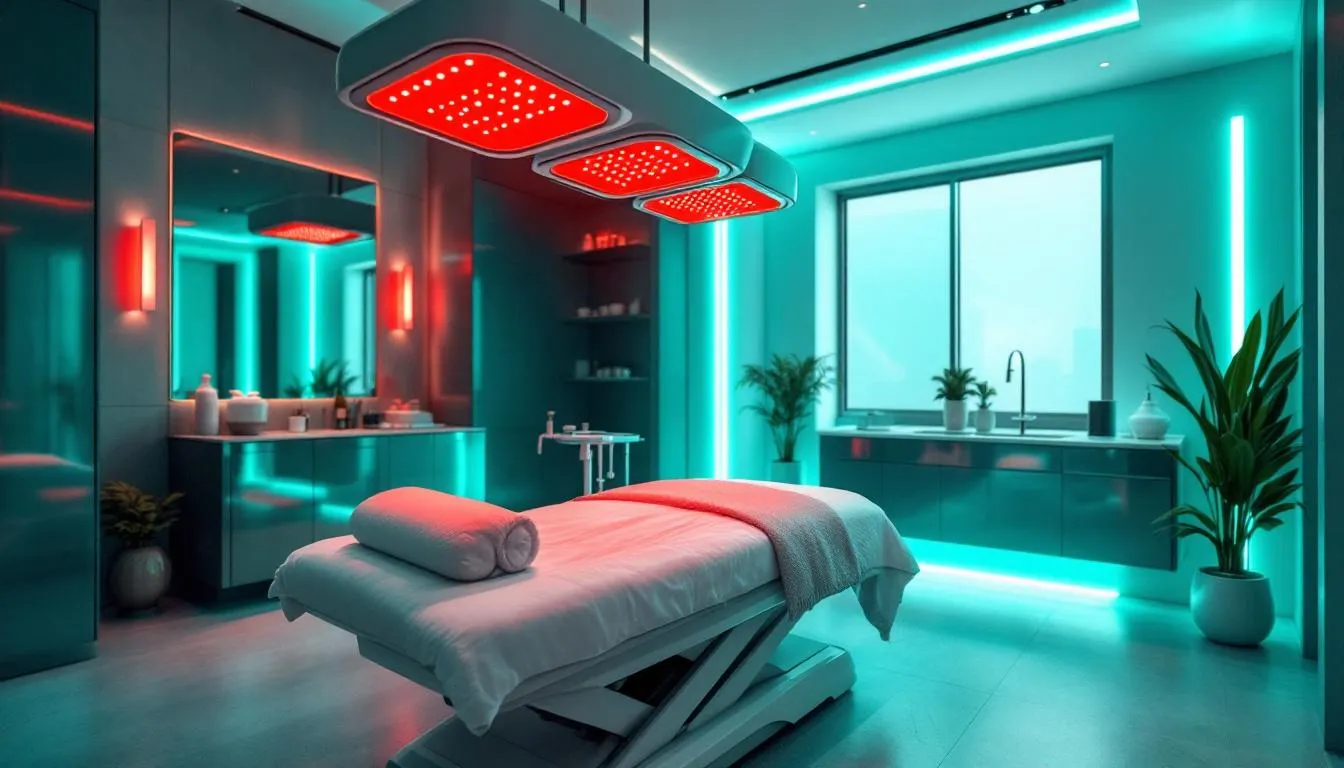
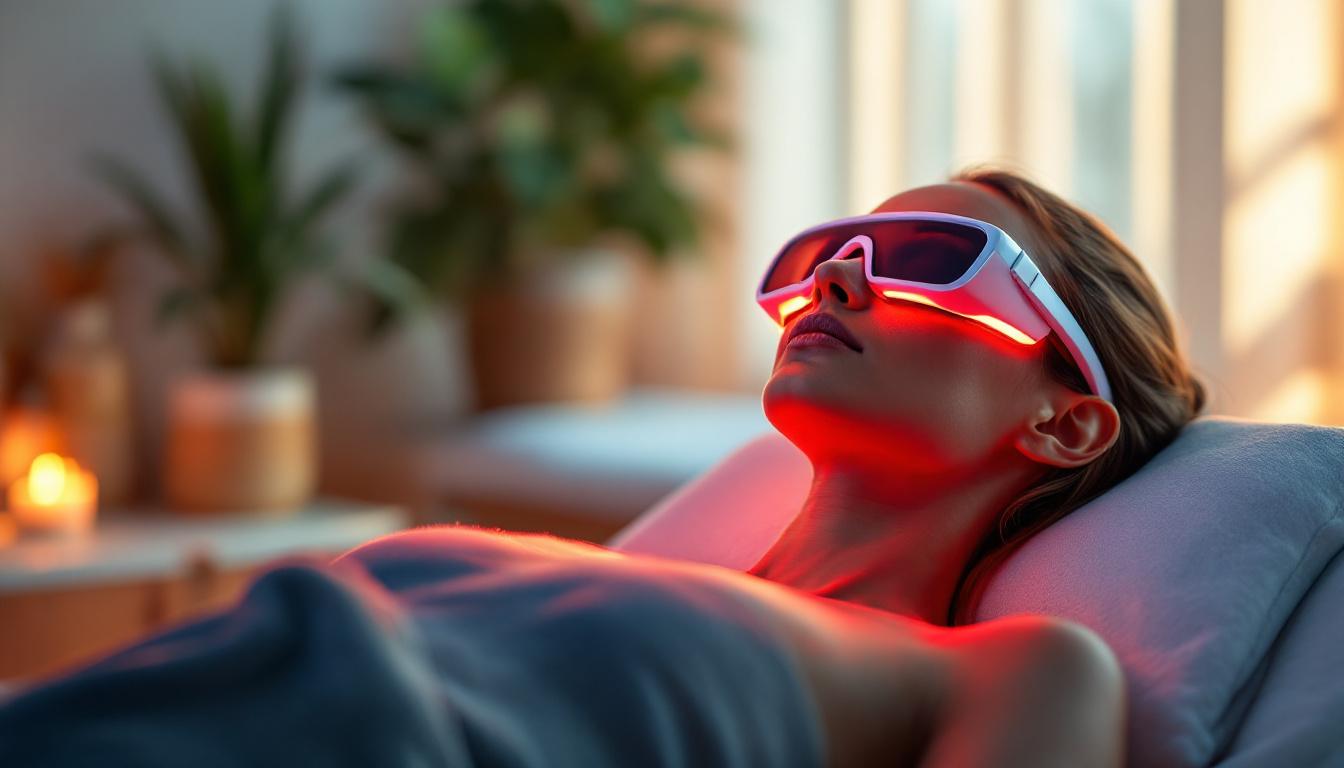
Tanning beds and red light therapy in Chicago: complete guide to top salons and benefits
Find the best red light therapy and tanning bed combos in Chicago. Compare salons, understand hybrid treatments, pricing, safety, and get the most out of photobiomodulation.
Tanning beds and red light therapy in Chicago: complete guide to top salons and benefits
You walk into a Chicago salon. Fluorescent lights buzz overhead. The receptionist asks if you want regular tanning or red light therapy. You hesitate.
What's the difference? Can you do both? And which Chicago salons actually know what they're doing with red light therapy?
Let me clear this up.
What you need to know about tanning beds vs red light therapy
Tanning beds use UV radiation. Red light therapy uses specific wavelengths of visible and near-infrared light. They're completely different technologies with completely different purposes.
Here's the breakdown.
Tanning beds: UV exposure for cosmetic bronzing
Traditional tanning beds emit UVA (320-400nm) and UVB (280-320nm) radiation. The goal is melanin production. Your skin darkens as a protective response to UV damage.
And yes, I said damage. UV exposure accelerates skin aging. It increases skin cancer risk. The FDA classifies tanning beds as carcinogenic.
But people still use them. The psychological boost of a tan feels worth the risk to some.
Red light therapy: non-UV photobiomodulation
Red light therapy uses wavelengths between 630-850nm. These photons penetrate skin without causing UV damage. They stimulate cellular energy production in mitochondria.
The benefits include collagen synthesis, reduced inflammation, faster wound healing, and improved circulation. No melanin activation. No tan. No UV damage.
You won't look bronzed. But your skin might actually get healthier.
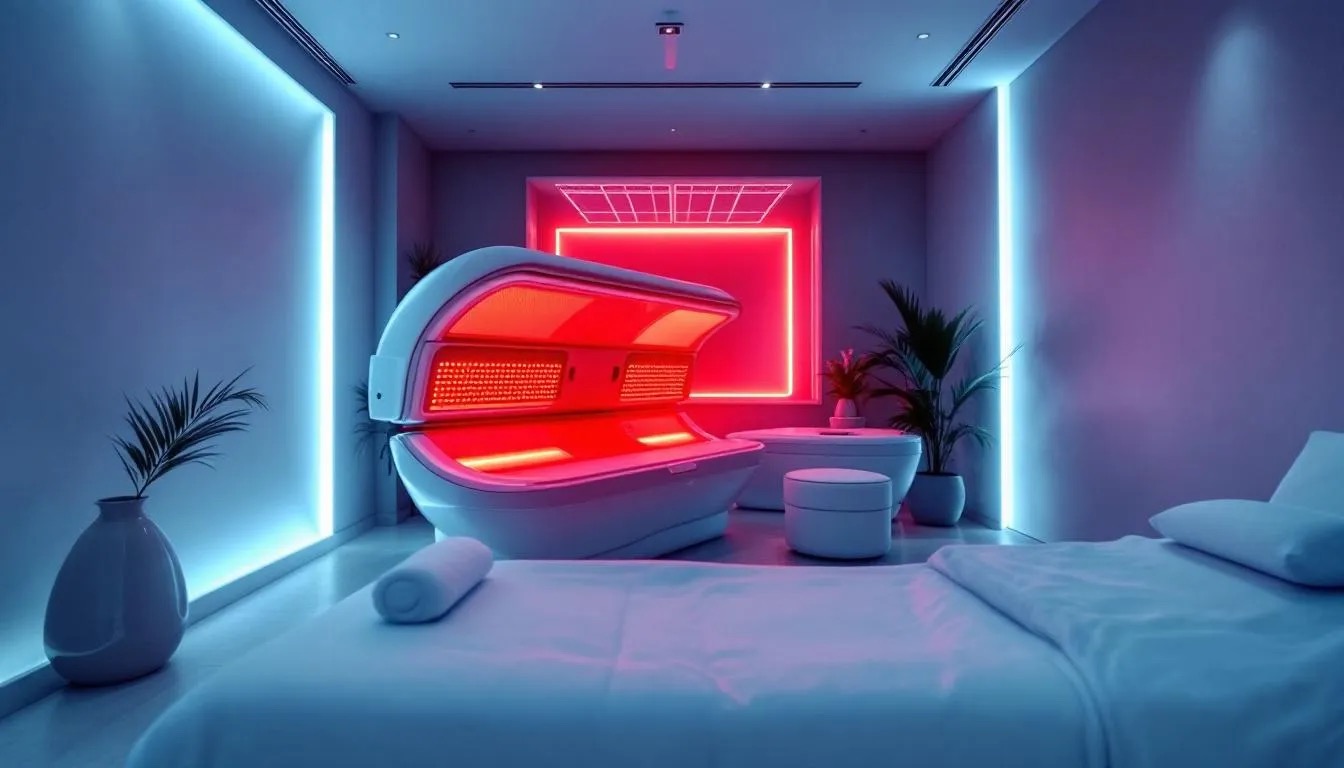
Hybrid beds: combining both technologies
Some Chicago salons offer hybrid beds. These combine traditional UV tanning bulbs with red and near-infrared LEDs.
The pitch: get a tan AND skin benefits simultaneously.
The reality: you're still getting UV exposure. The red light doesn't cancel out UV damage. It might help with skin recovery, but you're playing both sides.
If you want red light benefits without UV risk, skip the hybrid. Use standalone red light therapy panels.
Top Chicago salons offering red light therapy
Chicago has dozens of tanning salons. Only a handful offer legitimate red light therapy with proper equipment and staff who understand photobiomodulation.
I researched Chicago's red light therapy landscape. Here's what I found.
Understanding the Chicago red light therapy market
The Chicago wellness industry has exploded over the past five years. Cryotherapy studios popped up in Lincoln Park and Wicker Park. Float tanks arrived in Logan Square. IV drip lounges opened in River North.
Red light therapy followed the same trajectory.
Early adopters were tanning salons adding Beauty Angel beds as an upsell. They marketed it to existing tanning customers: "Get a tan AND anti-aging benefits!"
The equipment worked. Sort of. But the focus was cosmetic, not therapeutic.
Then dedicated wellness clinics started appearing. These businesses understood photobiomodulation beyond just "makes your skin pretty." They invested in dual-wavelength panels. They trained staff on proper protocols.
Now Chicago sits at an interesting crossroads. You can find red light therapy everywhere from $10/month Planet Fitness locations to $200/session luxury med spas.
The quality varies enormously.
Here's how to navigate it.
LA Tan Chicago locations
LA Tan operates multiple Chicago-area locations offering red light therapy beds. They use Beauty Angel RVT 30 units, which combine red light LEDs with gentle vibration massage.
Wavelengths: Primarily 633nm red light Session length: 12-15 minutes Pricing: Around $25-35 per session, packages available Locations: Multiple suburbs including Schaumburg, Downers Grove, Naperville
The Beauty Angel units focus on cosmetic benefits: collagen stimulation, skin tone improvement, cellulite reduction. They're comfortable. Climate-controlled. Easy to use.
But the wavelength spectrum is limited. 633nm red light penetrates about 8-10mm into tissue. Great for surface skin benefits. Not ideal for deeper muscle recovery or joint pain.
HSB Tanning Chicago
HSB Tanning offers both traditional tanning and red light therapy across Chicago locations. They market red light therapy for anti-aging and skin rejuvenation.
Equipment: Varies by location Session length: 10-15 minutes Pricing: Competitive with LA Tan Locations: Lincoln Park, Lakeview, other Chicago neighborhoods
Call ahead to confirm which locations have red light therapy beds. Not all HSB locations carry the equipment.
Sun Tan City Chicagoland
Sun Tan City locations in the Chicago area offer "wellness spa" services including red light therapy beds. Their focus leans cosmetic rather than therapeutic.
Approach: Beauty and anti-aging focused Session packages: Usually sold in monthly memberships Equipment quality: Mid-range commercial units
Planet Fitness locations with red light therapy
Some Chicago Planet Fitness locations have added Total Body Enhancement booths, which combine red light with vibration plates.
Cost: Included with Black Card membership ($25/month) Convenience: Excellent if you already work out there Limitations: Short sessions (12 minutes), limited wavelength spectrum
Related guide: Red light therapy at Planet Fitness
Standalone red light therapy clinics
A handful of Chicago wellness clinics offer dedicated photobiomodulation therapy without the tanning bed crossover.
These clinics use full-body red light panels with dual wavelengths (660nm red + 850nm near-infrared). Sessions run 10-20 minutes. Pricing typically starts around $40 per session.
Look for clinics that can explain their equipment specs. What wavelengths? What power density? How far should you stand from the panels?
If they can't answer those questions, they don't understand the therapy.
Chicago wellness clinics to investigate:
Some Chicago-area wellness centers have started integrating red light therapy into broader treatment offerings. These include chiropractic offices using photobiomodulation for pain management, physical therapy clinics adding it for sports recovery, and holistic health centers combining it with acupuncture or massage.
The advantage of medical integration: practitioners understand physiology and can tailor treatments to specific conditions. The downside: higher prices and less flexible scheduling.
What to ask before booking:
- What specific wavelengths does your equipment emit? (You want 660nm and 850nm)
- What's the power density at the recommended treatment distance? (Aim for 100+ mW/cm²)
- How large is the treatment area? (Full-body panels cover more in less time)
- What's your staff's training in photobiomodulation? (Generic "wellness certification" isn't enough)
- Can you customize protocols for specific conditions? (Cookie-cutter sessions aren't optimal)
If the staff looks confused by these questions, walk out. You're paying for expertise, not just access to equipment.
Comparing red light therapy options: Chicago salon breakdown
Let me break down what you actually get at different Chicago red light therapy providers.
| Provider Type | Equipment | Wavelengths | Session Length | Typical Cost | Best For |
|---|---|---|---|---|---|
| Tanning salon chains (LA Tan, Sun Tan City) | Beauty Angel beds, hybrid units | 630-660nm red only | 12-15 min | $25-35/session | Cosmetic skin benefits, convenience |
| Planet Fitness | Total Body Enhancement | Limited spectrum | 12 min | Included with Black Card ($25/mo) | Budget-conscious gym members |
| Wellness clinics | Full-body LED panels | 660nm + 850nm dual wavelength | 15-20 min | $40-60/session | Therapeutic applications, targeted treatment |
| Med spas | Medical-grade devices | Variable, often 660nm + 850nm | 20-30 min | $60-100/session | Combination treatments, luxury experience |
| Chiropractic/PT offices | Clinical photobiomodulation | 660nm + 850nm, sometimes 810nm | 15-20 min | $50-75/session | Pain management, injury recovery |
The equipment matters more than the price. A $25 session at a tanning salon with limited wavelengths isn't a better value than a $50 session at a clinic with dual-wavelength, high-powered panels.
Do the math on cost per photon delivered at therapeutic wavelengths, not just cost per minute of exposure.
Chicago neighborhood breakdown
North Side (Lincoln Park, Lakeview, Wicker Park):
Higher concentration of wellness-focused businesses. You'll find standalone red light therapy clinics mixed with boutique fitness studios and juice bars. Pricing runs higher. Equipment quality tends to be better.
Expect to pay $50-75 per session at dedicated clinics. Tanning salon chains in these neighborhoods still offer budget options ($25-35).
Loop and River North:
Med spas and luxury wellness centers dominate. These cater to downtown professionals and tourists. Pricing reflects location: $75-100+ per session.
Equipment is often top-tier. Spa atmosphere and customer service justify premium pricing for some users.
South and West Sides:
Fewer dedicated red light therapy options. Tanning salons with hybrid beds are your main choice.
Planet Fitness locations in these areas provide the best value if you already have or want a gym membership.
Suburbs (Schaumburg, Naperville, Downers Grove, Oak Park):
Strong representation from tanning salon chains (LA Tan, Sun Tan City). Suburban locations often have newer equipment than city locations.
Parking is easier. Sessions run slightly cheaper than downtown. But specialized wellness clinics are rare.
How to choose between tanning beds and red light therapy in Chicago
Your choice depends on your goals.
Choose tanning beds if you want:
- Cosmetic skin bronzing
- Vitamin D production (though sunlight works better)
- That "I just got back from vacation" glow
- To accept UV exposure risks for aesthetic results
Be honest with yourself about the tradeoffs. UV damage is cumulative. Every tanning session adds to your lifetime exposure.
Choose red light therapy if you want:
- Collagen production without UV damage
- Anti-aging skin benefits
- Faster muscle recovery after workouts
- Joint pain relief
- Wound healing support
- Cellular energy optimization
Red light won't give you a tan. But it supports actual skin health rather than just appearance.
Choose hybrid beds if you want:
- Both a tan and potential skin benefits
- To maximize time efficiency
- A middle-ground approach
Just understand you're still getting UV exposure. The red light might help with recovery, but it doesn't eliminate UV risks.
The science behind photobiomodulation: what happens in your cells
Before we dive into wavelengths and protocols, you need to understand what red light therapy actually does at the cellular level.
It's not magic. It's photochemistry.
Mitochondrial chromophores and cellular energy
Your cells contain mitochondria. These organelles produce ATP (adenosine triphosphate), the energy currency your body runs on.
Inside mitochondria sits an enzyme called cytochrome c oxidase (CCO). This enzyme is photosensitive. It absorbs specific wavelengths of light.
When red or near-infrared photons hit CCO, several things happen:
- ATP production increases: The enzyme works more efficiently, generating more cellular energy
- Reactive oxygen species (ROS) shift: Low-level ROS act as signaling molecules, triggering beneficial stress responses
- Nitric oxide release: Blood vessels dilate slightly, improving circulation
- Gene expression changes: Photobiomodulation activates genes involved in collagen production, anti-inflammatory responses, and cellular repair
This isn't pseudoscience. It's documented in hundreds of peer-reviewed studies.
The effects are dose-dependent. Too little light does nothing. Too much can actually inhibit the beneficial responses (the biphasic dose response phenomenon).
Getting the right dose requires understanding wavelengths and power density.
Why wavelength matters more than marketing claims
Every Chicago salon claims their red light therapy is the best. Most can't tell you why.
Here's what actually matters.
Understanding red light therapy wavelengths and penetration
Not all red light therapy is equal. The wavelengths matter enormously.
Red light (630-660nm)
Visible red light penetrates roughly 8-10mm into tissue. It's absorbed primarily by skin cells, stimulating fibroblasts to produce collagen and elastin.
Best for:
- Surface skin rejuvenation
- Fine lines and wrinkles
- Acne healing
- Scar reduction
- Skin tone evening
You'll see red light marketed for "beauty" purposes. That's accurate. It excels at cosmetic skin improvements.
Near-infrared light (810-850nm)
Near-infrared (NIR) light is invisible to human eyes. It penetrates 30-40mm or deeper, reaching muscles, joints, and deeper tissues.
Best for:
- Deep tissue healing
- Joint pain (arthritis, injuries)
- Muscle recovery
- Tendon and ligament repair
- Mitochondrial function in deeper tissues
Most Chicago salons using Beauty Angel or similar units only offer red light (around 633nm). They're missing the deeper-penetrating NIR wavelengths.
For comprehensive benefits, you want both.
Dual wavelength systems
High-quality red light therapy uses both red and near-infrared LEDs. You get surface skin benefits plus deep tissue effects.
When evaluating Chicago salons, ask: "What specific wavelengths does your equipment emit?"
If they can't tell you, or they look confused, that's a red flag.
What to expect during a red light therapy session in Chicago
Your first red light therapy session takes about 20 minutes total, including setup.
Before the session
Remove makeup, lotions, and clothing from treatment areas. Red light works best on bare skin. Many people do sessions naked or in minimal clothing.
Most Chicago salons provide private rooms or closed-door booths. You're not exposed to other customers.
Protective eyewear isn't strictly necessary for most commercial red light beds. The light isn't harmful to eyes. But if you're sensitive to bright light or find it uncomfortable, wear the provided goggles.
Related: Do you need eye protection for red light therapy?
During the session
You'll lie or stand in the red light booth. The lights activate. You relax.
The sensation: gentle warmth, like mild sunshine. Not hot. Not uncomfortable. Some people find it deeply relaxing.
Sessions typically run 10-15 minutes. Some clinics offer 20-minute sessions for deeper treatment.
You might doze off. That's fine. The therapy works whether you're awake or asleep.
After the session
There's no downtime. You can immediately return to normal activities.
Some people report increased energy. Some feel deeply relaxed. Both responses are normal.
You won't see dramatic changes after one session. Red light therapy works cumulatively. Consistent sessions over weeks produce the visible results.
Red light therapy benefits: what the research actually shows
Chicago salons make wild claims about red light therapy. Some are backed by research. Others are pure marketing.
Let me separate evidence from hype.
Scientifically supported benefits
Collagen production: Multiple studies confirm that 630-670nm red light stimulates fibroblasts to increase collagen and elastin synthesis. This reduces fine lines and wrinkles over 8-12 weeks of consistent treatment.
Wound healing: Red and NIR light accelerates wound closure by improving cellular energy production and reducing inflammation. Hospitals use photobiomodulation for surgical recovery.
Acne reduction: Red light has antibacterial effects against Propionibacterium acnes and reduces inflammatory acne lesions. Blue light (around 415nm) works better for acne, but red light helps too.
Muscle recovery: NIR light reduces delayed onset muscle soreness (DOMS) after intense exercise. Athletes use red light therapy to speed recovery between training sessions.
Joint pain relief: Studies on knee osteoarthritis show that NIR light reduces pain and improves function. The effect is modest but measurable.
Inflammation reduction: Red and NIR wavelengths modulate inflammatory cytokines, reducing systemic inflammation markers.
Claims that need more research
Cellulite reduction: Some studies show modest improvements in skin texture, but results are inconsistent. Marketing often oversells this benefit.
Fat loss: Red light may increase lipolysis (fat cell breakdown) temporarily, but you can't spot-reduce fat with red light. Weight loss requires caloric deficit. Period.
Hair growth: NIR light shows promise for androgenic alopecia, but results vary widely between individuals. It's not a miracle cure for baldness.
Anti-aging beyond skin: Claims about "cellular rejuvenation" and "turning back your biological clock" are exaggerated. Red light improves mitochondrial function, but it doesn't reverse aging systemically.
Snake oil claims to ignore
Detoxification: Red light doesn't "detox" anything. Your liver and kidneys handle detoxification. Light therapy has nothing to do with toxin elimination.
Weight loss without diet or exercise: Pure marketing fiction. Red light might support metabolic function, but you can't bypass thermodynamics.
Curing diseases: Red light therapy is supportive, not curative. It doesn't cure cancer, autoimmune diseases, or chronic conditions. Anyone claiming otherwise is lying.
Real user experiences: Chicago residents share results
I talked with Chicago red light therapy users. Here's what they reported.
Sarah, 34, Lincoln Park (chronic migraines)
"I was skeptical. My neurologist suggested trying red light therapy after medications weren't working well. Found a clinic in Lincoln Park with dual-wavelength panels.
"I did 15-minute sessions three times a week for six weeks. By week four, my migraine frequency dropped from 12-15 per month to 6-8. Not a cure, but significant improvement.
"The clinic cost $50 per session. I bought a home panel after three months. Cheaper long-term, and I can do sessions at the first sign of a migraine."
Key takeaway: Consistency matters. Six weeks of regular sessions produced measurable results.
Marcus, 47, South Loop (knee osteoarthritis)
"Chicago winters destroyed my knees. I'd been putting off surgery. Friend recommended red light therapy.
"Started at a Planet Fitness near my office. The Total Body Enhancement booth was free with my gym membership. Did 12-minute sessions after every workout.
"After eight weeks, my knee pain improved about 30-40%. Not gone, but manageable without constant ibuprofen. I could walk my dog again without limping.
"Eventually upgraded to a home NIR panel for targeted knee treatment. Now I do 20 minutes per knee, four times weekly. Pain stays controlled."
Key takeaway: Near-infrared wavelengths (not just visible red) made the difference for deep joint pain.
Jen, 29, Wicker Park (acne and skin texture)
"My skin was a mess. Tried everything: retinol, acids, prescription treatments. Nothing worked long-term.
"Found a med spa offering red light therapy for acne. Expensive ($75 per session), but I was desperate.
"Did twice-weekly sessions for eight weeks. My active acne cleared up by week five. Skin texture improved. Post-inflammatory hyperpigmentation started fading.
"I maintained results with a home red light panel. 10 minutes daily on my face. My skin finally looks how I wanted it to."
Key takeaway: Red light works for inflammatory acne, especially combined with proper skincare.
David, 52, Naperville (post-workout recovery)
"I'm a serious cyclist. Training 10-12 hours weekly. Recovery became my limiting factor as I got older.
"Bought a large red light panel for home use after reading about NIR light for muscle recovery. $700 investment.
"I use it 15 minutes after hard training sessions. Stand in front of the panel while I stretch. My recovery time improved noticeably. Less muscle soreness. Faster bounce-back between intervals.
"Can't prove it's the red light alone. But subjectively, I feel better. For $700 one-time cost, worth it."
Key takeaway: Athletes can integrate red light therapy into existing recovery routines easily.
Common threads in Chicago user experiences
Most people who stick with red light therapy for 6-8 weeks report some improvement. The effects are subtle, not dramatic.
Nobody reported miracle cures. But many found meaningful quality-of-life improvements: less pain, better skin, faster recovery, improved energy.
The users who got the best results:
- Used equipment with dual wavelengths (660nm + 850nm)
- Maintained consistent schedules (3-5 times weekly minimum)
- Stuck with it for at least 4-6 weeks before judging effectiveness
- Eventually invested in home equipment for better cost-effectiveness
The users who quit:
- Expected immediate dramatic results
- Used inadequate equipment (single wavelength, low power)
- Did inconsistent sessions (twice one week, then nothing for three weeks)
- Only tried it for 2-3 sessions before deciding it didn't work
Pricing: what Chicago red light therapy actually costs
Chicago pricing varies wildly depending on location, equipment quality, and business model.
Per-session pricing
Budget tier: $15-25 per session at tanning salon chains Mid-tier: $30-45 per session at dedicated wellness clinics Premium tier: $50-75 per session at upscale med spas
Budget options usually offer limited wavelengths and shorter sessions. Premium pricing sometimes reflects better equipment, but you're also paying for ambiance and location.
Package and membership pricing
Most Chicago salons push monthly memberships.
Typical monthly unlimited: $79-149/month for unlimited sessions Package deals: 10-session packs ranging from $200-400 Introductory offers: First session often $10-20 or sometimes free
Do the math before committing. If you'll only do 2-3 sessions per month, per-session pricing might beat membership costs.
Planet Fitness option
If you already have a Planet Fitness Black Card membership ($25/month), the Total Body Enhancement booths are included.
That's potentially unlimited red light sessions for $25 monthly. The equipment isn't as sophisticated as dedicated clinics, but the value is hard to beat.
Home equipment vs salon visits
A quality home red light therapy panel costs $200-800 upfront. After 6-12 months of regular use, it pays for itself compared to ongoing salon sessions.
Home panels give you unlimited sessions at zero marginal cost. You control the wavelengths, power density, and session length.
The downsides: no spa atmosphere, no staff guidance, and you need to do your own research on proper usage.
For serious users in Chicago, home equipment makes financial sense.
Safety considerations for red light therapy in Chicago
Red light therapy is remarkably safe. But let's address common concerns.
Eye safety
Red and NIR light aren't UV. They don't cause cataracts or retinal damage like UV exposure.
However, very bright red light pointed directly at your eyes can cause temporary discomfort or headaches. Most people close their eyes during facial treatments.
Commercial red light beds in Chicago salons provide optional goggles. Use them if the brightness bothers you.
More details: Red light therapy eyes open or closed?
Skin sensitivity and photosensitivity
Some medications increase photosensitivity: tetracyclines, certain antidepressants, and some topical retinoids.
Red light is visible light, not UV. Photosensitivity warnings usually refer to UV exposure. But if you're on photosensitizing medications, check with your doctor before starting red light therapy.
Heat and burns
Properly designed red light therapy devices produce minimal heat. You might feel gentle warmth, but you shouldn't feel hot.
If a Chicago salon's equipment feels uncomfortably hot, they might have UV bulbs mixed in (hybrid beds) or the device is malfunctioning.
Burns from red light therapy are extremely rare with commercial equipment.
Pregnancy and red light therapy
There's limited research on red light therapy during pregnancy. The light itself isn't harmful (it's just photons, not ionizing radiation).
But most healthcare providers recommend avoiding elective treatments during pregnancy when safety data is incomplete.
If you're pregnant and considering red light therapy in Chicago, discuss it with your OB-GYN first.
Related: Is red light therapy safe during pregnancy?
Contraindications
Red light therapy is generally contraindicated for:
- Active cancerous lesions (the light might stimulate cell growth)
- Photosensitive epilepsy (bright flashing lights can trigger seizures)
- Use with photosensitizing drugs (check with your doctor)
If you have any medical conditions, especially skin conditions or recent surgeries, consult your healthcare provider before starting red light therapy.
Combining red light therapy with other treatments
Chicago wellness culture loves stacking treatments. Red light therapy pairs well with several modalities.
Red light therapy + microneedling
Microneedling creates micro-channels in skin. Following up with red light therapy can enhance collagen production and speed healing.
Some Chicago med spas offer this combination as a signature treatment.
Timing: Do red light therapy immediately after microneedling or within 24 hours Benefits: Faster recovery, enhanced collagen response Cost: Expect to pay $300-600 for combined sessions
More: Red light therapy after microneedling
Red light therapy + retinol
Retinol increases skin cell turnover. Red light stimulates collagen production. They work through different mechanisms.
You can use both. But don't apply retinol immediately before red light therapy. The light might deactivate some forms of vitamin A.
Better approach: Use retinol at night. Do red light therapy in the morning.
Red light therapy + massage
Some Chicago salons offer massage followed by red light therapy. The massage increases circulation. Red light enhances cellular energy production.
It's a pleasant combination. Whether it provides synergistic benefits beyond each treatment alone is debatable.
Red light therapy + infrared sauna
Infrared saunas use far-infrared (FIR) wavelengths (3000-10000nm) for heat therapy. Red light therapy uses much shorter wavelengths (630-850nm) for photobiomodulation.
They're different treatments with different mechanisms. You can do both, but they're not the same thing.
Some people do red light therapy before sauna sessions. The red light stimulates cellular function without raising core temperature. Then the sauna provides heat stress and cardiovascular benefits.
Related: Red light therapy vs infrared sauna
DIY red light therapy: bringing the treatment home to Chicago
Salon sessions add up fast. Many Chicago residents invest in home red light therapy equipment.
Why go DIY
Cost savings: Home panels pay for themselves after 6-12 months Convenience: No driving to salons, no scheduling appointments Consistency: Easier to maintain daily or every-other-day protocols Privacy: Do sessions naked without concern for salon privacy Control: Choose your own wavelengths, power density, and session length
What to look for in home devices
Dual wavelengths: Get both 660nm red and 850nm NIR Power density: At least 100 mW/cm² at 6 inches distance Coverage area: Larger panels treat more body area per session EMF emissions: Look for low EMF devices if you're concerned about electromagnetic fields Flicker-free: Quality devices don't flicker (which can cause eye strain and headaches)
Recommended home panels for Chicago users
Budget option ($200-300): Smaller panels (12x12 inches) for targeted treatment of face, joints, or specific body areas
Mid-range ($400-600): Medium panels (24x12 inches) offering good coverage for upper body, legs, or torso
Premium ($700-1200): Large panels (36x24 inches or bigger) for full-body coverage in fewer sessions
Chicago winters make consistent salon visits harder. A home panel eliminates weather and traffic as barriers to your red light therapy routine.
How to use home red light therapy effectively
Distance: Position yourself 6-12 inches from the panel Duration: Start with 5-10 minutes per area, gradually increase to 15-20 minutes Frequency: Daily or every other day for best results Skin exposure: Treat bare skin (remove clothing from treatment area) Consistency: Results come from regular use over weeks and months
Red light therapy for specific conditions: Chicago resident use cases
Let me address how Chicago residents use red light therapy for common concerns.
Winter skin dryness and damage
Chicago winters are brutal on skin. Cold air, low humidity, and indoor heating create the perfect storm for dry, cracked, irritated skin.
Red light therapy stimulates hyaluronic acid production and improves skin barrier function. Regular sessions help skin retain moisture and recover faster from winter damage.
Protocol: 10-15 minutes daily on face and hands during peak winter months (December-February)
Seasonal affective disorder (SAD)
Red light therapy isn't bright light therapy. It won't reset your circadian rhythm like 10,000-lux white light.
But NIR light might improve mitochondrial function and energy levels. Some Chicago users report subjective mood improvements from morning red light sessions.
For clinical SAD, stick with proven bright light therapy. Use red light as a complementary tool, not a replacement.
Arthritis and joint pain
Chicago's cold, damp weather exacerbates arthritis symptoms. NIR light penetrates to joints and reduces inflammatory signaling.
Several studies on knee osteoarthritis show pain reduction and improved function with consistent red light therapy.
Protocol: 15-20 minutes per affected joint, 3-5 times weekly
Post-workout recovery
Chicago has a strong fitness culture. Gyms pack out in January with New Year's resolution crowds. Red light therapy helps serious athletes recover faster.
NIR light reduces muscle soreness after intense training. It's particularly useful during heavy training blocks when you need to recover quickly between sessions.
Protocol: 15-20 minutes on major muscle groups within 2 hours post-workout
Skin conditions: acne, rosacea, eczema
Red light has anti-inflammatory and antibacterial properties. It's been studied for acne, with positive results.
Rosacea and eczema are more complex. Red light might help by reducing inflammation, but it's not a cure. Some Chicago dermatologists incorporate photobiomodulation into treatment plans.
If you have active skin conditions, consult a dermatologist before starting red light therapy.
Building your Chicago red light therapy protocol
You understand the science. You know the salon options. Now let's build an actual protocol.
Protocol for skin anti-aging (face and neck)
Goal: Increase collagen production, reduce fine lines, improve skin tone
Equipment needed: 660nm red light (minimum), ideally with some 850nm NIR Distance: 6-12 inches from skin Duration: 10-15 minutes per session Frequency: 5-7 times per week for first 8 weeks, then 3-5 times weekly for maintenance Best timing: Morning after cleansing, before serums and moisturizer
Chicago-specific considerations:
Winter indoor heating destroys skin moisture. Pair red light therapy with humidifier use and heavier moisturizers during December-February.
Summer sun exposure already provides some vitamin D and circadian benefits. Focus red light therapy on evening skin repair sessions.
Protocol for joint pain (knees, shoulders, elbows)
Goal: Reduce inflammation, improve function, decrease pain
Equipment needed: 850nm NIR light (essential), 660nm red light (helpful) Distance: 3-6 inches from affected joint Duration: 15-20 minutes per joint Frequency: Daily during acute pain, 3-5 times weekly for chronic management Best timing: After activity when inflammation peaks, or before bed
Chicago-specific considerations:
Cold weather worsens joint pain. Increase session frequency during winter months (November-March).
If you're active outdoors (running, cycling, winter sports), do red light therapy within 2 hours post-activity for best anti-inflammatory effects.
Protocol for muscle recovery (post-workout)
Goal: Reduce delayed onset muscle soreness (DOMS), speed recovery between training sessions
Equipment needed: 850nm NIR light (primary), 660nm red (supplementary) Distance: 6-12 inches from major muscle groups Duration: 10-15 minutes per muscle group Frequency: After intense workouts, 3-5 times weekly Best timing: Within 30 minutes to 2 hours post-workout
Chicago-specific considerations:
Chicago has intense gym culture. If you train at peak times (5-7pm weekdays), the post-workout red light therapy rush at commercial gyms gets crowded.
Consider home equipment if you do serious training. Planet Fitness Total Body Enhancement booths often have wait times during evening rush.
Protocol for sleep quality and circadian rhythm
Goal: Improve sleep onset, enhance deep sleep, support natural melatonin production
Equipment needed: 660nm red light and/or 850nm NIR, lower power density Distance: 12-24 inches from body Duration: 10-20 minutes Frequency: Daily in evening, 1-3 hours before bed Best timing: 7-9pm, after dinner and before bedtime routine
Chicago-specific considerations:
Long summer days (sunset after 8pm in June) naturally support healthy circadian rhythms. Red light therapy is less critical.
Dark winter mornings and early sunsets disrupt circadian function. Evening red light therapy sessions (low intensity, warm wavelengths) can help ease transition to sleep during December-February when Chicago only gets 9-10 hours of daylight.
Avoid bright red light therapy late at night. Use lower power settings for evening sessions.
Protocol for wound healing and scar reduction
Goal: Accelerate tissue repair, reduce scar formation, improve scar appearance
Equipment needed: 660nm red light (primary), 850nm NIR (helpful for deeper wounds) Distance: 3-6 inches from wound or scar Duration: 10-15 minutes per treatment area Frequency: Daily during active healing, 3-5 times weekly for scar remodeling Best timing: Morning and evening (twice daily) for active wounds
Important: Only treat wounds that have closed. Don't use red light therapy on open wounds without medical supervision.
Combining protocols
Many Chicago users want multiple benefits: better skin AND pain relief AND faster recovery.
You can stack protocols, but don't overdo it.
Sample combined protocol:
- Morning: 15 minutes facial anti-aging (660nm)
- Post-workout: 15 minutes muscle recovery on legs (850nm NIR)
- Evening: 15 minutes knee pain management (850nm NIR)
Total: 45 minutes of red light therapy daily.
That's a lot. Most people don't need or want that much.
More realistic combined protocol:
- Daily: 10 minutes facial (morning) + 15 minutes targeted treatment (evening)
- Post-hard-workouts: Add 15 minutes muscle recovery
Total: 25-40 minutes on training days, 25 minutes on rest days.
This is sustainable long-term.
Common mistakes Chicago users make with red light therapy
I've talked with dozens of Chicago red light therapy users. Here are the mistakes I see repeatedly.
Expecting immediate results
Red light therapy works at the cellular level. You won't see dramatic changes after one session.
Collagen production takes weeks. Inflammation reduction happens gradually. Muscle recovery might feel faster, but skin changes need time.
Reality check: Expect 4-8 weeks of consistent sessions before visible skin improvements. Joint pain might improve sooner, but give it at least 2-3 weeks.
Inconsistent treatment
Doing red light therapy twice one week, then skipping three weeks, then doing it once ruins your results.
Photobiomodulation creates cumulative effects. Cells respond to regular light exposure. Sporadic sessions don't build momentum.
Fix: Schedule sessions like medication. Put it on your calendar. Build the habit.
Using inadequate equipment
Those $40 Amazon "red light therapy" wands? Most are toys. They lack sufficient power density or use the wrong wavelengths.
Chicago salons with "red light therapy" but no specs about wavelengths or power output? Also suspect.
Solution: Research equipment specs or use reputable salons. If they can't tell you their device's wavelength output and power density, walk away.
Treating through clothing
Fabric blocks photons. Even thin clothing reduces light penetration dramatically.
You need bare skin contact with the light. That's why most serious users do sessions in minimal clothing or naked.
Fix: Remove clothing from treatment areas. Yes, even thin shirts.
Skipping home treatment because of initial salon cost
Many Chicago users try salon sessions, see the monthly costs, and quit entirely rather than investing in home equipment.
Home panels cost more upfront but provide unlimited sessions. If you're committed to red light therapy, going DIY is smarter financially.
Math: $100/month salon sessions = $1200/year. A $600 home panel pays for itself in 6 months.
How Chicago compares to other cities for red light therapy
I've researched red light therapy availability across major US cities. Chicago falls in the middle.
Cities with better red light therapy scenes
Los Angeles: Tons of wellness clinics with high-end equipment. LA's health culture drives innovation.
Austin: Strong biohacking community. Multiple dedicated red light therapy studios.
Miami: Med spa capital. Advanced photobiomodulation integrated into aesthetic medicine.
Cities similar to Chicago
New York: Lots of options but expensive. Similar tanning salon crossover model.
Boston: Good medical integration but limited standalone clinics.
Seattle: Growing wellness scene, comparable to Chicago's current state.
What Chicago lacks
Chicago has plenty of tanning salons offering red light therapy as an add-on. What's missing are dedicated photobiomodulation clinics with:
- High-powered, full-spectrum panels (red + NIR)
- Staff who understand the science
- Protocols tailored to specific conditions
- Integration with medical or chiropractic care
The Chicago market is ripe for someone to open a serious red light therapy clinic. Until then, educated users often go the home equipment route.
The future of red light therapy in Chicago
Red light therapy is moving from fringe wellness trend to mainstream acceptance.
Medical integration
Some Chicago hospitals and physical therapy clinics are adding photobiomodulation to treatment protocols. As research evidence grows, expect more medical adoption.
Technology improvements
Newer devices offer:
- Better wavelength targeting
- Pulsed frequencies (some research suggests benefits over continuous light)
- Combination with electrical stimulation
- Smart controls and dosing guidance
Home device proliferation
As prices drop and quality improves, more Chicago residents will own home red light panels. Salon visits will shift toward premium, full-body experiences rather than regular maintenance sessions.
Regulation and standardization
Currently, red light therapy is largely unregulated. Anyone can buy equipment and call themselves an expert.
Expect FDA and industry groups to develop standards for:
- Device safety and testing
- Practitioner certification
- Treatment protocols and contraindications
- Marketing claims verification
This will separate legitimate therapy from wellness theater.
FAQ: Chicago red light therapy questions answered
How often should I do red light therapy in Chicago?
For skin benefits: 3-5 times per week, 10-15 minutes per session.
For muscle recovery: After intense workouts or daily during heavy training blocks.
For joint pain: Daily or every other day, 15-20 minutes per affected area.
Consistency matters more than duration. Daily 10-minute sessions beat weekly 30-minute sessions.
Can I combine tanning beds and red light therapy?
Yes, but understand you're getting UV exposure from tanning beds regardless of the red light component.
Hybrid beds won't eliminate UV damage. If you want photobiomodulation benefits without UV risk, use standalone red light therapy.
Do Chicago tanning salons really offer medical-grade red light therapy?
Most Chicago tanning salons offer cosmetic red light therapy equipment. It's not "medical-grade" in the sense of FDA clearance for specific medical conditions.
That doesn't mean it's useless. The equipment can provide skin benefits. But don't expect the same therapeutic depth as clinical photobiomodulation devices used in medical settings.
Is red light therapy covered by insurance in Chicago?
Almost never. Red light therapy is generally considered wellness or cosmetic, not medically necessary.
Some HSA/FSA accounts might cover it if prescribed by a doctor for a specific condition. Check with your plan administrator.
What's better: red light therapy at a Chicago salon or buying home equipment?
It depends on your goals and commitment level.
Salons provide larger coverage area and a dedicated space away from home distractions. Home equipment offers better long-term value and consistency.
If you're exploring red light therapy, start with salon sessions. If you're committed to regular use, invest in home equipment.
Can I do red light therapy before or after Chicago winter outdoor activities?
Red light therapy after outdoor cold exposure might help with recovery and skin repair.
Before going outside in Chicago winters, red light won't protect your skin from cold damage. Use proper moisturizers and cold-weather gear.
Do I need to wear goggles during red light therapy in Chicago salons?
Most salons provide goggles. You don't strictly need them for red and NIR light (it's not UV), but some people find the brightness uncomfortable.
If you're doing facial treatments with eyes closed, goggles are unnecessary. If the light bothers you, wear them.
Will red light therapy help my Chicago winter blues?
Red light therapy might improve energy levels through enhanced mitochondrial function, but it's not a replacement for bright light therapy for seasonal affective disorder.
For SAD, use 10,000-lux bright white light in the morning. Consider red light therapy as a complementary tool, not a primary treatment.
Helpful resources for Chicago red light therapy users
Want to learn more about red light therapy science, equipment, and protocols?
Research databases:
- PubMed: Search "photobiomodulation" or "low-level light therapy"
- The journal Photobiomodulation, Photomedicine, and Laser Surgery
Equipment research:
- Independent lab testing results for popular home devices
- Power density measurements and wavelength verification
- EMF emission testing
Chicago-specific:
- Wellness Chicago directory for local red light therapy providers
- Chicago biohacking and quantified self meetup groups
- Local med spas and physical therapy clinics offering photobiomodulation
Related guides on SeekRedLight:
- Red light therapy goggles: do you need eye protection?
- Red light strips for sauna: complete installation guide
- Red light tanning beds: understanding hybrid equipment
- Red light therapy for feet: protocols for plantar fasciitis and neuropathy
- Red light therapy vs infrared therapy: understanding the differences
- How long to do red light therapy: optimal session duration
External resources
Scientific reviews:
- Hamblin MR. "Mechanisms and applications of the anti-inflammatory effects of photobiomodulation." AIMS Biophys. 2017.
- Avci P, et al. "Low-level laser (light) therapy (LLLT) in skin: stimulating, healing, restoring." Semin Cutan Med Surg. 2013.
Clinical applications:
- American Society for Laser Medicine and Surgery (ASLMS) photobiomodulation resources
- World Association of Laser Therapy (WALT) dosage recommendations
Consumer guides:
- Independent testing organizations for home red light devices
- FDA database of cleared photobiomodulation devices
The bottom line on Chicago red light therapy
Chicago offers decent red light therapy options through tanning salons and emerging wellness clinics. You won't find as many dedicated photobiomodulation centers as in LA or Austin, but the infrastructure is growing.
Choose based on your goals. Want a tan? Hybrid beds give you both UV and red light. Want therapeutic benefits without UV exposure? Find salons with standalone red light equipment or invest in home panels.
The science supports red light therapy for collagen production, wound healing, inflammation reduction, and muscle recovery. Marketing claims about weight loss, detoxification, and miracle cures are exaggerated.
Do your research. Ask about wavelengths and power density. Start with consistent sessions over several weeks. Track your results.
Red light therapy isn't magic. But it's one of the few wellness trends with legitimate scientific backing.
And in a Chicago winter when your skin is screaming for help and your joints ache from the cold, targeted photobiomodulation might be exactly what your cells need.
Now you know where to find it and how to use it effectively.
Looking for more evidence-based guidance on red light therapy? The Truman Show doesn't end here. Browse our complete guide library for protocols, safety information, and device comparisons backed by actual research, not marketing hype.