Poly red light therapy: what polychromatic wavelengths do and why they matter
Polychromatic red light therapy uses 4-12 wavelengths simultaneously to target multiple tissue depths. Here's what it does, which conditions benefit most, and how to find the right device.
Most red light therapy devices you'll find online use two wavelengths: 660nm and 850nm. Two. That's it. And honestly, that's fine. Those two wavelengths cover a lot of ground, they're backed by a mountain of research, and most people who use them consistently see results.
But then you start looking at other devices. And you notice some claim four wavelengths. Others claim six. Some brands advertise eight, ten, even twelve distinct wavelengths packed into a single panel. The marketing copy gets breathless. "Full-spectrum photobiomodulation." "Comprehensive cellular activation." "The complete light therapy experience."
And you stop and ask the obvious question: is this real science, or is it a sales pitch?
That's the question this guide is going to answer. Not with vague reassurances in either direction, but with the actual biology of what different wavelengths do, why some conditions genuinely benefit from multiple frequencies simultaneously, and when more wavelengths is just a way to sell you a more expensive device.
Here's the honest preview: polychromatic therapy isn't a gimmick. There are real physiological reasons why hitting tissue with multiple wavelengths at once can produce different outcomes than hitting it with one or two. But the execution matters enormously. A cheap device claiming twelve wavelengths with near-zero power in most of them is worse than a well-built two-wavelength panel from a reputable brand.
This guide is going to give you the tools to tell the difference.
You'll understand what each wavelength in the therapeutic spectrum actually does. You'll learn how polychromatic devices interact with cells differently than standard devices. You'll see which conditions have the strongest case for multi-wavelength protocols, and which conditions are just as well served by a standard panel. And you'll get practical guidance on what to look for when you're evaluating devices.
By the end, you'll be able to read any polychromatic device's marketing page and know immediately whether it's making legitimate claims or selling you wavelength count as a proxy for quality.
Let's get into it.
What "poly" actually means
The word is from Greek. "Poly" means many. So polychromatic red light therapy is, at its simplest, light therapy that uses many colors simultaneously.
In the context of photobiomodulation, color means wavelength. Each wavelength of light corresponds to a specific color or shade on the electromagnetic spectrum, and each wavelength interacts with biological tissue differently. Standard consumer devices use two wavelengths because 660nm (visible red) and 850nm (near-infrared) are the most studied and cover the most common therapeutic needs. They're the workhorse combination.
Polychromatic devices expand on that foundation. Entry-level polychromatic typically means three to four wavelengths. A manufacturer might add 630nm to the visible red range and 810nm to the near-infrared range, giving you more coverage at the surface and more precision in the deep-tissue band. That's a modest upgrade. Still, it means the device is hitting your skin with four distinct frequencies instead of two.
Full polychromatic systems can span from 590nm amber all the way to 1064nm in the far near-infrared range. That's twelve different wavelength bands, each with a distinct penetration depth profile and a distinct set of biological targets.
Why does penetration depth matter? Because your body isn't a uniform medium. Skin, fat, muscle, bone, nerve, cartilage, and blood vessels all sit at different depths and respond to different frequencies. A wavelength that works beautifully at the skin surface doesn't penetrate far enough to reach a deep joint. A wavelength powerful enough to reach cartilage passes straight through the top layers with minimal interaction.
Here's how the main therapeutic wavelengths stack up:
| Wavelength | Approximate penetration depth | Primary target tissues |
|---|---|---|
| 590nm (amber) | 1-2mm | Epidermis surface, melanin, sebaceous glands |
| 630nm (red) | 3-5mm | Epidermis, superficial dermis, wound healing |
| 660nm (red) | 8-10mm | Dermis, collagen fibers, hair follicles |
| 810nm (NIR) | 30-40mm | Brain tissue, thyroid, lymphatics, deep muscle |
| 830nm (NIR) | 35-45mm | Cartilage, bone surface, deep connective tissue |
| 850nm (NIR) | 40-50mm | Deep joints, nerve fibers, dense muscle |
| 940nm (NIR) | 50-60mm | Circulatory system, water-rich tissue, metabolic tissue |
| 1064nm (NIR) | 60-70mm+ | Deepest therapeutic penetration, chronic pain sites, bone |
The numbers are approximate. Penetration depth is affected by tissue type, skin pigmentation, and how much fat sits between the surface and the target. But the pattern is clear: as wavelength increases, penetration generally increases. And a device that only emits 660nm and 850nm is leaving a lot of that therapeutic range uncovered.
That's the fundamental case for polychromatic therapy. Not that more wavelengths is automatically better. But that different wavelengths do genuinely different things, and for some conditions and some goals, covering more of that spectrum delivers more comprehensive results.
The wavelength guide: what each frequency actually does
Understanding why polychromatic devices work requires understanding what each wavelength is actually doing when it hits tissue. This is where the biology gets interesting.
590nm, amber
Amber sits at the boundary between yellow and orange on the visible spectrum. It doesn't penetrate far. One to two millimeters, roughly speaking, which puts it squarely in the outermost layer of the skin: the epidermis.
What it does there is specific. Amber wavelengths interact preferentially with melanin, the pigment in skin cells, and with the sebaceous glands that sit just below the surface. This makes 590nm particularly relevant for pigmentation issues, surface-level inflammation, and skin tone evenness. Some protocols for rosacea and general redness use amber specifically because it targets superficial vascular structures without the depth that would just pass through the problem area.
It's not a heavy hitter for most therapeutic goals. But for surface-level skin work, it's doing something that 660nm or 850nm simply can't do at that tissue level.
630nm, visible red
A step deeper than amber, 630nm reaches the superficial dermis at three to five millimeters. This is wound healing territory. Research into 630nm has consistently shown accelerated wound closure, reduced inflammation at the surface level, and stimulation of fibroblast activity, which is the cell type that lays down new collagen.
If you're treating a fresh wound, a healing incision, or a superficial skin condition, 630nm is doing meaningful work that 660nm partially covers but not as efficiently.
660nm, classic red
This is one of the two workhorses. At 660nm, light penetrates eight to ten millimeters, which puts it into the mid-dermis where collagen fibers live, where hair follicles extend, and where many of the structural proteins that determine how skin looks and behaves are maintained.
Anti-aging protocols rely heavily on 660nm. It stimulates fibroblast activity to produce collagen, reduces inflammatory markers in the dermis, and supports skin cell turnover. For conditions like red light therapy hyperpigmentation, 660nm is part of the core treatment approach.
It's also important for hair follicle stimulation. The follicle sits mostly in the upper dermis, which 660nm reaches comfortably. If you're exploring red light therapy for hair loss, 660nm is one of the primary therapeutic wavelengths.
810nm, near-infrared
This is where things get genuinely interesting, and where a lot of the most compelling recent research is focused.
810nm penetrates thirty to forty millimeters, reaching deep muscle, the thyroid gland, lymphatic tissue, and, critically, brain tissue through the skull. The photobiomodulation research on 810nm for neurological applications is some of the most exciting in the field. Because it can penetrate the skull and reach cerebral cortex tissue at meaningful depths, 810nm is the primary wavelength studied in transcranial photobiomodulation: using light to modulate brain function.
For mood, cognitive performance, and neurological recovery, 810nm is the wavelength you're most interested in. Standard 850nm gets discussed in this context too, but 810nm has the better absorption profile for the specific chromophores in neural tissue.
It also works for deep muscle recovery and lymphatic stimulation, making it a versatile wavelength for anyone dealing with systemic inflammation or immune function.
830nm, near-infrared
Similar depth to 810nm but with a slightly different absorption profile. At 830nm, the light interacts particularly well with cartilage and the surfaces of bone. This is one reason why polychromatic devices designed for red light therapy for joint pain often include both 810nm and 830nm: they cover slightly different structures within the same deep-tissue zone.
For osteoarthritis and joint degeneration, having both 810nm and 830nm in your protocol gives you more comprehensive coverage of the relevant tissue types.
850nm, classic near-infrared
The other workhorse. At forty to fifty millimeters penetration, 850nm reaches deep joints, dense muscle tissue, and nerve fibers. It's the wavelength most studied for muscle recovery, for deep anti-inflammatory effects, and for nerve repair.
For conditions like red light therapy for neuropathy, 850nm is doing most of the heavy lifting in reaching the nerve structures where photobiomodulation effects occur. The same applies to red light therapy for neuropathy in feet, where the target tissue sits underneath skin, fat, and superficial muscle layers.
940nm, near-infrared
At this wavelength, something specific happens with water. The water molecules in biological tissue start to absorb 940nm light at a higher rate than they absorb shorter wavelengths. This sounds like a problem because water absorption can generate heat rather than photochemical effects, but at therapeutic intensities, 940nm still produces photobiomodulation responses in addition to gentle thermal effects.
The result is improved circulation through microvascular dilation and enhanced metabolic activity in tissues with high water content. Circulatory benefits from 940nm are a common claim in professional polychromatic systems, and there's genuine physiological basis for it.
1064nm, far near-infrared
This is the deepest therapeutic wavelength in common use. At sixty to seventy millimeters or more of penetration, 1064nm is used in clinical contexts for chronic deep pain conditions, for bone tissue stimulation, and for applications where reaching tissue through significant overlying layers is the goal.
You'll find 1064nm in high-end professional devices more than in consumer products. It's the wavelength used in Nd:YAG lasers at low power for photobiomodulation purposes. When it appears in a LED-based panel, the power at that wavelength needs to be evaluated carefully, because generating meaningful irradiance at 1064nm requires different LED technology than the shorter wavelengths.
How polychromatic therapy works at the cellular level
To understand why multiple wavelengths can produce different outcomes than a single wavelength, you need to understand what's happening inside the cell when light hits tissue.
The primary chromophore, meaning the molecule that absorbs photons and triggers a biological response, in red and near-infrared photobiomodulation is cytochrome c oxidase. This is an enzyme that lives in the inner mitochondrial membrane and plays a central role in the electron transport chain: the process by which mitochondria produce ATP, the energy currency of the cell.
Cytochrome c oxidase has multiple absorption peaks. It doesn't just absorb one wavelength. It absorbs across a range, with distinct peaks at different points in the spectrum. When photons at those peak wavelengths hit the enzyme, they cause a conformational change: a structural shift that enhances the enzyme's activity. More active cytochrome c oxidase means faster electron transport. Faster electron transport means more ATP production per unit time.
More ATP means more cellular energy. And cellular energy is what drives repair, regeneration, inflammation resolution, and virtually every other biological process you're trying to influence with light therapy.
Here's the polychromatic advantage: if cytochrome c oxidase has multiple absorption peaks, and you're only hitting it with wavelengths that correspond to one or two of those peaks, you're leaving activation potential on the table. A device that covers more absorption peaks simultaneously can produce a more comprehensive enzymatic response.
It's not just cytochrome c oxidase either. Nitric oxide plays a major role in photobiomodulation. Light therapy is believed to dissociate nitric oxide from cytochrome c oxidase, where it inhibits the enzyme's activity when cellular oxygen is low. That released nitric oxide then acts as a signaling molecule: dilating blood vessels, reducing inflammation, modulating immune response. Different wavelengths interact with different parts of this nitric oxide signaling pathway.
Reactive oxygen species, the molecules that drive oxidative stress at high concentrations but serve as essential signaling molecules at low concentrations, are also modulated differently by different wavelengths. A polychromatic protocol can tune this signaling more precisely because it's activating multiple pathways simultaneously.
The biphasic dose response adds another layer of complexity. Photobiomodulation follows a dose curve where too little light produces minimal effect, optimal light produces maximum effect, and too much light can inhibit the very processes you're trying to stimulate. This curve is wavelength-specific. What constitutes an optimal dose at 660nm is different from the optimal dose at 850nm.
Polychromatic devices allow a kind of dose distribution across wavelengths, which can help avoid the inhibitory zone for any single wavelength while still delivering meaningful energy to each biological target. In theory, this makes dosing more forgiving. In practice, it requires that each wavelength in the device is actually delivering meaningful irradiance, which is where device quality becomes the deciding factor.
Polychromatic vs standard 2-wavelength vs monochromatic
Let's be direct about how these three approaches compare, because the marketing in this space tends to present polychromatic as obviously superior, and that's not quite right.
Monochromatic therapy means a single wavelength. This is the model used in most clinical laser research and in many professional devices. The advantage of monochromatic therapy is precision. You know exactly what wavelength is hitting tissue, you can calculate dose precisely, and the research literature for specific wavelengths is extensive and well-controlled. If you have a very specific condition, like a surface wound that responds well to 630nm, a monochromatic device at that frequency can be highly effective. The limitation is narrow therapeutic coverage. One wavelength hits one depth range and activates one absorption profile.
Standard 2-wavelength therapy (660nm + 850nm) covers the two most commercially important therapeutic bands. This combination hits the mid-dermis and the deep tissue simultaneously. For general wellness, anti-aging, muscle recovery, and most common use cases, it works well. The research base for this specific combination is extensive. Most consumer devices in the $150-600 range use this combination, and many of them are good. For most people, this is enough.
Polychromatic therapy (4-12 wavelengths) adds breadth. Instead of two depths and two biological targets, a good polychromatic device is hitting six or eight tissue layers simultaneously. For conditions that span multiple tissue depths, like joint pain that involves cartilage, synovial tissue, and muscle, or neuropathy that involves surface sensory nerves and deeper motor nerves, this breadth is genuinely useful.
But here's the tension you need to understand: the power budget of a device is finite. If a panel generates 100mW/cm² of total irradiance and distributes that across two wavelengths, each wavelength contributes 50mW/cm². Distribute the same power across twelve wavelengths, and each wavelength contributes roughly 8mW/cm². That might fall below the threshold for meaningful therapeutic effect at some wavelengths.
This is called dose dilution, and it's the real risk with polychromatic devices. A cheap polychromatic panel might claim twelve wavelengths but deliver clinically meaningful doses at only two or three of them. In that case, you've paid more for a device that's no better than a standard two-wavelength panel, and might be worse because those two effective wavelengths are now delivering less power than they would in a dedicated two-wavelength device.
| Factor | Monochromatic | 2-wavelength | Polychromatic |
|---|---|---|---|
| Penetration coverage | Single depth | 2 depths | Multiple depths |
| Research base | Strong for specific conditions | Very strong | Growing, condition-specific |
| Dose precision | Highest | High | Requires per-wavelength irradiance data |
| Cost (consumer) | Low-high (varies) | Low-mid | Mid-high |
| Best for | Targeted conditions | General wellness | Multiple simultaneous conditions |
| Main risk | Too narrow | Limited coverage | Dose dilution in cheap devices |
When does 2-wavelength win? When you have a specific condition that maps cleanly to the coverage of 660nm and 850nm, and when you can find a well-built device in that configuration with strong irradiance at both frequencies. You're also on firmer research footing.
When does polychromatic win? When you're dealing with multiple conditions simultaneously, when your condition spans several tissue depths, when you're building a comprehensive wellness protocol rather than targeting a single issue, or when you can find a well-built polychromatic device that actually delivers meaningful irradiance across its full wavelength range.
For a deeper look at the foundational comparison between the two main wavelength categories, see red light vs infrared light.
Conditions where polychromatic has a real advantage
The case for polychromatic therapy gets strongest when the condition you're treating doesn't map neatly onto a single tissue depth. These are the situations where covering more of the therapeutic spectrum gives you a meaningful edge.
Skin health and anti-aging
Skin aging happens at multiple levels simultaneously. The epidermis thins and loses resilience. The mid-dermis loses collagen and elastin. Deeper dermal layers lose hydration and structural support. Surface pigmentation accumulates. Microvascular networks become less efficient.
A two-wavelength protocol at 660nm and 850nm hits the mid-dermis well and the deeper tissue reasonably well. But it underserves the surface layers where pigmentation and fine texture live, and it doesn't reach the vascular structures as efficiently.
A polychromatic approach adding 590nm and 630nm to that foundation covers the surface epidermis for pigmentation and texture, while 660nm handles mid-dermis collagen, and 810-850nm drives deeper structural regeneration. All four tissue levels in one session. For a comprehensive anti-aging protocol, that's genuinely better than two wavelengths.
Joint pain and arthritis
Joint structures are notoriously difficult to reach. Skin, subcutaneous fat, and muscle all sit above the target tissue. Then you need to reach synovial membrane, cartilage, and in some joints, bone.
Cartilage responds best to around 810-830nm. Synovial tissue responds well to 660-850nm. The muscle surrounding the joint benefits from 850nm and 940nm for circulation and recovery. And the bone itself, in severe arthritis, may benefit from deeper wavelengths.
A standard two-wavelength device reaches some of these targets. A well-built polychromatic device covers more of them simultaneously. The red light therapy for joint pain article covers the research basis for photobiomodulation in this area in more detail.
Hair loss
Hair loss treatment with light therapy requires two things: stimulating the follicle itself and improving scalp circulation to deliver nutrients and oxygen to active follicles.
The follicle sits in the upper dermis, accessible to 660nm. But scalp circulation, which is the limiting factor in many cases of thinning hair, benefits more from 810nm and 830nm working on the vascular structures beneath the follicle layer. You need both. A device with just 660nm hits the follicle but may underserve the circulatory component. A device with just 850nm passes through the follicle range efficiently but may not deliver optimal energy at the follicle level.
Polychromatic coverage of 630nm through 850nm is the most comprehensive approach for hair loss. See red light therapy for hair loss for full protocol details.
Neuropathy
Nerve tissue is complex in terms of depth. Small sensory nerve fibers in the skin sit close to the surface. Larger motor nerve fibers and the nerve bundles in deeper tissue require significantly more penetration.
For peripheral neuropathy, the goal is to reach multiple nerve populations simultaneously. That means covering 660nm for surface sensory nerves, 850nm for deeper nerve bundles, and ideally 940nm for the circulatory component that supports nerve health.
Standard two-wavelength devices can work for neuropathy but cover the full nerve depth range incompletely. Polychromatic protocols with 660nm, 810nm, 850nm, and 940nm give you better coverage. This is especially relevant for red light therapy for neuropathy in the lower extremities, where nerve structures sit at varied depths depending on anatomy.
Brain health and mood
This is one area where polychromatic is probably overkill in most cases, because the relevant wavelength for transcranial photobiomodulation is fairly specifically 810nm. That said, a polychromatic protocol that includes 810nm in meaningful doses, combined with 660nm for scalp health and 850nm for deeper structural support, creates a comprehensive head-and-neck protocol.
If brain health is your primary goal, honestly, a device with strong irradiance at 810nm specifically might outperform a polychromatic device that delivers low doses at many wavelengths including 810nm. This is the dose dilution concern in practice.
Sports recovery
Recovery involves multiple tissue types: surface skin and fascia, muscle belly, tendons, ligaments, and the vascular structures that supply them all. A single session after heavy training needs to reach all of these simultaneously to be maximally effective.
This is a strong case for polychromatic. A panel combining 630-660nm for surface inflammation and fascia, 810-850nm for deep muscle and tendons, and 940nm for circulation gives you comprehensive recovery support in a single session. For serious athletes doing daily sessions, the efficiency of polychromatic coverage is practically useful.
Wound healing
Surface wounds respond to 630-660nm for fibroblast activation and surface repair. But deeper wounds, surgical incisions, or wounds with significant underlying tissue damage also need 810-850nm to reach the deeper tissue planes. Polychromatic therapy accelerates layered tissue repair because it's working on all the layers simultaneously rather than just the surface.
Polychromatic therapy in professional settings
Walk into a serious red light therapy clinic or wellness center and you'll notice that the devices don't look like the panels sold on Amazon. They're larger, often ceiling-mounted or arranged in full-body booth configurations, and they tend to have more complex control systems. Many of these professional devices are polychromatic.
There are good reasons why clinics invest in multi-wavelength systems.
First, practitioners are treating diverse patients with diverse conditions. A clinic that sees someone for knee arthritis in the morning and someone for facial anti-aging in the afternoon needs a device that can handle both effectively. Configuring a protocol for arthritis might emphasize 810-850nm, while the anti-aging protocol leans on 630-660nm. A polychromatic device with individual wavelength controls lets the practitioner dial in the right emphasis for each patient.
Second, clinical reimbursement and regulatory pathways in some categories require demonstrated efficacy across a range of conditions. Polychromatic devices can support broader claims because they cover more therapeutic ground.
Third, professional clinics operate under the assumption that more comprehensive is generally better, and they have the budget to support it. A professional-grade polychromatic system can cost $20,000 to $80,000 or more. The per-session pricing reflects this: professional polychromatic sessions typically run $40 to $150 depending on session length and geographic market.
What does a professional polychromatic treatment room look like? Usually, you're looking at ceiling-mounted or stand-mounted panels surrounding a treatment bed or chair. Some clinics use full-body pods. The wavelength range in professional systems commonly spans 630nm through 940nm, with the highest-quality systems adding both 590nm and 1064nm at the ends.
Treatment times in professional settings are typically ten to twenty minutes per session for LED-based polychromatic systems. Frequency ranges from three sessions per week for ongoing wellness protocols to daily sessions for acute conditions. Most clinics recommend an initial course of eight to twelve sessions before evaluating results.
If you're considering trying polychromatic therapy before committing to a home device purchase, a professional clinic is a reasonable place to start. Eight to ten sessions gives you a genuine read on how your body responds to multi-wavelength protocols, which is useful information when you're making a purchasing decision.
Polychromatic home devices: what to look for
The home device market for polychromatic therapy has expanded significantly. You can now find devices claiming four, six, eight, or more wavelengths at price points from under $200 to over $2,000. Quality varies enormously. Here's how to evaluate what you're looking at.
The specs that actually matter
Irradiance per wavelength. This is the single most important number that most buyers never ask for. Irradiance is typically measured in mW/cm² and represents how much light energy per unit area the device delivers. When you see a device rated at 100mW/cm², that's the total. But is that 50mW/cm² each at two wavelengths, or 8mW/cm² each at twelve wavelengths?
For therapeutic effect, most research suggests a minimum of around 20mW/cm² per wavelength at the target tissue. Below that, you're in sub-therapeutic territory for that wavelength. So when evaluating a polychromatic device, ask specifically: what is the irradiance at each wavelength? If the brand can't or won't tell you, that's a red flag.
Total panel power and treatment area. A larger treatment area with the same total irradiance as a smaller panel means you're getting the same dose per session, but covering more body surface at once. For full-body wellness protocols, panel size matters. For targeted applications like joint treatment or facial use, a smaller panel with concentrated irradiance may be more appropriate.
Wavelength accuracy. Some manufacturers round or approximate. A device sold as "850nm" might actually peak at 840nm or 860nm. The difference matters less than some suggest, but it does mean that third-party testing is more reliable than manufacturer claims. Look for brands that publish independent spectral analysis from testing labs.
LED count and density. More LEDs per square inch generally means more even irradiance distribution. Sparse LED arrays create hot spots and dead zones.
The claimed wavelengths problem
Here's a practice that's common in lower-end polychromatic devices: a manufacturer installs primarily 660nm and 850nm LEDs (the cheap, mass-produced workhorse wavelengths) and then adds a small number of LEDs at other wavelengths, perhaps just one or two per frequency, as token inclusions. The device gets marketed as a "12-wavelength" system.
In reality, those additional wavelengths are delivering perhaps 1-2mW/cm² at the skin surface, far below therapeutic threshold. The device functions essentially as a two-wavelength panel with decoration.
How to spot this: ask for the spectral power distribution graph. A legitimate polychromatic device will show meaningful peaks at each claimed wavelength. A marketing-wavelength device will show two dominant peaks and tiny barely-visible spikes at the others.
Price tiers and what to expect
$150-400: basic polychromatic. Devices in this range claiming four to six wavelengths should be scrutinized carefully. Some are genuine entry-level polychromatic panels. Many are two-wavelength devices with token additions. At this price point, you're often better served by a well-built two-wavelength device from a reputable brand.
$400-800: mid-range polychromatic. This is where legitimate four to six wavelength devices start appearing. You're looking for brands that publish irradiance specs per wavelength and have some track record in the market. Read the actual user reviews for results, not just star ratings.
$800-2000+: professional-grade home devices. At this price, you should be getting genuine polychromatic coverage with meaningful irradiance across the full wavelength range. Brands at this tier typically have more transparent documentation, third-party testing, and warranty support. If you're serious about polychromatic therapy as a long-term health investment, this is the tier to explore.
Form factor considerations
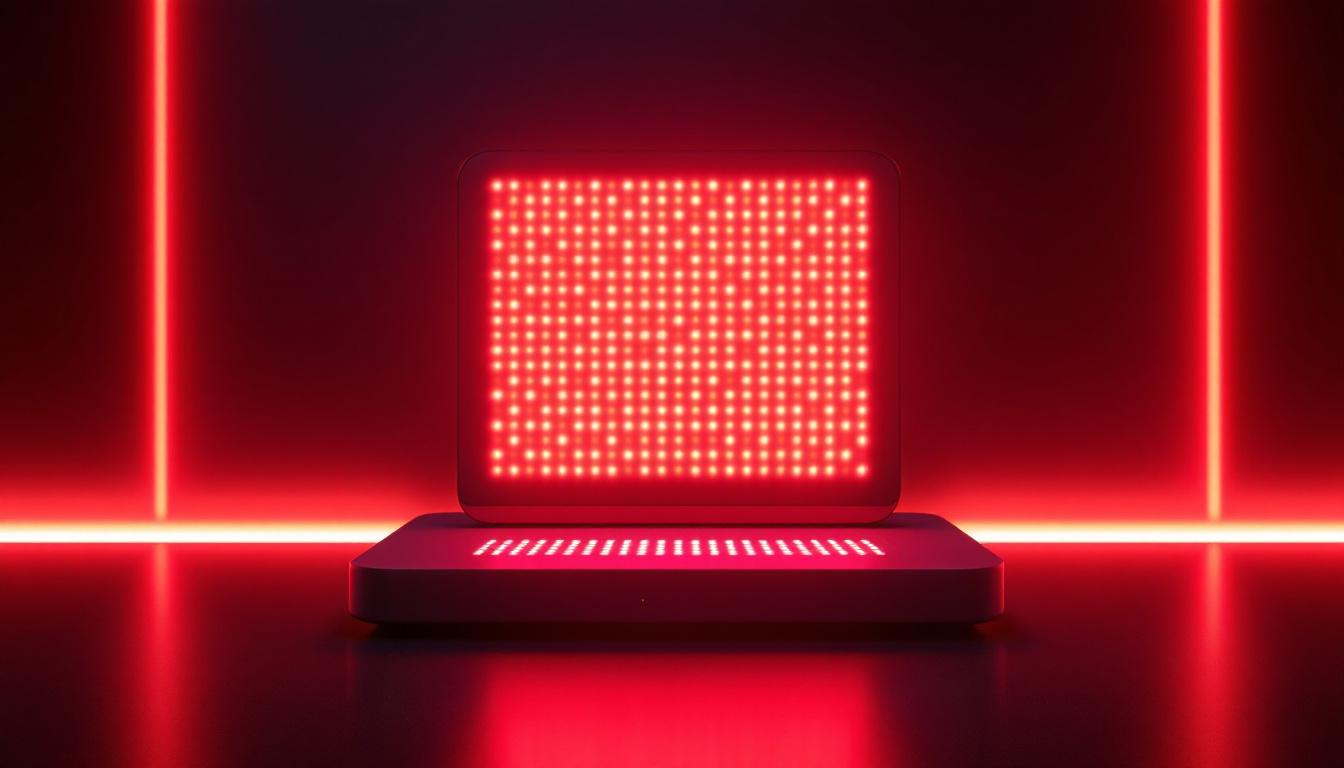
Panels are the most versatile and typically deliver the highest irradiance. They're best for body treatment, joint applications, and full-area coverage. Size ranges from tabletop to full-body floor-standing units.
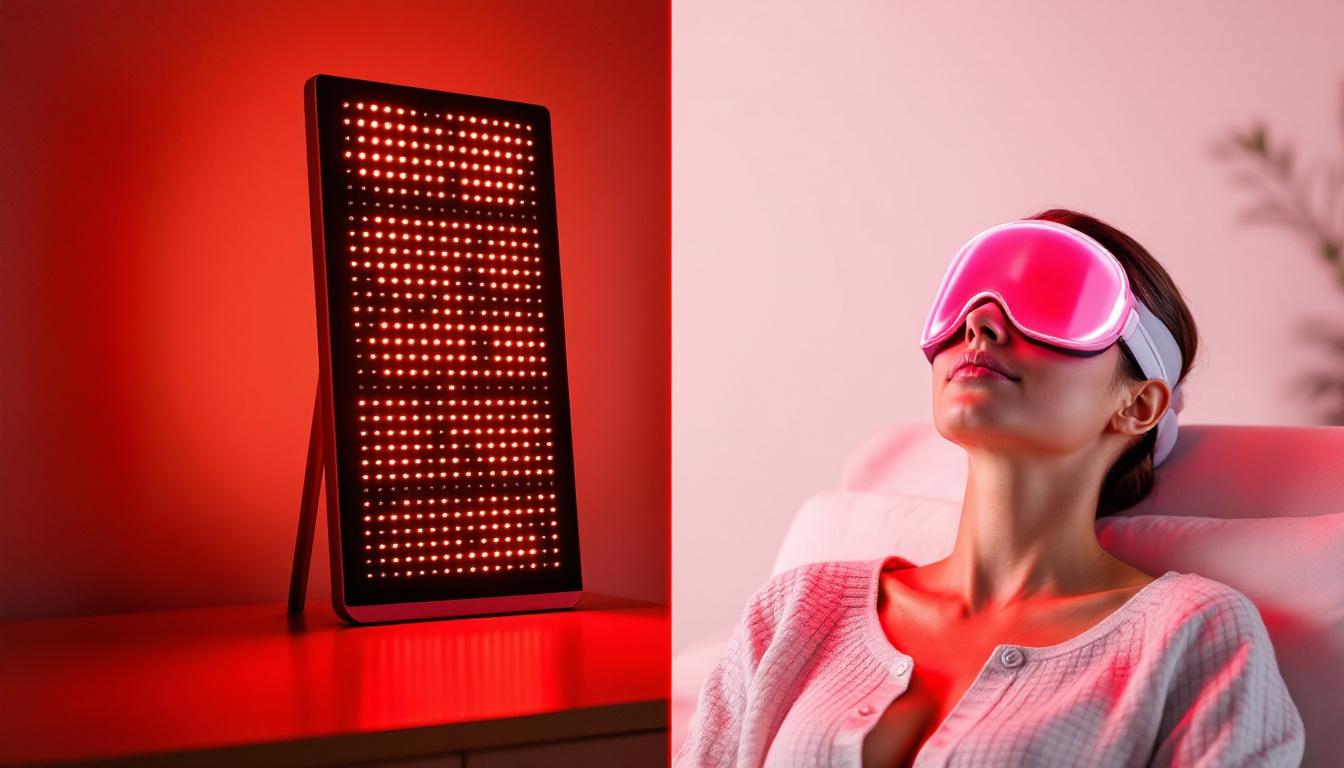
Masks are face-specific. A good polychromatic mask combines 590nm, 630nm, 660nm, and 810nm for comprehensive facial coverage. The limitation is irradiance: masks often deliver lower mW/cm² than panels because they sit directly against skin and need to be safe at contact distances.
Pads and wraps are flexible and can conform to body contours, useful for joint treatment or areas difficult to target with a flat panel. Irradiance is generally lower than panels.
Belts are targeted, useful for waist/lower back applications. Polychromatic belts can be useful for back pain protocols combining surface and deep coverage.
For a specific example of a well-reviewed device in this category, the HG300 red light therapy device review covers what to look for in terms of real-world performance.
Treatment protocols for polychromatic devices
Getting the most from a polychromatic device requires thinking about protocol differently than you might for a standard two-wavelength panel. More wavelengths means more variables to consider.
Distance. For LED panels, six to twelve inches from the skin surface is the standard range. Closer gives more irradiance per wavelength but a smaller treatment area. Farther reduces irradiance but covers more surface. For polychromatic devices, staying within six to ten inches maximizes the therapeutic dose at the shorter wavelengths, which attenuate with distance faster than the longer NIR wavelengths.
Session time. Ten to twenty minutes per session is appropriate for most polychromatic home devices. Because polychromatic devices are delivering energy across more wavelengths simultaneously, the dose accumulates differently than with a two-wavelength panel. Start at ten minutes and assess how your body responds before increasing. More wavelengths doesn't mean you need longer sessions.
Frequency. Three to five sessions per week is the typical recommendation for ongoing therapeutic protocols. Daily sessions are appropriate during acute phases or initial treatment courses. Rest days matter: the biological response to photobiomodulation continues after the session ends, and your tissue needs time to complete the repair and regeneration processes that the light initiates. See how long to do red light therapy for detailed dosing guidance.
Timing. Morning sessions support energy and inflammation management during the day. Evening sessions may support sleep through nitric oxide pathway effects and parasympathetic activation. Some research suggests that circadian context matters for photobiomodulation outcomes. Experiment with timing and track your results.
Avoiding overdose. Polychromatic devices don't eliminate the risk of photobiomodulation overdose, and more wavelengths doesn't mean you should extend sessions. The biphasic dose response applies to each wavelength individually. Can you do too much red light therapy addresses this in detail.
Stacking protocols. Some users combine a polychromatic full-body panel with a targeted mask or pad for specific areas. If you're stacking devices or sessions, give at least four hours between sessions targeting the same tissue, and monitor for signs of over-stimulation like increased inflammation or fatigue.
Tracking progress. Keep a simple log: date, session time, distance, any subjective observations about pain, energy, skin appearance, or other target outcomes. Changes from photobiomodulation tend to be gradual and cumulative. A log makes it much easier to evaluate whether your protocol is working.
The honest verdict on polychromatic therapy
Let's be straight about this.
Polychromatic therapy is not automatically better than standard red light therapy. The wavelength count on the box is not a reliable proxy for device quality or therapeutic effectiveness. And for many people and many conditions, a well-built two-wavelength device at 660nm and 850nm will produce excellent results at lower cost and with a stronger research basis.
The case for polychromatic therapy is real. Different wavelengths do genuinely different things. Covering multiple tissue depths simultaneously is physiologically logical for conditions that span those depths. Professional clinical devices have moved toward polychromatic configurations for good reasons.
But the execution has to be there. A device claiming twelve wavelengths with sub-therapeutic irradiance at eight of them is a marketing exercise, not a therapeutic upgrade. The question isn't "how many wavelengths does this device have?" The question is "how much power is this device delivering at each of those wavelengths, and is any of it actually reaching the tissue I'm trying to treat?"
When polychromatic therapy genuinely earns its premium: when you're treating multiple conditions simultaneously, when your primary condition spans multiple tissue depths, when you're building a long-term wellness protocol and want comprehensive coverage, and when you're evaluating a device from a brand that publishes per-wavelength irradiance data.
When to save your money: when you have one specific condition that maps cleanly to the 660-850nm range, when you're new to light therapy and still building a baseline understanding of how it affects you, and when the polychromatic device you're considering can't or won't tell you its irradiance per wavelength.
The best two-wavelength device from a reputable brand will outperform a cheap polychromatic device every single time. Device quality is the foundation. Wavelength count is the ceiling you're building toward.
Who should prioritize polychromatic? People treating joint pain plus skin aging simultaneously. Athletes dealing with muscle recovery and chronic inflammation at different depths. People with complex neuropathy affecting multiple nerve types. Anyone who's already achieved good results with standard therapy and wants to see if broader coverage advances their outcomes further.
For a sense of how this compares to other therapeutic modalities, red light therapy vs infrared sauna offers useful context on the broader spectrum of light-based and heat-based treatments.
FAQ
What does "poly" mean in red light therapy?
"Poly" simply means many. Polychromatic red light therapy uses multiple wavelengths of light simultaneously rather than one or two. In practice, this means a device that emits light across four to twelve distinct wavelength bands, each targeting different tissue depths and biological processes. It's the opposite of monochromatic therapy, which uses a single precise wavelength.
Is polychromatic therapy better than standard red light therapy?
Not automatically. It has the potential to be more comprehensive because it covers more tissue depths and activates more biological pathways. But that potential is only realized if the device actually delivers meaningful irradiance at each wavelength. A well-built standard two-wavelength device will outperform a cheap polychromatic device that dilutes its power across too many frequencies. Quality first, wavelength count second.
What wavelengths should a polychromatic device have?
At minimum, a legitimate polychromatic device should include 660nm and 850nm (the standard pair) plus at least 630nm and 810nm. A more comprehensive configuration adds 590nm, 830nm, and 940nm. Devices claiming eight or more wavelengths should include some combination of 590nm, 630nm, 660nm, 810nm, 830nm, 850nm, 940nm, and potentially 1064nm. Each additional wavelength should have documented irradiance above 20mW/cm² at the treatment distance.
How does polychromatic therapy work differently from single-wavelength?
Single-wavelength therapy activates cytochrome c oxidase and other chromophores at one absorption peak, at one tissue depth. Polychromatic therapy activates multiple absorption peaks simultaneously across multiple tissue depths. The result is a broader biological response: more nitric oxide release pathways, more ATP production at different tissue levels, more comprehensive anti-inflammatory signaling. The cellular machinery gets more activation signals at once.
Can I get polychromatic benefits from a standard device?
Partially. Standard two-wavelength devices at 660nm and 850nm cover two major therapeutic bands and produce genuine photobiomodulation effects across the tissues those wavelengths reach. What they can't do is deliver simultaneous effects at the tissue depths that fall outside those two bands, like the very surface effects of 590-630nm or the very deep effects of 940-1064nm. If your condition is well-served by the 660-850nm range, you may not need more. If it spans deeper or shallower tissue types, you're leaving some coverage on the table.
What's the difference between polychromatic and full-spectrum light therapy?
They're related but distinct concepts. Polychromatic therapy refers specifically to using multiple therapeutic wavelengths in the red and near-infrared range, typically 590-1064nm. Full-spectrum light therapy is a broader term that can include visible white light, UV, and blue light in addition to red and NIR wavelengths. Full-spectrum devices are more commonly associated with circadian rhythm support and mood disorders. Polychromatic photobiomodulation focuses specifically on the therapeutic NIR and red bands.
Does polychromatic therapy penetrate deeper?
It doesn't penetrate deeper than its longest wavelength, which follows the same physics as any other device. A polychromatic device with 1064nm reaches deep tissue because 1064nm penetrates deeply, not because it has multiple wavelengths. What polychromatic therapy does is cover multiple penetration depths simultaneously. It's not that any single wavelength goes deeper; it's that the combination reaches more depths at once.
Are polychromatic devices safe?
Yes, with the same caveats as any photobiomodulation device. Protect your eyes, don't treat directly over the thyroid without guidance, and follow standard precautions if you take photosensitizing medications or have conditions that contraindicate light therapy. The fact that a device uses more wavelengths doesn't make it more or less safe than a standard device. The safety considerations for each individual wavelength in the therapeutic range (590-1064nm) are well-established, and at appropriate therapeutic intensities, none of them are harmful to healthy tissue.
How many wavelengths is enough?
For most people with one or two primary treatment goals, four to six meaningful wavelengths is sufficient and probably optimal. Below four, you're likely leaving significant therapeutic range uncovered. Above eight, you're in diminishing returns territory unless each additional wavelength is genuinely powering above therapeutic threshold. The sweet spot for most home users is a well-built four to six wavelength device with documented irradiance per wavelength. More than six is fine if the device can actually deliver on all of them.
Do professional clinics use polychromatic therapy?
Yes, and it's becoming increasingly standard in serious photobiomodulation practices. Professional clinical devices almost universally use multi-wavelength configurations because practitioners are treating diverse conditions and need coverage across the therapeutic spectrum. High-end wellness clinics, sports performance centers, and some physical therapy practices have adopted professional polychromatic systems as their primary treatment modality. The cost differential between consumer and professional polychromatic devices is significant, which is why clinical settings tend to offer this as a premium service.
Helpful resources and related guides
If you're building out your understanding of photobiomodulation and light therapy devices, these guides go deeper on the specific conditions and comparisons most relevant to polychromatic therapy:
- Red light vs infrared light: The foundational comparison that explains why wavelength selection matters at the physics level
- Red light therapy for joint pain: Deep dive on protocols and research for one of polychromatic therapy's strongest use cases
- Red light therapy for hair loss: How multi-wavelength coverage addresses both follicle stimulation and scalp circulation
- Red light therapy for neuropathy: Why neuropathy particularly benefits from multi-depth wavelength coverage
- How long to do red light therapy: Session timing and dose guidance that applies directly to polychromatic protocols
External resources
For readers who want to go deeper into the primary research behind polychromatic photobiomodulation:
Hamblin MR and colleagues at Massachusetts General Hospital have published extensively on the mechanisms of photobiomodulation, including cytochrome c oxidase absorption spectra and multi-wavelength dosing. The journal Photobiomodulation, Photomedicine, and Laser Surgery is the primary peer-reviewed venue for this research.
Karu TI's work on the primary mechanisms of photobiomodulation established the foundational understanding of how different wavelengths interact with the electron transport chain and why multiple absorption peaks exist in biological chromophores.
The North American Association for Photobiomodulation Therapy (NAALT) maintains a research bibliography and educational resources for practitioners and informed consumers seeking peer-reviewed literature on clinical applications across wavelength ranges.
Most people will spend their whole life using a two-wavelength red light therapy device and see genuinely good results. And that's fine. The 660nm and 850nm combination is well-researched, widely available, and effective for a broad range of common conditions. You don't need polychromatic therapy to benefit from photobiomodulation.
But if you're the type of person who wants to understand what's actually happening in your cells, polychromatic therapy is where things get genuinely interesting. It's where the biology of photobiomodulation stops being a simple story about two wavelengths stimulating mitochondria and becomes something more layered: a picture of light interacting with tissue at multiple depths, activating different molecular pathways, covering more biological ground in a single session than any single frequency can reach alone.
The technology is real. The science is solid. The marketing around it is, predictably, a mess. But now you have what you need to cut through that. You know what each wavelength does, which conditions benefit from broad spectrum coverage, and what questions to ask before spending money on a polychromatic device.
That's the only thing that matters when navigating a market like this: knowing enough to make a decision on your own terms, without needing to trust the marketing copy.