Red light panel vs mask: which should you buy?
LED panels and face masks both deliver red light therapy, but the differences matter. Learn which device fits your goals, budget, and lifestyle before you spend a dollar.
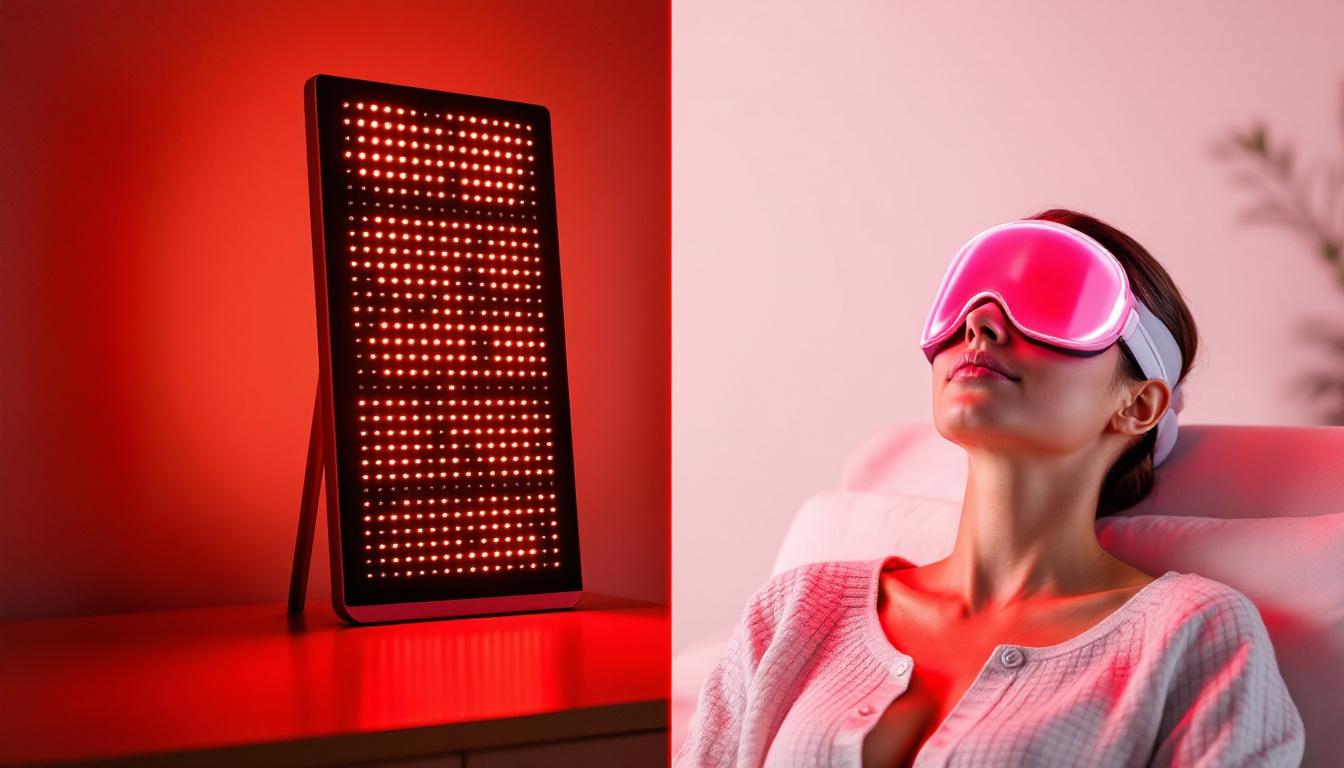
Two people walk into a wellness store. One leaves with a $1,400 floor-standing red light panel. The other walks out with a $395 LED face mask. Both are convinced they made the right choice. Both spent their money based on something they read online. And one of them probably made a mistake.
The red light therapy market grew fast, and it's full of marketing designed to blur the lines between these two very different types of devices. Panel brands will tell you masks are underpowered toys that can't penetrate deep enough to do anything meaningful. Mask brands will tell you panels are impractical, that you'll never stick to a routine that requires standing at attention for 15 minutes a day, and that their FDA-cleared device is the only serious option for skincare.
Neither camp is being straight with you.
The truth is simpler: both work. The question is what they work for. And whether the device you're considering matches your actual goals.
This guide cuts through the marketing noise. We're covering how panels and masks differ mechanically and biologically, what the science says about each, where one device genuinely outperforms the other, and exactly how to choose based on what you're trying to treat. No affiliate bias. No sales pitch. Just the information you need to spend your money right.
What is a red light therapy panel?
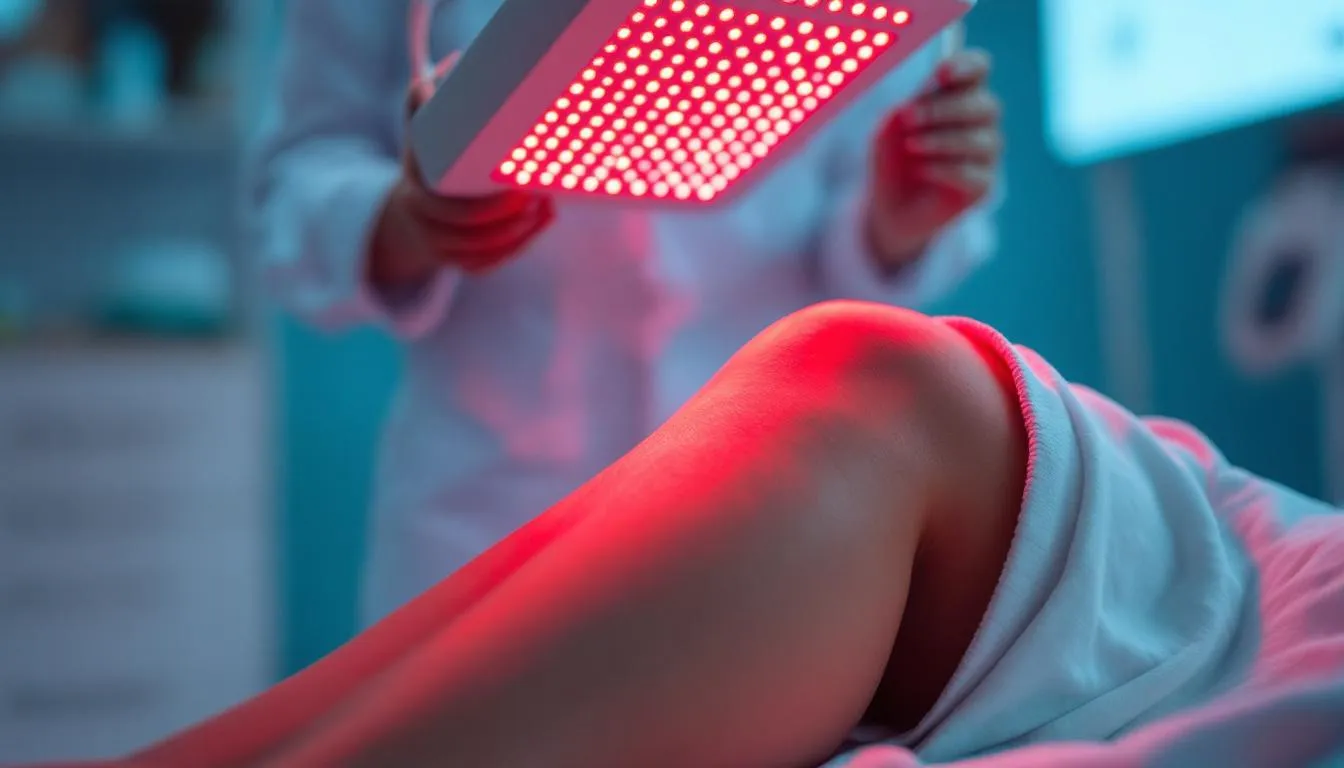
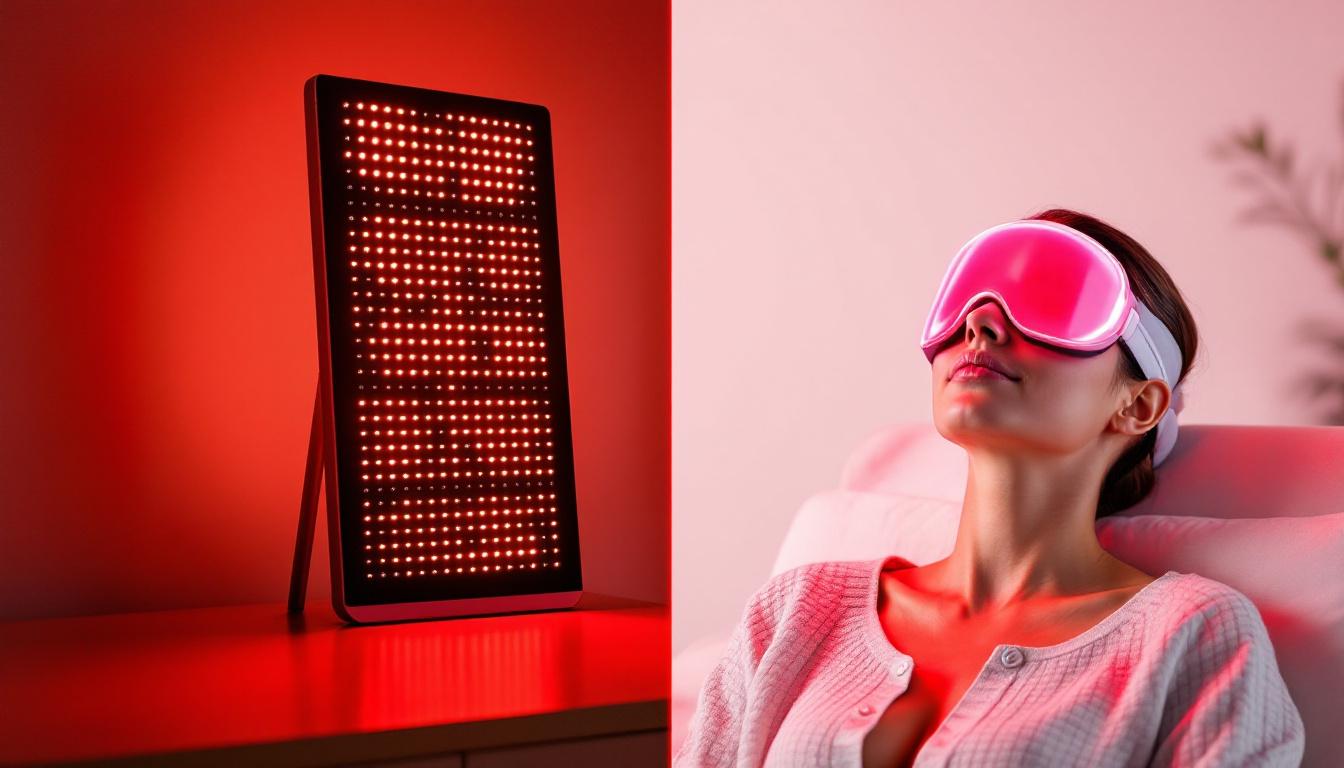
A red light therapy panel is a flat, rectangular array of LEDs mounted in a frame. That's the basic description. In practice, panels span an enormous range: from compact tabletop units about the size of a hardcover book to full-body panels nearly six feet tall. You position yourself in front of the panel at a measured distance, typically 6 to 12 inches for most treatment goals, and the light irradiates whatever body surface is facing it.
Panels stay stationary. You move around them. They're not wearable. They don't conform to anything. They're just light sources with a lot of LEDs arranged to cover a treatment area at therapeutic irradiance.
Most quality panels include two types of LEDs working in combination: visible red wavelengths around 630-660nm and near-infrared (NIR) wavelengths around 810-850nm. These two ranges address different tissue depths. The red handles surface-level effects in the dermis. The NIR penetrates deeper into muscle, tendons, and joint structures. Premium panels add multiple wavelengths across the full therapeutic spectrum: 630nm, 660nm, 810nm, 830nm, 850nm, and sometimes 940nm or 1060nm deep NIR. Each wavelength has slightly different biological absorption characteristics.
The defining advantage of a panel is flexibility. You can treat your face, your neck, your chest, your back, your knees, your scalp. You can stand in front of it for a full-body front session, then turn around and treat your back. With a large panel or two panels positioned strategically, you can irradiate your entire body in one session. That versatility is something a mask can't match by design.
Panels are also generally more powerful in terms of raw irradiance delivery at distance, which we'll get into in detail.
Popular panel brands include Joovv, PlatinumLED (BioMax series), Mito Red, and Hooga. Prices range from roughly $150 for entry-level tabletop units to $1,200-$1,800 for premium full-size panels. That's a wide range that reflects real differences in power output, build quality, wavelength diversity, and company reputation.
What is an LED face mask?
An LED face mask is a wearable device that sits on or just above your face. The LEDs point inward at your skin from close range. Because the mask conforms to your facial shape, it's completely hands-free. You strap it on and do whatever you want for the next 10-20 minutes. Read. Watch TV. Lie back and breathe. The mask just does its thing.
The whole design is oriented toward one goal: treating the skin on your face. Masks don't treat your joints, your back, or your scalp. They treat your face, and ideally every contour of it, including the areas around your nose, chin, and eyes.
Most masks use red wavelengths in the 630-660nm range. Better masks add near-infrared at 830-850nm for some deeper penetration. Some add blue light at 415nm for acne-specific treatment, since blue light at this wavelength kills acne-causing bacteria at the skin surface. A few premium models go further: the CurrentBody Skin Series 2 includes a 1072nm deep NIR channel in addition to its red and near-infrared LEDs.
The form factor creates a real, underappreciated advantage: it makes the routine easy enough that people actually do it. This sounds obvious but it's genuinely the most important variable in home red light therapy. Results don't come from one perfect session. They accumulate over weeks and months of regular use. A device you'll actually use consistently beats a technically superior device you'll use twice a week at best.
Several masks carry FDA 510(k) clearance for specific skin indications. The Omnilux Contour Face (wrinkle reduction and skin tone), the Dr. Dennis Gross SpectraLite FaceWare Pro (fine lines and skin appearance), the Therabody TheraFace Mask Glo, and Celluma FACE all carry this regulatory backing. That clearance is based on clinical testing, not just manufacturing registration.
Popular masks range from about $199 (TheraFace) to $455 (Dr. Dennis Gross SpectraLite). The Omnilux Contour Face, widely cited as the clinical benchmark for home LED masks, retails at $395.
The science behind why any of this works
Both panels and masks deliver photobiomodulation, which researchers also abbreviate as PBM or PBMT. That's the umbrella term for the biological effects of red and near-infrared light on living tissue. The core mechanism is surprisingly well understood for a field this young.
Light in the 600-1100nm range penetrates skin and is absorbed primarily by a mitochondrial enzyme called cytochrome c oxidase (CCO). This enzyme sits in the inner mitochondrial membrane as the terminal acceptor in the electron transport chain. When it absorbs photons at the right wavelengths, it increases electron transport chain activity, produces more cellular ATP, reduces reactive oxygen species (the cause of oxidative stress), and triggers the release of nitric oxide, which relaxes blood vessels and improves local circulation.
These aren't small effects. More ATP means cells have more energy to do their jobs. Less oxidative stress means less cellular damage and inflammation. Better blood flow means more oxygen and nutrients reaching the tissue being treated. The downstream results include increased collagen synthesis from fibroblasts, accelerated wound healing, reduced inflammatory marker expression, improved muscle cell repair, and stimulation of hair follicle cells in the anagen growth phase.
This is why photobiomodulation has been studied across such a wide range of conditions: skin aging, acne, wound healing, joint inflammation, muscle soreness, neuropathy, hair loss, and more. The primary mechanism, cytochrome c oxidase absorption, is universal across these different applications. What changes is the wavelength, the dose, and the tissue depth being targeted.
Cytochrome c oxidase has absorption peaks at approximately 620nm, 665nm, 811nm, and 970nm. These peaks correspond closely to the wavelengths used in effective photobiomodulation devices. Red light around 630-660nm hits the first two peaks. Near-infrared around 810-850nm hits the third. This isn't coincidence. Researchers mapped these absorption peaks and used them to identify which wavelengths drive the strongest cellular response.
Step 10-20nm off an absorption peak and you get a measurably weaker response from the same irradiance. This is why wavelength specificity matters. It's also why the "red light" from a hardware store bulb or a basic sauna heater produces no photobiomodulation effect. The wavelength has to land in the right range.
How deep does light penetrate?
- 630-660nm (visible red): Penetrates approximately 8-20mm into tissue, reaching the dermis, upper subcutaneous layer, and superficial muscle
- 810-850nm (near-infrared): Penetrates 20-50mm, reaching deeper muscle tissue, tendons, ligament insertions, joint capsules, and periosteum
- 1060nm (deep NIR): Penetrates even further, with some evidence of effects at bone level
For facial skin goals, the 630-660nm range does most of the work. Collagen-producing fibroblasts live in the dermis, which is well within penetration range of red light. For conditions involving joints, muscles, tendons, or inflammation in deeper tissue, you need 850nm NIR at adequate power density to reach the treatment site. And this depth distinction is precisely where panels and masks diverge most significantly.
Irradiance: the number everyone ignores but shouldn't
Most people shopping for red light devices focus on the wrong metrics. LED count. Total wattage. Wavelength variety. These matter, but none of them tells you what you actually need to know. The single most important specification is irradiance, measured in milliwatts per square centimeter (mW/cm2).
Irradiance is power density: how many photons hit your skin per unit area per unit time. It determines how quickly therapeutic light energy accumulates in tissue. The actual therapeutic effect depends on the total energy dose delivered, expressed in joules per square centimeter (J/cm2). The math is straightforward:
J/cm2 = (mW/cm2 × seconds) ÷ 1000
For skin and anti-aging goals, most photobiomodulation research suggests 10-20 J/cm2 per session as a useful target range. For deep tissue goals like muscle recovery and joint inflammation, protocols typically target 20-40 J/cm2. At 100 mW/cm2, you reach 10 J/cm2 in just 100 seconds, or a little over a minute and a half. At 10 mW/cm2, you need 1,000 seconds, about 17 minutes, to hit the same dose.
Here's where panels and masks genuinely diverge:
Masks typically deliver 5-35 mW/cm2 at the skin surface. The Omnilux Contour Face, one of the strongest clinical-grade masks available, delivers approximately 30-35 mW/cm2 at contact distance. Many mid-range masks deliver 15-25 mW/cm2. Budget masks often land at 5-15 mW/cm2. A 10-minute session at 30 mW/cm2 delivers about 18 J/cm2, which is well within the therapeutic window for skin goals.
Quality panels deliver 60-200+ mW/cm2 at 6 inches of treatment distance. The Mito Red MitoPRO X and PlatinumLED BioMax 900 both deliver around 160-202 mW/cm2 at 6 inches in independent testing. Even a budget Hooga panel typically delivers 50-80 mW/cm2. At 160 mW/cm2, you hit 10 J/cm2 in 62 seconds.
The raw irradiance gap between panels and masks is real: 4-10x more power density from a panel at 6 inches compared to most masks. For deep tissue applications, this difference is decisive. For facial skin specifically, the comparison is more nuanced.
Masks sit at contact or near-contact distance from the skin. As you move away from any LED source, irradiance falls rapidly, following the inverse square law. Double the distance and you get one-quarter the irradiance. A panel at 6 inches is competing at very different effective skin distances than a mask pressed against the face. For equivalent skin surface doses on the face, a quality mask delivering 30 mW/cm2 at contact can match or outperform what a panel delivers at treatment distance.
The panel's irradiance advantage becomes decisive for deep tissue applications. No mask, regardless of how long you wear it or what wavelengths it includes, can drive meaningful 850nm NIR photobiomodulation into a knee joint or deep muscle tissue. The physics don't work. The irradiance ceiling on masks isn't high enough to compensate for the additional distance the photons need to travel through dense tissue.
A warning about irradiance marketing. This is a category with documented measurement fraud. Many brands inflate irradiance numbers by measuring at 0 inches from the LED surface rather than at actual treatment distances, or by using solar meters calibrated for the full visible spectrum rather than specific LED wavelengths. Solar meter readings systematically overestimate LED irradiance at therapeutic wavelengths. This is a known problem documented by independent testing labs. Always look for third-party irradiance data at 6 inches. Reputable brands publish independent lab results. Brands that only show surface measurements or "peak" irradiance without distance specification are hiding something.
Panel advantages: when a panel is the right tool
Full-body coverage changes everything
This is the obvious difference and it matters more than most panel marketing makes clear. A panel treats whatever surface faces it. Neck. Chest. Back. Shoulders. Knees. Calves. Scalp. You can rotate during a session to treat different areas, or use multiple panels simultaneously for whole-body coverage.
A mask treats your face. That's the complete list of what it treats.
If you have joint pain anywhere in your body below the chin, a mask cannot help. If you want the muscle recovery benefits that endurance athletes and strength trainers use red light therapy for, you need a panel. If you're dealing with back pain, knee arthritis, plantar fasciitis, or any condition involving tissue more than a few centimeters below your face, a mask is the wrong tool.
Near-infrared depth reaches muscle, joints, and connective tissue
The 850nm NIR wavelengths in most quality panels penetrate 20-50mm into tissue. At the irradiances panels deliver, that penetration depth translates into meaningful dose delivery at muscle and joint level. This is the mechanism behind the athletic recovery benefits, the joint pain improvements, and the anti-inflammatory effects that clinical photobiomodulation research has documented.
Red light therapy for joint pain is one of the most studied applications in photobiomodulation. Multiple randomized controlled trials have shown benefits for knee osteoarthritis, rheumatoid arthritis flares, and musculoskeletal pain conditions. The mechanism requires 850nm NIR at adequate power density reaching joint tissue. A panel can do this. A mask cannot, regardless of its NIR wavelength listing.
A 2016 systematic review in Laser Therapy found that photobiomodulation applied before exercise significantly reduced delayed-onset muscle soreness and improved performance markers in subsequent sessions. A 2025 meta-analysis confirmed these findings, showing consistent reduction in creatine kinase and lactate dehydrogenase, both markers of muscle damage, following PBMT. These effects require NIR light at panel-level irradiance applied to the muscles being treated.
Versatility across multiple conditions
One mid-range panel handles skin health, muscle recovery, joint inflammation, scalp and hair follicle stimulation, and general wellness protocols. You buy it once and it grows with your goals. Someone who starts using it for facial skin today might develop knee arthritis in five years. They're already equipped.
A mask bought for one purpose stays limited to that purpose. Adding body or deep tissue treatment later means buying additional equipment.
Hair loss treatment requires scalp access
Red light therapy for hair loss has a growing clinical evidence base, particularly for androgenic alopecia. The mechanism involves stimulating hair follicles in the telogen (resting) phase back into the active anagen growth phase, improving scalp circulation, and boosting ATP production in follicle cells.
Treating hair loss requires irradiating the scalp. A panel positioned above or in front of the head delivers red and NIR light to the scalp effectively. A face mask doesn't cover the scalp. For anyone motivated by hair thinning, the panel is the only practical home option without buying a dedicated scalp device.
Multiple wavelength options for comprehensive coverage
Premium panels include 6-7 distinct wavelengths across the full therapeutic spectrum. PlatinumLED's BioMax 900 includes 480nm, 630nm, 660nm, 810nm, 830nm, 850nm, and 1060nm. Each wavelength hits slightly different cytochrome c oxidase absorption peaks and reaches different tissue depths. Together, they create more comprehensive photobiomodulation than a single wavelength can provide.
Most masks include 2-3 wavelengths. Some only include one. The multi-wavelength advantage belongs firmly to the panel category.
Mask advantages: when a mask is the smarter choice
Hands-free convenience is a genuine clinical advantage
Don't underestimate how much this matters. Consistency is the most important variable in any home photobiomodulation protocol. Results don't come from occasional use. They accumulate over weeks and months of regular sessions. The device you'll actually use every day beats the technically superior device you skip four days out of seven.
Sitting in front of a panel requires something. You have to position yourself correctly. You have to stay at the right distance. You can listen to audio, but reading or scrolling is awkward from 6 inches away. For some people, a 10-15 minute panel session fits naturally into their routine. For others, it's an interruption that gets deprioritized.
A mask takes about two seconds to put on. Then you do whatever you want. You watch TV, read, scroll your phone, meditate, or just close your eyes and rest. The session completes while you're doing something else. That frictionless experience significantly improves adherence, and adherence is what produces results.
Plenty of panel users report inconsistent use. They forget. The session feels like a dedicated block of time they need to carve out. People who use quality masks tend to stick with them precisely because the barrier is so low.
Designed specifically for facial contours
A good mask is engineered around the shape of a human face. The Omnilux Contour Face uses medical-grade flexible silicone that molds to the curves of your forehead, cheeks, nose bridge, and chin. Every LED maintains a consistent, close distance from the skin surface regardless of facial geometry.
Sitting in front of a flat panel, the center of your face might be 6 inches away, but the sides of your cheeks, your nose, your chin, and the hollows around your eyes will all be at different distances. That variation reduces irradiance uniformity across the face and creates zones that receive less light than others.
A well-designed flexible mask eliminates this problem entirely. Consistent coverage, consistently close distance, every session.
Safe treatment of the periorbital area
This is an underappreciated difference between panels and masks. When using a panel, appropriate eye protection is necessary. LED panels at therapeutic irradiances can cause photochemical retinal damage with prolonged exposure or direct viewing. Red light therapy goggles or blackout eye protection should be worn.
But goggles block the periorbital area: crow's feet, the skin under the eyes, the outer eye corners, and the fine lines around the eye socket. These areas can't receive light while the eyes are protected by opaque goggles. Some users briefly remove goggles to expose the eye area, but this requires careful management of distance and angle.
Quality LED masks handle this differently. They're designed from the ground up for safe use near the eyes. Common approaches include recessed LEDs above the eye socket that angle away from the pupil, integrated opaque silicone eye shields that protect the pupils while leaving the periorbital skin exposed, LED-free zones directly over the eyes, and lower irradiance in the periorbital zone than the cheek and forehead zones.
The Omnilux Contour Face, for example, uses this design to safely treat the crow's feet and under-eye skin that goggles would block in a panel session. Its FDA clearance includes safety testing for ocular exposure at the mask's design parameters.
If treating the periorbital area is important for your anti-aging goals, and for many people it's the primary motivation, a mask often delivers meaningful access that a panel can't practically match.
FDA clearance for facial indications provides regulatory confidence
Several masks carry 510(k) FDA clearance for specific claims:
- Omnilux Contour Face: cleared for wrinkle reduction and improved skin tone
- Dr. Dennis Gross SpectraLite FaceWare Pro: FDA-cleared, with a clinical study showing 97% improvement in fine lines after 10 weeks
- Therabody TheraFace Mask Glo: FDA-cleared
- Celluma FACE: cleared for acne and skin rejuvenation
510(k) clearance means FDA has reviewed the device and found it substantially equivalent to an already-cleared device for a specific medical use. It's not the same as FDA approval, which requires higher-level clinical trials, but it represents real regulatory scrutiny and is far more meaningful than the FDA registration that many panel brands display. (FDA registration is just a registration. It confers no safety or efficacy evaluation.)
Most red light panels carry CE marking for European conformity and FCC certification for electromagnetic compliance. These are useful but don't carry the same clinical weight as 510(k) clearance for specific indications.
Skin-focused value at lower entry cost
If your goals are entirely facial, a quality mask often provides better cost-to-value than a comparable-cost panel. A $300 entry-level panel is less powerful than most reviews suggest, often delivering 40-60 mW/cm2 at 6 inches. A $395 Omnilux delivers 30-35 mW/cm2 at contact distance, with the additional benefits of hands-free use, facial contour conformity, periorbital access, and 40+ clinical studies backing its specific design.
For someone who only wants to treat their face, the mask typically wins on the combination of convenience, facial specificity, and regulatory backing.
Treatment protocols: what to actually do
Mask protocol
Session length: 10-20 minutes. Most masks recommend 10 minutes per session. Some high-irradiance masks like the Dr. Dennis Gross SpectraLite recommend as little as 3 minutes because of their power density. Follow the manufacturer's specific protocol for your device.
Frequency: 3-5 times per week is the general recommendation, with many protocols suggesting daily use for the first 4-8 weeks to build cumulative benefit, then dropping to maintenance frequency of 3-4 sessions per week. Daily is fine. Twice daily is overkill and probably won't help.
Skin preparation: Use on clean, bare skin. No serums, sunscreen, or moisturizer between your skin and the mask during treatment. Some products contain compounds that can absorb or scatter the light, reducing delivery. Others, particularly retinoids and photosensitizing actives, can increase skin sensitivity to light in ways that aren't always beneficial. Apply your serums and moisturizer after the session, not before.
Results timeline: Most users report visible improvements in skin texture and tone within 4-6 weeks of consistent near-daily use. Fine line reduction typically becomes noticeable at 6-10 weeks with continued use. Acne improvement often appears within 2-4 weeks for the inflammatory component. These are typical ranges, not guarantees, and results vary based on skin type, condition severity, and consistency of use.
What to watch for: If you're taking medications that cause photosensitivity (certain antibiotics, some retinoids, St. John's Wort, certain diuretics), check with your doctor before starting LED therapy. Most people tolerate it well, but photosensitizing drugs can increase skin reactivity.
Panel protocol
Session length: 5-20 minutes depending on your panel's irradiance and treatment goals. At 100+ mW/cm2, most skin goals are reached in 5-10 minutes. For deep tissue applications like joint inflammation or muscle recovery, protocols typically run 10-20 minutes per treatment area. More is not always better. There's a biphasic dose-response curve: doses above approximately 60 J/cm2 per treatment site can paradoxically reduce the therapeutic response.
Treatment distance: 6-12 inches is standard for most applications. Closer for lower-irradiance panels that need the proximity boost. Farther for very high-irradiance panels when you want to cover a larger area at slightly lower dose per session. Match your distance to the verified irradiance data for your specific panel.
Frequency: 3-5 times per week for most goals. Daily is generally safe; most research doesn't show meaningful benefit from sessions more frequent than once per day per treatment site. Give your tissue 24 hours between sessions at the same spot.
Dose calculation: Target 10-20 J/cm2 per session for skin and superficial goals. Target 20-40 J/cm2 for deep tissue goals. Use your panel's independently verified irradiance to calculate session time: time in seconds = (target J/cm2 × 1000) ÷ mW/cm2. For specifics on how long to use red light therapy for different conditions, our dosing guide covers this in depth.
Results timeline: Skin improvements from panel use follow similar timelines to masks: 4-8 weeks of consistent use for visible changes. Muscle soreness benefits can often be felt within 1-2 weeks of incorporating pre or post-workout sessions. Joint pain and chronic inflammation conditions typically take 4-8 weeks, with some users reporting improvement in acute conditions within 2-4 weeks.
Head-to-head comparison by condition
Let's be concrete about this. Rather than vague preferences, here's how the choice breaks down by treatment goal:
| Condition | Best choice | Why |
|---|---|---|
| Facial wrinkles and fine lines | Mask | Contour conformity, periorbital access, convenience for adherence |
| Facial acne | Mask (red + blue) | Targeted blue light for bacteria, easy daily use, FDA clearance |
| Facial hyperpigmentation | Either | Both work; mask wins on periorbital access |
| Joint pain, osteoarthritis | Panel | NIR depth and irradiance required; masks cannot reach joints |
| Muscle recovery post-exercise | Panel | 850nm NIR at panel irradiance for deep tissue |
| Hair loss (scalp) | Panel | Masks don't cover the scalp |
| Neck and décolleté skin | Panel | Masks are anatomically face-only |
| Back pain or spine inflammation | Panel | Anatomically impossible with any mask |
| Neuropathy or nerve pain in limbs | Panel | Deep tissue NIR required at limb treatment sites |
| General wellness and energy | Panel | Full-body access and systemic NIR benefits |
| Wound healing | Panel | Higher irradiance, flexible positioning |
| Overall skin tone and texture | Either | Mask wins on convenience; panel wins on body coverage |
If you're treating your face and nothing else, a mask wins on convenience, contour design, and often on consistency. If you're treating anything from the neck down, you need a panel.
Buying guide: what specs actually matter
For masks
Irradiance at contact distance: Look for published data showing 25-35 mW/cm2 at the skin surface. Less than 15 mW/cm2 is weak and will require very long sessions to reach therapeutic doses. Brands like Omnilux publish their irradiance data clearly. If a brand won't tell you their irradiance, that's a problem.
Wavelengths: 633nm or 660nm red plus 830nm or 850nm NIR is the baseline for anti-aging. Adding blue (415nm) adds acne-treating capability. Some premium masks add 1072nm deep NIR. Whatever the claims, you want specific nm values, not vague language like "therapeutic red" or "clinically tested wavelengths."
Eye safety design: Ask specifically how the mask handles eye area treatment. Integrated shields, angled LEDs, opaque padding over the pupils, or LED-free zones over the eyes. Budget masks sometimes skip this entirely, meaning you can't safely treat the crow's feet and periorbital area that are often the main motivation for buying.
FDA clearance vs registration: For anti-aging and acne indications, look for 510(k) clearance. This is what Omnilux, Dr. Dennis Gross, Therabody, and Celluma carry. Not FDA registration, which just means the manufacturer filed paperwork and carries no efficacy evaluation.
Clinical backing: Omnilux is referenced in over 40 peer-reviewed clinical studies. CurrentBody and Dr. Dennis Gross have conducted independent clinical trials. These brands have real evidence behind their designs. Brands that cite "clinical studies" without being able to link to published research are citing marketing, not science.
Coverage and conformity: A flexible silicone mask that covers the full face including nose and chin is significantly better than a rigid plastic mask with gaps or limited coverage around the edges. More complete LED coverage of the full face produces more even results.
Warranty: Minimum 1 year. 2-year warranty is a sign of confidence in the device. Less than 1 year is a red flag.
For panels
Irradiance at 6 inches, independently verified: This is the number that matters. Aim for 60+ mW/cm2 at 6 inches for serious results. 100-200 mW/cm2 is premium territory. Never trust irradiance data that isn't backed by independent lab testing at treatment distance. Demand to see the third-party testing report, not just the manufacturer's claim.
Wavelengths: 660nm red plus 850nm NIR is the minimum viable configuration. Multi-wavelength panels adding 630nm, 810nm, 830nm, and for premium options 1060nm, offer more comprehensive photobiomodulation coverage across tissue depths.
Treatment area coverage: Know what you intend to treat and match panel size accordingly. A 12"x6" tabletop panel works for localized treatment or facial use. For full-body or back sessions, you need a larger panel, at least 12"x24" or bigger. Full-body coverage requires large or multiple panels.
Certifications: CE marking (European conformity) and FCC certification (electromagnetic compliance, required for US sale) should both be present. ETL or UL listing for electrical safety is a meaningful bonus. IEC 60601-1 compliance indicates medical-grade electrical safety standards.
Warranty: Quality panels come with 2-3 year warranties. Joovv offers 2 years. PlatinumLED and Mito Red offer 3 years. Less than 1 year is a pass.
Cost per watt of output: This varies significantly by brand. Joovv runs approximately $21 per watt of output power, which is the highest in the category. Mito Red delivers approximately $8-9 per watt and matches Joovv on independent irradiance testing. PlatinumLED BioMax is similarly positioned. Budget brands like Hooga deliver $3-5 per watt but with less third-party verification. The premium brand tax in this category is real and doesn't always correspond to performance.
Red flags to avoid
Some warning signs apply across both categories and you should walk away when you see them:
No irradiance data at treatment distance. If a brand only publishes "surface irradiance" or irradiance at 0 inches from the LED surface, that number is meaningless for predicting therapeutic benefit. Irradiance falls off dramatically with distance. Surface irradiance of 200 mW/cm2 can mean 30-40 mW/cm2 at 6 inches. Always ask for 6-inch data.
Solar meter measurements presented as LED irradiance. This is a documented manipulation in the red light therapy industry. Solar meters are calibrated for the full visible and UV spectrum from sunlight, not for specific LED wavelengths. When used to measure red and NIR LEDs, they overestimate irradiance by a significant factor. Independent testing uses specialized sensors calibrated for specific wavelength ranges. Brands that use solar meter data either don't know better or are using it deliberately to inflate their numbers.
"FDA approved." LED devices cannot receive FDA approval. The correct regulatory pathway for medical devices is 510(k) clearance. Approval requires clinical trials the FDA evaluates directly. Any brand claiming "FDA approved" is either unaware of the distinction or deliberately misleading consumers.
Vague wavelength descriptions. "Deep red," "therapeutic spectrum," "near-infrared blend" without specific nm values means the brand doesn't want you to look up what those wavelengths actually do or verify them independently. Quality brands specify exact wavelengths because they're proud of them.
Extraordinary irradiance claims without independent verification. Any panel claiming more than 200 mW/cm2 at 6 inches should have independent accredited lab data available. Some legitimate devices hit this range. Many claims at this level are inflated. GembaRed and Light Therapy Insiders maintain independent testing databases worth consulting before purchase.
Return policy under 30 days, or warranty under 1 year. Brands that don't let you try the device and return it are telling you they don't stand behind what they sell. Red light therapy results take weeks to appear. A 30-day return window is the absolute minimum. Many quality brands offer 60-90 days.
The combined approach: why some people buy both
Here's the thing neither panel companies nor mask companies tend to mention: a lot of serious home users eventually use both. Not because they couldn't decide, but because the two devices don't actually duplicate each other's benefits.
The protocol is straightforward. Set up your panel at the correct treatment distance, targeting whatever body area needs attention, typically the chest, neck, or upper body. Put on your mask. Sit in front of the panel for 10-15 minutes. The panel treats the body area it's facing while the mask handles the face in detail. Both run simultaneously. There's no interference between the two light sources.
The synergy is real. The panel adds NIR depth and systemic photobiomodulation to whatever's in range. The mask delivers precise, contour-following facial treatment at close distance. The result is a comprehensive session that a single device can't replicate.
The cost of a combined setup is significant: a quality mask ($380-$455) plus a solid mid-range panel ($300-$600) puts you in the $680-$1,055 range. That's a real investment. But compared to monthly professional red light sessions at a med spa, typically $30-$100 each, a home combination setup pays for itself within one to two years of regular use, and then runs essentially free.
Many experienced users start with one device and add the second 6-12 months later when they have a clear sense of what each does and what they want to add. Starting with a panel is usually the more versatile entry point. Starting with a mask makes more sense if facial anti-aging is the only goal.
Our verdict
After going through all of this, the straightforward answer looks like this:
Buy a mask if facial anti-aging, skin tone, and texture are your primary goal. If you want the most convenient routine you'll actually stick to. If you're specifically treating crow's feet and periorbital skin. If you want FDA clearance for a specific facial indication. If your budget is $200-$500 and your face is the only area you're treating.
Buy a panel if you have joint pain, arthritis, or any musculoskeletal issue. If you want muscle recovery benefits from training. If you're experiencing hair thinning. If you want to treat your neck, chest, back, or anywhere below the chin. If you're interested in systemic, full-body photobiomodulation for general wellness and energy. If you want a device that can grow with your health goals over time without being replaced.
Buy both if you have serious facial skin goals alongside body or systemic goals. If your budget allows. If you're committed enough to a home wellness protocol to use both regularly.
The mistake isn't choosing one over the other. The mistake is choosing the wrong one for the wrong reasons, based on a compelling marketing video rather than a clear-eyed look at what you're actually trying to treat.
Red light therapy works. The underlying photobiomodulation mechanisms are real and documented in peer-reviewed literature. But it works for specific things, through specific mechanisms, at specific wavelengths and doses, applied consistently over weeks. Match the device to the condition. Use it consistently. The light does the rest.

Frequently asked questions
Is a red light panel stronger than a mask?
In terms of raw irradiance at treatment distance, yes, quality panels are generally stronger. Premium panels deliver 100-200+ mW/cm2 at 6 inches, while most masks deliver 5-35 mW/cm2 at contact. But for facial skin goals specifically, proximity partially compensates for this gap. A mask pressed close to the face can deliver equivalent skin-surface doses to a panel used at distance. The panel's power advantage becomes decisive for deep tissue and full-body applications that a mask simply cannot access.
Can I use a red light mask for my neck or chest?
Technically you could hold a mask against your neck or chest, but masks aren't designed for this. Coverage is limited to the mask's face-shaped footprint, and most masks aren't rated for prolonged contact with non-facial skin. A panel is the right tool for neck, chest, and décolleté treatment. It's faster, more effective, and designed for the purpose.
How long does it take to see results with a mask versus a panel?
For facial skin goals, most users report visible improvement in skin texture and tone within 4-6 weeks of consistent daily or near-daily mask use. Fine line reduction typically appears at 6-10 weeks. Panel users targeting facial skin on a similar schedule see comparable timelines. For joint and muscle conditions treated with a panel, acute soreness and inflammation sometimes respond within 1-2 weeks, while chronic conditions typically need 4-8 weeks of regular sessions.
Can you overdo red light therapy?
Yes. There's a well-documented biphasic dose-response curve in photobiomodulation research: doses above approximately 60 J/cm2 per treatment site per session can paradoxically reduce or eliminate the therapeutic response. For masks, following manufacturer protocols, typically 10-20 minutes per session, keeps you comfortably below this threshold. For panels, calculate your dose using your device's verified irradiance and stay within recommended session times. More is genuinely not always better here.
Do red light masks work for acne?
Yes, particularly masks that include blue light at 415nm alongside red. Red light at 630-660nm reduces inflammation in the dermis. Blue light at 415nm kills Propionibacterium acnes (C. acnes), the bacteria most associated with inflammatory acne, at the skin surface. Clinical studies show 66% reduction in inflammatory acne lesions after 8 weeks of consistent use with red and blue combination LED masks. Several FDA-cleared masks are specifically indicated for acne treatment alongside anti-aging benefits.
Is it safe to use a red light panel every day?
For most people, daily use within recommended session times and distances is safe. The main precaution is avoiding overdose: keep doses per treatment site below 60 J/cm2 per session and allow at least 24 hours between sessions on the same area. For specific guidance on how often to use red light therapy based on your goals and device, our dosing guide covers this in detail.
What's the best LED face mask available?
Based on clinical evidence, design quality, and independent testing, the Omnilux Contour Face is consistently cited at the top. It's FDA-cleared, uses medical-grade flexible silicone that conforms to facial contours, delivers approximately 30-35 mW/cm2, and is referenced in over 40 peer-reviewed clinical studies. The Dr. Dennis Gross SpectraLite FaceWare Pro and CurrentBody Skin LED Mask are strong alternatives. Each has slightly different wavelength profiles and design characteristics worth comparing against your specific goals.
Can you use a red light mask with retinol or vitamin C serum?
You shouldn't apply retinol or photosensitizing actives immediately before a mask session. These products can increase skin photosensitivity and may also absorb or scatter light, reducing delivery to the skin. Use your mask on clean, bare skin. Apply serums and actives after the session. Plain hyaluronic acid applied immediately after a session can be beneficial.
Is there a risk to the eyes from red light therapy panels?
Yes, with direct exposure. Never look directly at a high-irradiance LED panel without protection. The concentrated red and NIR output at therapeutic irradiances can cause photochemical retinal damage with prolonged direct viewing. Eye protection is necessary during panel sessions. Quality LED masks are specifically engineered for safe use near the eyes and include design features that prevent hazardous direct LED exposure to the pupil. Always verify the specific eye safety mechanism in any mask before purchasing.
What's the difference between a panel and an infrared sauna for health benefits?
Red light therapy and infrared saunas are genuinely different therapies with different primary mechanisms. Red light and NIR panels work through photochemical reactions in cells, specifically cytochrome c oxidase activation in mitochondria, driven by photons at specific wavelengths. Infrared saunas work primarily through thermal effects: raising body temperature to trigger heat-stress responses including increased circulation, sweating, and heat shock protein production. The wavelengths partially overlap in the far-infrared range, but the mechanisms and therapeutic applications are distinct. They're complementary rather than interchangeable.
Is a home device worth it compared to professional sessions?
For consistent, long-term use, the math strongly favors home equipment. Professional red light therapy sessions at spas, tanning salons, or med spas typically cost $20-$100 per visit. At 3-4 sessions per week, that's $3,000-$10,000 per year. A quality panel at $600-$1,200 lasts years with minimal maintenance cost. A quality mask at $380-$455 does the same. The break-even point is typically 3-12 months of regular home use, depending on the comparison. After that, it's essentially free.
Can you use a panel and a mask at the same time?
Yes, and many experienced users do exactly this. You wear the mask while sitting in front of the panel. The panel treats the body area it's facing while the mask handles the face simultaneously. There's no interference between the two light sources. This combined session takes 10-15 minutes and delivers both precise facial treatment from the mask and systemic or deep tissue benefits from the panel.
Helpful resources
- How long to do red light therapy: dosing guide
- Can you do too much red light therapy?
- Do you need eye protection for red light therapy?
- Red light therapy goggles: what to use and when
- Red light therapy glasses: protecting your eyes
- Red light therapy for joint pain: the science
- Red light mask before and after: realistic expectations
- Red light therapy face before and after
- Red light therapy for hair loss: what actually works
- Red light therapy for hyperpigmentation
Related guides
- Red light body contouring: how it works and results
- Red light therapy goggles: the complete buying guide
- Red light therapy for feet: pain relief and circulation
- Full block red NIR light glasses: what to look for
- Red light therapy eyes open or closed: what the science says
External resources
- Omnilux Contour Face clinical data
- Dr. Dennis Gross SpectraLite clinical study results
- Mito Red Light irradiance and dosing guide
- GembaRed independent irradiance testing and red flags
- PubMed: LED light therapy in dermatology systematic review
- PubMed: Photobiomodulation for muscle recovery meta-analysis
Somewhere out there is a version of you who read five comparison articles, got confused by the conflicting claims, bought the wrong device, used it twice, and moved on. That's a very common outcome in this category. The marketing is designed to make every device sound like the obvious choice for everyone. It isn't.
Know what you're treating. Match the device to the mechanism. Use it on clean skin, at the right distance, on the right schedule. Give it eight weeks before you evaluate the results. That's the whole protocol. The rest is just details, and now you have the details.