Red light therapy for feet: A complete guide to treating plantar fasciitis, neuropathy, and foot pain
Everything you need to know about using red light therapy for foot pain, plantar fasciitis, neuropathy, circulation, and recovery. Science-backed protocols, dosing guides, and device recommendations.
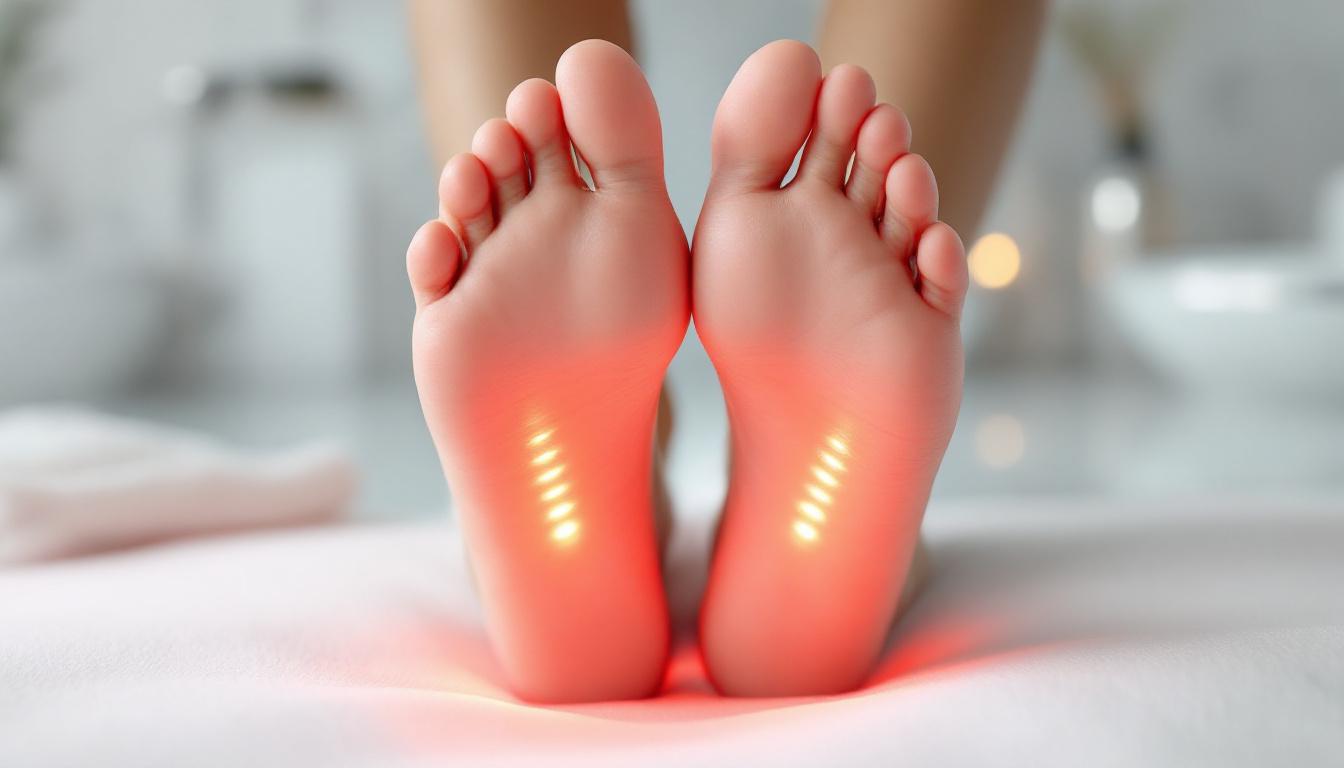
Your feet hurt.
Maybe it's plantar fasciitis. That stabbing heel pain first thing in the morning. Or neuropathy, that burning, tingling sensation that won't quit. Could be general soreness from standing all day, running too much, or just getting older.
Whatever the cause, you've tried the usual suspects. Ice. Stretching. Better shoes. Inserts. Maybe even cortisone shots.
And you're still searching for something that actually works.
Red light therapy might be that something. It's not magic, but the science is solid. Wavelengths of red and near-infrared light penetrate deep into tissue, reaching muscles, tendons, nerves, and even bone. They reduce inflammation, improve circulation, and speed up healing at the cellular level.
But here's the thing: not all red light devices work for feet. The dose matters. The wavelengths matter. The treatment protocol matters.
This guide walks you through everything. How red light therapy actually works for foot pain. Which conditions respond best. What devices to use (and which ones are a waste of money). How to dose your treatments properly. And what realistic results look like.
Let's get your feet feeling better.
How red light therapy works for foot pain
Red light therapy delivers specific wavelengths of light to your tissues. Not the kind of light that tans you or burns you. The therapeutic kind.
Two wavelength ranges do the heavy lifting: 630-680nm (red) and 810-850nm (near-infrared).
Red light penetrates 8-10mm deep. That's enough to reach superficial tissue, skin, and the top layer of muscle. Near-infrared goes deeper, penetrating 30-40mm or more. That means it reaches tendons, ligaments, deep muscle tissue, nerves, and even bone.
Your feet need both.
When these wavelengths hit your cells, they're absorbed by mitochondria, the energy factories inside every cell. This triggers a cascade of biological effects. More ATP production (cellular energy). Less oxidative stress. Better blood flow. Reduced inflammation. Faster tissue repair.
Here's what that means for your feet specifically:
Pain reduction. Red and near-infrared light decrease inflammatory markers like cytokines and prostaglandins. Less inflammation equals less pain. Studies show significant pain reduction in conditions like plantar fasciitis and arthritis.
Improved circulation. Near-infrared light stimulates nitric oxide production, which dilates blood vessels. Better blood flow means more oxygen and nutrients reach damaged tissue. That's critical for healing, especially in the feet where circulation can be compromised.
Nerve regeneration. For neuropathy sufferers, this is huge. Research shows near-infrared light can stimulate nerve growth factors and improve nerve conduction velocity. It won't cure nerve damage, but it can reduce symptoms and potentially slow progression.
Faster healing. Whether you're dealing with plantar fasciitis, a stress fracture, or just overuse injury, red light accelerates tissue repair. It increases collagen production, enhances cellular metabolism, and speeds up the healing timeline.
The feet are actually an ideal target for red light therapy. Unlike trying to treat deep organs or thick muscle groups, the tissue depth in feet is manageable. A good near-infrared device can penetrate all the way through to the bone.
That said, you can't just shine any red light on your feet and expect results. The dose, timing, and consistency all matter. More on that later.
What foot conditions respond to red light therapy
Not every foot problem will improve with red light. But several common conditions have solid research backing.
Plantar fasciitis
This is the big one. Plantar fasciitis is inflammation of the thick band of tissue running along the bottom of your foot, connecting your heel to your toes. It causes sharp heel pain, especially with the first steps in the morning.
Multiple studies show red and near-infrared light reduce pain and improve function in plantar fasciitis. A 2019 study found that patients using 850nm near-infrared light experienced significant pain reduction and improved mobility after just four weeks of treatment.
The mechanism makes sense: near-infrared penetrates deep enough to reach the plantar fascia, reducing inflammation directly at the source. It also improves blood flow to the area, which is typically poor in plantar fasciitis cases.
Treatment protocol: 10-15 minutes per foot, 3-5 times per week, targeting the heel and arch. Use a device with at least 850nm wavelength and sufficient power density (more on device specs below).
Peripheral neuropathy
Neuropathy, the tingling, burning, numbness often caused by diabetes or chemotherapy, is notoriously difficult to treat. Medications help some people but not everyone.
Red light therapy shows promise. Studies using near-infrared light (typically 890nm) demonstrate reduced pain scores, improved sensation, and better nerve conduction in diabetic neuropathy patients.
One study found that patients receiving near-infrared light therapy three times per week showed significant improvement in neuropathic pain and sensation after 12 weeks. Not a cure, but meaningful relief for many participants.
The key wavelength here is near-infrared, which can reach the nerves in your feet. Red light alone won't cut it. You need 810-890nm wavelengths with enough power to penetrate.
Treatment protocol: 15-20 minutes per foot, 3-4 times per week. Be consistent. Neuropathy improvement takes time, often 8-12 weeks before you notice significant changes.
Arthritis in the feet
Arthritis in the toes, midfoot, or ankle causes pain, stiffness, and reduced mobility. Red light therapy has been studied extensively for arthritis, with positive results across various joints.
The anti-inflammatory effects of red and near-infrared light reduce swelling and pain. Improved circulation brings nutrients to damaged cartilage and surrounding tissue. Some research suggests red light may even slow cartilage degradation, though more studies are needed.
A 2018 review of low-level light therapy for arthritis found consistent pain reduction and improved function across multiple studies. The feet are no exception.
Treatment protocol: 10-15 minutes per foot, 3-5 times per week. Focus on the affected joints. If you have arthritis in multiple areas of the foot, you may need to treat different zones in separate sessions or extend treatment time.
Achilles tendinitis
Inflammation of the Achilles tendon causes pain at the back of the heel, often from overuse or repetitive strain. Tendon injuries are slow to heal because blood flow to tendons is limited.
Red light therapy helps by increasing circulation and stimulating collagen production. Studies on tendinopathies (including Achilles) show that near-infrared light can reduce pain and improve healing, especially when combined with eccentric exercises.
Treatment protocol: 10-12 minutes targeting the Achilles tendon, 3-4 times per week. Combine with proper stretching and strengthening for best results.
General foot pain and soreness
Not every foot issue has a specific diagnosis. Sometimes your feet just hurt from standing all day, running, hiking, or wearing bad shoes.
Red light therapy can help here too. Even without chronic inflammation or injury, the increased circulation and cellular metabolism reduce soreness and speed recovery.
Athletes use red light therapy for muscle recovery. The same principles apply to your feet. Treating sore feet after a long day or intense workout can reduce next-day pain and stiffness.
Treatment protocol: 8-10 minutes per foot as needed, ideally right after activity or before bed. You can use red light therapy daily for general recovery without issues.
Conditions that won't respond well
Let's be clear about what red light therapy won't fix.
Structural deformities. If you have bunions, hammertoes, or flat feet, red light won't change the bone structure. It might reduce associated pain, but it won't correct the deformity.
Acute infections. If you have cellulitis, athlete's foot, or an infected wound, red light therapy is not the treatment. See a doctor.
Severe nerve damage. If you have complete nerve loss (like from a spinal injury), red light won't restore sensation. It works best for functional nerve issues, not severed or completely dead nerves.
Broken bones. While red light may speed healing of fractures, it's not a substitute for proper medical care. Get an X-ray, follow your doctor's advice, and use red light as a complementary therapy if appropriate.
Dosing red light therapy for your feet
Here's where most people mess up. They buy a device, use it inconsistently, dose it wrong, and then decide it doesn't work.
Dosing matters. A lot.
The dose in red light therapy is measured in joules per square centimeter (J/cm²). That's the total amount of light energy delivered to your tissue. To calculate it, you need to know two things: power density (irradiance, measured in mW/cm²) and treatment time.
The formula: Dose (J/cm²) = Power density (mW/cm²) × Time (seconds) ÷ 1000
Most foot conditions respond best to doses between 4-12 J/cm².
Let's break that down.
Power density (irradiance)
This is how much light energy hits your skin per second. It depends on the device and your distance from it.
A good red light therapy device for feet should deliver at least 50-100 mW/cm² at the treatment distance. Stronger is not always better, but too weak definitely won't work.
Most manufacturers provide power density specs. If they don't, that's a red flag.
Distance matters. Power density drops as you move away from the light source. If a device delivers 150 mW/cm² at 6 inches, it might only deliver 40 mW/cm² at 12 inches. Always check the spec at your intended treatment distance.
Treatment time
Once you know your power density, you can calculate how long to treat.
For a dose of 6 J/cm² (a good starting point for most conditions):
- At 100 mW/cm²: 60 seconds (1 minute)
- At 50 mW/cm²: 120 seconds (2 minutes)
- At 25 mW/cm²: 240 seconds (4 minutes)
If your device delivers 100 mW/cm² at 6 inches, you'd treat each foot for about 1 minute to hit 6 J/cm². If you want a higher dose (say, 10 J/cm² for severe inflammation), increase the time to 100 seconds.
This is per treatment area. If you're treating both the sole and the top of your foot, you'd do separate sessions or double the time.
Frequency
How often should you use red light therapy on your feet?
For acute pain or injury: 5-7 times per week initially, then taper to 3-5 times per week as symptoms improve.
For chronic conditions (plantar fasciitis, neuropathy, arthritis): 3-5 times per week consistently. Stick with it for at least 8-12 weeks before judging results.
For recovery and maintenance: 3-4 times per week, or daily if you're active and your feet take a beating.
You can use red light therapy daily without issues. Unlike medications, there's no toxicity or side effects from consistent use. But more isn't always better. If you're already seeing results at 3-4 sessions per week, adding more won't necessarily speed things up.
Distance and positioning
Closer is generally better, up to a point. Too close and you'll only treat a small area. Too far and the power density drops too much.
For feet, 6-12 inches is typically ideal. Close enough for good power density, far enough to cover the whole foot.
Make sure you're treating the right area. For plantar fasciitis, the sole and heel are the priority. For Achilles tendinitis, the back of the heel. For neuropathy, you might need to treat the whole foot, including the top and sides.
Don't forget both feet. Even if only one hurts now, treating both can prevent issues down the road.
Start low, go slow
If you're new to red light therapy, start with lower doses (4-6 J/cm²) and see how you respond. You can always increase the dose if needed.
Some people get temporary soreness or fatigue after their first few treatments. That's usually a sign your cells are ramping up activity, which is good. But if it bothers you, back off a bit and build up gradually.
Understanding the science: why feet respond so well to red light
Before we get into devices and protocols, let's dig deeper into why red light therapy works particularly well for feet.
The feet are unique. They're weight-bearing structures with complex anatomy. Twenty-six bones per foot. Thirty-three joints. Over a hundred muscles, tendons, and ligaments. All packed into a relatively small space.
When something goes wrong in your feet, the tissue depth works in your favor for red light therapy.
Penetration depth and tissue layers
The average foot has about 2-4mm of skin, 10-20mm of soft tissue (depending on location), and then bone. Near-infrared light at 850nm can penetrate 30-40mm or more, easily reaching through all layers.
Compare that to trying to treat a deep organ like the liver or a thick muscle like the quadriceps. The feet are accessible targets.
This means near-infrared light doesn't just hit the surface. It reaches the plantar fascia (thick connective tissue on the sole), the deep muscles of the foot, nerves running through the tarsal tunnel, tendons like the Achilles, and even the periosteum (the outer layer of bone).
That comprehensive penetration is why red light therapy can address so many different foot conditions.
Mitochondrial response in stressed tissue
Your feet are under constant mechanical stress. Every step creates impact. Every hour of standing loads the tissue.
Stressed tissue has compromised mitochondria. They're producing less ATP and more reactive oxygen species (ROS). That's a recipe for chronic inflammation and slow healing.
Red and near-infrared light hit the reset button. Photons are absorbed by cytochrome c oxidase in the mitochondrial respiratory chain. This increases electron transport efficiency, boosts ATP production, and reduces oxidative stress.
In practical terms, your cells get more energy to repair damage and less inflammation making things worse.
Studies show that tissues under mechanical stress (like the plantar fascia in someone with plantar fasciitis) respond particularly well to photobiomodulation. The cells are primed for healing; they just need the energy boost.
Circulation and the challenge of foot blood flow
Blood flow to the feet is tricky. You're far from the heart. Gravity works against you. And conditions like diabetes or peripheral artery disease make it worse.
Poor circulation means less oxygen, fewer nutrients, and slower waste removal. All of that delays healing.
Near-infrared light stimulates nitric oxide (NO) release from endothelial cells lining blood vessels. NO is a powerful vasodilator. When blood vessels dilate, more blood flows through.
This effect lasts for hours after treatment. You're not just getting a temporary circulation boost during the session. You're improving vascular function over time.
For foot conditions, better circulation means faster healing, reduced swelling, and less pain. It's one of the most important mechanisms of red light therapy.
Nerve regeneration: what's actually possible
Let's be realistic about nerve damage. If a nerve is completely severed, red light won't reconnect it. But for functional nerve problems (neuropathy, nerve compression, demyelination), there's real potential.
Near-infrared light has been shown to:
Increase nerve growth factor (NGF). NGF promotes nerve survival and regeneration. More NGF means better chances of nerve repair.
Improve nerve conduction velocity. Studies in diabetic neuropathy patients show that near-infrared light can improve how fast nerves transmit signals. That translates to better sensation and less numbness.
Reduce neuroinflammation. Chronic inflammation damages nerves. By reducing inflammatory cytokines, red light creates a better environment for nerve recovery.
Stimulate Schwann cells. These cells produce the myelin sheath that insulates nerves. Damage to myelin causes slowed conduction and pain. Red light can stimulate Schwann cell activity, potentially improving myelination.
This doesn't mean red light therapy will cure severe neuropathy. But for early-stage or moderate cases, the research shows meaningful improvement is possible.
Collagen synthesis and tendon repair
Tendons heal slowly because they have limited blood supply. The Achilles tendon, for example, is notoriously slow to recover from injury.
Red light therapy stimulates fibroblasts, the cells that produce collagen. More collagen means stronger, healthier tendons.
But it's not just about quantity. Red light also improves collagen organization. Disorganized collagen is weak and prone to re-injury. Well-organized collagen (aligned along the direction of force) is strong and resilient.
Studies on tendinopathies show that near-infrared light combined with eccentric exercise leads to better tendon remodeling than exercise alone.
For foot conditions like Achilles tendinitis or plantar fasciitis (which is technically a fasciitis, but involves similar collagen tissue), this is critical.
The dose-response relationship
More light isn't always better. There's a biphasic dose response in photobiomodulation.
At low doses (1-4 J/cm²), you get minimal effects. The stimulation isn't strong enough to trigger significant cellular changes.
At moderate doses (4-12 J/cm²), you get optimal stimulation. ATP production increases, inflammation decreases, and healing accelerates.
At very high doses (over 20-30 J/cm²), the effect plateaus or even reverses. Too much light can cause oxidative stress and inhibit healing.
For feet, the sweet spot is 6-12 J/cm² for most conditions. Stay in that range and you'll maximize benefits.
Choosing the right red light device for foot treatment
Not all red light devices are created equal. Some are great for feet. Some are useless.
Here's what to look for.
Wavelengths: 660nm and 850nm (or close)
You want a device that delivers both red (around 660nm) and near-infrared (around 850nm). Some devices offer 630nm and 810nm, which are also fine.
Red light (630-680nm) treats superficial tissue and skin. Near-infrared (810-850nm) penetrates deeper to reach tendons, nerves, and bone.
For feet, near-infrared is the priority. If you can only get one wavelength, choose 850nm. But ideally, get both.
Avoid devices that don't specify wavelengths. If the manufacturer won't tell you, they're probably not using therapeutic wavelengths.
Power density: at least 50 mW/cm² at treatment distance
Check the irradiance specs. A device should deliver at least 50 mW/cm² at the distance you'll use it.
Higher is better, to a point. 100-150 mW/cm² is ideal for feet. That lets you treat effectively in a reasonable time (5-10 minutes instead of 20-30).
Be wary of manufacturers who only give power output in total watts. That doesn't tell you how much light actually reaches your skin. Demand mW/cm² specs at a specific distance.
Size: small panel or targeted device works best
For feet, you don't need a full-body panel. A small panel (12"×12" or even 6"×8") or a targeted device works great.
Targeted devices (like handheld or wrap-around models) can be convenient. Just make sure they have enough coverage and power.
Avoid tiny devices meant for wrinkles or spot treatment. They won't cover enough area or deliver enough power for therapeutic use on feet.
Quality LEDs: look for reputable brands
Not all LEDs are equal. High-quality LEDs deliver consistent wavelengths and power. Cheap LEDs degrade quickly, shift wavelengths, and waste energy as heat.
Stick with brands that use medical-grade or therapeutic-grade LEDs. They cost more upfront but last longer and perform better.
No flicker, low EMF
Flicker (pulsing at high frequency) can cause eye strain and may reduce effectiveness. Look for devices with flicker-free LEDs.
EMF (electromagnetic fields) are a concern for some people. Most quality red light devices have low EMF output, but if you're sensitive, check the specs.
Device types that work well for feet
Small LED panels. A 12"×12" or 18"×12" panel is perfect for feet. Set it on the floor or prop it up and rest your feet in front of it. Easy and effective.
Flexible LED pads. Wrap-around pads designed for joints can work on feet too. Look for ones with sufficient LED density and power.
Handheld devices. If you want portability or need to target specific spots (like the heel or Achilles tendon), a handheld device can work. Just be prepared to move it around to cover the whole foot.
Device types to avoid
Low-power beauty devices. If it's marketed for wrinkles and costs $50, it's not powerful enough for therapeutic use on feet.
Mystery devices with no specs. If the manufacturer won't tell you the wavelengths, power density, or LED type, skip it.
Devices with only red or only near-infrared. You want both. Don't compromise.
Comparing popular device types for foot treatment
Let's break down the pros and cons of each device type specifically for treating feet.
LED panels (12"×12" to 18"×24")
Pros:
- Hands-free treatment. Set it on the floor or prop it up, rest your feet in front of it.
- Covers both feet simultaneously if large enough.
- Consistent power across the treatment area.
- Long lifespan (50,000+ hours for quality panels).
- Can also be used for other body parts (knees, hands, face).
Cons:
- Less portable. Not something you'll travel with.
- Higher upfront cost ($200-$500 for a quality small panel).
- Overkill if you only need to treat feet.
Best for: People who want a versatile device for multiple body parts, or those who need to treat both feet regularly and want a hands-free option.
Example use case: You have plantar fasciitis in both feet and also use red light for knee pain. A 12"×12" panel makes sense.
Flexible LED pads and wraps
Pros:
- Wraps around the foot for 360-degree coverage.
- Good contact ensures consistent distance and dose.
- Portable. Easy to travel with.
- Can be used while sitting at a desk or relaxing.
Cons:
- Often lower power density than panels (30-50 mW/cm² is common).
- Smaller LED count means less total coverage.
- Some pads use adhesive or Velcro that degrades over time.
- May not reach all areas evenly (like the arch or between toes).
Best for: People who want portability, or those treating a specific area like the heel or Achilles tendon.
Example use case: You travel frequently for work and want to treat Achilles tendinitis on the road. A flexible pad fits in your suitcase.
Handheld devices
Pros:
- Highly targeted. You can focus on specific spots like the heel or a sore joint.
- Portable and easy to store.
- Often more affordable than panels ($100-$250).
Cons:
- Requires holding the device, which can be tiring for longer sessions.
- Small treatment area means you have to move it around to cover the whole foot.
- Easy to miss spots or treat unevenly.
Best for: People who need to target specific areas (like a single sore spot), or those who want an affordable entry point into red light therapy.
Example use case: You have a localized pain point on the ball of your foot. A handheld device lets you treat that spot precisely.
Full-body panels (large, expensive)
Pros:
- Can treat feet and entire body at once.
- Highest power output (some deliver 150+ mW/cm² at 6 inches).
- Best for people using red light therapy for multiple health goals.
Cons:
- Expensive ($500-$2,000+).
- Large and bulky. Requires dedicated space.
- Overkill if you only care about feet.
Best for: People serious about red light therapy for whole-body health, recovery, and anti-aging, in addition to foot treatment.
Example use case: You're an athlete using red light for muscle recovery, joint health, and foot pain. A full-body panel covers all your needs.
DIY setups (individual bulbs or strips)
Pros:
- Cheapest option if done correctly.
- Customizable. You can build exactly what you need.
- Can be surprisingly effective with the right components.
Cons:
- Requires research and technical know-how.
- Risk of buying incorrect wavelengths or low-quality LEDs.
- No customer support if something goes wrong.
- Time-consuming to set up properly.
Best for: DIY enthusiasts who enjoy building things and want to save money.
Example use case: You're handy, you've done your research, and you want to build a custom foot panel for under $100.
What I'd recommend for most people
If you're specifically focused on foot treatment and want the best balance of effectiveness, ease of use, and cost, go with a small LED panel (12"×12" or 18"×12").
Look for one with:
- 660nm and 850nm wavelengths
- At least 100 mW/cm² at 6-12 inches
- Flicker-free LEDs
- Good warranty (2+ years)
This setup will cost $200-$400, which sounds like a lot upfront. But compare it to ongoing physical therapy copays, medications, or cortisone injections. Over time, it's a good investment.
Troubleshooting: when red light therapy isn't working
You've been using red light therapy for weeks. You followed the protocols. You dosed it correctly. And your feet still hurt.
What's going wrong?
Problem 1: Your device isn't powerful enough
This is the most common issue. You bought a cheap device marketed for wrinkles or beauty treatments. It delivers 10-20 mW/cm², which is nowhere near therapeutic for deep tissue.
Solution: Check your device specs. If it doesn't list power density in mW/cm², that's a red flag. If it does list specs and they're under 50 mW/cm² at your treatment distance, you need a better device.
Problem 2: You're underdosing
Maybe your device is fine, but you're treating for two minutes when you need ten. Or you're only using it once a week instead of 3-5 times.
Solution: Calculate your dose properly. Use the formula: Dose (J/cm²) = Power density (mW/cm²) × Time (seconds) ÷ 1000. Aim for 6-10 J/cm² per treatment. And be consistent with frequency.
Problem 3: You're not treating the right area
If you have plantar fasciitis but you're only treating the top of your foot, you won't see results. The problem is in the plantar fascia on the sole.
Solution: Know your anatomy. For heel pain, treat the bottom and sides of the heel. For Achilles tendinitis, treat the back of the heel. For neuropathy, treat the entire foot, including the sole, top, and sides.
Problem 4: You're expecting results too soon
Red light therapy speeds healing. It doesn't deliver instant pain relief like a painkiller.
If you've only been treating for a week or two and you're frustrated that your chronic plantar fasciitis isn't gone, you need to reset your expectations.
Solution: Give it time. Most studies show significant improvements at 8-12 weeks. If you're not seeing any change by week six, reassess your protocol. But don't give up at week two.
Problem 5: You're using red light therapy alone
Red light works best as part of a comprehensive treatment plan. If you're using red light but still wearing terrible shoes, standing on concrete for 12 hours a day, and skipping stretches, you're working against yourself.
Solution: Combine red light therapy with proper footwear, stretching, strengthening exercises, rest, and other evidence-based treatments. Fix the root cause while using red light to speed healing.
Problem 6: Your condition isn't responsive to red light
Some foot problems won't improve with red light therapy. Structural deformities, severe nerve damage, acute infections, and certain rare conditions just don't respond.
Solution: If you've been consistent for 12 weeks with proper dosing and you've seen zero improvement, it might not be the right tool for your specific condition. Consult a healthcare provider for alternative treatments.
Problem 7: You're overdosing
This is rare, but possible. If you're treating for 30+ minutes at high power, you might be hitting the plateau or inhibitory range of the dose-response curve.
Solution: More isn't always better. Stick to 6-12 J/cm² per session. If you've been overdoing it, scale back and see if that helps.
Treatment protocols for specific foot conditions
Let's get practical. Here's how to use red light therapy for the most common foot issues.
Plantar fasciitis protocol
Goal: Reduce inflammation in the plantar fascia, improve blood flow, decrease heel pain.
Wavelengths: 660nm and 850nm (both)
Dose: 8-10 J/cm²
Treatment time: 8-10 minutes per foot (at 100 mW/cm² power density)
Frequency: 5 times per week for the first 4 weeks, then 3-4 times per week
Positioning: Sit comfortably and place your foot flat in front of the light, or elevate your foot so the sole faces the device. Make sure the heel and arch get direct exposure.
What to expect: Some people notice reduced morning pain within 2-3 weeks. Full improvement can take 8-12 weeks. Combine with stretching, proper footwear, and rest for best results.
Peripheral neuropathy protocol
Goal: Reduce neuropathic pain, improve nerve function and sensation.
Wavelengths: 850nm or 890nm (near-infrared is critical)
Dose: 10-12 J/cm²
Treatment time: 10-12 minutes per foot (at 100 mW/cm²), or 15-20 minutes at lower power density
Frequency: 3-4 times per week consistently for at least 12 weeks
Positioning: Treat the entire foot, including the sole, top, and sides. Nerves run throughout, so comprehensive coverage matters.
What to expect: Neuropathy improvement is slow. Don't expect miracles in week one. After 6-8 weeks, you might notice less burning, tingling, or numbness. After 12 weeks, improvements in sensation and pain are more common. Some people need ongoing treatment to maintain results.
Arthritis in feet protocol
Goal: Reduce joint inflammation, decrease pain, improve mobility.
Wavelengths: 660nm and 850nm
Dose: 6-8 J/cm²
Treatment time: 6-8 minutes per foot (at 100 mW/cm²)
Frequency: 4-5 times per week
Positioning: Focus on the affected joints. If you have arthritis in your big toe, target that area specifically. For midfoot arthritis, treat the top and bottom of the midfoot.
What to expect: Pain reduction often starts within 3-4 weeks. Stiffness may improve around the same time. Long-term use (3+ months) can lead to more consistent results.
Achilles tendinitis protocol
Goal: Reduce tendon inflammation, stimulate collagen repair, decrease pain.
Wavelengths: 850nm (near-infrared)
Dose: 8-10 J/cm²
Treatment time: 8-10 minutes (at 100 mW/cm²)
Frequency: 4-5 times per week
Positioning: Position the light to hit the back of your heel where the Achilles tendon attaches. You may need to angle the device or use a handheld unit for better access.
What to expect: Tendon healing is slow. It can take 6-8 weeks to notice significant improvement. Combine red light therapy with eccentric heel drops and avoid activities that aggravate the tendon.
General foot recovery protocol
Goal: Reduce soreness, speed recovery from activity, prevent chronic issues.
Wavelengths: 660nm and 850nm
Dose: 4-6 J/cm²
Treatment time: 4-6 minutes per foot (at 100 mW/cm²)
Frequency: 3-7 times per week, as needed
Positioning: Treat the sole and any sore areas. After a long run, for example, you might focus on the arches and heels.
What to expect: Immediate relief is less common, but you should notice less stiffness the next day. Over time, consistent use can prevent chronic issues from developing.
Combining red light therapy with other treatments
Red light therapy works best when combined with other evidence-based treatments. It's not a standalone cure, but it enhances almost everything else you're doing.
Physical therapy and exercises
If you're doing exercises for plantar fasciitis (calf stretches, toe stretches) or strengthening for Achilles tendinitis (eccentric heel drops), add red light therapy before or after.
Treating before exercise can improve blood flow and reduce stiffness, making the exercises more effective. Treating after can speed recovery and reduce soreness.
Don't skip the exercises just because you're using red light. The two work together.
Orthotics and supportive footwear
Good shoes and custom orthotics address biomechanical issues that red light can't fix. If overpronation is causing plantar fasciitis, an orthotic corrects the root cause. Red light speeds healing of the inflammation.
Use both.
Ice and heat therapy
Ice reduces acute inflammation and pain. Heat improves circulation and relaxes muscles.
Red light therapy can partially replace heat therapy (it improves circulation without external heat), but ice still has a place for acute flare-ups.
Some people alternate ice and red light: ice immediately after aggravating activity, red light later in the day or the next morning.
Massage and manual therapy
Massage, foam rolling, and manual therapy (like myofascial release) address tight muscles and fascia. Red light therapy complements this by reducing inflammation and improving tissue quality.
Consider using red light after a massage or foam rolling session. The increased blood flow from both treatments can enhance recovery.
Medications and injections
If you're taking NSAIDs (like ibuprofen) or have had cortisone injections, red light therapy can work alongside these treatments.
In fact, some people reduce their reliance on pain meds once red light therapy kicks in. That's a win: less medication, same or better pain relief.
Talk to your doctor before changing medication dosages, but don't assume you have to choose between red light and other treatments. They can coexist.
Topical treatments
Creams, gels, and essential oils for pain relief won't interfere with red light therapy. Apply them after your red light session, not before.
Some topicals (like menthol or capsaicin) create heat or cooling sensations that might distract from the red light treatment. Save them for later.
Safety and contraindications for foot treatments
Red light therapy is safe for most people. But there are a few situations where caution is needed.
When to avoid red light therapy on your feet
Active infections. If you have cellulitis, an open infected wound, or any active infection on your foot, don't use red light therapy until the infection is treated. While red light doesn't cause infections, treating infected tissue can potentially spread bacteria or delay proper medical care.
Cancerous lesions. If you have a cancerous lesion on your foot (like melanoma), avoid red light therapy over that area. The effects of red light on cancer cells are not fully understood, and it's better to err on the side of caution.
Recent injections. If you've had a cortisone injection or other injection in your foot, wait 48 hours before using red light therapy. Give the medication time to settle.
Deep vein thrombosis (DVT). If you have or suspect a blood clot in your leg or foot, don't use red light therapy. Improving circulation could theoretically dislodge a clot. See a doctor immediately.
Pregnancy (feet are okay, but be cautious). Red light therapy on the feet is generally considered safe during pregnancy, but avoid treating the abdomen or lower back. If you're unsure, consult your doctor.
Side effects (rare but possible)
Temporary soreness. Some people experience mild soreness or fatigue after the first few treatments. This usually resolves within a day or two. It's a sign your cells are responding, not a problem.
Skin irritation. Very rare, but some people with extremely sensitive skin might notice mild redness or irritation. If this happens, reduce treatment time or increase distance from the device.
Eye strain (if looking at the light). Red and near-infrared light is bright. Don't stare directly at the LEDs. If you're treating your feet, just look away or close your eyes. No special goggles needed for foot treatments.
Medications that increase photosensitivity
Some medications make your skin more sensitive to light. These include certain antibiotics (tetracyclines), diuretics, and some antifungals.
Red and near-infrared light are different from UV light (which causes sunburn), so the risk is much lower. But if you're on a photosensitizing medication, start with shorter treatment times and watch for any unusual skin reactions.
Using red light therapy safely
Keep the device clean. Wipe down the LEDs and any surfaces your feet touch. Basic hygiene prevents spreading bacteria or fungus.
Follow manufacturer guidelines. Don't exceed recommended treatment times or distances unless you know what you're doing.
Start slow. If you're new to red light therapy, start with lower doses and shorter sessions. You can always increase later.
Listen to your body. If something feels wrong (burning, severe pain, unusual swelling), stop and reassess. Red light therapy should feel neutral or slightly warm, never painful.
Real results: what to expect (and what's hype)
Let's set realistic expectations.
Red light therapy can significantly reduce foot pain and improve function for many people. But it's not instant. And it doesn't work for everyone.
What you can reasonably expect
Pain reduction. For plantar fasciitis, neuropathy, and arthritis, most studies show a 30-50% reduction in pain after 8-12 weeks of consistent treatment. Some people get better results. Some get less.
Improved mobility. If pain has limited your walking, standing, or activity, you'll likely notice gradual improvement. It won't happen overnight, but over weeks and months, you should be able to do more with less pain.
Faster recovery from acute injuries. If you strain a muscle or aggravate your Achilles tendon, red light therapy can cut recovery time. Instead of two weeks of limping, maybe it's one week.
Better overall foot health. Even if you don't have a specific injury, regular red light therapy can reduce soreness, improve circulation, and keep your feet feeling better day-to-day.
What won't happen
Instant pain relief. Red light therapy is not a painkiller. It doesn't block pain signals like ibuprofen or numb your foot like ice. The pain reduction comes from healing, which takes time.
Curing structural problems. If you have flat feet, bunions, or hammertoes, red light won't change your bone structure. It might reduce associated pain, but it won't fix the deformity.
Perfect results for everyone. Some people respond amazingly well. Some see modest improvement. A small percentage see no benefit at all. That's true for almost any treatment.
Permanent fixes without maintenance. If you stop using red light therapy, the benefits will fade over time. For chronic issues, you'll likely need ongoing maintenance treatments.
Timeline for results
Week 1-2: Most people notice nothing dramatic. Maybe slightly less soreness, but it could be placebo.
Week 3-4: Pain starts to decrease for some conditions, especially acute inflammation like plantar fasciitis.
Week 6-8: More consistent pain reduction. Mobility and function improve. This is when many people start to think, "Okay, this is actually working."
Week 10-12: Full benefits become apparent. For chronic conditions like neuropathy, this is when sensation and pain improvements are most noticeable.
3-6 months: Long-term use leads to sustained improvement. Some people can reduce treatment frequency to maintenance levels (2-3 times per week) and still keep symptoms under control.
Real-world examples (what people actually experience)
Let's talk about real cases. Not clinical trials with perfect compliance. Real people using red light therapy for real foot problems.
Case example 1: Plantar fasciitis after marathon training
Runner, mid-40s, developed plantar fasciitis three months into marathon training. Tried rest, ice, stretching, new shoes. Pain persisted, especially in the morning.
Started red light therapy with a 12"×12" panel. 660nm + 850nm. Treated both feet for 10 minutes each, five times per week. Dose: approximately 8 J/cm².
Week 1-3: No noticeable change. Almost gave up. Week 4-6: Morning pain reduced from 8/10 to 5/10. Still limping but less severe. Week 8: Morning pain down to 3/10. Started light jogging again. Week 12: Pain mostly gone. Returned to full training. Continued red light 3 times per week for maintenance.
Key factors: Consistency, proper dosing, combined red light with PT exercises and good shoes.
Case example 2: Diabetic neuropathy, 15-year duration
Patient in late 60s with type 2 diabetes. Burning, tingling feet for 15 years. Tried gabapentin with limited success. Numbness in toes progressing.
Used a flexible LED pad wrapped around each foot. 850nm wavelength. 15 minutes per foot, four times per week. Dose: approximately 10 J/cm².
Week 1-6: No change. Skeptical but continued. Week 8: Burning sensation slightly reduced. Noticed it more at night. Week 12: Burning down by about 30%. Still present but more manageable. Month 6: Sustained improvement. Burning reduced by 40-50%. Some sensation returning to toes. Continued long-term.
Key factors: Patience. Neuropathy takes time. Near-infrared penetration was critical. Medication continued alongside red light.
Case example 3: Achilles tendinitis from overuse
Active hiker, early 50s. Developed Achilles pain after a week-long backpacking trip. Sharp pain at back of heel, especially when climbing stairs.
Used a handheld device targeting the Achilles tendon. 850nm. 10 minutes per session, four times per week. Dose: approximately 9 J/cm².
Week 1-2: No change. Week 3-4: Pain intensity dropped from 7/10 to 4/10. Week 6: Able to hike again without pain. Continued red light twice per week as maintenance during active periods.
Key factors: Targeted treatment. Combined with eccentric heel drops. Avoided aggravating activities during healing.
Case example 4: General foot soreness from standing job
Retail worker, mid-30s. On feet 8-10 hours per day on concrete. Chronic foot soreness, no specific diagnosis.
Used a small panel, 10 minutes per foot, three times per week in the evening. 660nm + 850nm. Dose: 6 J/cm².
Week 1-2: Feet felt slightly less sore the next day. Hard to tell if placebo. Week 4: Consistent reduction in end-of-day soreness. Less stiffness in the morning. Long-term: Continued three times per week indefinitely. Noticed a clear difference on weeks when skipping treatments.
Key factors: Prevention is easier than treatment. Consistent use prevented chronic issues from developing.
Common patterns across experiences
Across many users, a few patterns emerge:
Improvement is gradual, not instant. Almost no one sees dramatic results in the first week. Week 3-6 is when most people start noticing change.
Consistency matters more than intensity. People who use red light 3-4 times per week for months get better results than those who use it daily for two weeks and then stop.
Combining treatments works best. Almost everyone who gets good results is also doing something else: stretching, wearing better shoes, doing PT exercises, etc.
Maintenance is necessary. When people stop red light therapy, symptoms often return (gradually, not immediately). Ongoing maintenance treatments prevent relapse.
Factors that influence results
Consistency. People who use red light therapy regularly (3-5 times per week) get better results than those who use it sporadically.
Proper dosing. If you're underdosing (too little power, too short treatment time), you won't get results. If you're overdosing (which is rare), you might get diminishing returns.
Severity of condition. Mild to moderate issues tend to respond better than severe, long-standing problems. If you've had neuropathy for 20 years, don't expect it to disappear in two months.
Combination with other treatments. Red light therapy works best when combined with proper footwear, exercises, stretching, and other therapies. It's not a magic bullet.
Individual variation. Some people are just better responders. We don't fully understand why, but genetics, overall health, and other factors play a role.
Frequently asked questions
Can I use red light therapy on my feet every day?
Yes. Daily use is safe and may speed results, especially in the first few weeks. After symptoms improve, you can reduce to 3-4 times per week for maintenance.
Do I need to remove socks or shoes?
Yes. Red and near-infrared light don't penetrate fabric well. Bare feet are essential for effective treatment.
How long does each treatment take?
For most conditions, 8-12 minutes per foot is sufficient. If you're using a higher power device, you might only need 5-6 minutes. Lower power devices may require 15-20 minutes.
Can I use red light therapy for both feet at once?
If your device is large enough to cover both feet, yes. Otherwise, treat one foot at a time.
Will red light therapy help diabetic foot ulcers?
There's some evidence that red light can speed wound healing, including diabetic ulcers. But this should be done under medical supervision. Don't rely on red light alone for wound care.
Is near-infrared better than red light for feet?
Near-infrared penetrates deeper, which is important for conditions like neuropathy, tendinitis, and deep tissue pain. But red light also has benefits, especially for skin and superficial tissue. Ideally, use both.
Can I use red light therapy on my feet if I have a pacemaker?
Yes. Red light therapy does not generate strong electromagnetic fields like some other devices. It's safe to use with pacemakers. If you have concerns, consult your cardiologist.
How much does a good device cost?
Expect to spend $150-$500 for a quality small panel or targeted device suitable for feet. Cheaper devices often lack power or use incorrect wavelengths. More expensive full-body panels aren't necessary for foot treatment.
What if my feet feel worse after treatment?
Temporary soreness can happen, especially in the first few sessions. It usually resolves within 24 hours. If pain gets significantly worse or lasts more than a day, reduce treatment time or take a break. Consult a healthcare provider if it continues.
Can I use red light therapy along with physical therapy?
Absolutely. Red light therapy complements physical therapy exercises and manual treatments. Many physical therapists now incorporate red light therapy into their practice.
Do I need to wear eye protection?
For foot treatments, no. The light is directed at your feet, not your eyes. Just don't stare directly at the LEDs. If you're using a very large panel and it's at eye level, consider looking away or closing your eyes.
Will my insurance cover red light therapy?
Probably not. Most insurance plans consider red light therapy experimental or wellness-related, not medically necessary. Check with your provider, but don't count on coverage.
Helpful resources for treating foot pain with red light
If you're serious about using red light therapy for your feet, these resources can help.
Research databases: PubMed is the go-to source for peer-reviewed studies on red light therapy. Search terms like "photobiomodulation plantar fasciitis" or "low-level laser therapy neuropathy" will pull up relevant research.
Device manufacturers: Reputable brands like Joovv, Red Light Rising, and Mito Red Light provide detailed specs, dosing guides, and customer support. Read the specs carefully before buying.
Physical therapy and podiatry: Consider consulting a physical therapist or podiatrist who understands photobiomodulation. They can help you integrate red light therapy into a comprehensive treatment plan.
Online communities: Forums and Facebook groups dedicated to red light therapy can be helpful for troubleshooting device issues and sharing experiences. Just remember that anecdotal reports aren't the same as clinical evidence.
Books and guides: The Ultimate Guide to Red Light Therapy by Ari Whitten is a solid primer on photobiomodulation science and practical use. It's not foot-specific, but the principles apply.
Related guides on this site:
- Red light therapy for joint pain: If you have pain in other joints (knees, hips, hands), this guide covers dosing and protocols.
- Red light therapy for neuropathy: A deeper dive into using red light for nerve pain and diabetic neuropathy.
- Do you need eye protection for red light therapy?: Clarifies when eye protection is necessary and when it's not.
- How long to do red light therapy: A comprehensive guide to treatment duration and dosing for various conditions.
Clinical trials: Check ClinicalTrials.gov for ongoing studies on photobiomodulation and foot conditions. You might even find a trial near you that you can participate in.
External resources:
- American Podiatric Medical Association (APMA): Provides evidence-based information on foot health and treatment options. While they don't have extensive content on red light therapy yet, their foot care guidelines are solid.
- National Institute of Diabetes and Digestive and Kidney Diseases (NIDDK): Offers authoritative information on diabetic neuropathy and foot complications. Useful context if you're dealing with diabetes-related foot pain.
- PubMed Central (PMC): A free archive of biomedical research. Search "photobiomodulation feet" or "low-level light therapy plantar fasciitis" to access full-text studies.
- Arthritis Foundation: If arthritis is contributing to your foot pain, this organization provides evidence-based resources on managing arthritis symptoms across all joints.
The Truman Show moment
This whole guide is about light.
Red light. Near-infrared light. Wavelengths and photons and mitochondria.
But here's the thing: light is just energy. And energy, at the right dose, in the right place, at the right time, changes things.
Your feet carry you everywhere. Every step, every mile, every decade of standing and walking and moving. They take a beating. And when they hurt, everything else gets harder.
Red light therapy won't solve every problem. It won't fix structural issues or cure diseases. But it can reduce pain, speed healing, and help you move better.
You've read the science. You know the protocols. You understand the realistic expectations.
Now it's up to you.
Are you going to keep doing the same things and hoping for different results? Or are you going to try something that has actual evidence behind it?
Your feet are waiting.
Give them some light.