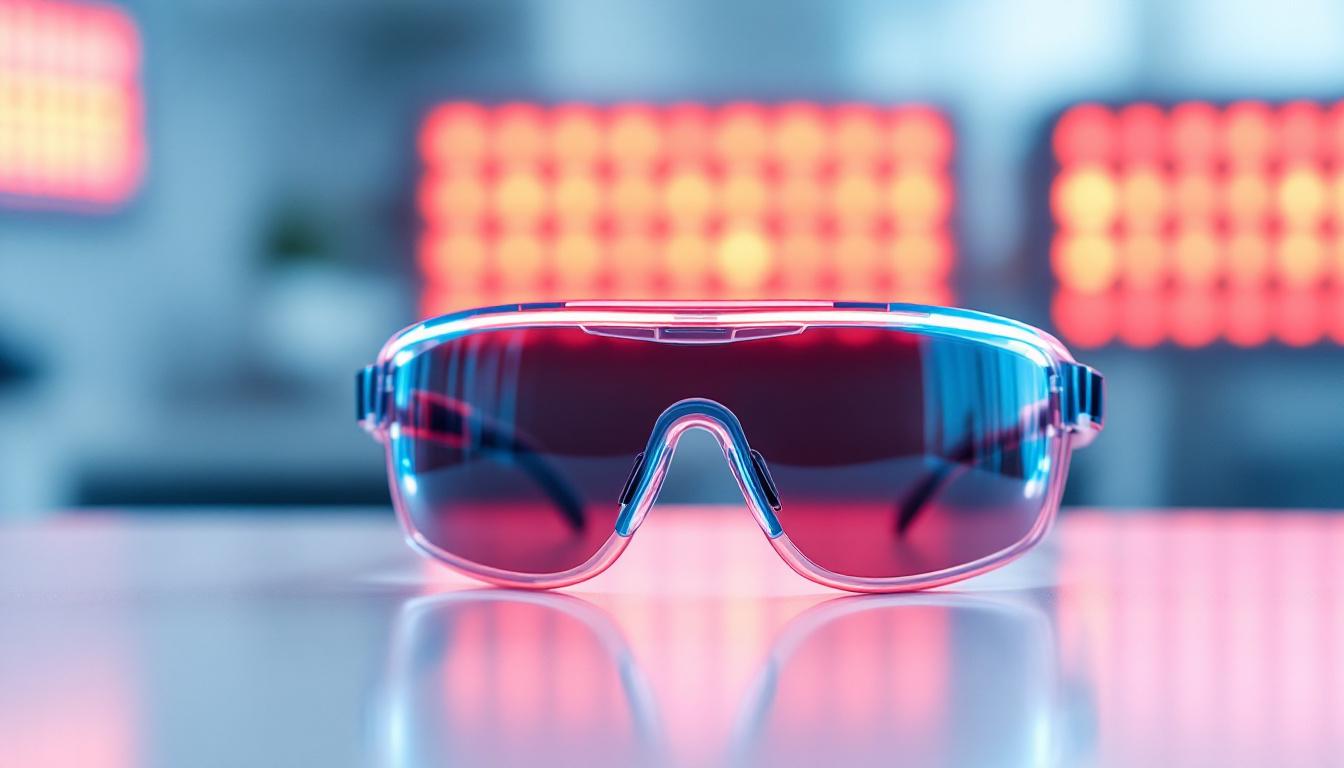
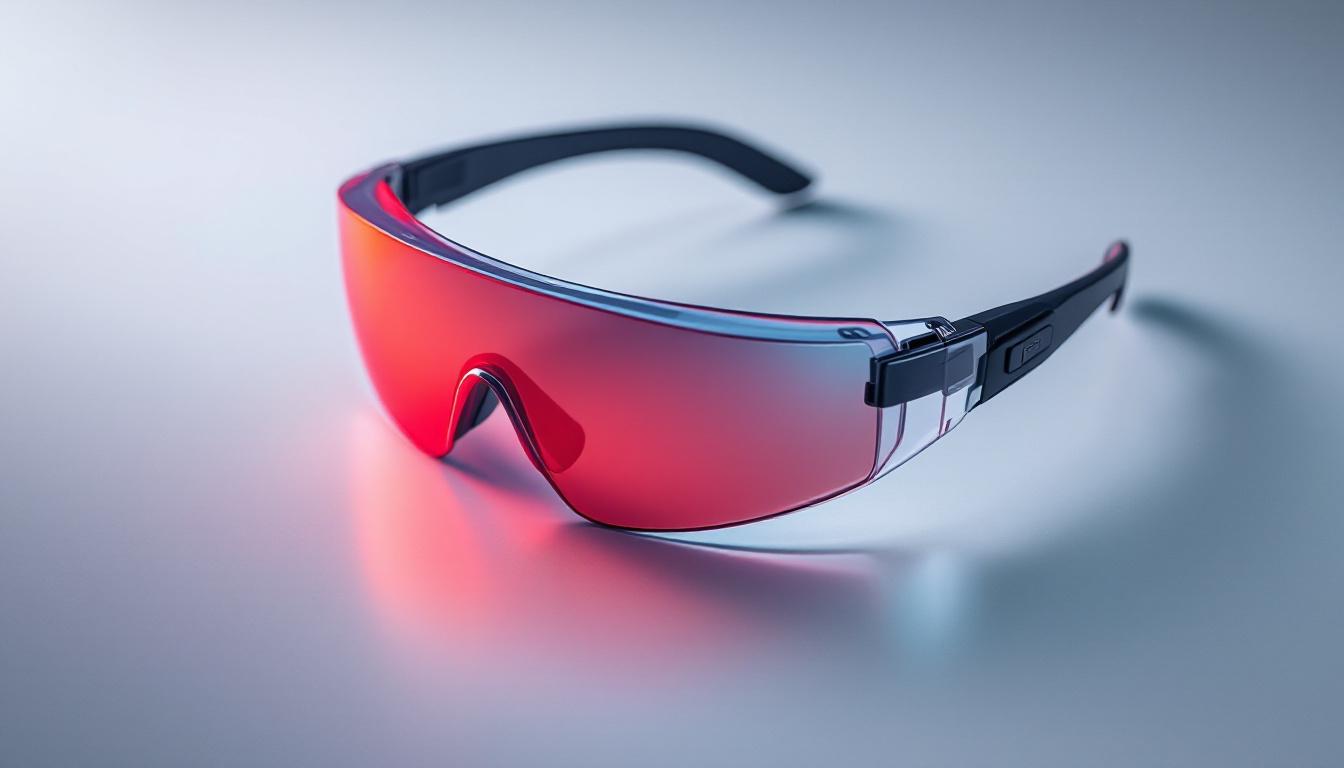
Red light therapy goggles: the complete guide to protecting your eyes
Should you wear goggles during red light therapy? Learn when you need eye protection, which goggles block NIR wavelengths effectively, and which cheap alternatives won't protect you at all.
You're standing in front of your red light panel.
Bright red LEDs blaze at your face. You squint. The brightness isn't painful, exactly, but it's intense. Your eyes water a bit.
Should you be wearing goggles?
This question keeps popping up in red light therapy forums, Facebook groups, and Reddit threads. And the answers you'll find are all over the map. Some people say goggles are essential. Others claim they're unnecessary paranoia. Device manufacturers often bundle cheap black-out goggles with panels, then contradict themselves in the manual by saying protection is optional.
So what's the truth?
Here's the short answer: it depends. On your device type, wavelength output, treatment distance, session duration, and whether you're looking directly at the LEDs. But that answer doesn't help you make a decision, does it?
Let me break down everything you need to know about red light therapy goggles. We'll cover the science of eye safety, when you actually need protection, which goggles work (and which are useless), and how to choose the right pair for your setup.
By the end of this guide, you'll know exactly whether you need goggles and which ones to buy.
Do you actually need goggles for red light therapy?
The short answer is: probably yes, if you're using a high-powered LED panel close to your face.
But let's dig deeper.
Red and near-infrared light aren't inherently dangerous to your eyes. Unlike UV light, which damages DNA and causes cataracts, red and NIR wavelengths don't carry enough energy to break molecular bonds. Your eyes can handle these wavelengths just fine under normal circumstances.
The concern isn't the wavelength type. It's the intensity.
Modern LED panels pack serious power. A quality 300W panel positioned 6-12 inches from your face delivers irradiance levels around 100-150 mW/cm² or higher. That's a lot of concentrated light hitting your retina. And while your eyes can handle ambient red light all day (think sunset), they're not designed for staring into what's essentially a wall of high-powered LEDs.
Think of it like this. Looking at a candle won't hurt your eyes. But staring at a spotlight will, even though both emit visible light. The difference is intensity, not wavelength.
The brightness problem
When you stand in front of an LED panel with your eyes open, here's what happens.
Your pupils constrict to protect against the brightness. Good. But red and NIR light still penetrate through. Your blink reflex kicks in, making you want to close your eyes or look away. Also good. But if you're trying to treat facial skin or maintain specific positioning for body treatments, you can't always look away.
The result? Eye strain. Discomfort. Watering. Headaches. And potentially, over many sessions, some level of retinal stress from chronic bright light exposure.
Is one 10-minute session going to blind you? No. But repeated exposure to high-intensity light over months or years? That's where the uncertainty lives. We don't have long-term safety data on daily LED panel exposure at 100+ mW/cm² irradiance levels. The research on red light therapy focuses on therapeutic benefits, not cumulative eye safety.
So while red and NIR wavelengths themselves are safe, the intensity of modern devices creates a practical need for eye protection during facial treatments and close-range body treatments.
When goggles are essential
You absolutely should wear goggles in these situations:
Treating your face or head. If the panel is aimed at your face, you're getting direct LED exposure to your eyes. Even with your eyes closed, the brightness penetrates your eyelids. Goggles create a physical barrier that blocks both the visible red glow and the invisible NIR wavelengths.
Using high-powered panels (300W+) at close range. The closer you are to the panel, the higher the irradiance. If you're 6 inches away from a 300W panel to maximize skin benefits, you're also maximizing light exposure to your eyes. Goggles are non-negotiable here.
Treating children. Kids' eyes are still developing. Their lenses are clearer and transmit more light to the retina than adult eyes. Children should always wear light-blocking goggles during any red light therapy session, regardless of device type or distance.
If you have light sensitivity. Some people are just more sensitive to bright light. Migraines, photophobia, recent eye surgery, certain medications, all these can make bright LED exposure uncomfortable or harmful. If you squint, tear up, or get headaches during sessions, wear goggles.
Using NIR mode or combo wavelengths. Most quality panels combine 660nm (visible red) and 850nm (invisible near-infrared). You can't see the 850nm light, which means you can't judge its intensity by feel. NIR penetrates deeper than red light, including deeper into eye tissue. If your device has NIR capability, goggles should block both red and NIR wavelengths.
When goggles are optional
You can probably skip goggles in these lower-risk scenarios:
Treating body parts far from your face. If you're using a panel on your back, knees, or shoulders and the LEDs aren't pointing toward your eyes, direct exposure risk is minimal. You might still get some ambient light reflection, but it's not the same as direct beam exposure.
Using low-powered devices. Small targeted devices (like handheld wands at 30-50W) typically don't produce the same intense irradiance as full-body panels. The risk is lower, though you should still avoid staring directly at the LEDs.
Red-only mode (no NIR). If your device only uses 660nm or other visible red wavelengths without near-infrared, and you can easily look away or close your eyes during treatment, goggles become less critical. But this is uncommon, most quality devices use combo wavelengths for better results.
Treatment distance >24 inches. The farther you are from the panel, the lower the irradiance (inverse square law). If you're standing 2-3 feet away for a full-body session, eye exposure drops significantly. Goggles are still a good idea for facial treatments, but less urgent for distant body treatments.
The controversy: why manufacturers are vague
You've probably noticed that red light device manufacturers give wishy-washy advice about eye protection.
Why?
Liability and market positioning.
If a company says "goggles required," they're implicitly admitting their device might harm your eyes without protection. That scares buyers. But if they say "goggles not needed," they risk legal exposure if someone develops eye problems after prolonged use.
So they split the difference. They bundle cheap goggles with the device (covering their legal bases), then say in the manual that protection is "recommended but optional" (avoiding the implication of danger).
This leaves you, the user, confused.
Here's my take: the fact that manufacturers include goggles at all tells you they think protection matters. They're just hedging their messaging to avoid scaring customers. When in doubt, wear them. The downside of wearing goggles is minor (slight inconvenience). The downside of not wearing them could be cumulative retinal stress, eye strain, or discomfort.
Why risk it?
How red and NIR light affect your eyes (the science)
Let's talk about what actually happens when red and near-infrared light hit your eyes.
Understanding the mechanism will help you make better decisions about protection.
Eye anatomy and light transmission
Your eye is basically a sophisticated camera.
Light enters through the cornea (the clear front surface), passes through the pupil (the aperture), gets focused by the lens, and hits the retina (the film). The retina converts light into electrical signals that your brain interprets as vision.
Different wavelengths interact with these structures differently.
Visible red light (630-700nm) passes through the cornea and lens with minimal absorption. About 90% reaches the retina. Your iris (the colored part that controls pupil size) absorbs 53-98% of light between 750-900nm, but red wavelengths below 750nm mostly pass through. The retina absorbs the remaining light energy, which is why you "see" red.
Near-infrared light (700-1400nm) is invisible but behaves similarly. It penetrates the cornea and lens even more efficiently than visible red. The crystalline lens transmits most wavelengths up to 1400nm with minimal absorption (roughly 10% absorbed by cornea and lens combined). This means NIR light reaches your retina at nearly full strength.
Here's the critical point: your retina is the most sensitive tissue in your eye. It's packed with photoreceptor cells, blood vessels, and neurons. And unlike your skin, which has multiple protective layers, your retina is essentially naked and exposed.
When high-intensity light hits your retina, the tissue absorbs that energy. At therapeutic levels (the kind used for retinal treatments), this can be beneficial. But at high irradiance levels from powerful LED panels, especially with prolonged or repeated exposure, there's potential for thermal stress or photochemical reactions.
Thermal vs. photochemical damage
Eye damage from light exposure comes in two flavors: thermal and photochemical.
Thermal damage happens when absorbed light energy heats tissue beyond safe limits. Infrared radiation is particularly prone to causing thermal effects because it's absorbed by water in tissues, generating heat. The lens is especially vulnerable. Prolonged exposure to intense infrared can denature lens proteins, leading to cataracts. This is well-documented in industrial settings (glassblowers, welders) where workers face chronic IR-A exposure (780-1400nm).
The retina can also suffer thermal burns from intense NIR exposure. The irradiance at your retina can be up to 1,000,000 times higher than at your cornea, based on pupil diameter and focusing effects. That's wild. A seemingly safe irradiance level at the surface of your eye can become dangerously concentrated when focused onto your retina.
Photochemical damage occurs when light energy triggers harmful chemical reactions in retinal tissue. This is more common with shorter wavelengths (UV and blue light), which carry more energy per photon. Red and NIR wavelengths carry less energy, making photochemical damage less likely. But at high cumulative doses, even red light can contribute to oxidative stress in retinal cells.
The good news? Red light therapy devices, when used as directed, don't produce irradiance levels high enough to cause acute thermal burns. You're not going to blind yourself with one session.
The uncertainty? Chronic exposure. What happens after 1,000 sessions over several years? We don't have that data yet.
Research on NIR and eye safety
Most research on red and NIR light therapy for eyes focuses on therapeutic benefits, not safety risks.
And yes, there are benefits. Low-level red and NIR light has been shown to improve retinal function in conditions like age-related macular degeneration, diabetic retinopathy, and even glaucoma. The light stimulates mitochondrial function in retinal cells, reduces inflammation, and improves blood flow.
But therapeutic dosing is carefully controlled. Researchers use specific wavelengths, irradiance levels, and durations designed to help, not harm.
When you're standing in front of a 300W full-body panel aimed at your face, you're not getting a controlled therapeutic dose. You're getting whatever irradiance the panel produces at your chosen distance, for however long you decide to stand there.
One review in Medicina (2020) noted that "no side effects have been observed from animals and humans exposed to NIR light therapy," suggesting NIR could be safe and effective when used appropriately. But "appropriately" is doing a lot of work in that sentence. The review looked at therapeutic studies, not high-powered LED panel exposure.
Another concern: cumulative dose. Your skin can handle a bad sunburn and recover. Your retina? Not so much. Retinal damage tends to be permanent because photoreceptor cells and retinal neurons don't regenerate easily.
So while single-session risk is low, playing it safe with goggles makes sense for long-term users.
Why regular sunglasses don't work
You might be tempted to just wear your regular sunglasses during red light therapy.
Don't.
Here's why.
Sunglasses are designed to block UV light and reduce visible brightness. They typically cut 70-90% of visible light, which is why the world looks darker when you wear them. But most sunglasses don't block near-infrared wavelengths effectively.
In fact, sunglasses can make NIR exposure worse.
When you wear dark sunglasses, your pupils dilate because your brain thinks it's darker. Larger pupils allow more light to enter your eye and reach your retina. If the sunglasses block visible red (making things darker) but don't block NIR, your dilated pupils let more NIR through to your retina.
You've effectively increased NIR exposure while thinking you're protecting yourself.
This is why specialized red light therapy goggles matter. They're designed to block both visible red (630-700nm) and near-infrared (700-1200nm+). They don't just make things darker, they actually filter out the specific wavelengths you're trying to avoid.
Some high-quality goggles block from 200nm (UV) all the way to 2000nm (far infrared), giving you comprehensive protection across the entire spectrum your device emits.
Regular sunglasses can't do that. Neither can cheap Amazon safety goggles unless they specifically list NIR wavelength blocking specs.
Types of red light therapy eye protection
Not all goggles are created equal.
Let's break down the different types you'll encounter and what they actually do.
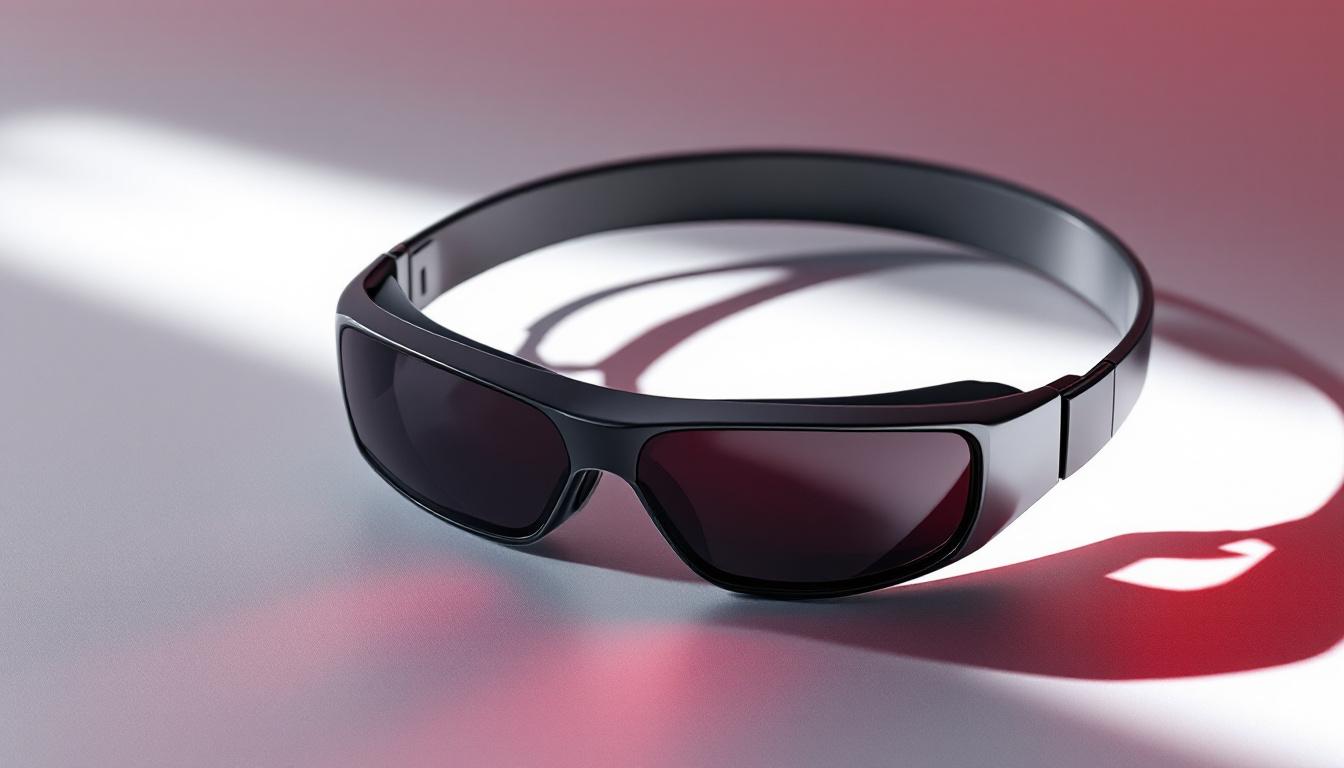
Full blackout goggles
These are the most common type bundled with red light panels.
They're typically made of soft silicone or foam, shaped like swim goggles, and completely opaque. They block 100% of all light, creating total darkness when you wear them. You can't see anything, which means zero light reaches your eyes.
Pros:
- Complete light blocking, no wavelength gets through
- Usually included free with device purchase
- Simple and foolproof (if no light gets in, you're protected)
- Comfortable fit that seals around your eye sockets
- Good for facial treatments where vision doesn't matter
Cons:
- You're completely blind while wearing them, can't see to adjust position or check your phone
- Can leave pressure marks on your face after 15-20 minute sessions
- Some models don't fit all face shapes well, allowing light leakage
- Gets sweaty inside the goggles during longer sessions
- Can't do anything else during treatment (reading, watching TV, etc.)
Blackout goggles work well if you're doing a dedicated red light session and don't need to see. Just stand there, relax, and let the LEDs do their thing. But if you want to multitask or maintain visual awareness, they're not ideal.
Wavelength-filtering glasses
These look more like regular eyewear, with tinted lenses that filter specific wavelengths while allowing some visible light through.
The most common tint is green, which blocks red and infrared wavelengths but lets other colors pass through. Some models use amber or specialized coatings to target specific ranges.
Pros:
- You can see while wearing them (though color perception is altered)
- More comfortable for longer sessions, less pressure on face
- Look less ridiculous, can be worn around the house if needed
- Lighter weight than blackout goggles
- Allow you to read, watch TV, or use your phone during treatment
Cons:
- Effectiveness varies widely by product, cheap ones may not block NIR adequately
- You need to verify the wavelength blocking specs (many don't list them)
- Green tint distorts color perception, everything looks weird
- Usually more expensive than basic blackout goggles
- Not all models provide side protection, light can leak around frames
If you want functional vision during red light sessions, wavelength-filtering glasses are worth considering. But you absolutely must verify the specs. Look for models that explicitly state they block 600-900nm or wider. Generic green sunglasses won't cut it.
Professional-grade safety glasses
These are designed for industrial or medical use with lasers and intense light sources.
They're rated with an optical density (OD) number that indicates how much light they block at specific wavelengths. For example, OD 2+ blocks 99% of light at the specified wavelengths, OD 4+ blocks 99.99%.
Pros:
- Certified wavelength blocking, you know exactly what protection you're getting
- Durable polycarbonate construction
- Often cover UV, visible red, and NIR in a single lens
- Side shields prevent light leakage
- Designed for extended wear, very comfortable
Cons:
- More expensive ($30-80 vs. $10-20 for basic options)
- Can be overkill for LED panels (OD 2+ is sufficient for most home use)
- Tinted lenses affect color vision
- May not fit over prescription glasses if you wear them
For LED-based home red light therapy, OD 2+ is generally sufficient. You don't need medical-grade laser protection unless you're using a Class 3B or Class 4 laser device, which home red light panels are not.
Bundled goggles vs. aftermarket options
Most red light panels come with free goggles.
Should you use them or buy better ones?
It depends on what you get. Some manufacturers include decent silicone blackout goggles that work fine. Others throw in flimsy plastic goggles that leak light around the edges and leave deep creases in your skin.
If your bundled goggles fit well, block all light, and don't cause discomfort, use them. Free protection is good protection if it works.
But if they're uncomfortable, leak light, or you want the ability to see during sessions, consider upgrading to wavelength-filtering glasses or professional-grade safety glasses.
A few popular aftermarket options:
BON CHARGE Protective Goggles block up to 99% of near-infrared light. They're made from flexible, comfortable material (not hard plastic) and don't leave pressure marks. Users report a snug fit that blocks side light effectively.
Hooga Protective Glasses shield from 200nm to 1000nm with 10% light transmittance. They're lightweight (13g), unisex, with durable polycarbonate lenses. The snug fit blocks side light well.
Mito Red Light Glasses come in two versions: IR3 Dark (80% reduction) and IR5 Extra Dark (95% reduction). You can choose the attenuation level based on your comfort and device power. They block both red and NIR wavelengths effectively.
LED Technologies Relaxation Goggles are designed specifically for light therapy. They're soft, close-fitting, and create a light-proof seal around your eyes. Similar to bundled blackout goggles but reportedly more comfortable for extended wear.
Your choice depends on priorities. Want total darkness and maximum protection? Blackout goggles. Want to see and multitask? Wavelength-filtering glasses. Want certified protection with exact specs? Professional safety glasses.
There's no single "best" option, just the best option for your specific needs.
What to look for when buying goggles
If you're shopping for red light therapy goggles, here's what actually matters.
Don't just buy the cheapest option on Amazon. Pay attention to these key factors.
Wavelength blocking range
This is the most important spec.
Your goggles need to block both visible red and near-infrared wavelengths. Most home red light panels use 660nm (red) and 850nm (NIR), sometimes with additional wavelengths like 630nm or 810nm.
Look for goggles that block 600-900nm minimum. Better yet, find ones that cover 200-2000nm for full-spectrum protection (UV through far-infrared).
The product description should explicitly state wavelength blocking. If it doesn't, contact the manufacturer and ask. If they can't provide specific numbers, skip that product.
Vague claims like "blocks red light" or "reduces brightness" are useless. You need actual wavelength ranges in nanometers.
Optical density (for glasses-style protection)
If you're buying wavelength-filtering glasses or professional safety glasses, optical density (OD) tells you how much light gets blocked.
OD is logarithmic:
- OD 1 = 90% blocked (10% transmitted)
- OD 2 = 99% blocked (1% transmitted)
- OD 3 = 99.9% blocked (0.1% transmitted)
- OD 4 = 99.99% blocked (0.01% transmitted)
For LED panels, OD 2+ is generally adequate. You don't need OD 4+ unless you're working with high-powered lasers.
But here's the catch: OD is wavelength-specific. A lens might be OD 3 at 808nm but only OD 1 at 660nm. Check the OD rating across the full wavelength range your device emits.
If the goggles don't list OD ratings at all, they're probably not designed for serious wavelength blocking. Pass.
Fit and comfort
You're going to wear these goggles for 10-20 minutes per session, potentially daily.
Comfort matters.
For blackout goggles, look for soft silicone or foam padding that conforms to your face without digging in. The seal should be snug enough to block light leakage but not so tight that it leaves marks or causes pressure headaches.
For glasses-style protection, consider weight and frame design. Lightweight frames (under 20g) are less fatiguing. Frames that sit naturally on your nose and ears without squeezing are better for extended wear. Side shields or wraparound designs prevent light from sneaking in around the edges.
If you wear prescription glasses, check whether the goggles fit over them. Some models are designed to accommodate glasses underneath, others aren't.
Read reviews. If multiple people mention discomfort, marks on face, or poor fit, take that seriously.
Light leakage prevention
Even the best wavelength-blocking lenses don't help if light leaks around the sides.
For blackout goggles, the seal around your eye sockets should be complete. No gaps, no bright spots when you press the goggles against your face.
For glasses, side shields or wraparound frame designs minimize leakage. Flat lenses with open sides allow light to enter from the periphery, reducing effectiveness.
Some glasses models have foam or rubber padding around the frame edges to create a better seal against your face. This helps, especially if you're using a high-powered panel close to your face.
Build quality and durability
Cheap goggles break.
Silicone blackout goggles can tear, especially around the strap attachment points. Plastic frames crack. Lens coatings peel.
Look for goggles with reinforced strap attachments, durable polycarbonate lenses, and solid frame construction. If it feels flimsy when you take it out of the package, it probably is.
For wavelength-filtering glasses, check whether the blocking is achieved through the lens material itself or a surface coating. Material-based blocking (like green polycarbonate lenses) is more durable than coatings, which can scratch or wear off over time.
Certifications and testing
Professional-grade safety glasses often carry certifications like ANSI Z87.1 (American National Standards Institute eye protection standard) or CE marking (European safety compliance).
These certifications don't specifically address red light therapy wavelengths, but they do indicate the manufacturer tested their product for impact resistance and optical quality. It's a sign they're serious about making real protective equipment, not just cheap costume accessories.
For red light therapy-specific goggles, look for third-party testing or lab verification of wavelength blocking claims. Some manufacturers provide spectral transmission graphs showing exactly how much light gets blocked at each wavelength.
If a product has zero certifications, no test data, and vague marketing claims, be skeptical.
Top red light therapy goggles (my recommendations)
Based on research, user reviews, and reported specs, here are the goggles I'd recommend.
I've organized them by type so you can choose based on your priorities.
Best blackout goggles: LED Technologies Relaxation Goggles
These are designed specifically for light therapy users.
They're soft, flexible, and create a complete light seal around your eyes. The padding is comfortable enough for 20+ minute sessions without leaving deep marks. The elastic strap is adjustable and doesn't dig into your head or ears.
You can't see anything while wearing them, which is the point. Total darkness means zero light exposure.
They're affordable (usually under $20) and durable. Multiple users report them lasting through hundreds of sessions without tearing or losing elasticity.
If you want simple, effective, total blackout protection and don't need to see during treatments, these are a solid choice.
Best glasses for seeing during sessions: Mito Red IR3 Glasses (Dark)
If you want to maintain vision while still getting meaningful wavelength blocking, the Mito Red IR3 glasses are excellent.
They block 80% of red and NIR light, which is enough to prevent discomfort and reduce retinal exposure while still allowing you to see (though with altered color perception).
The frames are lightweight and comfortable. They sit naturally on your face without squeezing. You can read, watch TV, or check your phone during treatment, which is a big plus if you're doing 15-20 minute sessions daily.
For users who find 80% blocking insufficient (maybe you're using a very powerful panel close to your face), Mito also offers IR5 Extra Dark lenses with 95% reduction. More protection, less visibility.
The downside? They're more expensive than blackout goggles (around $40-60). But the comfort and functionality may be worth it if you want a better experience.
Best professional-grade option: Hooga Protective Glasses
For users who want certified wavelength blocking with precise specs, Hooga's protective glasses deliver.
They block 200-1000nm wavelengths with only 10% light transmittance. That's comprehensive coverage from UV through near-infrared. The polycarbonate lenses are durable and impact-resistant.
At only 13g, they're extremely lightweight. You barely feel them on your face. The frame design includes side coverage to prevent light leakage.
They're unisex and fit most face shapes comfortably. The snug fit stays secure during movement without pinching.
Hooga lists specific wavelength blocking specs, which is huge. You know exactly what protection you're getting. This transparency is rare in the red light therapy goggle market.
Price is mid-range (around $25-35), making them affordable for serious protection without going full industrial laser safety mode.
Best for kids: BON CHARGE Protective Goggles
If you're doing red light therapy with children, BON CHARGE's goggles are a great fit.
They block up to 99% of near-infrared light. The material is soft and flexible (not hard plastic), which is safer for kids who might bump into things or take them off quickly. The fit is comfortable and doesn't leave marks.
Kids should always wear eye protection during red light therapy sessions because their eyes are more sensitive and still developing. These goggles make that easy.
They're also good for adults with sensitive eyes or those who want maximum NIR blocking without total blackout.
Budget option: Bundled goggles from your device
If you're on a tight budget, use the goggles that came with your red light panel.
Most quality manufacturers (Joovv, Platinum LED, Red Light Rising, etc.) include decent blackout goggles. They're not fancy, but they work. They block all light, which is all you really need.
The main downsides are comfort (some fit better than others) and durability (cheap ones may not last as long). But for functional protection, they're fine.
If your bundled goggles are uncomfortable or leak light, consider upgrading. But if they work, save your money.
What I'd personally choose
If I were buying goggles today for my own use, I'd go with the Mito Red IR3 Dark glasses.
Why? I want to see during sessions. I like reading or watching something while standing in front of my panel for 15 minutes. Total blackout goggles annoy me because I'm stuck doing nothing.
The 80% blocking is enough to prevent discomfort and reduce bright light exposure, while still giving me functional vision. The lightweight design means I can wear them comfortably for longer sessions.
If I were treating my face directly with a high-powered panel at close range, I might opt for the IR5 Extra Dark version for 95% blocking. But for general use, IR3 hits the sweet spot between protection and usability.
That said, if you prefer total darkness and maximum protection, blackout goggles are absolutely valid. It's a personal preference thing.
Common mistakes people make with eye protection
Let me save you from screwing this up.
Here are the most common mistakes I see people make with red light therapy eye protection.
Mistake 1: Wearing regular sunglasses
We covered this earlier, but it's worth repeating.
Regular sunglasses don't block near-infrared wavelengths effectively. They make things darker by reducing visible light, but NIR passes right through. And because your pupils dilate behind dark lenses, you might actually increase NIR exposure to your retina.
Don't use sunglasses. Don't use cheap colored lenses from a costume shop. Don't use welding goggles unless they're specifically rated for the wavelengths you're trying to block.
Use goggles designed for red light therapy or professional safety glasses with confirmed wavelength blocking specs.
Mistake 2: Skipping goggles for "just a quick session"
This is the "I'll just check my phone while driving" of red light therapy.
You think one quick 5-minute session without goggles won't matter. And honestly, it probably won't cause acute damage. But cumulative exposure adds up. Fifty "quick sessions" without protection is almost an hour of direct LED exposure to your eyes.
Your retina doesn't forgive chronic stress easily. Play it safe, wear the goggles every time.
If it's genuinely inconvenient, ask yourself why. If your goggles are uncomfortable or annoying, buy better ones. Don't skip protection because your equipment sucks, fix your equipment.
Mistake 3: Buying goggles without checking wavelength specs
You search Amazon for "red light therapy goggles."
You find a pair with good reviews and a low price. The description says "blocks harmful light" and "designed for LED therapy." You buy them.
Then you realize the product page doesn't list any wavelength blocking specs. No nanometer ranges, no optical density ratings, no spectral graphs. Just vague marketing fluff.
You've just bought decorative plastic that may or may not protect you.
Always verify wavelength specs before buying. If the manufacturer won't provide them, don't buy that product.
Mistake 4: Assuming blackout goggles block all wavelengths equally
Blackout goggles block all visible light because they're opaque. No light gets through.
But some cheap blackout goggles are made from thin plastic or fabric that blocks visible wavelengths while allowing some NIR transmission. You can't see NIR, so you don't notice the leakage.
This is rare with quality silicone goggles designed for red light therapy, but it can happen with generic sleep masks or budget goggles.
If your blackout goggles feel warm inside after a session, that's a sign NIR might be penetrating. Consider upgrading to goggles specifically rated for NIR blocking.
Mistake 5: Not adjusting fit properly
Goggles only work if they fit.
If there are gaps around your nose, temples, or forehead, light leaks in. You might not notice with your eyes closed, but it's still reaching your eyelids and potentially your eyes.
Take 30 seconds to adjust the strap, position the padding, and make sure you have a good seal before starting your session.
For glasses-style protection, make sure the frames sit snug without pinching. Side shields should wrap around enough to block peripheral light. If light is streaming in from the sides, the glasses aren't doing their job.
Mistake 6: Using damaged or worn-out goggles
Goggles don't last forever.
Silicone degrades, elastic stretches out, lens coatings wear off, plastic cracks. If your goggles are damaged, they're not protecting you properly.
Inspect your goggles every few months. If the seal is breaking down, the lenses are scratched, or the strap won't stay tight, replace them. Goggles are cheap compared to eye health.
Mistake 7: Letting kids use adult goggles
Kids' faces are smaller.
Adult goggles don't fit properly on children, which means light leakage. And kids' eyes are more vulnerable to bright light exposure than adult eyes, so proper protection is even more important.
Buy kid-sized goggles or adjustable models designed to fit smaller faces. Don't assume adult goggles will work just because you can tighten the strap.
How to use your goggles correctly
You've got your goggles. Now use them right.
Here's a simple protocol for every red light therapy session.
Before you start
Check the fit. Put your goggles on before turning on the panel. Make sure there's no light leakage around the edges. The seal should be snug but not painful.
Adjust the strap. Tight enough to stay in place, loose enough to be comfortable. If your goggles have an adjustable strap, set it so it holds the goggles firmly without squeezing your head.
Position your panel. Set up your red light panel at the correct distance and angle before putting on your goggles. If you're using blackout goggles, you won't be able to see to adjust anything once they're on.
Clean the lenses. If you're using glasses-style protection, make sure the lenses are clean. Smudges and fingerprints can scatter light in weird ways, reducing protection effectiveness.
During your session
Keep them on the entire time. Don't take your goggles off mid-session to check the time or adjust your position. If you need to make changes, turn off the panel first.
Don't peek. Resist the urge to lift the edge of your blackout goggles to see how much time is left. That defeats the purpose. Set a timer you can hear, or use a device with an auto-shutoff feature.
Stay at the recommended distance. If you're supposed to be 12 inches away from the panel, don't lean in closer because you think more is better. Higher irradiance increases eye exposure risk, even with goggles.
Relax your eyes. If you're wearing blackout goggles, close your eyes and relax. If you're using wavelength-filtering glasses and can still see, avoid looking directly at the LEDs. Look at something else, read a book, watch TV.
After your session
Remove goggles after turning off the panel. Don't take off your goggles while the LEDs are still on. Turn off the device first, then remove eye protection.
Inspect your goggles. Take a quick look at the condition. Any cracks, tears, or damage? If so, replace them before your next session.
Clean if needed. Blackout goggles can get sweaty or collect dust. Wipe them down with a damp cloth occasionally. For glasses, use a microfiber cloth to clean the lenses without scratching.
Store properly. Don't throw your goggles in a drawer where they'll get crushed. Store them in a protective case or hang them on a hook near your red light panel so they're ready for the next session.
FAQs about red light therapy goggles
Let's tackle the most common questions people have.
Can I just close my eyes instead of wearing goggles?
Closing your eyes helps, but it's not enough.
Your eyelids only block about 25-40% of red and NIR light. The rest penetrates through and reaches your retina. The bright red glow you see with closed eyes in front of a panel? That's light passing through your eyelids.
For low-powered devices at a distance, closed eyes might be sufficient. But for high-powered panels close to your face, you need physical barrier protection.
Do I need goggles if I'm treating my back or legs?
If the LEDs aren't pointing at your face and you're not looking directly at the panel, eye exposure risk is minimal.
You'll get some ambient light reflection, but it's nowhere near the intensity of direct exposure. Goggles are optional in this scenario, though wearing them doesn't hurt.
If you're treating multiple body areas and rotating the panel (including facial treatment), just keep the goggles on for the whole session. Easier than taking them on and off.
What if my bundled goggles are uncomfortable?
Buy better ones.
Comfort matters because if your goggles suck, you won't wear them. And not wearing protection is worse than temporary discomfort.
Try wavelength-filtering glasses if blackout goggles leave marks on your face. Or upgrade to higher-quality blackout goggles with better padding and fit.
Think of goggles as part of your red light therapy setup, like the panel itself. You wouldn't use a cheap, ineffective panel. Don't use cheap, ineffective eye protection.
Can I wear my prescription glasses under my goggles?
Some blackout goggles are designed to fit over glasses, others aren't.
Check the product description or reviews to see if people with glasses can wear them comfortably. Goggles designed for this will have a deeper eye cup to accommodate frames.
For wavelength-filtering glasses, you have a few options. Some are designed to fit over prescription glasses (called OTG, over-the-glasses). Others won't work. If you need prescription correction during your session, OTG models are the way to go.
Alternatively, many people just take off their prescription glasses during red light sessions. If you're standing still in front of a panel, you don't really need to see clearly. But that's a personal choice.
How often should I replace my goggles?
It depends on wear and tear.
Inspect them regularly. If the seal is degrading, the lenses are scratched, the strap is stretched out, or there's any damage, replace them.
For silicone blackout goggles with normal use, expect 1-2 years of life. For wavelength-filtering glasses with polycarbonate lenses, potentially longer if you take care of them.
If you're using your goggles daily, check them every few months. Better to replace them proactively than discover they're failing mid-session.
Are goggles safe for kids?
Yes, but make sure they fit properly.
Kids should always wear eye protection during red light therapy because their eyes are still developing. Buy goggles designed for children or adjustable models that fit smaller faces.
Avoid goggles with hard plastic edges that could hurt if a kid moves suddenly or takes them off too fast. Soft, flexible materials are safer.
Supervise young children during sessions to make sure they keep the goggles on and don't peek.
Can I use goggles designed for tanning beds?
Only if they block the right wavelengths.
Tanning bed goggles are designed to block UV light (200-400nm), which causes eye damage from UV exposure. But they may not block visible red (630-700nm) or near-infrared (700-1200nm) effectively.
Check the specs. If the tanning bed goggles block 600-900nm, they'll work for red light therapy. If they only block UV, they won't.
Don't assume one type of light therapy goggle works for another without verifying wavelength coverage.
What if I forget to wear goggles for a few sessions?
You're probably fine.
A few unprotected sessions won't cause immediate damage. The concern is cumulative exposure over months and years. Your eyes can handle occasional bright light exposure (think camera flashes, brief sun glances).
That said, don't make it a habit. Get back on track with consistent goggle use going forward.
If you experience eye pain, vision changes, or persistent discomfort after unprotected sessions, see an eye doctor. Unlikely to be serious, but better safe than sorry.
Do more expensive goggles work better?
Not always.
Price often reflects build quality, comfort, and brand markup more than protection effectiveness. A $15 pair of simple blackout goggles can block light just as well as a $50 pair if both are properly designed.
What you're paying for with more expensive goggles is usually: better materials, more comfort, wavelength-filtering instead of total blackout, certified specs, and durability.
Don't assume expensive equals better protection. Check the actual wavelength blocking specs and user reviews regardless of price.
Can goggles help with eye strain during sessions?
Absolutely.
If you've been getting headaches, eye fatigue, or discomfort during red light sessions, goggles will likely solve the problem. Bright light exposure is a common cause of eye strain, and reducing that input with proper eye protection makes sessions much more comfortable.
Many people report they can extend session duration and use their panel closer to the face once they start wearing quality goggles. The eye strain was limiting their ability to get optimal treatment, and goggles removed that barrier.
The bottom line: should you wear goggles?
Here's my final take after reviewing all the research, products, and user experiences.
If you're doing any facial treatment with a red light panel, wear goggles. Period.
If you're using a high-powered panel (300W+) at close range, wear goggles.
If you're treating children, goggles are mandatory.
If you're using NIR mode or combo wavelengths (660nm + 850nm), wear goggles.
For body treatments where the panel isn't aimed at your face and you're maintaining a reasonable distance, goggles are optional but still smart.
The downside of wearing goggles is minimal. Slight inconvenience, maybe minor discomfort if you have poor-fitting ones. The downside of not wearing them could be cumulative eye strain, discomfort, or potential long-term retinal stress.
Why risk it? Goggles are cheap, they work, and they let you use your red light therapy device with confidence and safety.
If your current goggles suck, upgrade. If you don't have goggles, buy some. If you've been skipping eye protection, stop.
Your eyes are irreplaceable. Protect them.
Helpful resources
Internal guides:
- Red light therapy eyes open or closed - Should you keep your eyes open during treatment?
- Do you need eye protection for red light therapy - Complete eye safety guide
- Red light therapy glasses - Glasses vs. goggles comparison
External resources:
- Mito Red Light protective glasses - IR3 and IR5 options for different blocking levels
- PlatinumLED eye protection guide - Manufacturer perspective on when goggles are necessary
- Joovv protective eyewear guidelines - Professional recommendations for eye safety
Scientific references:
- Near Infrared (NIR) Light Therapy of Eye Diseases: A Review - Research on therapeutic and safety aspects of NIR exposure
- Effect of infrared radiation on the lens - Study on how IR affects lens tissue
- Red and NIR light therapy effects on eyes - Overview of eye safety with red light devices
The Truman Show ending
You've reached the end.
You now know more about red light therapy goggles than 95% of people using these devices. You understand when you need protection, which goggles actually work, and how to use them correctly.
No more confusion. No more wondering if you're damaging your eyes. No more squinting through sessions because you can't decide whether to wear the goggles or not.
Just clear, simple, science-backed guidance: protect your eyes, use the right equipment, and get the most out of your red light therapy sessions safely.
Now go put on your goggles and actually enjoy your treatments without worrying about your retinas.
Sources:
- Mito Red Light | Red Light Therapy Glasses IR5 (Extra Dark)
- Protective Goggles For Red Light Therapy | BON CHARGE
- 5 Must-Have Safety Goggles for Red Light Therapy – KOZE Health
- 5 Best Red Light Therapy Glasses | Eye Protection Guide 2026
- Red Light Therapy Glasses: Do You Need Them? – PlatinumLED Therapy Lights
- Do You Need Eye Protection for Red Light Therapy? Safety Tips – Maysama
- Top RED & NIR Blocking Eyewear, Goggles, Sunglasses, and Safety Glasses Reviewed!
- Red Light Therapy Protective Glasses – Hooga
- Protective Eyewear Guidelines With Red Light Therapy | Joovv
- Near Infrared (NIR) Light Therapy of Eye Diseases: A Review - PMC
- Effect of infrared radiation on the lens - PMC
- Infrared & Near Infrared light therapy and the effect on Eyes – Kivo Light Therapy