Lumara red light mask review: 470 LEDs, one wavelength, real results?
Honest review of the Lumara VISO red light mask: specs, how it compares to Omnilux and CurrentBody, who should buy it, and what the single-wavelength limitation really means.
You've probably seen the Lumara VISO pop up in comparison lists. 470 LEDs. FDA Class II cleared. Made in the USA. Silicon Valley company. Sounds impressive on paper.
But then you dig deeper and find the one thing that makes reviewers pause: it only emits 660nm red light. No near-infrared. No blue light. Just red.
So is that a dealbreaker? Or does the LED density and clinical-grade output make up for the single-wavelength approach?
That's exactly what we're going to work through. This isn't a brand press release. It's a full breakdown of what the Lumara VISO actually does, what the science says about its wavelength choice, how it stacks up against serious competitors, and who should actually buy it versus who's better served by something else.
By the end, you'll know whether this mask deserves a spot in your skincare routine or whether your money is better spent elsewhere.
What is the Lumara VISO?
The VISO is the flagship consumer face mask from Lumara Systems, a Silicon Valley-based company founded in 2016. Before going consumer, they supplied professional LED systems to medspas and skin clinics. That background shows in the device design.
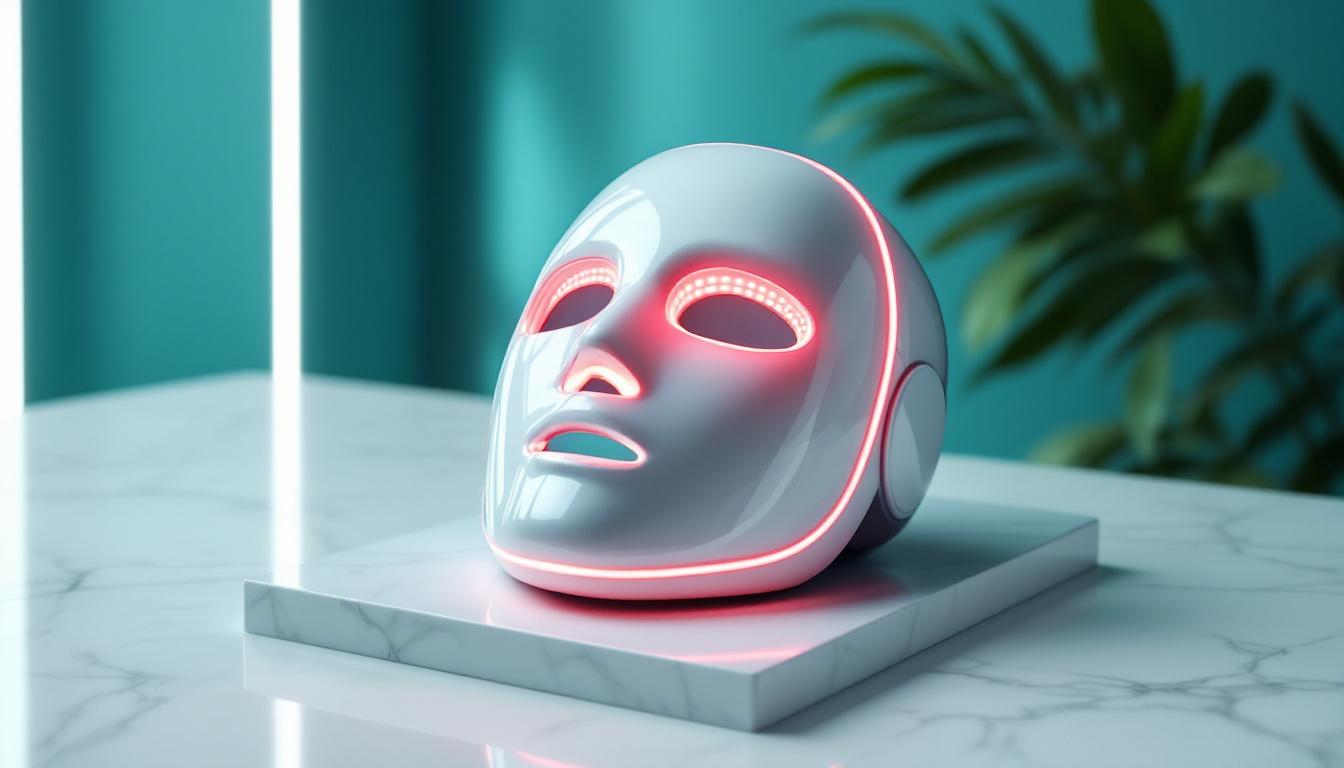
The VISO is a wearable silicone face mask packed with 470 individual red light LEDs, all emitting at 660nm. It sits flush against your face, covering your forehead, cheeks, nose, temples, and most of your lower face. You wear it for 10-20 minutes per session.
Lumara has received the ASCP Award for Best in Skincare LEDs, and the device holds FDA Class II 510(k) clearance, which puts it in a different category from the generic LED masks flooding Amazon. It's also ISO 60601 tested (the international standard for medical electrical equipment safety) and carries an IP65 water-resistance rating.
The design is cordless and foldable, which makes it unusually travel-friendly for a clinical-grade device.
The main pitch: more LEDs than any comparable mask on the market, delivering more photons to more surface area with less variation across your face.
The main concern, which we'll address honestly throughout this review: it only uses one wavelength.

The specs, explained plainly
Before getting into what the device does, let's go through the numbers. Marketing specs can be confusing, so here's an honest breakdown.
470 LEDs at 660nm. This is the core claim. Most face masks use 100-200 LEDs. The Omnilux Contour, one of the most respected masks on the market, uses 132 LEDs. CurrentBody's flagship mask uses 236. The VISO's 470 LEDs represent significantly denser coverage. What that means in practice: more uniform energy delivery across your entire face, fewer "hot spots," and less chance that some areas get more treatment than others.
Irradiance: 20-31 mW/cm². Lumara markets the device as delivering 30 mW/cm² peak irradiance. Independent testing by Light Therapy Insiders measured 20 mW/cm² on low and 31 mW/cm² on high. Both numbers are solid for a consumer face mask. Many cheap masks deliver 5-10 mW/cm², which barely crosses the therapeutic threshold.
Energy dosage at 10 minutes: 12-19 J/cm². This is the metric that actually matters for photobiomodulation. At 10 minutes on high, you're delivering around 19 J/cm². Most red light therapy research uses dosing in the 3-50 J/cm² range for skin applications, so the VISO is firmly in the therapeutic zone.
IP65 water resistance. Waterproof enough for sweat, steam, and accidental splashing. You can use it in a sauna-adjacent setup without worrying about moisture damage.
Two intensity settings. Low for sensitive skin or eyes, high for maximum therapeutic output. Simple.
Cordless, foldable. Runs on a rechargeable battery. No cord to wrestle with during sessions. Folds flat for travel.
Price: approximately $479-$599. Price has varied since launch. Check the current listing on lumarasystems.com. A 30-day money-back guarantee and a 2-year warranty are included.
What's not in the specs: any NIR wavelengths (810-850nm), any blue light (415nm), or any pulsing modes. It's a simple, clean, single-wavelength device.
Why 660nm? The science behind the wavelength choice
Here's where the single-wavelength criticism either becomes a dealbreaker or a non-issue, depending on what you're trying to accomplish.
660nm sits in what researchers call the "therapeutic window" for red light. It's absorbed readily by chromophores in your skin cells, particularly cytochrome c oxidase (CCO), which is an enzyme in the mitochondria responsible for cellular energy production. When CCO absorbs 660nm photons, it kicks off a chain reaction: more ATP production, more cellular activity, more collagen synthesis, faster tissue repair.
This isn't speculative. It's one of the most studied wavelengths in the entire photobiomodulation literature. Hundreds of peer-reviewed studies have examined 660nm light for skin applications. The evidence for collagen stimulation, wrinkle reduction, inflammation control, and wound healing at this wavelength is strong.
So Lumara's choice of 660nm isn't arbitrary. It's arguably the most evidence-backed single wavelength you could choose for facial skin rejuvenation.
The question is what you're giving up.
Near-infrared light, typically 810-850nm, penetrates deeper into tissue than red light. While 660nm works primarily at the skin surface (epidermis and upper dermis), NIR wavelengths can reach the dermis, hypodermis, muscle tissue, and even bone. For face masks specifically, this deeper penetration means NIR can affect:
- Circulation and lymphatic drainage beneath the skin
- Deeper collagen remodeling in the lower dermis
- Inflammation in deeper tissue structures
- Jaw muscle tension (useful for some users)
If you're targeting only superficial skin quality, texture, tone, and collagen density in the upper dermis, 660nm alone does the job well. If you want deeper-tissue effects, you need NIR. And the VISO doesn't have it.
For most people doing a face mask primarily for anti-aging and skin quality, this is more of a theoretical limitation than a practical one. The results are real. But it's worth understanding clearly before spending $500.
Build quality and design
The VISO's silicone construction is one of the best things about it. The material is soft, flexible, and conforms to different face shapes better than the rigid plastic frames used by some competitors. It won't leave pressure marks or dig into your nose bridge.
The design sits closer to your face than panels do. This matters because irradiance follows an inverse square law: as you double the distance from a light source, irradiance drops to a quarter of its value. A mask sitting flush against your skin delivers the full 20-31 mW/cm² consistently. A panel six inches away delivers less. Contact devices have an inherent irradiance advantage for face treatments.
The LED arrangement follows Lumara's proprietary "Illuminate technology," which distributes the 470 LEDs for maximum uniformity. Based on independent measurements, there's less variation across the mask surface compared to many competitors where LEDs are clustered in certain zones.
The cordless design is genuinely useful. You can move around, do other things, and not be tethered to a wall. The battery life handles full sessions without issue.
IP65 waterproofing is a standout feature. Most masks are not rated for moisture exposure. The VISO can handle sweat, steam, and bathroom humidity without concern. For people who want to use it during a hot yoga session or in a steam room environment, this is a real differentiator.
What's less impressive: there's no companion app, no digital timer, no intensity presets beyond the two settings, and no companion skincare recommendations built into the product experience. This is a hardware-first device. You press the button, you set the intensity, you count your minutes. That simplicity is either refreshing or frustrating depending on how you like your devices.
The coverage gap at the jawline
One consistent complaint across multiple independent reviews: the mask doesn't extend far enough down the lower face. Your chin, the underside of your jaw, and the corners of your lower lip receive less consistent coverage or no coverage at all.
This is a real limitation if you're treating jowling, chin wrinkles, or lower face pigmentation. The "100% face coverage" marketing claim doesn't hold up precisely when you factor in the anatomy of how the mask sits.
If the lower face is your primary concern, this is worth knowing before you buy.
How the treatment actually works
One of the things people overthink with red light therapy is the mechanism. Let's keep it simple.
Your face mask emits 660nm photons. Those photons penetrate your skin. Inside your skin cells, mitochondria absorb the photons through cytochrome c oxidase. This stimulates the mitochondria to produce more ATP (cellular energy). More cellular energy means more collagen production by fibroblasts, faster cell turnover, reduced inflammatory signaling, and better overall skin health.
This is the same process that happens in photobiomodulation panels, handheld devices, and professional clinic machines. The device is just delivering the photons differently, via a wearable mask that conforms to your face.
The results aren't instantaneous. Red light therapy builds cumulatively. Most users see early changes (brightness, reduced redness, smoother texture) within 2-4 weeks of consistent use. More significant changes like reduced fine lines and improved firmness typically take 8-12 weeks.
Consistency matters more than duration per session. Three sessions per week for 10 minutes each will get you further than one 30-minute session per week. The mitochondrial response is cumulative, and it requires repeated photonic stimulation to sustain elevated collagen production over time.

Treatment protocol: what Lumara recommends vs. what's realistic
Lumara's official recommendation is ambitious: 20 minutes twice daily, morning and evening, for optimal results.
That's 40 minutes of mask time per day. For most people with actual jobs and lives, that protocol is unsustainable.
Here's a more realistic framework based on the research and the device's irradiance output:
Introductory phase (weeks 1-4): 10 minutes per session, 4-5 sessions per week. This lets your skin adapt and establishes the baseline routine without overwhelming the schedule.
Active phase (weeks 4-12): 15-20 minutes per session, 5-6 sessions per week. If results are progressing well, maintain this frequency. If you're seeing good progress at 4 sessions per week, that's fine too.
Maintenance phase (12+ weeks): 10-15 minutes per session, 3-5 sessions per week. Once you've achieved your target improvement, you can reduce frequency while maintaining results.
At the measured irradiance of 20 mW/cm² (low) to 31 mW/cm² (high), a 10-minute session on high delivers approximately 18.6 J/cm², which is within the therapeutic range documented in PBM literature. You're getting real dosing at clinically meaningful levels with a 10-minute session.
Always use the mask on clean, dry skin. You don't need to apply anything beforehand. If you're using serums, applying them after the session allows better absorption, since the improved circulation from the treatment enhances skin permeability in the short window following treatment.
Eye safety during treatment
The VISO has 470 LEDs sitting close to your face. That's a lot of light near your eyes.
Lumara doesn't require goggles for the VISO, and the device is designed so the eye cutouts allow your eyes to be closed or covered without direct LED contact at the eye level. But the brightness is significant, and if you're sensitive to bright light or have a history of eye issues, using eye protection is a reasonable precaution.
You can read more about when eye protection matters in our guide on do you need eye protection for red light therapy. For the short version: a face mask positioned with proper eye cutouts is lower risk than a panel aimed at your face from inches away, but the light is still bright enough that keeping your eyes closed during sessions is smart practice.
If you want to use goggles with the VISO, our review of the best red light therapy goggles covers which ones actually block both red and NIR wavelengths. For a mask that emits only red, any decent pair of blackout goggles or even a sleep mask will reduce eye exposure if that's a concern.
What results to expect
Let's set realistic expectations based on what 660nm red light therapy at clinical irradiance actually does, not what marketing promises.
Weeks 1-2. Most users notice improved skin brightness and some reduction in redness and inflammation. If you have chronic facial redness or rosacea-type symptoms, this often improves earlier than other markers. Some users also notice improved moisture retention.
Weeks 3-6. Texture improvements become more apparent. Pores often appear tighter. Skin tone looks more even. Early improvements in fine lines around the eyes and mouth can begin to show, though this varies significantly by age and skin condition.
Weeks 8-12. This is when collagen changes become structurally measurable. Studies on 660nm light show increased collagen density, improved skin elasticity, and measurable reduction in wrinkle depth at this timeframe. These aren't subtle cosmetic illusions: the cellular structure of your skin is actually different.
Long-term (3-6 months). Continued improvements in skin firmness, volume, and overall youthfulness. For hyperpigmentation, expect slower progress. Red light helps suppress melanin production and accelerate cell turnover, but pigmentation changes take time. Our dedicated guide on red light therapy for hyperpigmentation covers the timeline and expectations in more detail.
Individual results vary based on age, skin type, starting condition, lifestyle factors like sun exposure and hydration, and consistency of use. But the mechanism is established. If you're consistent, you will see changes.
Lumara VISO vs. the competition
This is where the buying decision really happens. The LED face mask market has several serious contenders, and the VISO sits at the premium end. Let's compare it honestly.
Lumara VISO vs. Omnilux Contour Face
The Omnilux Contour is the most clinically respected consumer LED mask on the market. It's backed by Omnilux's decades of professional clinic data and has a large published evidence base.
The Omnilux uses 132 LEDs emitting both 633nm (red) and 830nm (near-infrared), covering both superficial skin stimulation and deeper tissue penetration. The VISO has nearly 4x more LEDs but zero NIR.
At approximately $395, the Omnilux is also around $100-$200 cheaper than the VISO depending on current pricing.
Choose Omnilux if: NIR for deeper tissue effects matters to you, or you want the most clinically established mask brand at a lower price.
Choose VISO if: LED density and irradiance output are your priorities, and your focus is purely on surface skin quality at 660nm.
Lumara VISO vs. CurrentBody Series 2
The CurrentBody Series 2 is a premium mask with 236 LEDs and three wavelengths: 633nm red, 830nm NIR, and 1072nm deep NIR (which specifically targets the peri-orbital area around the eyes). Priced around $495.
CurrentBody covers more of the wavelength spectrum than either the VISO or the Omnilux. For someone specifically targeting eye-area aging (crow's feet, under-eye hollowing), the 1072nm wavelength is a genuine differentiator.
Choose CurrentBody if: Under-eye aging is your primary concern, or you want the broadest wavelength coverage in a face mask.
Choose VISO if: You want maximum LED density and uniform coverage across the full face, and you're not specifically targeting the eye area.
Lumara VISO vs. Dr. Dennis Gross DRx SpectraLite FaceWare Pro
The Dr. Dennis Gross mask combines red (630nm) and blue (415nm) light. Blue light kills P. acnes bacteria responsible for acne breakouts, making this the go-to option for acne-prone skin. It's priced around $455 and uses a 3-minute daily treatment protocol.
No NIR. Much lower LED count. Much faster sessions. Designed for a different primary use case.
Choose Dr. Dennis Gross if: Acne or blemish-prone skin is your main concern.
Choose VISO if: Anti-aging, collagen, texture, and tone are your priorities.
Side-by-side comparison
| Feature | Lumara VISO | Omnilux Contour | CurrentBody Series 2 | Dr. Dennis Gross |
|---|---|---|---|---|
| Price | ~$479-$599 | ~$395 | ~$495 | ~$455 |
| LED count | 470 | 132 | 236 | 100+ |
| Red wavelength | 660nm | 633nm | 633nm | 630nm |
| NIR? | No | 830nm | 830nm + 1072nm | No |
| Blue light? | No | No | No | 415nm |
| Session time | 10-20 min | 10 min | 10 min | 3 min |
| FDA status | Class II 510(k) | Cleared | Cleared | Cleared |
| Waterproof | IP65 | No | No | No |
| Warranty | 2 years | 1 year | 1 year | 1 year |
The VISO's waterproofing and 2-year warranty stand out. So does its LED density. The tradeoff is clear: you're getting the most photons at one wavelength rather than fewer photons across multiple wavelengths.
For a broader look at how panels and masks compare in general, see our guide on red light panel vs. mask, which covers the distance, irradiance, and coverage differences between the two device types.
Who should buy the Lumara VISO
Let's get specific. The VISO is the right choice for certain buyers.
You're focused on anti-aging and collagen. 660nm has the strongest evidence base for collagen synthesis among visible wavelengths. If wrinkle reduction, skin firmness, and texture improvement are your goals, the VISO delivers meaningfully on those outcomes. The high LED count means the energy is distributed evenly across your entire face, including cheeks, forehead, and temples.
You have sensitive, reactive skin. Without NIR's deeper tissue penetration and without blue light's antibacterial effect, the VISO is the most conservative option at this price tier. Lower risk of overstimulation or unexpected reactions in people with sensitive skin conditions.
You travel frequently. Cordless, foldable, IP65-rated. This is genuinely one of the most travel-friendly clinical-grade masks available. Most competitors are either corded or rigid. The VISO travels like a piece of clothing, not a fragile electronic.
You want simple operation. Two intensity settings, no app required, no complex protocols. You put it on and it works. Some people find advanced devices with companion apps, presets, and Bluetooth connectivity annoying rather than helpful. The VISO is for them.
You're investing in a long-term device. The 2-year warranty is twice what most competitors offer. Combined with the IP65 waterproofing and USA-engineered build quality, this is designed to last. Cheap masks at $50-$100 often need replacement within a year.
Who should probably look elsewhere
The VISO isn't for everyone. Here's who should consider a different device.
You have active acne. The VISO doesn't treat acne. It has no blue light component. If acne is your primary skin concern, the Dr. Dennis Gross FaceWare Pro or another red/blue combination mask is more appropriate.
You want deep tissue benefits. If you're interested in jaw muscle tension, deeper lymphatic drainage, or sub-dermal circulation improvements, you need NIR. The Omnilux Contour or CurrentBody Series 2 both include 830nm and will serve those goals better.
Under-eye aging is your focus. Crow's feet and under-eye hollowing respond well to 1072nm light (CurrentBody's differentiator). The VISO covers the peri-orbital area but without that specific deep-penetrating wavelength, you're leaving some potential on the table.
Budget is a concern. At $479-$599, the VISO is a genuine luxury purchase. If you're testing the waters with red light therapy for your face, starting with a less expensive device makes sense. The Omnilux at ~$395 gives you more wavelength coverage at a lower price point, even if fewer LEDs.
You want before-and-after documentation. The VISO has no companion app, which means no built-in progress tracking, no session logging, no photo comparison tools. If systematic documentation of your results matters to you, you'll need to manage that yourself.
The single-wavelength question, answered
Let's come back to the biggest criticism: one wavelength.
Is it a problem? It depends on what you're treating.
For pure skin quality, anti-aging, collagen stimulation, texture, tone, and redness: 660nm alone is genuinely sufficient. The evidence supports it. The irradiance is adequate. The LED density is excellent. You will get results.
For deeper tissue effects, acne, or advanced multi-system treatment: you need additional wavelengths, and the VISO won't provide them.
The honest framing is this. The VISO is a precision tool, not a Swiss Army knife. It does one thing well: delivers high-density 660nm red light to your face. If that's exactly what you need, it's excellent at that specific job. If you need multiple functions, you'll be better served by a multi-wavelength device.
Some people prefer the precision approach. One well-researched wavelength at clinical irradiance, consistently applied, beats a device with five wavelengths where none of them reach therapeutic dosing. The Lumara's irradiance measurements support that it's actually delivering clinically meaningful 660nm dosing, which is not guaranteed with every multi-wavelength mask on the market.
Does it work with serums?
A question that comes up often with face masks: should you apply your serums before or after?
For the VISO specifically, and for red light therapy in general, apply serums and active ingredients after your session. Here's why.
Red light therapy temporarily increases local circulation and skin permeability. Applying serums immediately following a session means deeper penetration and potentially greater efficacy. This is sometimes called the "post-treatment enhancement window."
More importantly, some ingredients don't mix well with red light during treatment. Photosensitizing ingredients like retinol, certain acids, and benzoyl peroxide can cause irritation when exposed to high-intensity light. Using them after your session avoids that issue.
If you're using retinol in your routine (which is common for anti-aging), see our article on retinol and red light therapy for the specific protocol that maximizes both without causing sensitivity reactions.
Clean, dry skin before your session. Serums and moisturizer after. Simple.
Is the Lumara VISO worth the price?
Let's talk money directly.
$479-$599 is a lot for a skincare device. It's also a lot less than what clinical photobiomodulation sessions cost over the same timeframe. A professional LED treatment in a dermatology office or medspa typically costs $75-$150 per session. At three sessions per week for 12 weeks, you're looking at $2,700-$5,400 for the same treatment period. Even at $599, the VISO breaks even after a matter of weeks.
Compared to other premium consumer masks, the VISO is priced at the high end but within range. Omnilux is cheaper. CurrentBody is comparable. The price is justified by the LED density, USA manufacturing, IP65 rating, 2-year warranty, and FDA Class II clearance, if those things matter to you.
It's harder to justify if: you're not sure red light therapy will work for your specific skin concerns, you've never tried it before, or you're comparing it mainly on wavelength count rather than irradiance quality.
The 30-day money-back guarantee reduces risk. If you try it for a month and see no improvement, you can return it. Most legitimate skin changes from red light therapy start appearing within the first two to four weeks of consistent use, so a 30-day trial is enough to get early signal.
Frequently asked questions
How often should I use the Lumara VISO?
For best results, 5-7 sessions per week is ideal during the first three months. A realistic minimum for meaningful progress is 3-4 sessions per week. Session length can be 10-20 minutes depending on your available time. More sessions at 10 minutes beats fewer sessions at 20 minutes if the alternative is skipping days. Consistency over duration.
For a deeper look at frequency and dosing, see our guide on how long to do red light therapy.
Does the Lumara VISO hurt?
No. 660nm red light at therapeutic irradiance levels doesn't generate meaningful heat on the skin surface. You may feel a very mild warming sensation, particularly on the high setting, but nothing that qualifies as uncomfortable for the vast majority of users. If you have extremely sensitive skin or a known sensitivity to light, start on the low setting.
Can I use it every day?
Yes. Daily use is safe and, according to Lumara's protocol, recommended. Red light therapy doesn't damage skin tissue, so there's no practical ceiling on frequency in the way there is for chemical exfoliants or ablative treatments. That said, there's a point of diminishing returns with photobiomodulation: you can't accelerate results indefinitely by adding more sessions. Daily use is fine. Twice-daily is fine for committed users. Three times daily provides no additional benefit and isn't worth the time.
Our article on can you do too much red light therapy covers the concept of biphasic dose response, which explains why more isn't always better.
Does it work for acne?
Not significantly. 660nm red light reduces inflammation, which can help calm active breakouts indirectly. But it doesn't have the antibacterial effect of blue light (415nm), which directly targets P. acnes bacteria. If acne is your primary concern, the Lumara VISO is the wrong tool. Look at masks that combine red and blue wavelengths.
Can I use it with my existing skincare routine?
Yes, with a simple adjustment: use it on clean skin before applying any serums, oils, or moisturizers. After your session, apply your usual skincare products. The post-treatment window offers enhanced absorption, so this sequencing actually improves the efficacy of what you apply afterward.
Is it safe for sensitive skin?
Generally yes. The VISO uses no heat-generating technology, no UV, and no chemical interaction with the skin. Red light therapy at 660nm is among the gentlest forms of skin treatment. Start on the low intensity setting if you're concerned, and build up to high intensity over a few weeks.
How long until I see results?
Early improvements (brightness, reduced redness) typically appear within 2-4 weeks of consistent use. Significant changes to fine lines, texture, and firmness typically require 8-12 weeks. Hyperpigmentation takes longer. Set a 12-week minimum before evaluating whether the device is working for you.
Does it work for men?
Yes. The biology of photobiomodulation doesn't vary by sex. Men tend to have slightly thicker skin, which might mean some results take slightly longer to appear, but the mechanism and outcomes are the same. Some men also find the treatment useful for post-shave skin recovery and beard area inflammation reduction.
What's the difference between 660nm and 630nm?
The two wavelengths are very close and both sit in the red spectrum. 630nm (used by Omnilux and others) and 660nm (used by Lumara) are both well-researched for skin applications. Neither is definitively superior for surface skin treatment. The differences in tissue depth penetration and chromophore absorption between them are minor at the consumer irradiance levels these masks operate at.
Is the Lumara VISO FDA approved?
It holds FDA Class II clearance under 510(k), registered under product code ILY in the Physical Medicine Device category. "FDA cleared" is the correct term for this category. It means the device has been reviewed and cleared as safe for its intended use, based on substantial equivalence to already-cleared devices. This is a meaningful distinction from the generic LED masks that make no FDA claims at all.
Related guides
If you're researching red light therapy for your face and skin, these guides cover adjacent topics in detail:
- Red light panel vs. mask: which is better for your face?: full comparison of device types, with irradiance, coverage, and cost analysis
- Red light therapy face before and after: what actually changes?: realistic timeline and what the research shows about visible outcomes
- Red light mask before and after: a closer look at results: specifically focused on LED face mask outcomes
- Red light therapy hyperpigmentation: does it work?: what to expect if dark spots and uneven tone are your primary concern
- Red light therapy for hair loss: if scalp and hair density is a secondary goal for your light therapy routine
- Eyes open or closed during red light therapy?: the evidence on what's actually safer for eye exposure during treatment
Helpful resources
For those who want to go deeper on the science and independent testing:
- Lumara VISO product page: manufacturer specs, warranty terms, and official protocol guidance
- Light Therapy Insiders independent review: third-party irradiance measurements and comparative ranking
- PubMed: photobiomodulation and skin collagen: search "photobiomodulation collagen 660nm" for peer-reviewed research on the specific wavelength
- FDA 510(k) database: verify any device's clearance status directly
The Lumara VISO is genuinely good at what it does. High-density 660nm delivery at clinical irradiance, in a durable, waterproof, cordless design that you'll actually use because it's convenient. The single-wavelength limitation is real but not catastrophic if your goals are surface skin quality.
It's not the right mask for everyone. But for the person who wants the most photons per session for collagen and anti-aging, the VISO makes a strong case.
You've done the research. You know the numbers. The rest is just deciding whether the results are worth the investment for your specific skin goals.
Only you can answer that. But now at least you have everything you need to answer it honestly.