Full block red NIR light glasses: complete protection guide
Full block red and near-infrared light glasses protect your eyes during photobiomodulation therapy. Learn which glasses actually block 600-1100nm wavelengths and how to choose quality eye protection.
Your eyes are staring straight into 100+ watts of concentrated light.
The panels glow red. Your skin warms. And you're wondering: should I be wearing eye protection?
Here's the truth. Most red light therapy sessions don't require eye protection. But certain situations absolutely do. And when you need protection, you need glasses that actually work, not cheap tinted lenses that block visible red while letting near-infrared wavelengths blast through to your retinas.
Full block red NIR light glasses are designed to block both red (600-700nm) and near-infrared (700-1100nm) wavelengths. They're not sunglasses. They're not regular laser safety glasses. They're specialized protective eyewear engineered for photobiomodulation therapy.
This guide covers everything: when you need full block glasses versus partial protection, what makes quality NIR-blocking eyewear different from cheap alternatives, which brands actually deliver rated protection, and how to verify your glasses are protecting your eyes instead of giving you false security while invisible wavelengths penetrate through.
Let's start with the fundamental question.
Do you need full block red NIR light glasses?
Most people doing red light therapy don't need full blockage.
Partial protection works fine for typical home panel use. You can use standard red light therapy goggles that block direct exposure while allowing ambient light through. You can close your eyes. You can position panels away from your face.
But three situations demand full block protection:
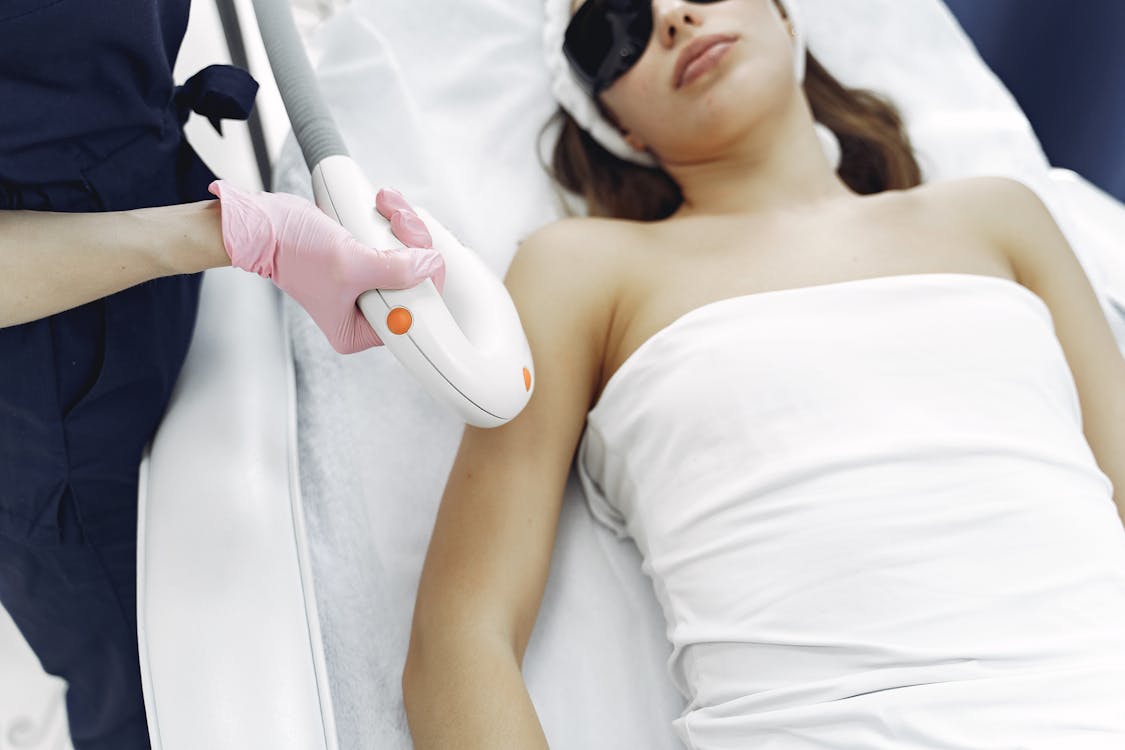
Close-range facial treatments. If you're treating your face from 6 inches away with a high-irradiance panel, you need complete blocking. The inverse square law means intensity quadruples when you halve the distance. At close range, even ambient reflection carries significant power.
Direct eye treatment protocols. Some practitioners treat eyes directly for macular degeneration, retinal conditions, or vision enhancement. This requires specialized glasses that block treatment wavelengths while allowing specific therapeutic wavelengths through. Not the same as full block glasses, but the opposite problem: you need precise wavelength selection.
High-power professional devices. Medical-grade LED beds, class IV laser therapy, or clinical panels operating above 200mW/cm² deliver enough power that reflected light alone can cause discomfort or temporary vision changes. Full block protection becomes necessary.
Here's what happens without proper protection.
Red wavelengths (630-660nm) are visible. Your pupils constrict in response to bright red light, providing natural protection. But near-infrared wavelengths (810-850nm) are invisible. Your pupils don't constrict. NIR passes through to your retina without triggering protective reflexes.
That's the danger.
You can't see NIR. You don't feel it hitting your eyes. But it reaches your retina and delivers energy to photoreceptors and retinal pigment epithelium cells. At therapeutic doses, this might be beneficial (some research suggests NIR helps retinal health). At excessive doses, you're risking phototoxicity.
The key word: excessive.
Therapeutic red light therapy devices typically output 30-100mW/cm² at the panel surface. Distance reduces this dramatically. At 6 inches, you might receive 20-40mW/cm². At 12 inches, maybe 8-15mW/cm². These are well below ocular damage thresholds.
But LED beds, full-body panels, or close-range treatments can deliver higher doses to eyes. That's when full block glasses matter.
What makes full block glasses different
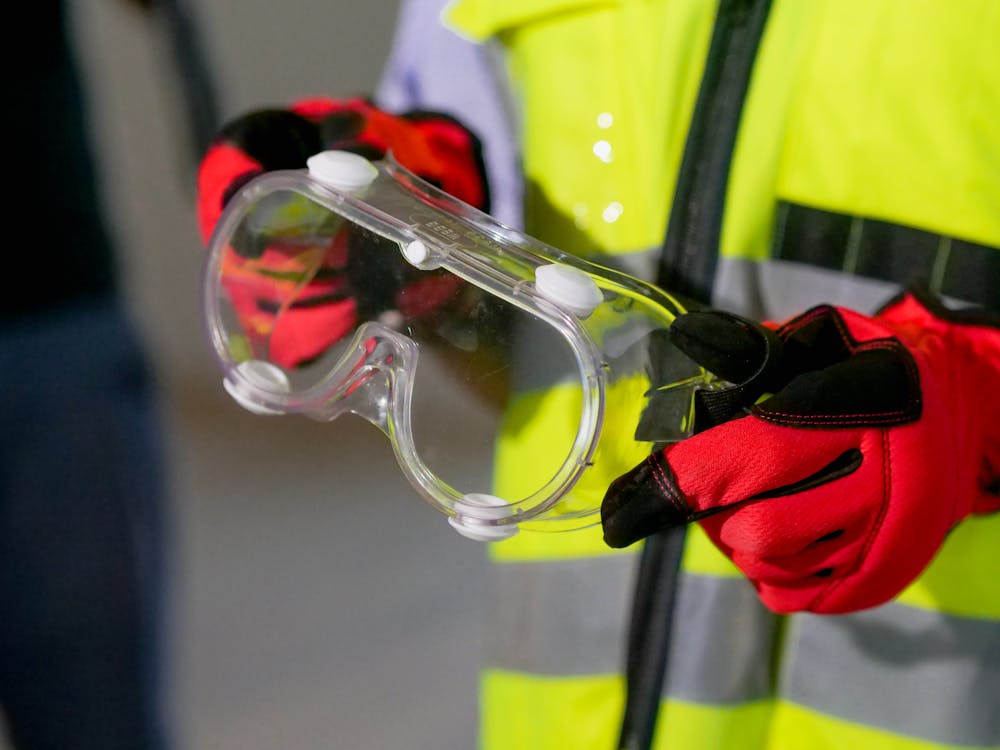
Not all protective eyewear blocks NIR wavelengths.
Standard red light therapy goggles block visible red light (620-700nm) but often transmit significant NIR (800-1100nm). They're designed to prevent visual discomfort and pupil fatigue, not comprehensive wavelength blocking.
Full block red NIR light glasses use specialized optical filters that attenuate both visible red and invisible near-infrared wavelengths.
Here's what separates quality full block glasses from inadequate protection:
Optical density ratings. OD numbers indicate blocking power on a logarithmic scale. OD 4+ blocks 99.99% of specified wavelengths. OD 5+ blocks 99.999%. Quality NIR-blocking glasses should offer OD 4+ across the entire 600-1100nm range.
Specified wavelength ranges. The rating should explicitly cover both red (600-700nm) AND near-infrared (700-1100nm). Many "laser safety glasses" block specific laser wavelengths but have gaps in the spectrum. You need continuous blocking across the full range.
Verified test data. Legitimate manufacturers provide spectrophotometer test results showing actual transmission percentages across wavelengths. If the seller can't provide transmission curves, you're buying on faith.
Wraparound design. Light doesn't just enter through the front. Reflections bounce off walls, ceilings, and your own skin. Quality glasses have side shields or wraparound frames that block peripheral exposure.
Comfort for extended use. You'll wear these for 10-20 minute sessions, possibly daily. Uncomfortable frames, heavy weight, or poor ventilation (which causes fogging) means you won't consistently use them.
Here's what doesn't matter as much as marketing suggests:
Color tint. Some full block glasses are green, some are orange, some are dark gray. The visible tint has nothing to do with blocking performance. Optical filters can be embedded in clear polycarbonate or colored material. What matters is the spectral transmission data, not appearance.
Price. You can find quality OD 4+ NIR-blocking glasses for $30-$60. You can also find $200+ options that offer identical protection with premium frames. Higher price doesn't guarantee better blocking—it often just means better frame quality, brand recognition, or medical device certification.
Polarization. Some sellers market polarized NIR-blocking glasses. Polarization reduces glare from reflective surfaces but doesn't enhance wavelength blocking. It's a nice feature, not a protective necessity.
The real differentiator: transmission data that proves blocking across your therapy device's wavelengths.
How to verify your glasses actually work
You bought glasses rated OD 5+ for 600-1100nm. How do you know they actually block those wavelengths?
Three verification methods:
Check transmission curves. Quality manufacturers provide spectrophotometer graphs showing transmission percentage across wavelengths. Look for curves that stay below 0.01% transmission (OD 4) across the entire 600-1100nm range. Gaps in the curve mean gaps in protection.
Visual red light test. Point your red light therapy panel at a white wall. Put on the glasses and look at the reflected glow. You should see significant darkening—the red should appear much dimmer. This tests visible red blocking (630-660nm) but doesn't verify NIR blocking since you can't see those wavelengths.
NIR camera test. Smartphone cameras can detect near-infrared wavelengths (many phone cameras have IR filters but still show some NIR). Point your phone camera at your panel with 810nm or 850nm LEDs running. You'll see bright spots even though your eyes see nothing. Now hold the glasses in front of the camera. The bright spots should vanish or dramatically reduce. This confirms NIR blocking.
Professional verification. If you're using therapeutic devices professionally or treating clients, consider having glasses tested by an optical testing lab. They'll provide certified spectrophotometer results showing exact transmission percentages across wavelengths. Cost: $100-$300 depending on the lab and testing scope.
What about cheap Amazon glasses claiming "full spectrum blocking?"
Many low-cost options provide vague specifications like "blocks red and infrared light" without optical density ratings or wavelength ranges. Some block visible red but transmit 50-80% of NIR wavelengths. Others have gaps in spectral coverage—they might block 600-700nm and 900-1100nm but transmit 750-850nm.
The problem: manufacturers can truthfully claim "NIR blocking" even if they only block portions of the NIR spectrum.
Your safety depends on continuous blocking across all wavelengths your device emits. If your panel uses 660nm red and 850nm NIR, you need verified blocking at both wavelengths, not just one.

Top brands for full block red NIR protection
Let's look at glasses that actually deliver rated protection.
Phillips Safety REDVue+. OD 5+ rated for 600-1100nm. Provides spectrophotometer transmission data showing >99.999% blocking across the full range. Wraparound design with side shields. Available in several frame styles. $55-$85 depending on frame choice. This is the standard recommendation for serious red light therapy users.
Thorlabs LG3. Originally designed for laser safety but works perfectly for LED therapy. OD 4+ for 600-1100nm. Transmission curves show excellent blocking across red and NIR. Wraparound polycarbonate frame. $45-$65. Popular with DIY builders and biohackers who want verified protection.
NoIR LaserShields. Medical-grade laser safety glasses with OD 5+ ratings for specific wavelength ranges. You need to select the right model for 600-1100nm coverage. More expensive ($120-$180) but offers medical device certification and comprehensive testing data. Overkill for home use but appropriate for clinical settings.
Carbonshade SCT-Gray. Newer brand focused specifically on photobiomodulation protection. OD 4+ across 600-1000nm. Includes blue light blocking for screen use when not doing therapy. Lightweight frames with good peripheral coverage. $65-$90. Growing reputation among red light therapy communities.
What about therapy device manufacturers' branded glasses?
Some panel makers sell branded protective eyewear. Quality varies dramatically. Joovv and Mito Red Light sell rebranded laser safety glasses with legitimate OD ratings and test data. But many smaller brands sell generic tinted goggles without verified NIR blocking.
Always ask for spectrophotometer data regardless of the brand. If they can't provide transmission curves, look elsewhere.
Partial protection alternatives
You don't always need full blockage.
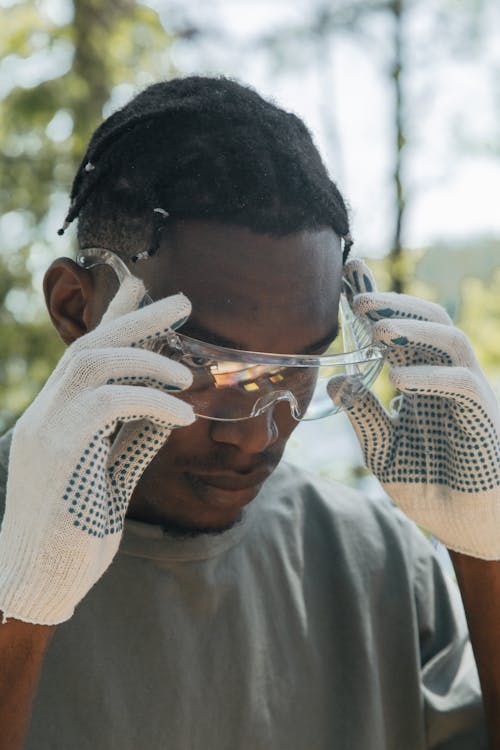
For routine body treatments where panels are positioned away from your face, partial protection works fine. Here are alternatives to full block glasses:
Standard red light therapy goggles. These block visible red wavelengths (630-700nm) and reduce eye strain from bright LEDs. Most don't block NIR but that's acceptable when you're not exposing eyes directly. Cost: $15-$30. Use these for body panels positioned 12+ inches from your face.
Closed eyes. Your eyelids block approximately 80-90% of red wavelengths and 70-80% of NIR. Combined with turning your face away from the panel, this provides adequate protection for ambient exposure during body treatments. Free. Simple. Effective for most use cases.
Red-blocking glasses without NIR protection. If your device only uses 630-660nm red wavelengths (no NIR), standard red-blocking glasses or even welding shade glasses can work. Much cheaper than full spectrum blocking. But verify your device specs—most modern panels include 810nm or 850nm NIR alongside red.
Photochromic safety glasses. These darken in response to light intensity but don't selectively block wavelengths. They reduce overall brightness, which helps with comfort but doesn't provide targeted red/NIR protection. Not recommended as primary eye protection but better than nothing.
The decision tree is simple:
Treating your face from close range with high-power devices? Full block glasses.
Using panels for body treatments with face turned away? Standard goggles or closed eyes.
Targeting eyes directly for vision protocols? Specialized therapeutic glasses (not full block—you need specific wavelength targeting).
Using full block glasses correctly
You bought quality glasses. Now use them properly.
Put them on before turning on the panel. Don't expose your eyes while fumbling for glasses. Make it habit: glasses first, power switch second.
Check for gaps. Light leaks through gaps between frames and your face. Adjust nose bridges and temple arms for snug fit without pressure points. If you see bright glow around edges when facing the panel, improve the seal.
Clean lenses regularly. Dust, oil, and residue can scatter light and reduce blocking effectiveness. Use microfiber cloths and lens cleaner. Don't use abrasive materials that scratch optical coatings.
Store properly. Keep glasses in a protective case when not in use. Scratched or damaged lenses may have compromised blocking. Replace glasses if lenses become scratched or coatings peel.
Position panels away from direct eye line. Even with full block glasses, don't stare directly into panels for extended periods. Position panels for body exposure, not eye exposure. Glasses protect against ambient and reflected light, not direct intentional exposure.
Remove glasses after powering down. Don't walk around wearing heavily tinted glasses—you'll trip over things. Take them off once the panel is off and you're done with treatment.
What about prescription glasses underneath?
Full block glasses need to fit over prescription eyewear if you require vision correction during setup. Look for "fitover" or "OTG" (over the glasses) models designed to accommodate prescription frames. These are larger and may cost $10-$20 more but solve the problem without requiring prescription red light blocking glasses (which would cost hundreds).
When NOT to use full block glasses
There are situations where full blocking is wrong.
Direct eye treatment protocols. If you're specifically treating eyes for macular degeneration, retinal health, or vision enhancement, you need the opposite of blocking—you need precise wavelength delivery to the eyes. Some protocols use 670nm red delivered to closed eyes for retinal mitochondrial support. Full block glasses would defeat the purpose.
For eye protocols, you need specialized glasses that block harmful wavelengths while transmitting therapeutic ones. Or you use calibrated devices designed for ocular exposure at safe irradiance levels. This is beyond the scope of protective eyewear—it's therapeutic delivery.
Low-power ambient exposure. If you're in a room with a red light therapy panel running but not directly facing it, full block glasses are overkill. Ambient reflected light from a panel operating 10 feet away carries minimal power. Your eyes can handle it fine.
Creating unnecessary barriers. If full block glasses are so uncomfortable or annoying that you skip red light therapy sessions, they're counterproductive. Better to use partial protection consistently than full protection inconsistently. Choose the level of protection you'll actually use.
Testing your device. When you first set up a new panel, you need to see the LEDs to verify they're all working. Full block glasses make visual inspection difficult. Use partial protection or brief unprotected viewing (seconds, not minutes) to check LED functionality, then put on full block glasses for actual therapy.
Safety considerations beyond glasses
Eye protection is one piece of red light safety.
Device positioning. Keep panels at appropriate distances. Manufacturers typically recommend 6-24 inches. Closer increases irradiance but also increases eye exposure risk. Further reduces both therapeutic dose and eye exposure. Find the balance that delivers effective treatment without excessive ocular exposure.
Session duration. Longer sessions don't necessarily mean better results. Most protocols call for 10-20 minutes per area. Extended sessions (30+ minutes) may cause eye fatigue even with protection, especially from ambient reflected light. Stick to recommended durations.
Skin and eye sensitivity. Some people are more photosensitive due to medications (certain antibiotics, retinoids, photosensitizing drugs), eye conditions (retinal disorders, recent eye surgery), or genetic factors. If you experience persistent afterimages, visual disturbances, or eye discomfort during or after sessions, increase protection level or consult an eye care professional.
Children and pets. Kids and animals can't understand or consent to eye protection protocols. If children or pets are in the room during red light therapy, either have them wear appropriate protection, position panels so they're not in the exposure path, or treat in a separate room. Don't assume they'll keep their eyes closed or stay out of the light.
Progressive exposure. Start with shorter sessions and lower power settings, then gradually increase as your eyes and skin adapt. This applies even with proper eye protection. Abrupt high-dose exposure can cause temporary visual adaptation issues (seeing dark spots, color shifts) that resolve within hours but are uncomfortable.
Common myths about NIR-blocking glasses
Let's clear up misconceptions.
Myth: All red light blocking glasses block NIR too. False. Many red-blocking glasses transmit 50-90% of NIR wavelengths. They block visible red (which your eyes see and naturally respond to) but let invisible NIR through. Always verify NIR blocking specifications separately.
Myth: Darker tint means better blocking. False. Optical blocking comes from filter coatings and materials, not visible darkness. Clear polycarbonate can have NIR-blocking coatings. Dark tinted lenses can transmit NIR while blocking visible light. Transmission data matters, not appearance.
Myth: You need the same glasses for all therapy devices. Partially true. If all your devices use wavelengths within 600-1100nm, one pair of full block glasses works for everything. But if you use blue light therapy, UV therapy, or other modalities, you need different protective eyewear for each wavelength range.
Myth: Expensive glasses protect better. Sometimes true, often false. Protection comes from optical density ratings and wavelength coverage, not price. A $50 pair with verified OD 5+ protection works as well as a $200 pair with the same rating. Higher price usually reflects frame quality, brand, or certifications, not blocking performance.
Myth: Glasses last forever. False. Optical coatings degrade over time, especially with exposure to heat, UV, and cleaning chemicals. Polycarbonate becomes brittle. Scratches compromise blocking. Replace protective glasses every 2-3 years with regular use, sooner if damaged.
Myth: One size fits all. False. Face shapes vary. Gaps between frames and your face allow light leakage. What seals perfectly on one person may have significant gaps on another. Try before you buy when possible, or verify return policies for online purchases.
DIY testing methods
You don't need a spectrophotometer to get basic verification.
The smartphone camera test. Most smartphone cameras can detect NIR wavelengths despite having IR-cut filters (the filters reduce but don't eliminate NIR sensitivity). Turn on your 850nm panel and look at it through your phone camera—you'll see bright spots even though your eyes see much dimmer light or nothing. Hold your glasses in front of the camera lens. The bright spots should dramatically reduce or disappear. This confirms NIR blocking.
Limitations: This test is qualitative, not quantitative. You're verifying that blocking occurs, not measuring how much. But it's better than nothing.
The red LED test. In a dark room, turn on a red light therapy panel (660nm). Without glasses, the room glows bright red. Put on your glasses. The red glow should become very dim or disappear. This tests visible red blocking but tells you nothing about NIR blocking (you can't see NIR).
The comparison test. If you have access to known-quality laser safety glasses with verified OD ratings, compare them side-by-side with your new glasses. Point both at your panel and observe brightness reduction. Similar darkening suggests similar blocking (though this still doesn't verify exact wavelength coverage).
The professional test. Some optometry offices have spectrophotometers for measuring lens transmission. Call local optometrists and ask if they can test your glasses. Some will do it for free or a small fee ($20-$50). You'll get basic transmission data, though it may not cover the full 600-1100nm range unless they have specialized equipment.
Buying guide: What to look for
Ready to buy? Here's your checklist.
Optical density rating. Minimum OD 4+ for 600-1100nm. OD 5+ is better if you're using high-power devices or treating at close range.
Wavelength coverage. Must explicitly cover both red (600-700nm) and NIR (700-1100nm). Verify there are no gaps. If your device uses 660nm and 850nm, both wavelengths must fall within the rated range.
Transmission data. Request spectrophotometer test results or transmission curves. Legitimate manufacturers provide this. If the seller says "proprietary" or "trade secret," buy elsewhere.
Frame design. Wraparound or side shields to block peripheral exposure. Adjustable nose bridge and temple arms for good seal. Comfortable for 10-20 minute wear.
Lens material. Polycarbonate is standard—lightweight, impact-resistant, and accepts optical coatings well. Glass lenses are heavier but more scratch-resistant. Either works.
Return policy. If glasses are uncomfortable or don't fit your face properly, you need to return them. Verify return policies before purchase, especially for online orders.
Replacement availability. Can you buy replacement lenses if they get scratched? Are the frames durable enough to last? Will this model still be available in 2 years if you need another pair?
Price range. Expect to pay $40-$90 for quality full block glasses from reputable manufacturers. Below $30 often means inadequate blocking or poor quality. Above $150 usually means you're paying for medical certifications, premium frames, or brand markup—which might be worth it for professional use but not necessary for home therapy.
Where to buy:
Direct from manufacturers. Phillips Safety, Thorlabs, NoIR, and other established laser safety companies sell directly. You get guaranteed authenticity and usually detailed product specs.
Red light therapy device retailers. Companies like Joovv, Mito Red Light, and others sell protective eyewear alongside panels. Quality varies—always request transmission data.
Amazon and general retailers. Many listings claim full NIR blocking without providing data. Read reviews carefully, looking for users who verified blocking with cameras or meters. Request test data from sellers before buying.
Medical supply companies. Laser safety equipment suppliers serving medical and research markets offer high-quality options with comprehensive testing. Often more expensive but backed by certifications.
Avoid: eBay listings without detailed specs, generic "as seen on TV" products, and glasses claiming to block "all light" (physically impossible while still allowing vision).
Maintenance and care
Protective eyewear needs proper care to maintain blocking effectiveness.
Clean with appropriate materials. Use microfiber cloths and lens cleaning solutions designed for optical coatings. Avoid paper towels (scratches), shirt hems (dirt and oils), and household glass cleaners (may damage coatings). Clean before and after each use.
Store in protective cases. Don't toss glasses in a drawer with other items. Scratches compromise both visual clarity and potentially the optical coatings that provide wavelength blocking. Use rigid cases.
Inspect regularly. Check for scratches, coating damage, or frame cracks before each use. Hold glasses up to light and look for damaged areas. If you see coating peeling, deep scratches, or clouding, replace the glasses.
Keep away from heat. Don't leave glasses in hot cars, near heating vents, or in direct sunlight for extended periods. Heat can degrade polycarbonate and damage optical coatings.
Replace periodically. Even with perfect care, optical coatings degrade over time. Plan to replace glasses every 2-3 years with regular use. If you use them daily, consider replacing annually.
Have backups. If you depend on red light therapy as part of a health protocol, keep a second pair of glasses. This ensures you can continue treatments if your primary glasses are damaged or being cleaned.
What about repairs?
Most protective eyewear isn't worth repairing. Lens replacement costs nearly as much as new glasses. Frame repairs can compromise fit and seal. If glasses are damaged, replace them rather than trying to fix them.
Full block glasses vs goggles vs shields
You have three protective options. Which one?
Full block glasses. Look like safety glasses or slightly oversized sunglasses. Easy to wear, comfortable for most people, provide good peripheral protection with wraparound designs. Best for: Regular home users, solo treatments, anyone who dislikes goggles.
Full block goggles. Complete seal around eyes like swim goggles or ski goggles. Maximum protection from all angles including top and bottom. Can feel claustrophobic, may cause fogging, harder to clean. Best for: High-power treatments, clinical use, people with very deep-set eyes where glasses leave gaps.
Face shields. Cover entire face rather than just eyes. Provide skin protection in addition to eye protection. Bulky, expensive ($100-$300), unnecessary for most use cases. Best for: Professional aestheticians doing facial treatments on clients, medical settings, people treating severe facial conditions at close range.
For home red light therapy, full block glasses are the sweet spot: adequate protection, comfortable, affordable.
Special cases: Prescription users and contact lens wearers
Do prescription glasses affect red light eye protection?
Your prescription lenses provide no wavelength-specific blocking unless they have special coatings. Standard eyeglasses transmit red and NIR wavelengths freely. You need protective eyewear regardless of prescription glasses.
Three options for prescription users:
Over-the-glasses (OTG) models. These are larger full block glasses designed to fit over prescription frames. They work but can be bulky and may not seal as well as glasses worn directly. Cost: $60-$100.
Prescription red light blocking glasses. You can order prescription lenses with NIR-blocking coatings. Custom optical work gets expensive ($200-$400+) but provides perfect vision and protection simultaneously. Overkill for most users unless you need vision correction to safely set up and operate panels.
Contact lenses plus standard full block glasses. Wear contacts during treatment and use regular protective glasses. This gives you vision, comfort, and proper protection. Most practical option for regular users who need vision correction.
What about contact lenses themselves?
Soft contact lenses transmit visible and NIR wavelengths freely—they don't provide protection. But they don't increase risk either. NIR passes through contacts just like it passes through your natural cornea. Wear protective glasses over your contacts.
One consideration: Extended red light therapy sessions can cause temporary tear film disruption (mild dryness). If you wear contacts and notice increased dryness after treatments, consider using rewetting drops before sessions or switching to glasses on treatment days.
Kids, pregnancy, and special populations
Should children wear full block glasses for red light therapy?
Children should not be exposed to direct red light therapy without professional guidance. Their eyes are still developing, they can't report visual disturbances accurately, and they won't consistently wear protective eyewear properly.
If a pediatric provider recommends red light therapy for a specific condition, they should specify appropriate protection. This often means panels positioned for body treatment only, with the child's face turned away and eyes closed. Full block glasses can work but sizing is challenging (adult glasses don't fit small faces well) and compliance is difficult.
For household use: Don't expose children to red light therapy. Treat when kids aren't in the room, or ensure they're at significant distance (10+ feet) with eyes not facing the panel.
Pregnancy considerations:
Red light therapy is generally considered safe during pregnancy for body treatments. Eye protection follows the same guidelines as non-pregnant users: use appropriate protection for the treatment type and device power.
Full block glasses don't affect pregnancy. But some pregnant women experience increased light sensitivity or visual changes due to hormonal fluctuations. If you notice unusual visual responses during therapy, increase protection level or skip facial treatments.
Elderly users:
Older adults may have age-related eye conditions (cataracts, macular degeneration, glaucoma) that warrant extra caution. The irony: some people use red light therapy specifically for eye health. This requires specialized protocols with ophthalmologist guidance, not DIY treatment.
For general body treatments in elderly users: Standard protection guidelines apply. Full block glasses if treating face or using high-power devices, partial protection or closed eyes for body panels.
People with cataracts should know that cloudy lenses scatter light differently, which can cause more glare and visual disturbance from bright LEDs. Fuller protection may be more comfortable.
Alternatives to glasses: Shields and panel positioning
You can avoid needing eye protection altogether by controlling exposure.
Panel positioning. Place panels to target your torso, legs, or back while keeping your face out of the primary beam. Turn your head away. This reduces eye exposure to reflected ambient light only, which is minimal.
Partial body treatments. Many protocols target specific areas: treating a shoulder injury, addressing knee pain, supporting lower back recovery. These treatments don't involve face or eye exposure. No protection needed beyond occasionally closing your eyes if you glance toward the panel.
Handheld devices. Small targeted devices for spot treatment don't create the ambient light exposure of full panels. When treating your hand, elbow, or foot, your eyes aren't in the exposure path. Protection unnecessary.
Strategic session timing. Some people do red light therapy right before bed with eyes closed throughout. Darkness helps melatonin production anyway. This eliminates eye exposure concerns without needing glasses.
The point: Don't use full block glasses just because you own them. Use them when exposure risk warrants protection, and skip them when it doesn't.
Real-world experiences: What users report
Let's see what actually happens with full block glasses in regular use.
Comfort during sessions. Most users report glasses are comfortable for 10-15 minute sessions but can cause pressure points during longer treatments. Temple pressure and nose bridge discomfort are common complaints with wraparound designs. Adjusting fit helps but some trial and error is necessary.
Visual experience. With high-OD blocking, the room appears very dark even with panels on. You'll see dim outlines and shapes but not clear detail. This is expected—the glasses are blocking the primary light source. Some users find this disorienting at first. Set up your position before putting glasses on.
Fogging issues. Goggles fog more than glasses, but even wraparound glasses can trap humidity during warm treatments. Anti-fog coating or ventilated frames help. Some users apply anti-fog spray designed for swim goggles.
Consistency in use. This is the biggest real-world challenge. People start with diligent eye protection, then gradually stop using it as they get comfortable with their panels. Consistency requires habit formation: glasses go on before the power switch, every single time.
Perceived necessity. Many users question whether protection is truly needed after months of unprotected use without obvious problems. Acute damage from red light therapy is rare—risk is cumulative and long-term. Think of it like sun exposure: you don't get immediate burns from most red light devices, but chronic unprotected exposure carries theoretical risk.
The economics: Is it worth buying full block glasses?
You're spending $40-$80 on glasses for a theoretical risk. Is it worth it?
Here's the math:
You invested $300-$1,500 in a red light therapy panel. You plan to use it for years. You're literally staring at concentrated light that's orders of magnitude brighter than ambient lighting. Your eyes are irreplaceable.
The cost of full block glasses is roughly 5-10% of your panel cost. One-time purchase. Lasts 2-3 years with proper care. That's $15-$40 per year for insurance against a low-probability but high-consequence risk.
The counterargument: Millions of red light therapy sessions happen without full block protection. Most users close their eyes or turn away. Acute injury is rare. Maybe you don't need glasses at all.
Here's my take:
If you're doing body treatments with panels 12+ inches from your face, standard goggles or closed eyes are fine. Save the $80.
If you're doing facial treatments from close range, using high-power panels, or treating daily for years, spend the $80. The risk-reward ratio favors protection.
If you're treating clients professionally, absolutely get full block glasses. Liability aside, you're responsible for others' safety.
If you're treating children, elderly parents, or anyone who can't assess risk for themselves, get protection that works for everyone.
The economics favor protection when consequences are serious and prevention is cheap.
How regulations and standards apply
Red light therapy devices exist in a weird regulatory space.
FDA classifies most consumer LED panels as "low-risk general wellness devices." They're not medical devices requiring prescription. They're not high-power lasers requiring special certification. They're consumer electronics that happen to emit bright light.
This means no regulatory requirement for protective eyewear at consumer use levels.
But laser safety standards do exist, even if they don't legally apply to LED therapy:
ANSI Z136 series. American National Standards Institute publishes laser safety standards including Z136.1 (general laser safety) and Z136.3 (healthcare). These specify when eye protection is required, what optical density ratings are needed for different laser classifications, and how to select appropriate eyewear.
LED panels typically fall below Class 3B laser thresholds, meaning protection is recommended but not required. But high-power panels or close-range use can approach Class 3B irradiance levels.
IEC 60825. International standard for laser product safety. Classifies lasers and LEDs based on accessible emission limits. Most consumer red light panels are Class 1 or Class 2 (eye-safe under normal use). But "normal use" assumes you're not staring into the panel.
CE and FDA clearance. Some manufacturers obtain medical device clearance or CE marking. This involves demonstrating safety at specified use distances and durations. Eye protection may or may not be part of the safety documentation.
What does this mean for you?
Regulations don't require full block glasses for consumer LED therapy. But standards recognize that high-irradiance exposure, close proximity, or extended duration warrant protection. Use professional judgment.
If you're unsure whether your use case needs protection, err on the side of caution. Glasses are cheap, vision is not.
Frequently asked questions
Do I need different glasses for red versus near-infrared panels?
No, if your glasses are rated for full spectrum 600-1100nm blocking. Most therapeutic devices use wavelengths within this range (630-660nm red, 810-850nm NIR). One pair of full block glasses covers all these wavelengths. Only specialty devices using wavelengths outside this range (blue light, UV, or far-infrared) would need different protection.
Can I wear full block glasses all day while panels run in the background?
Technically yes, but it's impractical. The heavy wavelength blocking makes normal vision difficult—everything appears very dark. You'd struggle to read, navigate, or perform tasks. Full block glasses are for dedicated treatment sessions, not ambient background use. If you want panels running while you work, position them away from your visual field or use partial protection.
Will glasses reduce the effectiveness of red light therapy on my face?
Only if you're treating your face through the glasses, which you shouldn't be. The idea is to protect eyes while exposing the rest of your face. Position panels to illuminate cheeks, forehead, and jawline while eyes are protected. The glasses block light from reaching your eyes; they don't block treatment of surrounding skin.
How do I know if my existing sunglasses block NIR?
Most sunglasses don't. They block UV and reduce visible light but transmit infrared freely. You can test with the smartphone camera method: look at an 850nm NIR source through your phone camera (you'll see it), then hold sunglasses in front of the camera. If brightness doesn't significantly reduce, they're not blocking NIR. Get transmission data from the manufacturer to be certain.
Can I use welding goggles instead of red light blocking glasses?
Welding goggles block UV and intense visible light from welding arcs. Some block certain NIR wavelengths depending on the shade rating. Shade 3-5 welding goggles provide some red light blocking but may not adequately protect against specific LED wavelengths. Shade 6+ blocks too much across all wavelengths—you won't be able to see. Dedicated red light blocking glasses with transmission data are more appropriate.
Do blue-blocking glasses also block red and NIR?
No. Blue blockers are designed to filter 400-500nm wavelengths (blue light from screens). They typically transmit red and NIR freely. You need different glasses for red light therapy protection. Some manufacturers make combination glasses that block both blue (for screen use) and red/NIR (for therapy), but verify wavelength coverage.
How often should I replace my protective glasses?
Every 2-3 years with regular use, sooner if damaged. Optical coatings degrade over time. Polycarbonate becomes brittle. Scratches reduce effectiveness. If you use glasses daily, consider annual replacement. Occasional users can extend to 3-4 years. Inspect regularly for signs of degradation.
Can I share glasses with family members?
Sharing is fine if glasses fit both users properly. The concern isn't hygiene (though clean between users) but fit. Gaps between frames and face allow light leakage. What seals well on one person may have significant gaps on another. Each regular user should have properly fitted glasses.
Making the decision: Do you need full block glasses?
Here's your decision flowchart:
Are you treating your face from less than 12 inches away? → Yes: Full block glasses. → No: Continue.
Are you using a high-power panel (200+ mW/cm² at typical distance)? → Yes: Full block glasses. → No: Continue.
Are you treating daily for extended periods (months or years)? → Yes: Full block glasses for long-term risk reduction. → No: Continue.
Are you treating professionally or on others? → Yes: Full block glasses for liability and safety. → No: Standard goggles or closed eyes sufficient.
The conservative approach: Get full block glasses if you're serious about red light therapy and plan to use it long-term. The $50-$80 investment is minor compared to panel costs and provides peace of mind.
The practical approach: Use appropriate protection for your specific situation. Body treatments don't need the same protection as facial treatments. Low-power devices don't need the same protection as high-power clinical units.
The reckless approach: Skip protection entirely because "everyone else does." This works until it doesn't. Vision damage is cumulative and often asymptomatic until significant.
Your eyes. Your choice.
Resources for further learning
Photobiomodulation journal articles on ocular exposure:
- Search PubMed for "photobiomodulation retinal safety" or "low-level light therapy ocular"
- Research on 670nm red light for macular degeneration shows both therapeutic potential and the importance of controlled dosing
Laser safety standards:
- ANSI Z136.1 standard (available through webstore.ansi.org)
- IEC 60825 series documents (preview through ISO.org)
Optical testing resources:
- Find local optical testing labs through COLA (Commission on Office Laboratory Accreditation)
- Many university physics departments have spectrophotometers and may test glasses for a fee
Manufacturer technical support:
- Phillips Safety provides detailed technical guidance: phillips-safety.com
- Thorlabs offers free consultation for selecting appropriate laser safety eyewear: thorlabs.com
Red light therapy safety discussions:
- r/redlighttherapy subreddit has extensive discussions on eye protection practices
- Photobiomodulation communities on Facebook share real-world experiences
Helpful related guides on this site
Looking for more information on red light therapy safety and equipment? Check out these comprehensive guides:
- Red light therapy goggles - Compare different goggle styles for partial protection and comfort during body treatments
- Eye protection for red light therapy - Understand when you actually need eye protection and when you don't
- Red light therapy eyes open or closed - Learn the science behind eye exposure during different treatment protocols
- Do you need eye protection for red light therapy - Get clear answers about protection requirements for various use cases
The bottom line:
Full block red NIR light glasses serve a specific purpose: protecting your eyes during high-exposure red light therapy situations. They're not necessary for everyone, not required by law, and not marketed aggressively because the need is genuinely case-by-case.
But when you need them, you really need them. Not cheap tinted glasses. Not regular sunglasses. Not "probably good enough" Amazon specials.
You need optical density rated, wavelength-verified, properly fitted protective eyewear that blocks both visible red and invisible near-infrared wavelengths.
This guide gave you everything: when protection matters, what makes quality glasses different from junk, which brands deliver verified blocking, and how to use protective eyewear correctly.
Your panels are powerful tools. Use them safely.
Your eyes will thank you in thirty years when your vision is still sharp and your retinas are still healthy because you took protection seriously when it mattered.
Now you know what to look for. You know what questions to ask. You know how to verify blocking.
The choice is yours. Choose wisely.