Red sleep light bulb: Why this simple bedroom change helps you sleep better
Red light bulbs block blue wavelengths that suppress melatonin. Here's how to use them correctly, which specs matter, and what actually works for better sleep.

Your bedroom lights are sabotaging your sleep.
Every night, you brush your teeth under bright white LED bulbs. Check your phone. Maybe read a bit. All while your brain's pineal gland desperately tries to produce melatonin, the hormone that tells your body it's time to sleep.
And the blue light from those bulbs? It's screaming "stay awake."
A red sleep light bulb solves this problem. It's not sexy. It won't transform your bedroom into a spa. But it works.
Here's why.
What makes red light different for sleep
Light isn't just light.
Your eyes contain specialized cells called intrinsically photosensitive retinal ganglion cells (ipRGCs). They don't help you see. They detect light and send signals to your brain's suprachiasmatic nucleus, the master clock controlling your circadian rhythm.
These cells are extremely sensitive to blue light (around 480nm wavelength). When they detect it, they suppress melatonin production. This made perfect sense when humans woke with sunrise and slept after sunset. Blue-rich sunlight during the day kept us alert.
But now? We've got blue LEDs in every room.
Red light doesn't trigger these cells. The wavelengths (620-750nm) simply don't activate the melanopsin photopigment in ipRGCs the same way blue does. Your brain's clock doesn't interpret red light as "daytime."
So you can see what you're doing without sabotaging your sleep.
Three studies prove this. A 2009 study in the Journal of Athletic Training found that red light exposure before sleep didn't suppress melatonin in female athletes. A 2012 chronobiology study showed red light at night preserved melatonin levels while blue light crushed them. And research from Harvard Medical School demonstrated that blue light suppressed melatonin for twice as long as green light, with red light having minimal effect.
The science is clear. But which bulb should you actually buy?
How to choose the right red sleep light bulb
Not all red bulbs work the same.
Walk into a hardware store and you'll find "red" bulbs that emit pink light, orange light, or even purplish light. Some are party bulbs with terrible color filtering. Others are grow lights designed for plants.
You need a bulb with specific characteristics.
Wavelength matters most
True red light for sleep should emit wavelengths above 620nm. Ideally 630-660nm or higher.
Many cheap red bulbs use colored glass or coating but still emit significant blue and green wavelengths underneath. These defeat the purpose entirely. You want a bulb that produces pure red light from the LED chip itself, not white light filtered through red plastic.
The best sleep bulbs explicitly state "0% blue light" or "zero blue spectrum." Some manufacturers spec this as "filters all wavelengths below 580nm" or similar. Don't trust color alone. Check the specs.
Brightness you can control
A red sleep bulb shouldn't blast your retinas.
Look for bulbs in the 3-7 watt range for bedside lamps. This produces enough light to navigate safely without overpowering your melatonin. Some people prefer 1-3 watts for ultra-dim lighting.
Dimmable bulbs give you flexibility. But even at full brightness, a proper red sleep bulb won't suppress melatonin the way a standard LED does.
One caveat: extremely bright red light (like from high-powered red light therapy panels) can still affect sleep if used right before bed. The intensity matters. For bedroom lighting, stick with low-wattage bulbs designed for ambient illumination.
Bulb base and fitting
Most red sleep bulbs come in standard E26/E27 bases (the common screw-in size for US/European lamps).
You'll also find:
- Candelabra bases (E12) for smaller fixtures
- GU10 spotlights for recessed lighting
- Smart bulb versions with app control
Match your existing fixtures. There's no point buying a perfect red bulb if it doesn't fit your lamp.
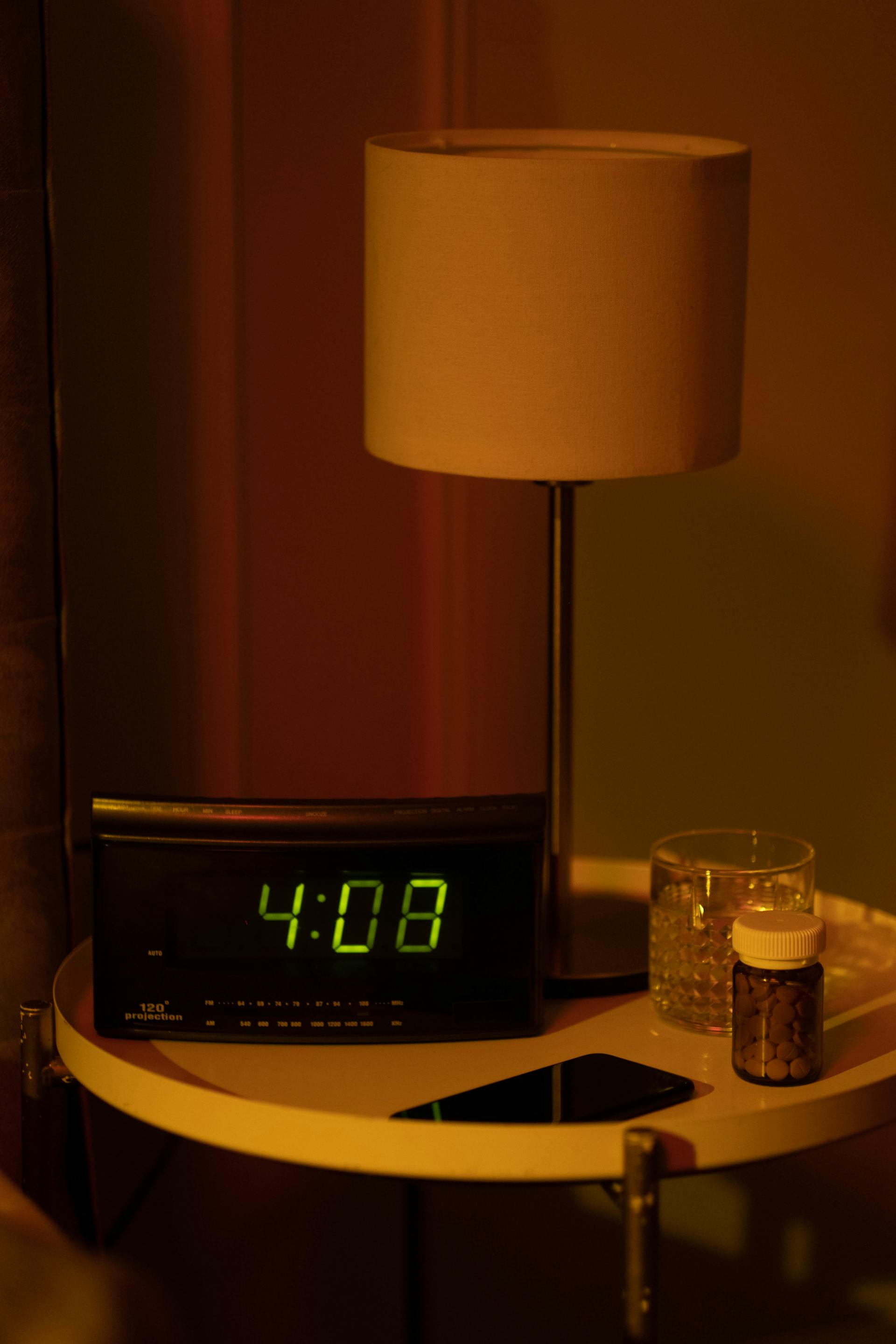
What about "amber" or "orange" bulbs?
These sit between red and white light.
Amber bulbs (around 590-610nm) block most blue light but not all. They produce a warmer, less intense glow than deep red. Some people find them more aesthetically pleasing for everyday use.
For strict melatonin protection, deep red wins. For a compromise between ambiance and sleep support, amber works. It depends on your sensitivity.
If you struggle with falling asleep or have delayed sleep phase syndrome, go with true red. If you just want better evening lighting without harsh blue LEDs, amber might suffice.
Where to use red sleep light bulbs in your home
Bedrooms are obvious. But they're not the only place.
Bedroom lamps and overhead lights
Replace all bedroom lighting with red bulbs 2-3 hours before bed.
This includes:
- Bedside table lamps
- Overhead ceiling lights
- Reading lights
- Closet lights if you're getting ready for bed
You don't need to replace every bulb in your house. Focus on spaces you use during your wind-down period.
One approach: install red bulbs in lamps you control separately from overhead lights. When it's time to relax, switch to the red lamp and turn off the overhead. This creates a visual cue that it's evening.
Bathroom lighting
This is critical.
You brush your teeth, wash your face, and complete your nighttime routine under bright bathroom lights. Often these are the most blue-heavy LEDs in your home.
Install a red bulb in one fixture or lamp in your bathroom. Use it during nighttime routines instead of the main lights. Even 5-10 minutes of blue light exposure right before bed can delay melatonin onset.
Hallways and night navigation
Ever stub your toe walking to the bathroom at 3am?
Red night lights or red bulbs in hallway fixtures let you navigate safely without triggering the alerting response of white light. This is especially valuable for people who wake during the night.
Small plug-in red LED night lights work well for this. Position them low near the floor so they don't shine directly in your eyes.
Nurseries and children's rooms
If you need to check on kids at night, red lighting preserves your night vision and doesn't fully wake them (or you).
Some parents use red night lights in nurseries for midnight diaper changes and feedings. The baby stays calmer, and you fall back asleep faster.
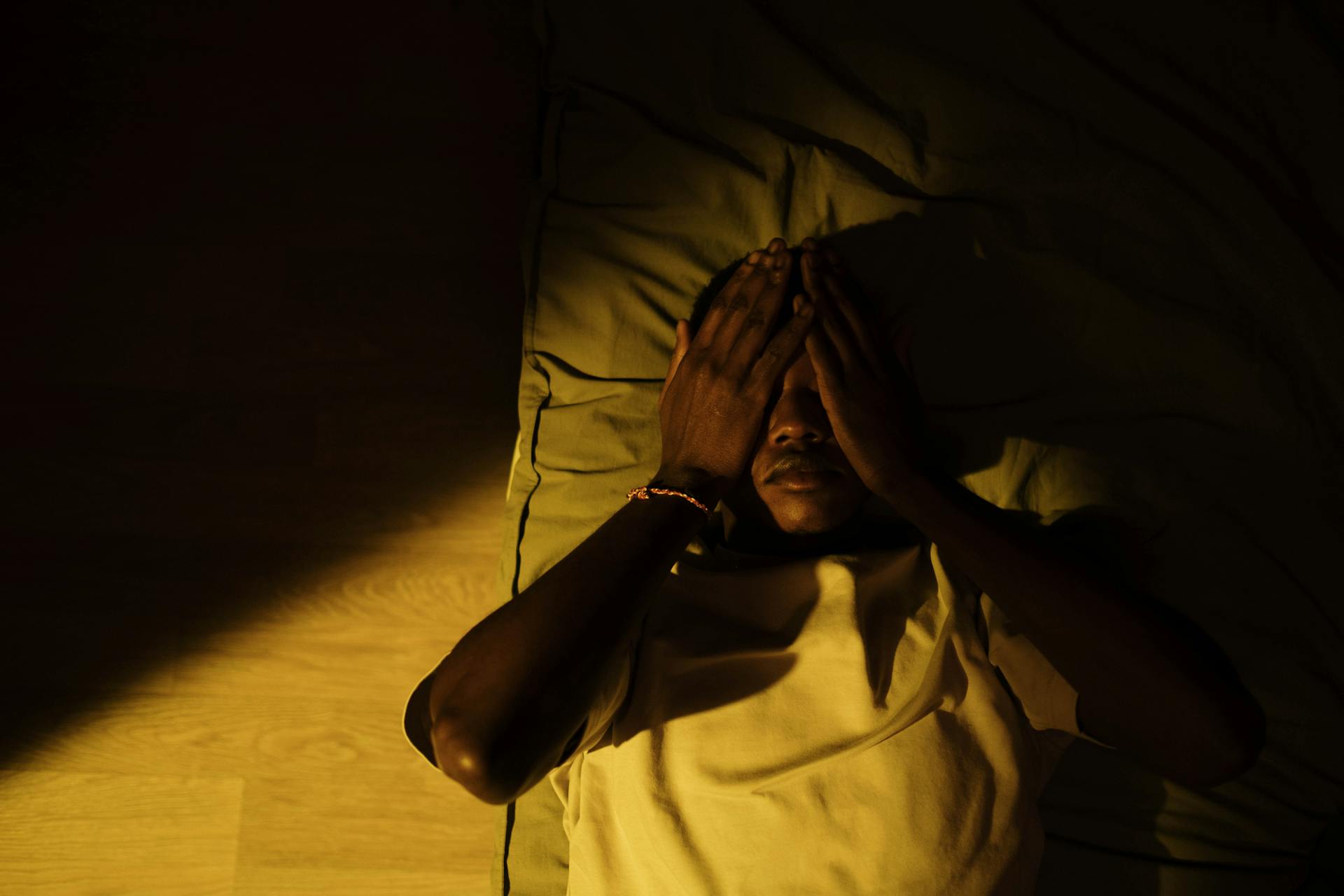
How to actually use red light bulbs for better sleep
Buying the bulb is step one. Using it correctly is step two.
Start 2-3 hours before bed
Your circadian rhythm doesn't flip a switch. Melatonin production gradually increases in the evening.
Begin using red lighting when you start winding down. For most people, this means switching to red bulbs around 7-9pm if you sleep at 10-11pm.
You don't have to sit in darkness. Just eliminate blue wavelengths from your environment.
Dim is better than bright
Even with red light, dimmer is preferable in the evening.
Use the minimum brightness needed for your task. If you're reading, position the lamp close enough that you don't need maximum brightness. If you're just relaxing, go as dim as comfortable.
Some people combine red bulbs with dimmer switches for ultimate control.
Combine with other light hygiene practices
Red bulbs aren't magic bullets.
They work best as part of a broader approach:
- Get bright light exposure during the day (ideally outdoors)
- Reduce screen time before bed (or use blue-blocking modes)
- Keep your bedroom cool and dark during sleep
- Maintain consistent sleep and wake times
Think of red lighting as removing obstacles to melatonin production. You still need good sleep habits to support the process.
Don't stress if you need regular light sometimes
Life happens.
If you need to turn on white lights for 5 minutes to find something, you won't destroy your sleep. The goal is reducing cumulative blue light exposure during your wind-down period, not achieving perfection.
Consistency over time matters more than occasional lapses.
The science behind red light and melatonin
Let's dig deeper into what's actually happening.
Melanopsin and circadian photoreception
The discovery of ipRGCs changed how we understand light and sleep.
For decades, scientists thought only rods and cones (the cells responsible for vision) detected light. Then researchers found these specialized ganglion cells that respond to light independently of vision.
They contain melanopsin, a photopigment most sensitive to blue light around 480nm. When blue light hits melanopsin, it triggers a cascade of signals to the suprachiasmatic nucleus (SCN) in your hypothalamus.
The SCN orchestrates your circadian rhythm. It tells your pineal gland when to produce melatonin and when to stop.
Blue light exposure = SCN signals "it's daytime" = pineal gland suppresses melatonin.
Red light doesn't significantly activate melanopsin. Your SCN doesn't interpret it as a strong zeitgeber (time cue). Melatonin production continues.
This isn't about red light actively promoting sleep. It's about red light not preventing it.
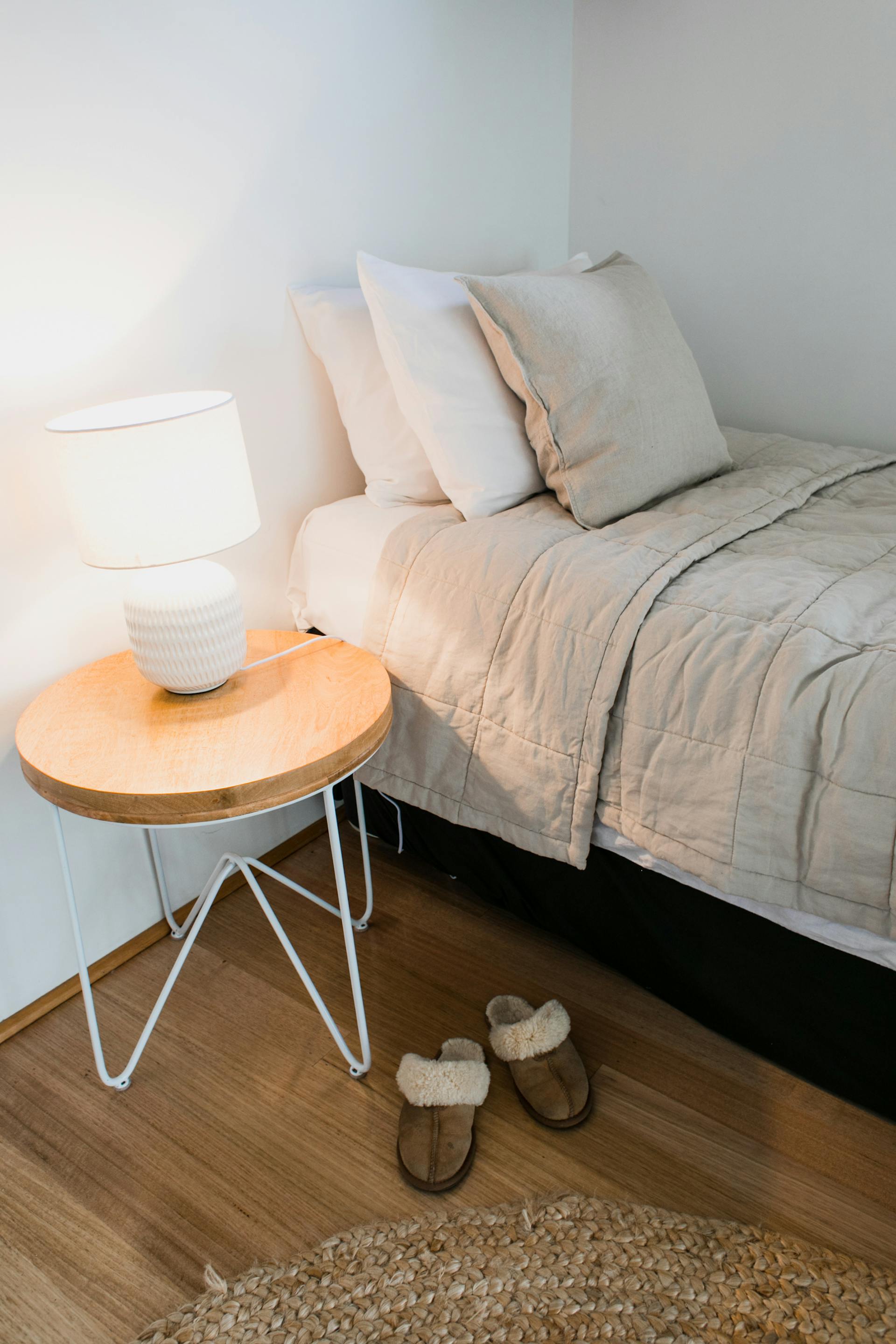
Clinical evidence for red light and sleep quality
Multiple studies support using red light at night.
A 2012 study published in Chronobiology International exposed participants to different colored lights for 2 hours before sleep. Blue light significantly suppressed melatonin. Red light didn't.
Research on shift workers (who constantly battle circadian disruption) showed that red light during night shifts helped preserve some melatonin production compared to white or blue light. This suggests practical applications for anyone with irregular schedules.
A 2019 study in Nature and Science of Sleep found that elderly individuals exposed to red light at night maintained better sleep quality compared to blue or white light exposure.
The evidence isn't just about melatonin levels in blood tests. Subjective sleep quality, sleep latency (time to fall asleep), and total sleep time all show improvements when people reduce blue light at night.
What about red light therapy versus red sleep bulbs?
They're different tools.
Red light therapy uses high-intensity red and near-infrared wavelengths (typically 630-850nm) to stimulate cellular energy production, reduce inflammation, and promote healing. These panels emit 50-200mW/cm² at the surface.
Red sleep bulbs produce low-intensity ambient lighting (under 10mW/cm²) to avoid melatonin suppression.
Some people use red light therapy during the day and red sleep bulbs at night. They serve different purposes. Don't confuse therapeutic red light exposure with bedroom lighting.
Common mistakes people make with red sleep light bulbs
Even with the right bulb, people screw this up.
Using "red-tinted" bulbs instead of true red LEDs
A pink party bulb is not a sleep bulb.
Many colored bulbs simply coat white LEDs with colored glass. The underlying spectrum still contains blue wavelengths. Your brain still gets the "stay awake" signal.
Always check the spectrum. Look for bulbs that explicitly state zero blue light emission, not just "red color."
Keeping other blue light sources on
You switch to red bulbs but keep scrolling Instagram on your phone.
Red lighting only helps if you eliminate other blue light sources too. Phones, tablets, TVs, and computer screens all emit significant blue light.
Use night mode features, blue light blocking apps, or (better yet) reduce screen time in the evening. Alternatively, wear blue light blocking glasses if you must use screens.
Making the room too dim too early
Some people go overboard and sit in near-darkness starting at 6pm.
You don't want to trigger your circadian system to think it's midnight when it's still early evening. Gradual dimming works better than abrupt changes.
Use regular lighting until your actual wind-down period begins. Then transition to red.
Expecting immediate results
Sleep improvements take time.
Your circadian rhythm doesn't reset overnight. Give your new red light routine at least 1-2 weeks before judging effectiveness.
If you've had poor sleep hygiene for years, one week of red bulbs won't fix everything. Be patient.
Alternatives and complementary approaches
Red sleep light bulbs aren't the only solution.
Blue light blocking glasses
These filter blue wavelengths before they reach your eyes.
Wear them 2-3 hours before bed while using regular lighting. This approach works if changing bulbs isn't practical (like in shared living spaces).
Quality matters. Cheap orange-tinted glasses don't block enough blue light. Look for glasses that filter wavelengths below 530nm or amber lenses that block 100% of blue light.
Glasses are portable. You can wear them anywhere. But they're also easy to forget or lose.
Smart bulbs with tunable spectrum
Some LED bulbs let you adjust color temperature throughout the day.
Set them to cool blue-white in the morning, warm white in the afternoon, and deep red in the evening. Automation via app or smart home integration removes the need to manually switch.
The downside? Cost and complexity. Smart bulbs run $15-50 each compared to $8-15 for basic red LEDs.
Blackout environment with minimal lighting
The ultimate approach: near-total darkness.
Use only dim red light when absolutely necessary. For most of the evening, rely on ambient light from outside or very minimal illumination.
This is challenging in practice. Most people need some light for safety and practical tasks. But it's worth considering how much light you actually need.
Amber bulbs as a middle ground
As mentioned earlier, amber (around 1800-2200K color temperature with minimal blue) offers a compromise.
These produce a candlelight-like glow that's more aesthetically pleasing than stark red. They block most but not all blue wavelengths.
If you live with others who find red light too unusual, amber might gain more compliance.
Real-world results: What to expect
So you install red bulbs. Now what?
Week 1: Adjustment period
The red glow will feel weird at first.
Your brain associates red light with warning signals, darkrooms, or romantic lighting (depending on your context). Using it for everyday activities takes adjustment.
You might not notice dramatic sleep improvements immediately. Your circadian rhythm needs time to respond to the new light pattern.
Some people report feeling sleepier earlier in the evening within a few days. Others notice nothing at first.
Week 2-3: Subtle changes
Around the second week, most people notice:
- Falling asleep faster when they get in bed
- Feeling naturally tired earlier in the evening
- Less urge to stay up scrolling on devices
- Easier time waking up in the morning (because circadian rhythm shifts earlier)
These changes are subtle. You won't suddenly become a perfect sleeper. But the friction around bedtime decreases.
Long-term (1-3 months): Establishing new patterns
With consistent use, red lighting becomes part of your natural wind-down routine.
Your brain starts associating the red light with sleep preparation. This creates a psychological cue in addition to the circadian benefits.
People with significant sleep issues (insomnia, delayed sleep phase) often see the most dramatic improvements. If you already sleep well, effects may be minor.
When it doesn't work
Red light bulbs won't fix all sleep problems.
If you have sleep apnea, restless legs syndrome, chronic pain, or other medical sleep disorders, lighting alone won't solve them. Talk to a doctor.
If your sleep issues stem from stress, anxiety, or poor sleep hygiene (inconsistent schedule, late caffeine, uncomfortable bedroom), addressing those matters more than light color.
Red bulbs are one tool. They work best as part of a comprehensive approach.
The complete guide to installing red light bulbs in every room
Different spaces need different approaches.
Setting up your bedroom for optimal sleep
Your bedroom is the priority. Here's how to do it right.
Bedside lamps: These get the most use during your wind-down routine. Install 5-7 watt red bulbs here. You'll use them for reading, relaxing, and getting ready for bed.
If you have two nightstands, put red bulbs in both. This creates symmetrical lighting that's less jarring than one bright side and one dark side.
Overhead ceiling lights: If you use overhead lights in the evening, replace them with red bulbs too. But consider whether you need overhead lights at all after sunset. Lamps create more intimate, relaxing ambiance.
Some people install dimmer switches on overhead fixtures for ultimate control. Start bright in early evening, gradually dim as bedtime approaches.
Reading lights: Clip-on reading lights or adjustable desk lamps work well with red bulbs if you read in bed. Position them close to the book so you don't need maximum brightness.
E-reader users have it easier. Most devices now include warm/red tint modes built-in. Enable these starting 2-3 hours before bed.
Closet and dresser areas: If you get dressed or ready for bed near these areas, consider red bulbs here too. Otherwise, regular lights are fine since you're using them earlier in the evening.
Bathroom lighting setup
This room matters more than people realize.
You spend 10-30 minutes in the bathroom before bed. Brushing teeth, washing face, evening skincare routine. All under bright blue-white LEDs that blast melatonin suppression right before sleep.
Option 1: Replace all bathroom bulbs. Simple but changes the entire vibe. Some people dislike red light for morning routines (when you actually want blue light for alertness).
Option 2: Install one dedicated nighttime lamp. Place a small lamp with a red bulb on the bathroom counter. Use this for nighttime routines while leaving overhead lights untouched for mornings.
Option 3: Use a portable rechargeable red lamp. Bring it into the bathroom when needed. Cheap, flexible, doesn't require permanent changes.
The portable lamp approach works best for shared bathrooms or rental homes where you can't change fixtures.
Living room and common areas
If you watch TV or relax in the living room before bed, these spaces matter too.
Table lamps: Install red bulbs in any lamps you use during evening hours. Keep one regular lamp for earlier in the day if needed.
Floor lamps: Same approach. Red bulbs for evening use.
TV backlighting: Some people add red LED strips behind their TV to reduce contrast between the bright screen and dark room. This isn't about melatonin (the TV screen itself emits blue light). But it can reduce eye strain.
If you're serious about sleep optimization, stop watching TV 1-2 hours before bed entirely. No amount of red ambient lighting counteracts staring at a glowing blue screen.
Kitchen and dining areas
These usually don't need red bulbs.
Most people finish dinner and kitchen cleanup before their designated wind-down period. If you're in the kitchen at 6-7pm, regular lighting is fine.
Exception: late-night snackers or people who eat dinner very late. If you're in the kitchen within 2 hours of bedtime regularly, consider one red lamp for minimal lighting.
Under-cabinet red LED strips work well for low-light kitchen navigation without overhead brightness.
Hallways and staircases
Safety matters here.
Red night lights or red bulbs in hallway fixtures prevent nighttime falls while preserving night vision and melatonin.
Install them low (near floor level) rather than at eye level. This provides path lighting without glare.
Motion-activated red night lights work brilliantly in hallways. They turn on when you walk by at night but don't stay on continuously wasting energy.
Home office or workspace
Don't use red light while working.
You need bright, blue-rich light during the day for alertness, focus, and proper circadian entrainment. Red light during work hours can make you feel drowsy and reduce productivity.
If your office doubles as a reading room or relaxation space in the evening, install red bulbs in one lamp you can switch to after work hours. Keep your desk lamp with regular bright white LEDs for daytime use.
Children's rooms and nurseries
Red lighting helps kids too.
Young children often need nighttime check-ins, diaper changes (for babies), or just comfort when they wake up. Turning on bright white lights fully wakes both you and the child.
Red night lights or red bulbs in a small lamp provide enough illumination for safe navigation and basic tasks without triggering full wakefulness.
For older kids who read before bed, a bedside lamp with a red bulb works well. Explain why you're using red light so they understand the purpose.
Teenagers glued to phones present a bigger challenge than lighting. Address screen use first, then optimize bedroom lighting.
Outdoor lighting and entryways
These generally don't matter for sleep.
Your circadian system primarily responds to indoor lighting during evening hours. Outdoor lights you barely interact with won't significantly impact melatonin.
Exception: If you sit on a porch or patio in the evening for extended periods, red bulbs in those fixtures can help.
Storage areas, basements, and garages
Regular bulbs are fine here.
You're rarely in these spaces during evening wind-down hours. Don't overthink it.
How red light affects different sleep conditions
Not everyone's sleep issues are the same.
Delayed sleep phase syndrome (DSPS)
This is a circadian rhythm disorder where your natural sleep-wake cycle is shifted later than normal.
People with DSPS can't fall asleep until very late (2-4am or later) even when exhausted. They struggle to wake for morning commitments but feel alert late at night.
Red lighting helps but isn't a complete solution. DSPS responds best to timed bright light therapy in the morning combined with melatonin supplementation and elimination of evening blue light.
Use red lights exclusively starting 4-5 hours before your desired bedtime (not your current late bedtime). This gradually shifts your rhythm earlier over several weeks.
Consistency matters immensely with DSPS. Weekends and weekdays must maintain the same schedule.
Insomnia
Insomnia has many causes. Red light addresses one specific trigger: light-induced melatonin suppression.
If your insomnia stems from:
- Anxiety or stress: Red light won't fix this directly, though dimmer evening ambiance may help relaxation
- Sleep apnea: Red light doesn't affect breathing during sleep
- Chronic pain: Lighting changes won't reduce pain
- Racing thoughts: Red light alone won't quiet your mind
But if you struggle to fall asleep despite feeling tired, and you're exposed to bright lights or screens before bed, red lighting can remove a major obstacle.
Combine it with cognitive behavioral therapy for insomnia (CBT-I), the gold standard insomnia treatment.
Shift work sleep disorder
Shift workers face brutal circadian challenges.
If you work night shifts and sleep during the day, red light becomes even more important. Use it during your "evening" (even if that's 7am) before going to bed.
Pair red lighting with:
- Blackout curtains for daytime sleep
- Bright blue-rich light during your "morning" (start of shift)
- Strategic caffeine timing
- Consistent sleep schedule even on days off
Many shift workers benefit from light therapy lamps (10,000 lux blue-white light) at the start of their shift to promote alertness, then red light before daytime sleep.
Seasonal affective disorder (SAD)
SAD involves winter depression linked to reduced daylight exposure.
Treatment requires bright light therapy in the morning (10,000 lux for 20-30 minutes). This is the opposite of red light.
But here's the nuance: SAD patients often have disrupted circadian rhythms overall. Morning bright light + evening red light can help establish a clear light-dark cycle that supports both mood and sleep.
Don't rely on red light alone for SAD. Get proper bright light therapy during the day.
Advanced sleep phase syndrome
This is the opposite of DSPS. You feel sleepy very early in the evening (6-8pm) and wake extremely early (3-5am).
Red lighting won't help this condition and might make it worse. People with advanced sleep phase need evening bright light to stay awake later, not red light that promotes drowsiness.
If you have this pattern, avoid red light until closer to your current bedtime (even if that's early).
Sleep maintenance insomnia (waking at night)
Some people fall asleep fine but wake at 2-3am and can't fall back asleep.
Red lighting helps here indirectly. If you need to use the bathroom or navigate your home at night, red lights or red night lights prevent the alerting response of white light.
Keep a small red LED night light in the bathroom. If you wake up and need to get up, you won't trigger full wakefulness with bright lights.
The key: don't turn on any white lights, don't check your phone, don't look at clocks with bright displays. Red light only.
The biology of sleep and light: Going deeper
Understanding the science helps you use red light more effectively.
The two-process model of sleep regulation
Your sleep-wake cycle operates on two independent processes.
Process S (sleep homeostasis): The longer you're awake, the stronger your sleep pressure builds. Adenosine accumulates in your brain during waking hours, creating sleepiness. Sleep clears adenosine.
Process C (circadian rhythm): Your internal 24-hour clock regulates alertness and sleepiness independent of how long you've been awake. It's controlled by the suprachiasmatic nucleus responding to light exposure.
Red light primarily affects Process C. It doesn't build sleep pressure (that happens naturally with time awake). It removes circadian signals that suppress melatonin and delay sleep timing.
This is why red light alone won't make you sleep if you're not tired. But it stops light from actively preventing sleep when you are tired.
Melatonin: More than just a sleep hormone
Melatonin does more than make you sleepy.
It's an antioxidant that scavenges free radicals. It regulates body temperature (dropping core temp promotes sleep). It influences glucose metabolism and immune function.
The timing of melatonin release matters as much as the amount. Your brain should start producing it 2-3 hours before sleep, peaking in the middle of the night.
Blue light in the evening delays this timing. You might still get sleepy eventually, but your circadian phase shifts later. This causes problems for morning wake times and daytime functioning.
Red light preserves natural melatonin timing. Your brain releases it when it should, not hours late.
Cortisol and the light-dark cycle
Cortisol (the stress hormone) follows a rhythm opposite to melatonin.
It should peak in the morning upon waking, giving you energy and alertness. It gradually decreases throughout the day, reaching its lowest point at night.
Light exposure influences cortisol. Bright light in the morning promotes healthy cortisol peaks. Blue light at night can interfere with the natural cortisol decrease.
Red light in the evening supports normal cortisol reduction. This complements melatonin increases, creating the optimal hormonal profile for sleep.
Individual differences in light sensitivity
Not everyone responds to light the same way.
Some people are highly sensitive to even small amounts of evening light. Others can tolerate more without sleep disruption.
Factors affecting sensitivity:
- Age: Children and teenagers are more sensitive to evening light than adults. Elderly people often become less sensitive but may have other sleep issues.
- Genetics: Polymorphisms in genes like PER3 affect circadian light sensitivity.
- Existing sleep issues: People with insomnia or delayed sleep phase often show heightened light sensitivity.
- Iris color: Lighter colored eyes transmit more light to the retina. Some research suggests brown-eyed individuals may be slightly less sensitive to evening light.
If you're highly sensitive, strict red-only lighting in the evening matters more. If you're less sensitive, amber/orange bulbs might suffice.
Pay attention to your individual response. Some people notice dramatic sleep improvements with red light. Others notice minimal change.
The role of brightness (lux) and duration
Wavelength isn't the only factor.
A dim blue light for 5 minutes has less impact than a bright blue light for 2 hours. Conversely, extremely bright red light at high intensity can still affect sleep if duration is long enough.
For red sleep bulbs:
- Keep brightness under 50 lux at eye level (roughly equivalent to a 5-7 watt red bulb in a bedside lamp)
- Lower is better as bedtime approaches
- Duration doesn't matter as much with true red wavelengths above 620nm
For comparison, a typical office has 300-500 lux. Your phone screen produces 100-200 lux. A sunset provides around 400 lux but with warm spectrum.
Sleep architecture and light exposure
Sleep isn't one uniform state. You cycle through stages.
Stage 1 (N1): Light sleep, transition period Stage 2 (N2): Slightly deeper sleep, majority of night Stage 3 (N3): Deep slow-wave sleep, most restorative REM: Rapid eye movement sleep, dreaming, memory consolidation
Evening light exposure doesn't just affect sleep latency (time to fall asleep). It impacts sleep architecture.
Studies show blue light before bed reduces time spent in deep sleep and REM sleep even if total sleep duration seems normal. You sleep, but the quality suffers.
Red light preserves normal sleep architecture. Your brain progresses through stages naturally.
This matters more than people realize. You can sleep 8 hours but wake feeling unrefreshed if sleep architecture is disrupted.
Practical product considerations and what to buy
Let's talk actual bulbs you can order today.
Budget option (under $15)
Basic red LED bulbs from hardware stores work if they meet the wavelength criteria.
Look for:
- "Deep red" or "true red" LED bulbs
- Specs showing 0% blue light or wavelength above 620nm
- 3-7 watts for bedside lamps
- Standard E26 base
These usually cost $8-15 each. Buy a few to test in different fixtures.
Mid-range option ($15-30)
Specialized sleep bulbs designed specifically for melatonin protection.
Brands making these include companies focused on circadian health. They often provide detailed spectrum charts showing exactly which wavelengths are emitted.
Features might include:
- Verified zero blue/green spectrum
- Dimmable capability
- Longer lifespan ratings
- Multiple wattage options
These cost $15-30 per bulb but offer more certainty about spectrum quality.
Premium option ($30-50+)
Smart red bulbs with app control and automation.
You can schedule them to gradually dim throughout the evening or turn on/off automatically. Some integrate with smart home systems like HomeKit, Alexa, or Google Home.
Benefits:
- Set-and-forget automation
- Gradual dimming schedules
- Remote control via phone
- Integration with other smart devices
Downsides:
- Higher cost
- Requires Wi-Fi and app setup
- More complex troubleshooting if they fail
For most people, mid-range dedicated sleep bulbs offer the best value.
Don't forget about fixtures
The lamp matters too.
If your lamp has a narrow shade that focuses light in one direction, you'll need different brightness than a diffuse paper lantern. Test bulbs in your actual fixtures before buying multiples.
Some people prefer salt lamps or ceramic lamps with red bulbs for aesthetic appeal. The fixture choice is personal preference as long as the bulb spectrum is correct.
Frequently asked questions about red sleep light bulbs
Can I use red light bulbs all night while sleeping?
You can, but you don't need to.
Once you're asleep, light exposure matters less (unless it's bright enough to wake you). Most people turn off all lights when sleeping or use very dim red night lights for navigation if they wake up.
If you prefer some ambient light while sleeping, dim red won't interfere with sleep the way white or blue light would.
Will red light affect my partner who has a different schedule?
Potentially.
If your partner goes to bed later and wants bright white light while you're trying to sleep, you'll need to compromise. Options include:
- Using a lamp on their side with a directional shade
- Them wearing a sleep mask
- You using blue-blocking glasses earlier
- Separate lamps with different bulbs for each side of the bed
Communication helps here. Explain why you're using red light and find a solution that works for both of you.
Do red sleep bulbs work for reading?
Yes, but it takes adjustment.
Red light reduces color perception since you're eliminating most of the visible spectrum. Black text on white paper remains readable, but colorful images or graphs become harder to distinguish.
E-readers with adjustable backlight work well. Set the backlight to warm amber or red tones. Physical books work fine too, though you might need slightly brighter red light than for ambient lighting.
Some people keep one small reading light with warmer white light (2700K) for detailed reading, then switch to red for general bedroom use.
Can I use red party bulbs instead of sleep-specific bulbs?
Usually not.
Most party bulbs use colored glass or coatings over white LEDs. They emit red visible light but still produce blue wavelengths that suppress melatonin.
Check the spectrum if available. If the bulb doesn't explicitly state "0% blue light," assume it won't work for sleep purposes.
True red LED bulbs produce red light directly from the LED chip, not via filtering.
How long do red LED bulbs last?
Most LED bulbs last 15,000-25,000 hours.
At 3 hours per night, that's 13-22 years of use. You'll likely move or redesign your room before the bulb burns out.
LED bulbs also use minimal energy (3-7 watts), so the electricity cost is negligible.
Is red light safe for eyes?
Yes, at the intensity used in sleep bulbs.
Low-wattage red bulbs for bedroom lighting pose no eye safety concerns. They're far less intense than sunlight, computer screens, or even regular indoor lighting.
Don't confuse these with high-powered red laser pointers or industrial red LEDs, which can be harmful. Standard red sleep bulbs are completely safe.
What about using red light during the day?
It won't help and might interfere with alertness.
During the day, you want bright blue-rich light to support wakefulness and circadian entrainment. Natural sunlight is ideal. If indoors, use bright white or cool-white lighting.
Reserve red light exclusively for evening and nighttime use.
Can kids use red sleep light bulbs?
Absolutely.
Children's circadian systems work the same way as adults. Many kids are exposed to blue light from devices, room lights, and screens in the evening.
Red night lights in children's rooms can help them fall asleep easier and stay asleep. Just make sure the bulb is secure in a safe fixture where curious hands can't touch hot surfaces.
Do I need to replace every bulb in my house?
No.
Focus on the rooms you use during your 2-3 hour wind-down period before bed. For most people, this means:
- Bedroom lamps
- Bathroom (one fixture or portable lamp)
- Maybe a living room lamp if you relax there in the evening
Kitchen, office, and other daytime spaces can keep regular bulbs.
What if I work night shifts?
Red light can still help, but your approach changes.
If you sleep during the day, you want complete darkness (blackout curtains) while sleeping. Use red light during your "evening" before bed, even if that's at 7am.
The goal remains the same: avoid blue light during your wind-down period, regardless of what time that occurs.
Shift workers often benefit most from comprehensive circadian strategies including timed light exposure, melatonin supplementation (under medical guidance), and strict sleep schedules.
Real user experiences and case studies
Theory is one thing. Real results are another.
Case study: Software developer with delayed sleep pattern
Mark, 34, couldn't fall asleep before 2am despite needing to wake at 7am for work.
He'd tried melatonin supplements (helped slightly but caused grogginess). He'd tried sleep restriction (made him miserable). His doctor suggested light therapy.
Mark's evening routine included:
- Working until 10-11pm under bright LED desk lights
- Scrolling phone in bed until 1-2am
- Falling asleep exhausted but wired
He changed three things:
- Stopped work at 9pm, switched all bedroom and living room lights to red bulbs
- Installed f.lux software on his computer (reduces blue light after sunset)
- Put his phone in another room at 10:30pm
First week: No major changes. Still fell asleep around 1:30am.
Second week: Started feeling drowsy around 12:30am. Fell asleep by 1am a few nights.
Third week: Consistent 12:30am sleep time. Waking felt easier.
Six weeks: Sleeping by 11:30pm most nights. Waking at 7am felt natural instead of torturous.
The red bulbs weren't magic. But they removed a major obstacle (evening blue light exposure) that had been pushing his circadian rhythm later every night.
Case study: Parent with newborn sleep disruption
Sarah had a 6-month-old baby who woke 2-3 times per night for feeding.
Every time the baby cried, Sarah would turn on bright overhead lights in the nursery to change diapers and prepare bottles. By the time she got back to bed, she was wide awake. Often couldn't fall back asleep for an hour.
Her pediatrician suggested red light for nighttime wake-ups.
She installed:
- Red bulb in a small desk lamp in the nursery
- Plug-in red night light in the hallway
- Red bulb in her bedroom lamp
Now when the baby woke, she used only red lighting. Enough to see what she was doing, not enough to signal "daytime" to her brain.
Result: She fell back asleep within 10-15 minutes after nursing instead of lying awake until 3am. Her total sleep time increased even though wake-ups continued (they gradually decreased as the baby got older).
Bonus: Her partner reported sleeping better too since red light didn't wake him as much as the overhead lights had.
Case study: Retiree with sleep maintenance insomnia
Robert, 68, fell asleep fine at 10pm but woke every night between 2-3am to use the bathroom.
After using the bathroom, he'd be wide awake. He'd check his phone (blue light at 2am). Read news. Stress about not sleeping. Finally fall back asleep around 5am, only to wake exhausted at 7am.
His sleep doctor recommended:
- Red night light in bathroom
- No phone checking at night
- If awake more than 20 minutes, do light stretching or reading under red light instead of lying in bed anxious
Robert implemented these changes plus:
- Installed red bulb in bathroom fixture
- Put phone charger in kitchen (removed temptation)
- Kept a boring book next to bed with small red reading light
The pattern changed:
- Still woke at 2-3am (this was likely age-related, less deep sleep)
- Used bathroom with only red light
- Back in bed within 5 minutes
- Fell back asleep within 10-20 minutes most nights
His total sleep time increased from 5-6 hours to 7-7.5 hours. He felt dramatically better during the day.
The red light didn't eliminate nighttime wakings. But it prevented them from turning into 3-hour awake periods.
Case study: College student optimizing performance
Emma, 21, wanted to max out her productivity and recovery.
She'd read about athletes using light therapy to optimize circadian rhythms. She experimented with:
- Bright blue-white light (light therapy lamp) for 20 minutes immediately upon waking at 6:30am
- Regular lighting during the day
- Red bulbs in bedroom and study area starting at 8pm
- Strict 11pm sleep time, 6:30am wake time, even on weekends
After one month:
- Fell asleep within 10 minutes of getting in bed (previously took 30-45 minutes)
- Woke feeling refreshed instead of hitting snooze repeatedly
- Better focus during morning classes
- More consistent energy throughout the day
She attributed most of the improvement to the morning bright light. But the evening red light made the early bedtime actually achievable. Without it, she'd lie in bed feeling alert despite being tired.
Her GPA increased from 3.4 to 3.8 over the semester. Not just because of sleep (she also improved study habits), but proper sleep supported everything else.
Troubleshooting common red light problems
Even with the right setup, issues arise.
"The red light is too dim, I can't see anything"
You have a few options:
Use brighter red bulbs: 7-watt instead of 3-watt. Or install multiple red bulbs in a fixture.
Position lamps closer: Move your bedside lamp closer to where you need light. Proximity matters more than wattage.
Use task-specific lighting: Keep one small warm-white lamp (2700K) for detailed tasks like applying makeup or searching for something. Use red for ambient lighting.
Let your eyes adjust: It takes 5-10 minutes for your eyes to adapt to dim red light. Don't immediately declare it too dark.
Your eyes are incredibly adaptable. What seems impossibly dim initially becomes perfectly usable after adjustment.
"My partner hates the red light"
This is tricky. Options:
Use separate lamps: Each person gets their own bedside lamp. Partner uses regular warm white, you use red. Directional shades minimize light spill.
You wear blue-blocking glasses instead: Let your partner use regular light, you filter it with glasses. Less ideal but preserves relationship harmony.
Compromise with amber: Amber bulbs (1800-2000K) are less visually jarring than deep red while still blocking most blue light.
Explain the science: Sometimes understanding why you're doing something makes it more tolerable. Share research on blue light and sleep.
Trial period: Ask for 2 weeks of trying it. If your sleep noticeably improves, your partner may be more willing to continue.
Sleep is important for both of you. Find a solution that works.
"The red light makes me feel anxious or weird"
Color associations are real.
Red signals danger, warning, stop in many contexts. Some people find red light activating rather than calming, especially at first.
Try:
Deeper red wavelengths: Some bulbs lean orange-red, others deep crimson. Experiment with different tones.
Amber/orange instead: Still blocks blue light but feels less intense.
Very dim red: Lower brightness can reduce the psychological impact while maintaining melatonin protection.
Gradual transition: Don't switch cold turkey. Use regular warm white (2700K) for the first hour of wind-down, red only in the 60-90 minutes before bed.
Salt lamps or amber lamps: These provide warm glows without the stark "red" appearance.
If red light genuinely increases anxiety or stress, it defeats the purpose. Find an alternative that works for you.
"I travel frequently, how do I maintain consistency?"
Portable solutions:
Rechargeable red LED lamp: Small, USB-charged lamps you can pack in luggage. Use them in hotels.
Red headlamp: Sounds dorky but works. Wear it during evening hotel room activities.
Blue-blocking glasses: Easier to pack than bulbs. Wear them in the evening regardless of hotel lighting.
Apps and screen filters: Use blue light filtering apps on devices when traveling.
Acceptance: Some disruption is inevitable when traveling across time zones. Focus on getting bright light in the morning at your destination to speed adjustment.
Business travelers and frequent flyers often benefit from using red light at home to establish a strong baseline circadian rhythm. This makes travel disruption less severe.
"The bulbs keep burning out"
LEDs rarely burn out if quality is decent.
If you're replacing red LED bulbs frequently:
Check fixture compatibility: Some fixtures aren't compatible with LEDs. Dimmer switches designed for incandescent bulbs can damage LEDs.
Verify wattage rating: Don't exceed the fixture's maximum wattage.
Buy better quality bulbs: The cheapest bulbs use inferior components. Spend $15-20 on reputable brands instead of $5 on no-name imports.
Check for overheating: Enclosed fixtures trap heat. LEDs don't produce much heat but poor ventilation can still reduce lifespan.
Good LED bulbs should last 15,000-25,000 hours. You should almost never need replacements.
"I don't notice any sleep improvement"
Red light isn't magic. If you don't notice improvement:
Give it more time: 2-3 weeks minimum. Your circadian rhythm doesn't reset instantly.
Eliminate other blue light sources: Red bulbs don't help if you're still using bright screens before bed.
Address other sleep issues: If you have sleep apnea, chronic pain, anxiety, or other underlying problems, fix those too.
Check your bulbs are truly red: Some "red" bulbs still emit blue wavelengths. Verify specs.
Reassess if evening light is your actual problem: Some people sleep poorly for reasons unrelated to light exposure.
If you already get morning sunlight, avoid screens before bed, have good sleep hygiene, and sleep in a dark room, adding red bulbs might not change much. You've already optimized the major variables.
The complete sleep-optimized lighting schedule
Here's the ideal 24-hour light exposure pattern.
Morning (6am-9am): Bright blue-rich light
Goal: Signal "daytime" to your circadian system, suppress residual melatonin, boost cortisol and alertness.
- Open curtains immediately upon waking
- Get outside in natural sunlight for 10-30 minutes within first hour
- If sunlight isn't available (winter, early wake time), use a 10,000 lux light therapy lamp for 20-30 minutes
- Indoor lighting: Bright white or cool white LEDs (4000-6500K)
This morning light exposure is as important as evening red light. It anchors your circadian rhythm.
Midday (9am-3pm): Moderate to bright neutral light
Goal: Maintain alertness and circadian stability.
- Natural window light if possible
- Indoor lighting: Neutral white LEDs (3500-4500K)
- Brightness: 300-500 lux for office work
- Get outside at lunch for natural light exposure if you can
During this time, blue light from screens is fine. Your circadian system expects daytime light.
Afternoon (3pm-6pm): Gradual transition to warmer light
Goal: Begin gentle shift toward evening without abrupt changes.
- Natural window light still beneficial
- Indoor lighting: Warm white LEDs (2700-3000K)
- Reduce brightness slightly if convenient
This isn't critical for sleep. It's more about creating a pleasant transition than biological necessity.
Evening wind-down (6pm-9pm): Warm to amber light
Goal: Reduce blue light exposure while maintaining functional lighting.
- Warm white LEDs (2700K) or amber bulbs (2000-2200K)
- Dimmer than daytime lighting (100-200 lux)
- Screen time: If necessary, use blue-blocking modes or glasses
This period is flexible based on your schedule. The key: less blue light than midday.
Pre-sleep period (9pm-bedtime): Red light only
Goal: Eliminate blue light completely, preserve melatonin production.
- Red LED bulbs (620nm+) in all lights you use
- Dim (under 50 lux at eye level)
- No screens without blue-blocking glasses
- Minimal light overall as you approach bedtime
If your bedtime is 11pm, start this around 9pm. If you sleep earlier or later, adjust accordingly.
Nighttime (during sleep): Complete darkness
Goal: Maximize melatonin, support deep sleep, maintain sleep cycles.
- All lights off
- Blackout curtains or eye mask if needed
- If you must have light: extremely dim red night light (under 10 lux)
Even small amounts of light during sleep can disrupt sleep quality. Darker is better.
Middle of night wake-ups: Red light only
Goal: Navigate safely without triggering full wakefulness.
- Red night lights in bathroom and hallway
- Very dim (just enough to prevent tripping)
- No bright lights, no screens
- Back to complete darkness when returning to bed
This pattern optimizes your full 24-hour light-dark cycle, not just evening lighting.
The bottom line on red sleep light bulbs
Red sleep light bulbs work because they don't interfere with melatonin production.
They're not revolutionary. They're not a cure for insomnia. They simply remove one major obstacle to natural sleep: evening blue light exposure.
If you struggle with falling asleep, feel wired at night, or want to optimize your circadian rhythm, they're worth trying. The cost is minimal (under $50 for a few quality bulbs). The downside is basically zero beyond aesthetic preference.
Start with one or two bulbs in your bedroom. Use them consistently for 2-3 weeks during your evening wind-down. Pay attention to how you feel.
For most people, the combination of red lighting and reduced screen time in the evening produces noticeable improvements in sleep latency and quality.
Your bedroom lights don't have to sabotage your sleep anymore.
Switch to red. See what happens.
Helpful resources
Want to dive deeper into sleep science and circadian lighting? Here are research-backed resources:
Understanding circadian rhythms and light:
- National Institute of General Medical Sciences guide to circadian rhythms
- Harvard Medical School's Division of Sleep Medicine circadian rhythm page
Research on light and melatonin:
- Gooley JJ, et al. "Spectral responses of the human circadian system depend on the irradiance and duration of exposure to light." Science Translational Medicine, 2010.
- Wood B, et al. "Light level and duration of exposure determine the impact of self-luminous tablets on melatonin suppression." Applied Ergonomics, 2013.
Related guides on this site:
- Red light therapy for sleep and circadian rhythm - How therapeutic red light differs from sleep bulbs
- How to protect your eyes during red light therapy - Eye safety with various red light devices
- Red light therapy eyes open or closed - Best practices for eye exposure
External resources
Product research:
- Consumer Reports: The best light bulbs for every room - General lighting guidance
- Energy Star lighting specifications - Energy efficiency standards
Sleep optimization:
Circadian biology:
- Society for Research on Biological Rhythms - Academic research organization
- Center for Environmental Therapeutics - Light therapy and circadian rhythm resources
Want to optimize your sleep environment beyond lighting? Start with red bulbs in your bedroom, reduce screen time 2 hours before bed, and maintain a consistent sleep schedule. Small changes compound into better rest.