Red light therapy for notalgia paresthetica: complete guide
Notalgia paresthetica causes relentless mid-back itching. Red light therapy targets the underlying nerve inflammation. Here's the science and exact protocol.
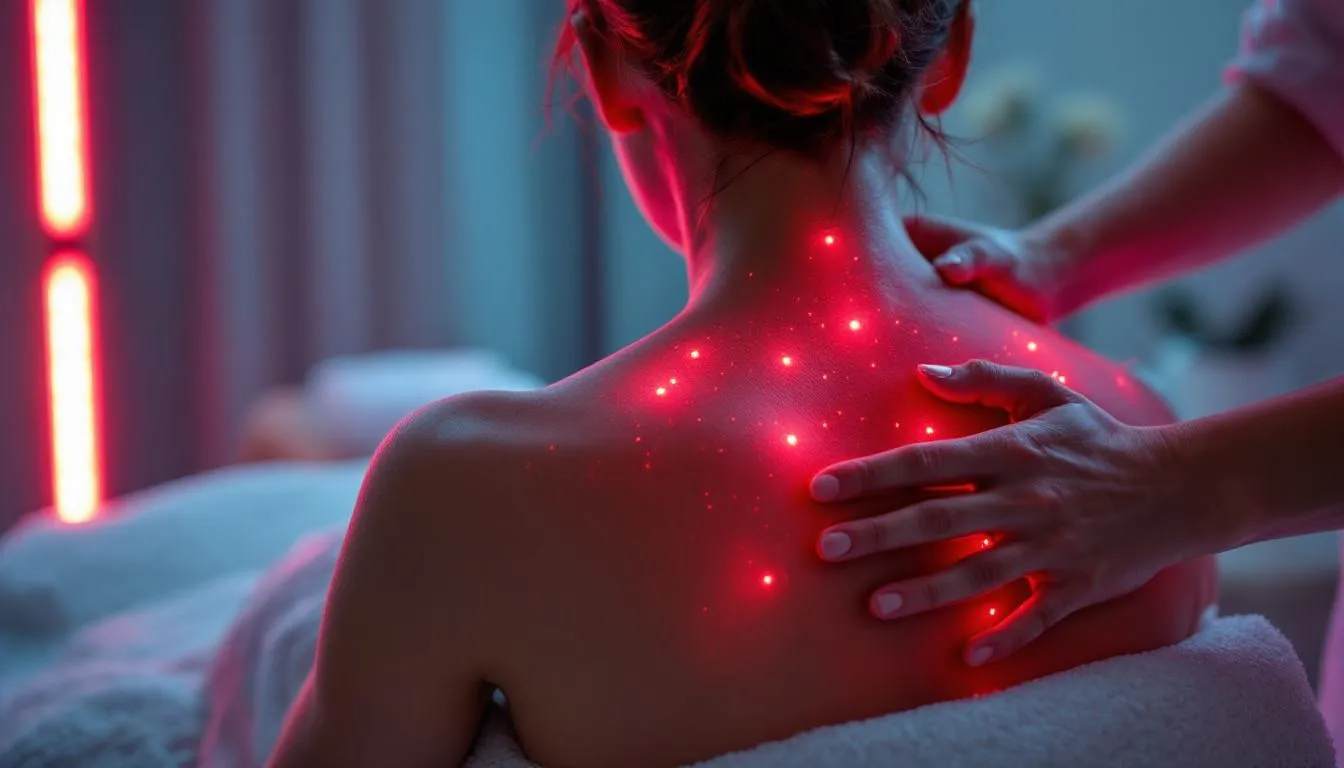
There's an itch on your mid-back. Between the shoulder blades, or just to the left of your spine. It's deep. Relentless. No amount of scratching reaches it properly, and when you do scratch, you get maybe ten seconds of relief before it's right back.
You've probably Googled this. Tried antihistamines, which did nothing. Maybe asked your doctor, who shrugged or prescribed a steroid cream that barely touched it. And here you are, reading about red light therapy, wondering if some LEDs in a panel can actually fix a problem that feels like it's coming from somewhere in your nervous system.
Here's the honest answer: red light therapy won't cure notalgia paresthetica. But it can, with the right wavelengths and the right protocol, meaningfully reduce the itch intensity and frequency in ways that many standard treatments can't match. And the mechanism makes sense. Because notalgia paresthetica isn't a skin problem. It's a nerve problem. And near-infrared photons reach nerves.
This guide covers what notalgia paresthetica actually is, why it produces that particular kind of maddening itch, how photobiomodulation (the science behind red light therapy) works on nerve tissue, and exactly how to use a red light device for the best chance of relief. We're going to get specific, because specific protocols matter. Distance, wavelength, session length, frequency. All of it.
SeekRedLight has covered photobiomodulation for a range of nerve and pain conditions, from neuropathy to joint pain to plantar fasciitis and tendonitis. Notalgia paresthetica is different from all of them in mechanism, but similar in one crucial way: it responds to light that penetrates deep enough to reach the problem.
Let's get into it.
What is notalgia paresthetica?
Notalgia paresthetica (NP) is a sensory neuropathy. That means it's a disorder of sensory nerve function, not a disease of the skin itself. The name comes from Latin and Greek roots: "notalgia" roughly translates to "back pain" and "paresthetica" refers to abnormal sensations like tingling, burning, or numbness.
The condition affects the dorsal skin, typically in the area between or below the shoulder blades, spanning the second to sixth thoracic dermatomes (T2-T6). Most people feel it on one side. The left side is somewhat more common than the right, though nobody is entirely sure why.
It was first described in the medical literature in 1934, though it was likely misdiagnosed and undertreated for decades after that.
The symptoms
The cardinal symptom is pruritus. Intense itching. It tends to be localized to a patch roughly the size of your palm, in that triangular zone between and below the shoulder blades. Some people describe it as superficial. Others say it feels deep, as if the itch is coming from under the skin. Many say scratching doesn't help, or that they scratch until the skin is raw without getting real relief.
Beyond the itch, people with NP often report:
Burning sensations. A mild to moderate burning that comes and goes, often worse after physical activity or at the end of the day.
Hyperpigmentation. This is a giveaway sign. Chronic scratching causes a darkening of the skin in the affected patch. A dermatologist who sees a hyperpigmented oval patch on the mid-back of an adult patient should have notalgia paresthetica near the top of the differential.
Tingling and numbness. Some people feel pins and needles in the area, or areas of reduced sensation.
Pain. Less common than itch, but some patients report aching or soreness in the affected dermatome.
The symptoms typically come in waves. Some days are worse than others. Stress, heat, certain clothing fabrics, and prolonged sitting or standing can all trigger flares. The condition tends to be chronic, persisting for years if untreated.
How common is it?
More common than most people realize. Estimates vary widely because NP is notoriously underdiagnosed. Many patients see multiple doctors before getting the right diagnosis. Studies suggest NP affects somewhere between 10% and 17% of adults at some point in their lives, with prevalence increasing with age.
It's most common in middle-aged and older adults. Women are diagnosed more often than men, though this may partly reflect who seeks medical care for skin symptoms. People with spinal degenerative changes are at higher risk, which tracks with the proposed mechanism.
The underlying cause
This is where it gets interesting, because understanding the mechanism is the key to understanding why red light therapy has any business treating NP.
Notalgia paresthetica is caused by nerve dysfunction in the posterior branches of the spinal nerves exiting the thoracic spine. The thoracic dorsal rami supply sensation to the back skin, and in NP, these nerve branches become compressed, irritated, or entrapped. This happens, usually, because of degenerative changes in the thoracic spine: disc narrowing, osteophytes (bone spurs), facet joint changes, or just the general wear that accumulates in the spine over decades.
The irritated nerve misfires. It sends aberrant sensory signals to the brain, which interprets them as itch, burning, or tingling. The skin itself is innocent. There's no rash, no infection, nothing wrong at the tissue level. The problem is in the nerve signal.
This is why antihistamines don't work. They block histamine-mediated itch pathways. Notalgia paresthetica doesn't use those pathways. It's neurogenic itch, driven by dysfunctional nerve signaling rather than histamine or inflammation in the traditional sense.
It's also why topical treatments are limited. Capsaicin cream helps some people because it depletes substance P in local nerve endings, but the effect is partial and temporary. Gabapentin and pregabalin, which work on nerve signaling more broadly, help more people but come with side effects including sedation, weight gain, and cognitive fog.
The root cause, spinal nerve irritation, is hard to address directly with anything short of physical therapy targeting the thoracic spine or injections near the affected nerve roots.
Red light therapy offers a different approach. It targets the inflammatory and cellular environment around nerve tissue, potentially reducing the irritation that drives the aberrant signaling in the first place.
Why the itch is so persistent
Most people with notalgia paresthetica are confused about why the itch won't stop. Understanding this helps set realistic expectations about any treatment, including red light therapy.
The nervous system has two types of itch-signaling fibers: histamine-dependent and histamine-independent. Histamine-dependent fibers are the ones that fire when you have an allergic reaction or a mosquito bite. That itch responds to antihistamines.
Notalgia paresthetica triggers histamine-independent fibers. These are C-fibers and Aδ-fibers that respond to neuropeptides like substance P and CGRP (calcitonin gene-related peptide), to direct nerve dysfunction, and to local inflammation around the nerve. When the dorsal ramus of a thoracic nerve is chronically irritated by disc or joint degeneration, it produces ongoing aberrant discharge. The brain gets a constant stream of "something is wrong in the mid-back" signals and interprets them as itch.
This also explains a phenomenon many NP patients report: the itch can get worse when they're relaxing, especially when lying down at night. When you're distracted during the day, your descending inhibitory pain pathways help suppress some of that aberrant signaling. At rest, those pathways are less active, and the itch breaks through more easily.
Scratching provides brief relief through a gate-control mechanism, where the large-fiber sensation of touch temporarily overrides the small-fiber itch signal. But as soon as you stop, the itch is back. Worse, repeated scratching eventually sensitizes the nerve endings in the skin, making them more reactive over time.
This is central sensitization. And it's a key reason why treating the underlying nerve irritation early matters. The longer aberrant signaling continues, the more the nervous system adapts around it. Treatment becomes harder.
This also matters for red light therapy. If you start using photobiomodulation early in the course of NP, before sensitization is well-established, you're more likely to see good results. If you've had NP for many years with significant central sensitization, you'll probably still get benefit, but it may take longer and be less complete.
How red light therapy works on sensory neuropathies
Red light therapy, or more precisely photobiomodulation (PBM), works by delivering specific wavelengths of light to biological tissue. The photons are absorbed by chromophores within cells, and this triggers a cascade of downstream effects.
The primary target is a protein called cytochrome c oxidase (CCO), a key enzyme in the mitochondrial electron transport chain. When near-infrared light hits CCO, it increases ATP production (cellular energy), reduces oxidative stress, and modulates nitric oxide levels. The result is an anti-inflammatory, pro-healing cellular environment.
In nerve tissue specifically, photobiomodulation has several documented effects that are relevant to notalgia paresthetica:
Reduction of neurogenic inflammation. Substance P and CGRP, the neuropeptides driving NP itch, are released in part because of localized inflammation around the nerve. PBM reduces pro-inflammatory cytokines including IL-1β, IL-6, and TNF-α. Less inflammation around the dorsal ramus means less aberrant nerve firing.
Modulation of substance P. Multiple studies have shown that PBM reduces substance P levels in treated tissue. Since substance P is a key mediator of neurogenic itch and pain, this is a direct hit on the NP symptom mechanism.
Neurotrophic factor upregulation. Near-infrared light stimulates the release of BDNF (brain-derived neurotrophic factor) and NGF (nerve growth factor). These proteins support nerve health and can help regenerate damaged or dysfunctional nerve tissue over time.
Axonal sprouting and repair. There's good evidence that PBM promotes regeneration of nerve fibers. Studies on peripheral neuropathies, particularly diabetic neuropathy and peripheral nerve damage, show improved nerve conduction and reduced symptoms with PBM treatment.
Mitochondrial support in neurons. Neurons are metabolically expensive cells. They have enormous energy demands. When neurons are chronically stressed, as they are when a dorsal ramus is being intermittently compressed by a bone spur, mitochondrial function suffers. PBM directly targets and improves mitochondrial function. Better mitochondrial health means neurons are more resilient and less likely to fire aberrantly.
The combined effect of these mechanisms is reduced irritability of the sensory nerve fibers responsible for NP symptoms. The itch doesn't disappear overnight, but with consistent treatment, the threshold for aberrant firing rises. The signals become less intense and less frequent.
The wavelengths that matter for reaching spinal nerves
This is where many people go wrong. Not all red light therapy devices are useful for notalgia paresthetica.
The issue is penetration depth. Red light in the 630-680nm range penetrates approximately 5-10mm into tissue, reaching the dermis and some superficial vasculature. That's great for skin conditions, wound healing, and superficial inflammation. But notalgia paresthetica originates in the thoracic dorsal rami, which run through the paraspinal muscles and under the thoracolumbar fascia. Getting light to those structures requires significantly more penetration.
Near-infrared (NIR) wavelengths in the 810-850nm range penetrate 20-50mm or more into tissue. At those depths, you can reach paraspinal musculature, fascia, and the area around the thoracic nerve roots. This is the range you need for NP.
That said, red light (630-680nm) still has value in the treatment stack. The hyperpigmented skin patch common in NP patients often has increased melanin and chronic microtrauma from scratching. Red wavelengths can help normalize skin appearance and reduce localized skin inflammation, while NIR goes deeper to work on the nerve itself.
The ideal device for notalgia paresthetica delivers both red (630-680nm) and near-infrared (810-850nm) wavelengths simultaneously. This is exactly what most good quality home red light therapy panels provide.
Understanding the differences between red and near-infrared light is worth your time if you're treating a deep-tissue condition like this. The wavelength selection determines what you're actually treating.

Wavelengths to target
For notalgia paresthetica specifically, here's what the research and clinical reasoning points to:
Primary target: 810nm or 830nm. These NIR wavelengths show the strongest evidence for penetrating to paraspinal structures and modulating nerve function. Most quality panels include one of these.
Secondary target: 850nm. Also NIR, with similar penetration to 810nm but slightly different absorption characteristics. Either works.
Red light complement: 630-660nm. Adds anti-inflammatory benefit at the skin surface and helps with the hyperpigmentation that often accompanies chronic NP.
Avoid devices that only offer visible red light (630-680nm only). They won't penetrate deeply enough to make a real difference for the nerve component of NP. Equally, avoid devices claiming wavelengths above 1000nm unless you have a specific reason, as those wavelengths start losing the cytochrome c oxidase absorption advantage that makes PBM work.
Treatment setup for the mid-back
The mid-back is actually one of the more straightforward areas to treat with a panel-style red light device. But positioning matters.
Device options
There are two main device types you'll encounter:
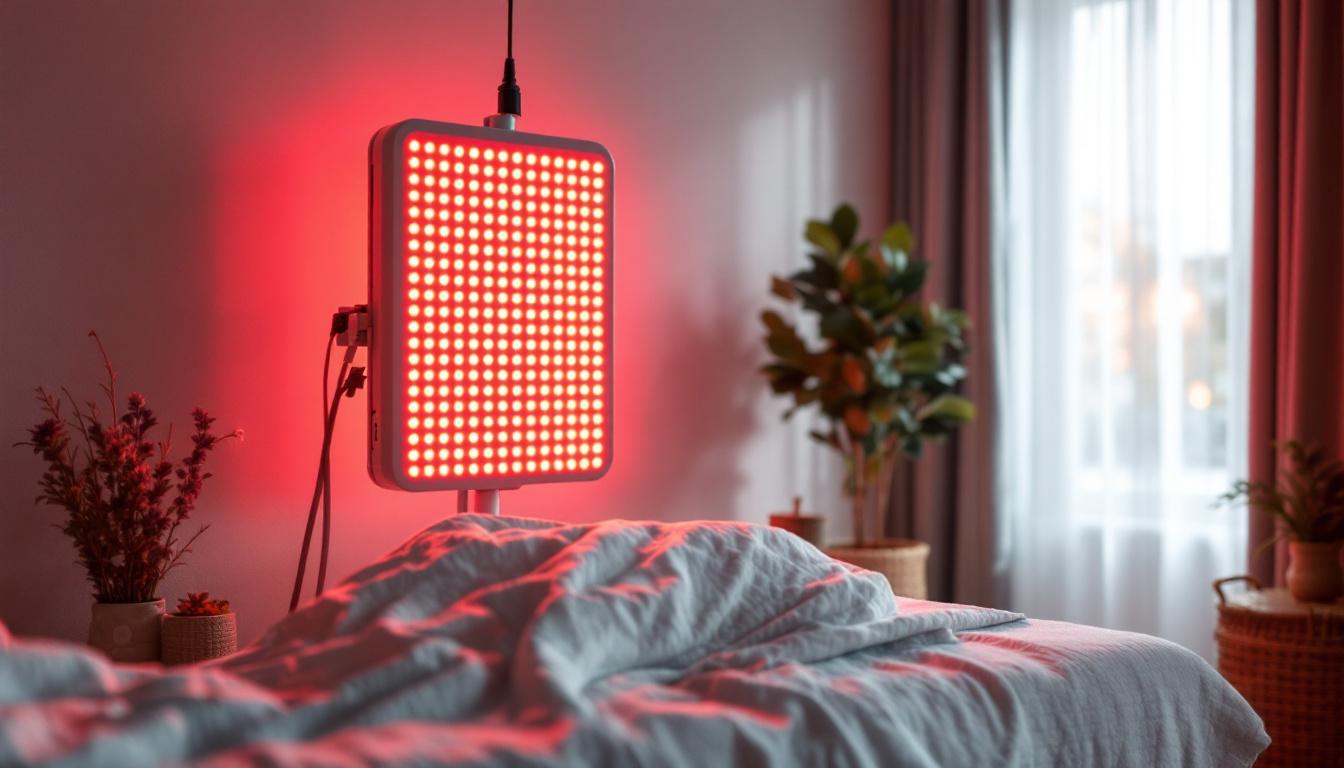
Full panels. These are rectangular LED panels, ranging from small desktop units (about 8" x 4") to full-body panels (24" x 48"). For notalgia paresthetica, a mid-size panel (about 12" x 18" or larger) works well. It covers the thoracic back area without requiring you to reposition constantly.
Handheld wands or pads. These are smaller, targeted devices. A wand can be positioned precisely on the NP patch, which some people prefer. The downside is lower total power output and smaller treatment area.
For most people with NP, a mid-size panel is the better investment because it lets you treat the entire mid-back region without needing a second pair of hands.
Positioning for treatment
The easiest treatment position is to kneel or sit in front of a panel mounted at back height, leaning slightly forward to expose the mid-back. Alternatively, lie face down with the panel suspended or positioned above your back at the correct distance.
The correct distance for a standard home panel (with irradiance in the 40-100 mW/cm² range at skin surface) is usually 6-12 inches. Closer gives more intense energy delivery per second. Further away is gentler and covers a larger area.
For the deepest penetration into paraspinal tissue, closer is generally better, 4-8 inches. The increased intensity at close range drives more photons through the overlying tissue layers to reach the nerve structures you're targeting.
Check your specific device's irradiance specs. You want at least 40-50 mW/cm² at your treatment distance for meaningful therapeutic dosing. Many premium panels deliver 100+ mW/cm² at 6 inches.
Eye protection
When the panel is positioned at back level and you're facing away or downward, your eyes aren't directly exposed. But if you're treating the upper thoracic back with the panel at a higher angle, eye protection makes sense. Learn about eye protection for red light therapy if you're unsure. Proper red light therapy goggles are inexpensive and worth keeping on hand.
The complete treatment protocol for notalgia paresthetica
Dosing in photobiomodulation is measured in joules per centimeter squared (J/cm²). The therapeutic window for most neurological applications falls between 3-10 J/cm² per treatment. Below 3 J/cm² is likely underdosing. Above 20-30 J/cm² may cause biphasic inhibition (too much light actually reduces the effect).
Here's a practical protocol to start with:
Phase 1: Induction (weeks 1-4)
Frequency: 5-7 sessions per week. Daily if possible.
Duration: 10-15 minutes per session.
Distance: 6-8 inches from the skin surface.
Coverage: Position the panel to cover the thoracic mid-back broadly, not just the symptomatic patch. The underlying nerve irritation extends along the dorsal ramus, so treating the full segment (not just where you feel the itch) is more effective.
Sessions: Morning sessions work well for most people. The anti-inflammatory effects seem to accumulate when sessions are consistent.
During this phase, don't expect dramatic results in the first week. The cellular changes that reduce neurogenic inflammation take time to accumulate. Some people notice a mild reduction in itch intensity by week 2-3. Others don't notice anything until week 4-6.
Phase 2: Consolidation (weeks 5-8)
Frequency: 4-5 sessions per week.
Duration: 15-20 minutes per session.
Distance: 6-12 inches, based on your comfort.
If you're seeing improvement, this phase locks in the gains. If you're not seeing improvement, this is also when to consider whether your device has adequate NIR output, whether your positioning has been optimal, or whether adjunctive treatments might help.

Phase 3: Maintenance (ongoing)
Frequency: 3-4 sessions per week.
Duration: 10-15 minutes per session.
Many people with chronic NP find that stopping PBM treatment completely leads to gradual return of symptoms over weeks or months. This isn't surprising given that the underlying spinal degeneration causing nerve irritation hasn't been cured. Maintenance sessions keep inflammation down and nerve function supported.
Think of it like a management strategy rather than a cure. Regular red light therapy keeps the nerve environment calm enough that symptoms stay manageable.
Total dose tracking
If you want to be precise, calculate the dose you're delivering:
Dose (J/cm²) = Irradiance (mW/cm²) × Time (seconds) ÷ 1000
So a device delivering 60 mW/cm² at your treatment distance, used for 10 minutes (600 seconds):
60 × 600 ÷ 1000 = 36 J/cm²
That's actually on the higher end. For nerve conditions, you can modulate by increasing distance or shortening session length. The goal is roughly 10-20 J/cm² per session when treating deep tissue.
Our guide on how long to do red light therapy and whether you can overdo it are worth reading if you want to dial in your dosing.
What to expect week by week
One of the biggest reasons people abandon red light therapy before it works is unrealistic expectations about timeline. This is especially true for nerve conditions.
Week 1-2: You're unlikely to notice significant symptom change. At the cellular level, mitochondrial function is improving, anti-inflammatory cytokines are shifting, and oxidative stress is decreasing. But these changes haven't yet translated to reduced nerve irritability. Stick with it.
Week 3-4: Many people begin noticing that the itch is slightly less intense on some days. Sleep might improve a little because the nocturnal itch flares are less severe. Some people notice that flare-ups after physical activity are shorter.
Week 5-8: This is when most responders see clear improvement. Itch frequency decreases. The sensation is still there but less consuming. The hyperpigmented patch may begin to lighten slightly as scratching decreases and skin repair mechanisms get a boost from red wavelengths.
Month 3 onward: Continued improvement in symptoms with consistent maintenance treatment. Some people reach a point where the itch is barely noticeable except during triggers like extreme heat or prolonged stress.
Not everyone responds equally well. People with severe spinal degeneration or long-standing NP with significant central sensitization tend to see more modest results. People with relatively recent onset of NP and less structural spine pathology tend to respond better.
This mirrors the experience with red light therapy for neuropathy more broadly, where earlier intervention produces better outcomes.
Best devices for notalgia paresthetica
Not all red light therapy devices are created equal, and for notalgia paresthetica specifically, you need a panel that delivers real near-infrared output.
Here's what to look for:
Irradiance output
Irradiance is the power per unit area of light delivered to the skin. Look for devices that publish this data at specific distances. A good quality mid-size panel should deliver at least 40-50 mW/cm² at 6 inches. Premium panels deliver 80-150 mW/cm² at that distance.
Avoid devices that don't publish irradiance data, or that only list total power (watts) without telling you what the actual light output is at the skin surface.
Dual wavelength output
Look for panels that include both red (630-660nm) and near-infrared (810-850nm) LEDs. Many panels use a combination of 660nm and 850nm. Some use 630nm and 810nm. Either combination is appropriate for NP treatment.
Single-wavelength devices (red only or NIR only) are less versatile and less effective for a condition that benefits from both skin-level and deep-tissue treatment.
Panel size for back coverage
For treating the thoracic mid-back, a panel with at least 12 inches of height is helpful. A standard "mid-size" panel (roughly 12" x 24") works well for this purpose, covering the full NP-affected region without needing to reposition.
If you want to check out what the red light therapy device landscape actually looks like, including how different panel types compare, explore our device guides on SeekRedLight.
What to avoid
Cheap panels with inadequate irradiance. Many sub-$100 panels emit too little light to be therapeutically meaningful. If irradiance data isn't published, be skeptical.
Incandescent red light bulbs. These are not the same as LED-based photobiomodulation panels. They don't deliver the right wavelengths at therapeutic irradiance. Red sleep light bulbs have their uses for circadian rhythm but aren't designed for therapeutic dosing.
Devices marketed primarily for tanning or cosmetic purposes. These are often configured for UV output or for superficial skin treatments only.
Combining red light therapy with conventional NP treatments
Red light therapy works best for notalgia paresthetica as part of a broader management approach, not as a sole treatment. Here's how to think about combining it with other options:
Topical capsaicin
Capsaicin cream (typically 0.025%-0.1% concentration) works by depleting substance P in cutaneous nerve endings. With regular application, the itch fibers in the treated area become temporarily desensitized.
Capsaicin burns. Most people get a significant burning sensation for 20-30 minutes after application, which decreases with continued use over 1-2 weeks. Some people can't tolerate it.
Red light therapy and capsaicin work through complementary mechanisms. Capsaicin desensitizes superficial nerve endings; red and NIR light reduce deeper nerve inflammation and support nerve health. Using both together (applying capsaicin, then using red light therapy a few hours later) may provide additive benefit.
Gabapentin and pregabalin
These anticonvulsants reduce neuropathic pain and itch by modulating calcium channels in nerve cell membranes, reducing aberrant firing. They're among the more effective pharmaceutical options for NP.
If you're using gabapentin and want to add red light therapy, there's no known interaction or contraindication. Some people are able to reduce their gabapentin dose as their PBM treatment gains traction, under medical guidance.
Physical therapy and spinal mobility work
Since NP's root cause is spinal nerve irritation from thoracic spine degeneration, addressing the spine itself makes sense. Physical therapy focused on thoracic extension, segmental mobility, and paraspinal muscle strengthening can reduce mechanical pressure on the affected nerve roots.
This is a slow process. Structural degeneration in the spine doesn't reverse quickly. But combining spinal mobility work with red light therapy creates a synergistic approach: the PT addresses the mechanical component while PBM addresses the inflammatory and cellular component.
Botulinum toxin injections
Some dermatologists offer botulinum toxin (Botox) injections directly into the NP patch. The mechanism is thought to involve inhibition of substance P release from nerve endings. Results vary considerably. It's a reasonable option for people who don't respond to other treatments.
Red light therapy can be used before or after botulinum toxin treatment. There's no evidence of interaction, and the anti-inflammatory benefits of PBM continue to apply regardless of other treatments being used.
Lifestyle modifications
Heat triggers NP in many patients. Hot showers and baths, hot weather, and anything that significantly raises core temperature can flare symptoms. Being aware of this and moderating heat exposure helps.
Tight clothing over the mid-back, especially underwire bras or anything with straps that press on the NP patch, can trigger symptoms through direct pressure on already-sensitized nerve endings. Loose, soft fabrics over the area help.
Stress management matters too. The descending inhibitory pain systems that help suppress aberrant nerve signals are compromised under psychological stress. Regular stress reduction practices, whatever form those take for you, genuinely reduce NP symptom burden.
What the research shows
The research on red light therapy specifically for notalgia paresthetica is limited, as is the research on most treatments for NP. It's a relatively niche condition that doesn't attract large clinical trials. But the evidence base around photobiomodulation for related conditions is substantial.
Neuropathic pain and itch
Multiple controlled trials have demonstrated that PBM reduces neuropathic pain and itch in various conditions. A 2019 systematic review published in the journal Pain found that laser and LED-based PBM significantly reduced neuropathic pain compared to sham treatment across multiple trials. The effect sizes were moderate, similar to those seen with gabapentin in some trials.
Studies on neuropathy treatments consistently show that the anti-inflammatory and neurotrophic effects of PBM improve nerve function measurably. Nerve conduction studies before and after PBM treatment show improvements in both sensory and motor nerve conduction velocity in neuropathic patients.
Substance P modulation
Several studies have specifically measured substance P levels before and after PBM treatment. A 2014 study in Photomedicine and Laser Surgery found that 830nm laser treatment significantly reduced substance P in treated tissue compared to control groups. Since substance P is central to the neurogenic itch of NP, this is directly relevant evidence.
Inflammatory cytokine reduction
The anti-inflammatory effects of PBM are among the most robustly demonstrated findings in photobiomodulation research. Studies consistently show reductions in IL-1β, IL-6, TNF-α, and other pro-inflammatory cytokines following PBM treatment. Reducing this inflammatory load around the affected nerve roots is a plausible mechanism for NP symptom improvement.
Pruritus specifically
Research on PBM for chronic pruritus (itch) not caused by allergic or histaminergic mechanisms is growing. Studies in psoriasis patients, where neurogenic itch is a significant component, have shown PBM reducing itch severity. Red light therapy for psoriasis research supports this, with itch being one of the primary outcome measures that improves alongside skin plaques.
A smaller body of work specifically on neurogenic pruritus from spinal causes supports the rationale for using PBM in conditions like NP, though larger randomized trials are still needed.
The honest caveat
There are no randomized controlled trials specifically studying red light therapy for notalgia paresthetica as of early 2026. The evidence supporting its use is mechanistic and drawn from analogous conditions. For most people with NP who've exhausted conventional options, the risk-benefit calculation favors trying PBM. It's safe, non-invasive, has no systemic side effects, and the underlying science is solid.
But anyone who claims red light therapy is a proven cure for NP is overstating the evidence. It's a promising intervention with a credible mechanism, not a miracle.
Common mistakes that reduce results
People trying red light therapy for notalgia paresthetica commonly make a few mistakes that reduce their results. Here are the main ones:
Using red-only devices
If your device only emits visible red light (630-680nm) without near-infrared, it's not going to penetrate deep enough to reach the affected nerves. Many inexpensive home devices fall into this category. Double-check your device's wavelength output before committing to a protocol.
Treating too short
Ten-minute sessions feel substantial if you've never used red light therapy before. But for a deep-tissue target like the thoracic nerve roots, getting adequate dosing at a given irradiance takes time. If your device delivers 40 mW/cm² at 6 inches, you need 15-20 minutes to accumulate a meaningful therapeutic dose at depth. Go shorter and you're likely underdosing.
Treating too sporadically
Red light therapy's effects on nerve inflammation are cumulative but not permanent. Skipping days frequently during the induction phase means you're not building the consistent anti-inflammatory and neurotrophic environment needed for symptom change. Daily or near-daily treatment for the first 4-6 weeks is important for NP.
Positioning the panel too far away
Intuitively, more distance feels safer. But too much distance dramatically reduces irradiance at the skin surface, and even more dramatically reduces what makes it to the target tissue. For deep-tissue nerve conditions, 6-8 inches is usually optimal.
Expecting results too quickly
This is probably the most common reason people give up. Neurological conditions respond slowly to any treatment, including PBM. If you're not seeing any change at two weeks, that doesn't mean it's not working. The cellular changes take 4-6 weeks to accumulate to the point where nerve irritability meaningfully decreases.
Not addressing the spine
Red light therapy can reduce the inflammatory component of NP and support nerve health, but if significant structural compression at the nerve root continues unchecked, progress will be limited. Combining PBM with thoracic spine mobility work and appropriate physical therapy gives you the best comprehensive approach.
Notalgia paresthetica and other dermatomes
Most information about NP focuses on the classic T2-T6 distribution in the mid-back. But the condition can also appear in adjacent areas.
Upper thoracic (T1-T2). The itchy patch may be near the base of the neck or across the upper back. The treatment approach is the same, but positioning the panel to cover higher thoracic segments is important.
Lower thoracic (T7-T12). Less common, but NP can present in the lower thoracic segments, with an itchy patch lower on the back, sometimes near the lower rib margin. Same treatment principles apply.
Bilateral presentation. Some people have patches on both sides of the back, though single-sided is more common. Bilateral NP may indicate a more diffuse process affecting multiple nerve levels.
The treatment approach scales to wherever the affected dermatome is. The key is covering the entire affected segment with adequate NIR light, not just the most symptomatic patch.
Related neuropathic skin conditions in other areas, like neuropathic itch from plantar nerve issues or conditions involving other nerve territories, share some overlapping mechanisms with NP. The photobiomodulation approach has relevance across these presentations.
Tracking your progress
Because NP symptoms fluctuate naturally, keeping a simple symptom log during your treatment period helps you distinguish genuine improvement from random variation.
A simple daily log with two entries is sufficient:
- Itch intensity on a 0-10 scale (average for the day)
- Any notable triggers or flare-ups
Looking at weekly averages rather than day-to-day numbers gives a clearer picture of trend. Most people who respond to PBM see their weekly average gradually decline over 6-8 weeks, even if individual days are still variable.
Photography of the hyperpigmented skin patch (if present) every two weeks provides objective documentation of improvement. The pigmentation often lightens measurably in responders, even when subjective symptom change is harder to quantify.
When to seek additional medical evaluation
Red light therapy is a reasonable home treatment to trial for notalgia paresthetica. But some presentations warrant medical evaluation regardless of whether you're pursuing PBM:
Symptoms that are rapidly worsening. Gradual progression over months to years is typical of NP. Rapid worsening over days to weeks should be evaluated.
Associated weakness or bowel/bladder changes. These could indicate spinal cord involvement rather than isolated peripheral nerve irritation. That's a different and more serious situation.
Significant pain as the primary symptom. Notalgia paresthetica is primarily an itch condition. If severe, deep aching pain is the dominant complaint, the differential is broader and includes conditions that warrant imaging.
No response to any treatment over several months. If multiple interventions including PBM, capsaicin, and gabapentin have all failed, imaging of the thoracic spine and possibly referral to a neurologist or pain specialist makes sense.
For straightforward NP presentations where the diagnosis is established and conventional treatments have been partially tried, red light therapy is a reasonable next step.
Frequently asked questions
How long does it take for red light therapy to reduce NP itch?
Most people who respond to red light therapy for notalgia paresthetica see initial improvement around weeks 4-6 of consistent daily treatment. Significant improvement typically takes 8-12 weeks. The timeline is longer for neurological conditions than for surface-level concerns because nerve cell function changes more slowly than skin changes.
Can I use a regular red light therapy panel for NP, or do I need a specialized device?
A standard home red light therapy panel that includes near-infrared wavelengths (810nm or 850nm) works fine for NP. You don't need a specialized or medical-grade device. The key requirement is adequate NIR output and sufficient irradiance at your treatment distance (40+ mW/cm²). Many consumer-grade panels meet these specs.
Should I treat the NP patch specifically or the whole mid-back?
Treat the whole mid-back region broadly, not just the symptomatic patch. The nerve irritation in NP runs along the dorsal ramus from the spinal exit point to the skin. Treating only the itch patch addresses the endpoint but misses the nerve trunk. Covering the entire mid-back segment, from roughly T2 to T7, treats the full nerve territory more effectively.
Can I use red light therapy while also taking gabapentin for NP?
Yes. There's no known interaction between photobiomodulation and gabapentin. The two treatments work through different mechanisms, and using both together may be more effective than either alone. Some people are able to gradually reduce their gabapentin dose as PBM treatment takes effect, but do this under medical guidance rather than independently.
Is near-infrared light safe to use on the spine area?
Yes. Near-infrared light at therapeutic irradiance levels does not penetrate the spinal canal or damage neural tissue. It's absorbed by surrounding muscle, fascia, and subcutaneous tissue. Photobiomodulation has been studied extensively and has an excellent safety profile. The main precautions are eye protection when the panel faces the head, and avoiding treatment over known tumors.
What if I have both notalgia paresthetica and psoriasis in the same area?
Both conditions respond to red light therapy, though through different mechanisms. Psoriasis treatment with red light therapy uses red wavelengths (630-660nm) to modulate skin inflammation and proliferation. NP treatment uses NIR wavelengths for nerve effects. A panel that delivers both simultaneously treats both conditions in the same session, which is convenient if you're dealing with overlapping presentations.
Does red light therapy work for itch from other causes, or just NP?
Photobiomodulation has shown benefit for several types of chronic itch beyond notalgia paresthetica. It helps with post-herpetic neuralgia (the itch that persists after shingles), pruritus associated with psoriasis and eczema, and some forms of idiopathic pruritus. The mechanism differs by condition, but the anti-inflammatory and neuromodulatory effects have broad applicability to itch that doesn't respond to antihistamines.
How do I know if my red light therapy panel actually puts out meaningful near-infrared?
Most manufacturers publish spectral data or irradiance measurements. If NIR output isn't listed, be skeptical. A simple test: NIR light (810-850nm) is not visible to the human eye, so a panel that only glows red but claims to have NIR output should be checked. Use a camera phone, which captures some NIR, to verify that the panel shows additional invisible emission beyond the visible red. Premium panels usually provide detailed irradiance charts across wavelengths.
Related guides
- Red light therapy for neuropathy
- Red light therapy for joint pain
- Do you need eye protection for red light therapy?
- How long to do red light therapy
- Can you do too much red light therapy?
Sources
- PubMed - Photobiomodulation for Neuropathic Pain and Pruritus
- Journal of the American Academy of Dermatology - Notalgia Paresthetica Reviews
In case I don't see you, good afternoon, good evening, and good night. May your mid-back stay quiet, your nerves find their calm, and your sessions stay consistent. Explore SeekRedLight for comprehensive guides and tools to optimize your red light therapy.