Red light tanning beds: what they are and how they actually work
Red light tanning beds don't tan you like UV beds. Learn what they actually do, how they work, which gyms have them, and whether they're worth the upgrade fee.
import Image from 'next/image'
You've seen them at Planet Fitness. Maybe at your local tanning salon. Big booth-style beds that promise "red light therapy" alongside your tan.
But here's the confusing part: some are actual red light therapy beds that don't tan you at all. Others are hybrid beds mixing UV with red light. And some salons call their regular tanning beds "red light beds" because the bulbs glow red.
Let's clear this up.
What is a red light tanning bed?
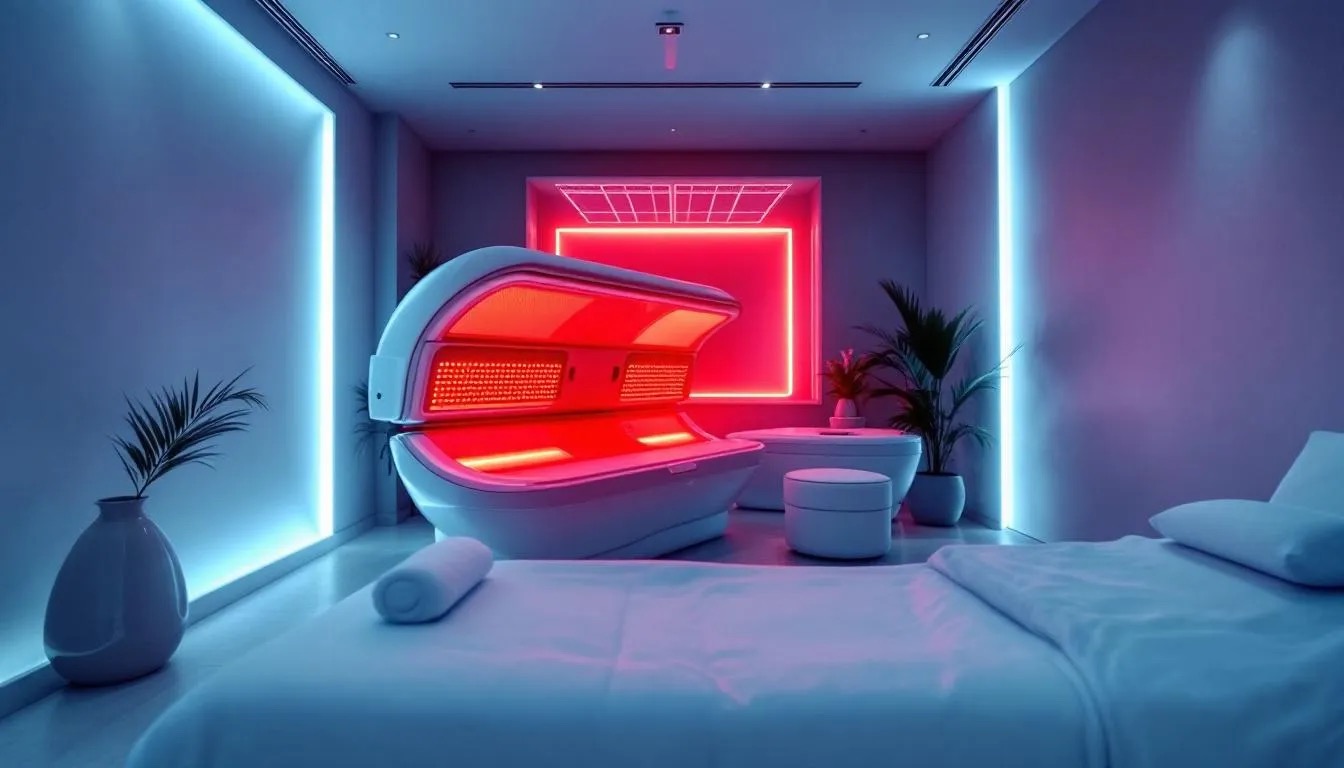
A red light tanning bed is a full-body booth that uses red and near-infrared wavelengths (620-900nm) to stimulate cellular function. These beds don't emit UV radiation. They don't make you tan. They're designed for skin health, collagen production, and muscle recovery.
The name is misleading. Call them what they really are: red light therapy beds.
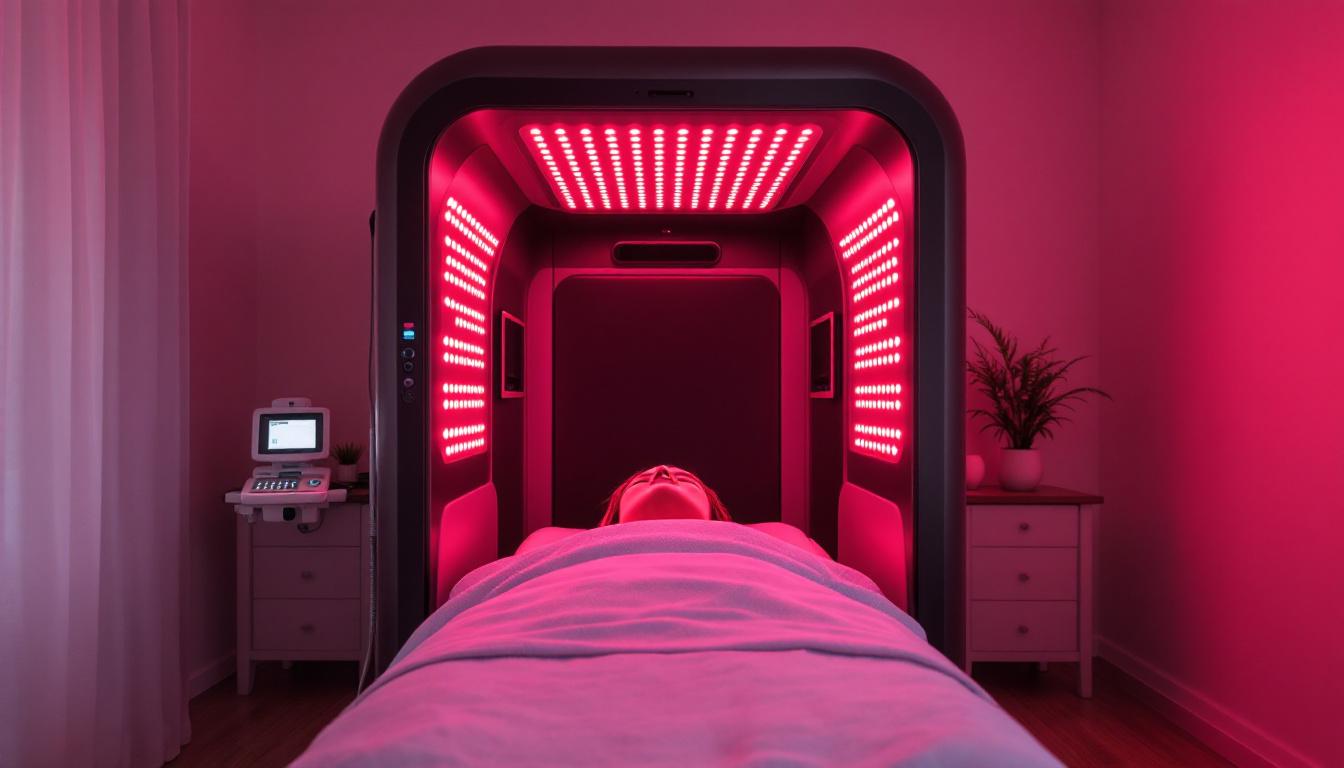
Most of these beds look like traditional tanning beds. You stand or lie in an enclosed booth surrounded by LED panels. The lights glow red or deep orange. Sessions last 10-20 minutes. You don't wear goggles (though some people prefer to close their eyes or use protective eyewear).
The confusion comes from gyms and salons using "tanning bed" language when marketing these devices. Planet Fitness calls theirs "Total Body Enhancement." LA Fitness has similar setups. Tanning salons added them as upsells when UV tanning started declining.
But the technology is completely different.
Red light therapy beds vs. UV tanning beds
Let's break down the key differences.
Wavelength
UV tanning beds emit ultraviolet radiation between 280-400nm. That's the same spectrum that causes sunburn, triggers melanin production, and damages DNA. Most tanning beds use UVA (320-400nm) with some UVB (280-320nm).
Red light therapy beds use visible red light (620-700nm) and near-infrared (800-900nm). No UV. Nothing that triggers melanin. Nothing that damages DNA.
This isn't a minor technical difference. It's the entire point.
How they work
Tanning beds darken your skin by forcing melanocytes to produce melanin. That's your skin's defense mechanism against UV damage. The "tan" is literally your body trying to protect itself from radiation that's harming it.
Red light therapy works through photobiomodulation. Red and near-infrared wavelengths penetrate skin and get absorbed by mitochondria in your cells. This triggers increased ATP production (cellular energy), which supports healing, collagen synthesis, and tissue repair.
One causes damage and your body responds. The other stimulates energy production at the cellular level.
Tanning results
UV tanning beds will bronze you. That's what they're designed to do. You'll see color change within hours of your first session. Maintain it with 2-3 sessions per week.
Red light therapy beds won't tan you. At all.
Some people report a slight "glow" or improved circulation that makes skin look healthier. But you're not getting darker. If a salon promises you'll tan from red light alone, they're lying.
Safety profile
UV tanning beds are classified as Group 1 carcinogens by the WHO. That puts them in the same category as tobacco and asbestos. Using tanning beds before age 35 increases melanoma risk by 75%. They also cause cataracts, immune suppression, and premature aging.
Red light therapy beds have an excellent safety record. Because they don't use UV wavelengths, they don't cause burns, skin damage, or increase cancer risk. The main caution is eye protection (debated among experts, but some recommend closing your eyes or wearing goggles for direct facial exposure).
Results timeline
Tanning beds give you immediate visible results. You walk out darker.
Red light therapy is cumulative. You might notice improved skin texture after 4-6 weeks of consistent use (3-5 sessions per week). Collagen changes take 8-12 weeks. This isn't an instant gratification technology.
Cost structure
UV tanning salons charge per session or sell monthly packages. A typical session runs $10-30 depending on bed quality and location.
Red light therapy beds at gyms are usually included with premium memberships. Planet Fitness requires a Black Card membership ($24.99/month) for Total Body Enhancement access. LA Fitness includes it at certain locations with higher-tier memberships.
Standalone red light therapy clinics charge $40-80 per session. Monthly unlimited packages run $200-400.
The hybrid bed problem
Here's where things get messy.
Some tanning salons offer "hybrid beds" that combine UV tanning bulbs with red light LEDs. These beds will tan you (from the UV) while supposedly giving you red light benefits at the same time.
Marketing materials call them "collagen beds" or "beauty beds" or "red light tanning beds." Salons position them as healthier alternatives to standard UV beds.
But you're still getting UV exposure. You're still damaging DNA. You're still increasing cancer risk.
The red light component might provide some skin benefits. But it doesn't negate the UV damage happening simultaneously. It's like taking vitamins while smoking. Sure, the vitamins are good for you, but you're still smoking.
Some people specifically seek out hybrid beds because they want both the tan and the collagen boost. That's a personal choice. Just understand what you're getting: UV radiation with red light added on top.
If you want red light therapy benefits without UV damage, use a pure red light bed. If you want to tan, accept that you're choosing UV exposure with all its risks. Don't convince yourself the hybrid bed is a "healthy tan" option.
What gyms have red light therapy beds?
Planet Fitness
Planet Fitness has the RVT30 Beauty Angel. It's a stand-up booth with red LED panels and a vibration plate. You stand on the vibrating platform while surrounded by red light.
The Beauty Angel uses wavelengths between 620-700nm (visible red only, no near-infrared). Sessions last 12 minutes. You can use it once per day.
Access requires a Black Card membership. That's $24.99/month versus $10/month for the basic membership. The Black Card also gets you guest privileges, massage chairs, and access to any Planet Fitness location.
Planet Fitness has these at most (but not all) locations. Call ahead to confirm your gym has one.
LA Fitness
LA Fitness has similar red light therapy booths at select locations. The exact model varies by gym. Some have the Mystic Luxe booth, others use different manufacturers.
These are typically included with premium memberships. Not all LA Fitness locations have them. Availability varies significantly by region.
Crunch Fitness
Crunch has added red light therapy beds at some locations as part of their wellness offerings. Like LA Fitness, this varies by franchise. Higher-tier memberships usually include access.
Tanning salons
Many tanning salons added standalone red light therapy beds when UV tanning started declining in popularity. These are often rebranded as "wellness centers" or "beauty spas."
The quality varies wildly. Some salons invested in medical-grade devices with proper wavelength specs. Others bought cheap LED beds that barely produce therapeutic output.
Ask about wavelengths (should be 630-670nm for red, 810-850nm for near-infrared), power output (look for at least 100 mW/cm² irradiance), and treatment protocols. If staff can't answer these questions, the bed is probably low quality.
Planet Fitness Total Body Enhancement: is it worth it?
Let's talk specifics about the most accessible option.
The Beauty Angel at Planet Fitness delivers red wavelengths between 620-700nm. That's therapeutic range. The LEDs surround you on all sides, giving you full-body coverage. The vibration plate adds a muscle toning element (though the actual toning effect is minimal).
For skin benefits, 12-minute sessions 3-5 times per week can improve skin texture, reduce fine lines, and support collagen production over 8-12 weeks. You're looking at gradual improvements, not dramatic overnight changes.
The biggest limitation is wavelength range. The Beauty Angel only uses visible red light (620-700nm). It doesn't include near-infrared (800-900nm), which penetrates deeper into tissue and provides more significant benefits for muscle recovery, joint pain, and inflammation.
For surface-level skin improvements, it works fine. For deep tissue benefits, you'd need a device with near-infrared capability.
Is the $15/month upgrade (from basic to Black Card) worth it?
If you're already at Planet Fitness 4-5 days per week and you'll actually use it consistently, yes. The skin benefits are real if you commit to regular sessions. Add in the massage chairs and reciprocal gym access, and the Black Card pays for itself.
If you're going to use it twice, get bored, and forget about it, no. Don't pay extra for a feature you won't use.
If you're serious about red light therapy for therapeutic purposes (chronic pain, injury recovery, significant skin issues), Planet Fitness isn't enough. You'll want a home device or access to a medical-grade bed with full-spectrum wavelengths.
Red light therapy bed vs. home devices
Full-body beds give you total coverage in 10-15 minutes. You don't have to hold anything or target specific areas. You just stand there.
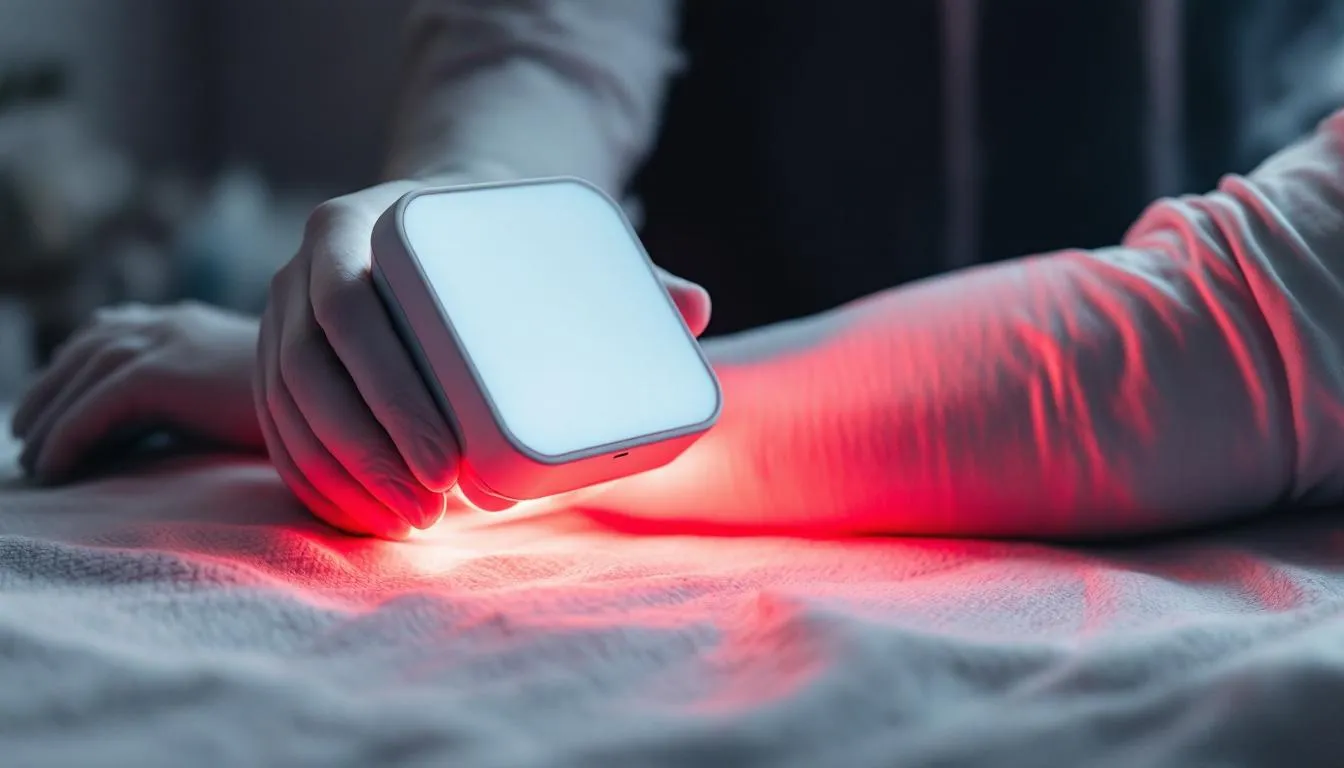
Home devices require more effort. You hold a panel 6-12 inches from your body and treat one area at a time. A full-body treatment takes 30-45 minutes if you're thorough.
But home devices offer better value long-term. A quality red light therapy panel costs $300-800 upfront. That's 3-4 months of gym membership upgrades or 5-10 sessions at a red light therapy clinic. After the initial investment, you own it. Use it daily if you want. No monthly fees.
Home devices also let you control wavelength, power density, and treatment time. Commercial beds have preset programs. You get what you get.
The downside is commitment. You have to make time for it. You have to remember to do it. Beds at gyms build it into your routine. You're already there. Might as well use it.
For most people, the ideal setup is a targeted home panel for specific issues (face, joints, injuries) plus gym bed access for general maintenance. Use the bed for full-body sessions. Use the panel when you need focused treatment.
Common questions about red light tanning beds
Can you get a tan from a red light bed?
No. Red light doesn't trigger melanin production. You won't get darker. If someone tells you their red light bed will tan you, they're either lying or they're actually using a hybrid bed with UV bulbs.
Some people notice improved skin tone and circulation after consistent use. That's not a tan. That's healthier skin.
How often should you use a red light therapy bed?
For skin benefits: 3-5 sessions per week, 10-20 minutes per session, for at least 8-12 weeks. Then you can reduce to 2-3 maintenance sessions per week.
For muscle recovery: Daily use is fine, especially after workouts. Many athletes use red light therapy beds as part of post-training recovery protocols.
Start with 10-minute sessions. You can gradually increase to 20 minutes as your body adapts. More isn't always better. Overexposure can cause temporary redness or irritation.
Do you need to wear clothes in a red light bed?
No. Red light penetrates skin most effectively when it hits bare skin directly. Clothing blocks photons.
Most red light therapy beds are private enclosed booths. You can strip down to underwear or go fully nude if you're comfortable. The more skin exposed, the more surface area you're treating.
Some people wear swimsuits for modesty. That's fine. You'll still get benefits on exposed areas.
Do you need goggles for red light therapy beds?
This is debated.
Red light (620-700nm) is generally considered safe for eyes in short exposures. It doesn't cause the same photochemical damage as UV. Some studies suggest red light may even benefit eye health.
But direct bright light exposure to closed eyelids can still be uncomfortable. Some people experience temporary visual effects (seeing spots, light sensitivity) after sessions with eyes open.
Most manufacturers recommend closing your eyes during facial exposure. Some provide goggles as an option. It's not strictly necessary, but it's a reasonable precaution if you're sensitive to bright light.
Near-infrared (800-900nm) is invisible to the human eye. It doesn't cause the same discomfort. But it still delivers energy to tissue, so the same general caution applies.
How long does it take to see results from red light therapy beds?
Skin texture improvements: 4-6 weeks of consistent use Collagen density increases: 8-12 weeks Fine line reduction: 12-16 weeks Muscle recovery: Immediate to 24-48 hours post-session
This assumes you're using the bed 3-5 times per week at proper intensity. Sporadic use (once a week, random sessions) won't produce measurable results.
Red light therapy is cumulative. Effects build over time. This isn't a quick fix.
Are red light tanning beds safe during pregnancy?
Red light therapy is generally considered safe during pregnancy. It doesn't emit UV radiation. It doesn't produce heat that could raise core body temperature to unsafe levels.
But there's limited research on red light exposure during pregnancy specifically. Most doctors recommend avoiding unnecessary exposures to be cautious.
If you're pregnant and considering red light therapy, talk to your healthcare provider first. They know your specific situation better than general advice.
Can you use red light therapy beds if you take medications?
Most medications don't interact with red light therapy. But photosensitizing drugs (certain antibiotics, retinoids, some blood pressure medications) can make your skin more sensitive to light exposure.
If you take medications that cause sun sensitivity, check with your doctor before using red light therapy beds. The wavelengths are different from UV, but it's worth confirming.
Do red light therapy beds help with acne?
Red light (620-700nm) has anti-inflammatory properties that can reduce acne inflammation and support healing. It won't kill acne bacteria (that requires blue light around 405-420nm), but it can calm existing breakouts.
Near-infrared (800-900nm) penetrates deeper and supports tissue repair, which can help with acne scarring over time.
For active acne, you'd get better results from a device that combines blue light (for bacteria) with red light (for inflammation). Pure red light beds help with inflammation and healing, but they're not the most targeted acne treatment.
What's the difference between red light therapy beds and infrared saunas?
Red light therapy beds use specific wavelengths (620-900nm) to stimulate cellular function through photobiomodulation. They don't produce significant heat. You don't sweat. The mechanism is photochemical, not thermal.
Infrared saunas use far-infrared wavelengths (3000-10,000nm) to generate heat. You sweat. Your core temperature rises. The benefits come from heat stress and cardiovascular response.
Near-infrared (800-900nm) sits in the middle. Red light therapy beds that include near-infrared provide some warmth, but nothing like a sauna. Infrared saunas typically don't provide the specific wavelengths needed for photobiomodulation benefits.
They're different modalities with overlapping benefits. Both reduce inflammation. Both support recovery. But the mechanisms are distinct.
The truth about "collagen beds" at tanning salons
Many tanning salons rebranded their offerings when UV tanning started getting bad press. They added red LEDs to tanning beds and started calling them "collagen beds" or "beauty beds."
Some of these are legitimate red light therapy beds. Others are just UV beds with a few red LEDs thrown in for marketing.
Here's how to tell the difference:
Ask about UV emission. If the bed produces any UV at all, it's a hybrid bed, not a pure red light therapy bed. Staff should be able to answer this directly.
Check the bulbs. Pure red light therapy beds use LEDs that glow red or deep orange. UV tanning beds use fluorescent tubes that glow blue-white or purple. If you see fluorescent tubes, there's UV.
Look at the labeling. FDA-cleared red light therapy devices will have specific wavelength information and safety labeling. Tanning beds have UV exposure warnings.
Ask about wavelength specs. Red light therapy requires 630-670nm (red) and/or 810-850nm (near-infrared). If staff can't tell you the specific wavelengths, the bed probably isn't therapeutic quality.
Watch for tan claims. If the salon promises you'll get a tan, they're using UV. Red light alone doesn't tan you.
Some salons are genuinely pivoting to wellness services and invested in quality red light equipment. Others slapped "red light therapy" on their marketing materials without actually changing their equipment. Don't assume "collagen bed" means you're getting red light benefits.
Should you use a red light tanning bed?
If you have gym access to a red light therapy bed (Planet Fitness, LA Fitness, Crunch) and you'll use it consistently, yes. It's a low-risk, convenient way to get skin benefits and support recovery.
If you're paying extra specifically for red light therapy access, do the math. A $15/month upgrade costs $180/year. A home panel costs $400-600 upfront and lasts 5-10 years. If you'll actually use a home device regularly, buy one instead.
If you're considering red light therapy at a tanning salon, verify what you're actually getting. Make sure it's pure red light, not a hybrid bed with UV. Ask about wavelengths and power output. If they can't answer those questions, go elsewhere.
If you want to tan, use a UV tanning bed and accept the risks (or use self-tanner, which is safer). Don't use a hybrid "red light tanning bed" thinking you're getting a healthier tan. UV damage is UV damage.
If you have specific therapeutic goals (chronic pain, injury recovery, significant skin conditions), a commercial bed probably isn't enough. You'll want a home device or access to medical-grade equipment through a functional medicine clinic or sports medicine facility.
Red light therapy beds work. They're not magic. They're not a replacement for proper skincare, good nutrition, or medical treatment. They're a tool that supports cellular function and tissue health when used consistently over time.
Use them if they fit your routine and budget. Skip them if you won't actually use them regularly. And definitely don't confuse them with tanning beds just because salons market them poorly.
Frequently asked questions
Do red light tanning beds give you vitamin D? No. Vitamin D synthesis requires UVB radiation (280-315nm). Red light therapy beds use 620-900nm wavelengths, which don't trigger vitamin D production. If you want vitamin D, get sun exposure or take supplements.
Can you use red light therapy beds every day? Yes. Daily use is safe and often beneficial, especially for muscle recovery. Most protocols recommend 10-20 minute sessions. Listen to your body. If you notice irritation, reduce frequency.
Will a red light bed help you lose weight? Red light therapy may support fat loss through improved mitochondrial function and increased metabolism, but it's not a weight loss tool on its own. Studies show modest improvements when combined with diet and exercise. Don't expect significant fat loss from red light alone.
Are red light therapy beds better than panels? Beds provide full-body coverage in less time. Panels require you to treat one area at a time but give you more control over power density and treatment protocols. Beds are more convenient. Panels are more targeted and cost-effective long-term.
How much do red light therapy beds cost? Commercial full-body beds range from $8,000 to $25,000+ for professional models. That's why gym and clinic access makes sense for most people. Home panels ($300-800) offer better value for personal use.
Can you combine red light therapy beds with UV tanning? Physically, yes. Many salons offer both. But using them on the same day doesn't negate UV damage. If you're serious about skin health (which is what red light therapy supports), UV tanning works against that goal.
Do red light therapy beds work for wrinkles? Yes. Multiple studies show that consistent red light exposure (630-660nm) over 8-12 weeks improves skin texture, reduces fine lines, and increases collagen density. Results are gradual and require ongoing use.
What's the best red light therapy bed? For gym access, Planet Fitness's Beauty Angel is the most accessible. For clinical quality, look for beds with dual wavelength (red + near-infrared), medical-grade LEDs, and at least 100 mW/cm² irradiance. Brands like Joovv, PlatinumLED, and RedTherapy make quality full-body systems.
The bottom line
Red light tanning beds don't tan you. They're red light therapy beds that support skin health, collagen production, and cellular function through photobiomodulation.
They're completely different from UV tanning beds in wavelength, mechanism, safety profile, and results. The "tanning bed" language is marketing confusion, not accurate description.
If you have gym access and you'll use it consistently, red light therapy beds are worth trying. If you're paying extra specifically for this feature, do the math on home devices. If you're at a tanning salon, verify you're getting pure red light, not a UV hybrid marketed as "healthy tanning."
Use red light therapy beds for what they actually do: support skin health and recovery over time with consistent use. Don't expect instant tans, dramatic transformations, or miracle cures.
And definitely don't confuse them with UV beds. They're not healthier tanning options. They're completely different technology that doesn't tan you at all.
Helpful resources
- Red light therapy eyes open or closed: Eye safety guidance for red light therapy
- Red light therapy goggles: Do you need eye protection during treatment?
Related guides from SeekRedLight
- Red light therapy for joint pain: How photobiomodulation helps reduce inflammation and pain
- Red light therapy for psoriasis: Using red light to manage chronic skin conditions
- How long to do red light therapy: Treatment time and frequency guidelines
- Red light therapy vs infrared sauna: Comparing photobiomodulation and heat therapy
External resources
- Photobiomodulation in dermatology: review of clinical evidence: Clinical research on red light therapy for skin health
- WHO classification of UV tanning beds as Group 1 carcinogens: Official cancer risk assessment
- LED-based light therapy clinical applications: Comprehensive review of therapeutic wavelengths and protocols
So what did we learn? Red light "tanning" beds don't tan you. They're wellness devices with misleading names. Use them for skin health if you have access. But don't expect bronze skin. That's not what they do.