Red light therapy for weight loss near me: Complete guide to local treatments
Find professional red light therapy for weight loss near you. Compare clinic costs, treatment protocols, at-home devices, and realistic results from body contouring.
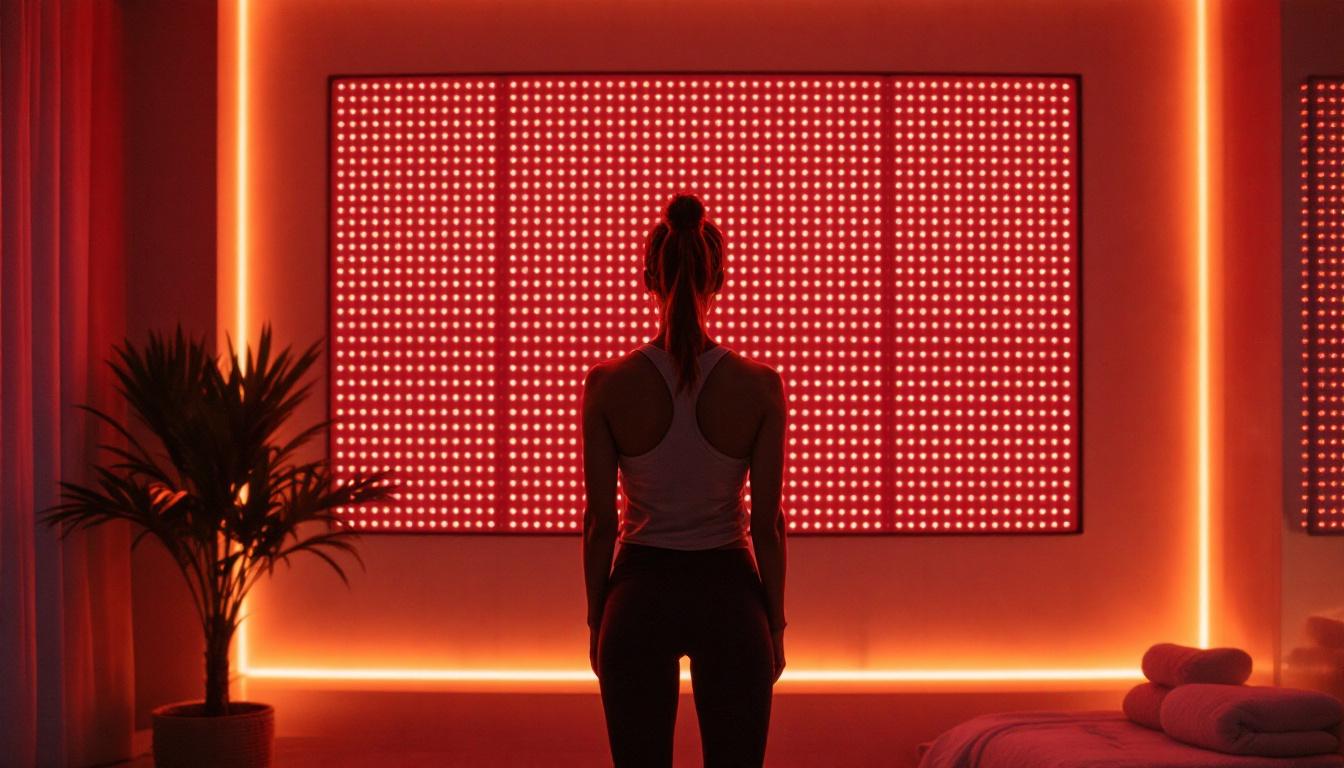
You've seen the Instagram ads. Your friend lost three inches off her waist. Now you're wondering where to find red light therapy for weight loss near you.
Here's what you need to know.
Red light therapy for weight loss isn't like popping into a tanning salon. The technology works differently. And finding the right provider near you requires understanding what actually happens inside your fat cells when red and near-infrared light penetrates your skin.
This guide covers everything. How the science works. Where to find legitimate providers in your area. What you'll actually pay. And most importantly, what results you can realistically expect.
Let's start with the basics.
What is red light therapy for weight loss?
Red light therapy uses specific wavelengths of light to trigger changes in your fat cells. The most common approach combines 635nm red light with 850nm near-infrared light.
When these wavelengths penetrate your skin, they're absorbed by cytochrome c oxidase. That's an enzyme in your mitochondria. The cellular powerhouses of every cell in your body.
This absorption boosts ATP production. Your cells get more energy. But here's where it gets interesting for weight loss.
The light also affects fat cells directly.
How red light therapy affects your fat cells
Think of your fat cells as tiny storage units. They hold triglycerides (the stored form of fat) until your body needs energy.
Red light therapy doesn't melt fat. That's marketing nonsense.
What it actually does is more subtle.
The light temporarily increases cell membrane permeability. It creates transient pores in the adipocyte walls. This allows the lipid content (fatty acids and glycerol) to leak out into the interstitial space around the cells.
From there, your lymphatic system and bloodstream pick up these released fats. Your liver processes them. And your body can either burn them for energy or eliminate them naturally.
But here's the catch: if you don't burn those released fats through physical activity or caloric deficit, they can get reabsorbed. The red light mobilizes the fat. Exercise and diet help you actually lose it.
This is why every legitimate provider will tell you the same thing. Red light therapy works best combined with healthy eating and regular movement.
The science behind red light and fat loss
Let's get into the cellular mechanisms. Because understanding how this works helps you evaluate whether a provider knows what they're doing.
Mitochondrial activation
Your mitochondria contain an enzyme called cytochrome c oxidase. When red and near-infrared light hit this enzyme, it triggers a cascade of cellular changes.
First, mitochondrial membrane potential increases. That means your mitochondria work more efficiently.
Second, ATP synthesis goes up. Your cells have more energy to perform their functions.
Third, reactive oxygen species (ROS) increase slightly. Before you panic, a small amount of ROS is actually beneficial. It signals your cells to activate repair and maintenance processes.
The cAMP pathway
Red light therapy activates something called cyclic AMP (cAMP). This molecule acts like a messenger inside cells.
When cAMP levels rise, it stimulates cytoplasmic lipase. This enzyme converts triglycerides into fatty acids and glycerol. Those smaller molecules can then escape through the temporary pores in the cell membrane.
Oxidative stress and apoptosis
Some research suggests red light therapy may cause controlled oxidative stress in fat cells. This can lead to adipocyte apoptosis (programmed cell death).
The body then clears away these dead cells naturally. Over time, this reduces the total number of fat cells in the treated area.
But this effect is subtle and happens over weeks or months. Not overnight.
What wavelengths work for fat loss?
Not all red light is created equal. The wavelength matters.
635nm red light
This is the sweet spot for fat loss. Multiple studies use 630-635nm because it directly affects adipocytes in the subcutaneous fat layer.
At this wavelength, the light penetrates 1-3mm into tissue. That's enough to reach the fat layer just beneath your skin.
One study found that 86 participants using 635nm for 20 minutes daily for two weeks lost close to three inches across all measured body parts.
That's not magic. That's measurable circumference reduction.
850nm near-infrared
This wavelength penetrates deeper. About two inches into tissue.
It doesn't directly target fat cells the same way 635nm does. Instead, it supports the process by increasing circulation, enhancing lymphatic drainage, and boosting overall metabolic function.
Think of 850nm as the support player. It helps your body process and eliminate the fats that 635nm releases.
Why the combination works
Professional devices typically combine multiple wavelengths. You'll see systems using 630nm, 660nm, 810nm, 830nm, and 850nm together.
This synergistic approach targets both superficial and deeper fat layers. It also provides the metabolic support needed to process released fats.

Finding red light therapy providers near you
Now for the practical stuff. Where do you actually find these treatments?
Types of providers
Red light therapy for weight loss shows up in several types of facilities:
Med spas and medical spas These are your most common option. Med spas often have FDA-cleared devices and trained staff. They focus on aesthetic treatments including body contouring.
Wellness centers These facilities take a holistic approach. You might find red light therapy alongside cryotherapy, IV nutrition, and other wellness modalities.
Cryotherapy studios Many cryo studios have added red light therapy to their service menu. The two treatments complement each other nicely.
Weight loss clinics Some clinics focused specifically on weight loss offer red light therapy as part of comprehensive programs.
Gyms and fitness centers Higher-end gyms are starting to offer red light therapy for recovery and body composition. Planet Fitness, for example, has red light therapy beds in some locations.
Chiropractic offices Chiropractors often use red light therapy for pain relief. Some also offer body contouring treatments.
How to search for local providers
Start with these search terms:
- "red light therapy weight loss near me"
- "body contouring near me"
- "med spa near me"
- "LED light therapy fat loss [your city]"
- "photobiomodulation weight loss [your city]"
You can also search for specific brand names. Contour Light and Celluma are two FDA-cleared systems commonly used by professional providers.
If you live in a major metro area, you'll likely find multiple options. Smaller cities might have fewer choices, but wellness centers are expanding rapidly across the country.
National chains to check
Some wellness chains offer red light therapy at multiple locations:
Restore Hyper Wellness Restore has locations across the U.S. offering red light therapy beds. They focus on recovery and wellness optimization.
CryoUSA Many CryoUSA locations include red light therapy alongside cryotherapy services.
Beauty Angel This system is found in some tanning salons and spas. It combines red light therapy with other aesthetic treatments.
Regional and local providers
In major cities, you'll find specialized providers. For example:
- New York: Red Light Therapy New York offers 20-minute sessions in a spa environment
- California: REJUV in Encinitas & Carlsbad, Aspire Weight Loss & Wellness in North Fontana
- Maryland: Body Basics Wellness Center in Eldersburg
- Kentucky: CaloSpa in Louisville
- Indiana: Downtown Wellness Spa in Fort Wayne
- Louisiana: Uptown Wellness + Aesthetics in New Orleans
Your best bet is searching Google Maps for "red light therapy" or "body contouring" in your specific area.
What to ask potential providers
Don't just book the cheapest session you find. Ask these questions first:
Device specifications
What wavelengths does your device use? You want to hear 630-660nm and 810-850nm. If they can't answer this question, that's a red flag.
What's the irradiance at treatment distance? Irradiance (measured in mW/cm²) tells you how much usable light reaches your skin. Professional devices should deliver at least 80-100 mW/cm² at the treatment distance.
If they don't know this spec, their device might be underpowered.
Is your device FDA-cleared? FDA clearance isn't everything, but it's a good indicator. Devices like Contour Light and Celluma are FDA-cleared specifically for body contouring.
FDA registration alone doesn't mean much. That's just paperwork. Look for FDA clearance or approval.
Treatment protocols
How long are sessions? Standard protocols run 10-20 minutes per area. Some providers treat both sides (20 minutes total). Others focus on one area at a time.
How many sessions do you recommend? A typical program is 8-12 sessions over 4-6 weeks. Be skeptical of anyone promising dramatic results in just 1-2 sessions.
How often should I come in? Most protocols call for 2-3 sessions per week. Daily treatments are sometimes recommended for the first 2-4 weeks, then tapering to maintenance.
What happens after the initial series? Ask about maintenance. Most providers recommend 1-2 sessions per month to maintain results.
Safety and credentials
Do you provide eye protection? Red light is bright. Proper eye protection should be offered.
What are the contraindications? Good providers will ask about pregnancy, photosensitivity, medications, and medical conditions before treating you.
What certifications do you have? Look for licensed aestheticians, nurses, or providers with specific training in light therapy.
How do you track results? Legitimate providers take circumference measurements and photos to track your progress objectively.
What red light therapy costs
Pricing varies widely based on location, device quality, and provider expertise.
Individual session costs
Expect to pay $40-$150 per session at most facilities.
Budget options (like some gyms) might charge $25-$40 per session. These often use older or less powerful equipment.
High-end med spas in major cities can charge $100-$150 for 20-30 minute sessions.
Package pricing
Most providers offer packages. Because you need multiple sessions, packages usually provide better value:
- 6-session package: $300-$800
- 12-session package: $600-$1,500
- 18-24 session packages: $1,200-$3,000
Some clinics offer comprehensive programs combining red light therapy with other treatments. These can run $2,000-$4,000 for 4-6 weeks.
Membership options
Wellness centers like Restore Hyper Wellness offer monthly memberships. For around $150-$200/month, you get several sessions per week plus access to other recovery modalities.
If you plan to use red light therapy long-term, memberships can be more cost-effective than paying per session.
Insurance coverage
Don't expect insurance to cover this. Red light therapy for weight loss is considered cosmetic, not medical.
Some FSA (Flexible Spending Account) or HSA (Health Savings Account) administrators might allow it if prescribed by a doctor for a specific medical condition. But that's rare.
Professional treatments vs at-home devices
Here's the big question. Should you pay for professional treatments or buy your own device?
Professional treatment advantages
Power and coverage Professional systems are significantly more powerful than at-home devices. They deliver higher irradiance and cover larger areas simultaneously.
Systems like Contour Light use multiple pads to treat the entire abdomen, hips, and thighs at once. That's hard to replicate at home.
Accountability and expertise When you pay for sessions, you're more likely to stick with the protocol. Plus, trained staff can optimize treatment parameters for your body.
Convenience You show up, lie down for 20 minutes, and leave. No setup, no cleanup, no figuring out positioning.
FDA-cleared devices Professional facilities typically use FDA-cleared equipment. That provides quality assurance.
At-home device advantages
Long-term cost savings A professional 12-session package might cost $1,200. A quality at-home panel costs $400-$800. After the first course of treatment, the at-home device pays for itself.
Convenience and privacy Use it whenever you want. No appointments. No driving. No waiting rooms.
Ongoing maintenance Once you complete your initial protocol, you can maintain results with 2-3 sessions per week indefinitely.
At-home device options
If you decide to go the at-home route, here are device types to consider:
Full panels These are the most versatile. Panels typically measure 12x12 inches to 24x48 inches. They provide good coverage and can be used for face, body, and general wellness.
Quality panels cost $300-$800. Look for brands that clearly state wavelengths (660nm + 850nm) and irradiance specs.
Wraps and belts These flexible devices wrap around your waist, thighs, or arms. They're convenient because you can wear them while doing other things.
FDA-cleared options like Celluma or Nushape Lipo Wrap cost $1,500-$2,500. More affordable options run $200-$500 but may be less powerful.
Pads Similar to wraps but usually flat. Novaalab makes an XL pad for under $500 that reviewers say delivers panel-level power.
What to look for in at-home devices
Wavelengths You want 630-660nm red and 810-850nm near-infrared. Ideally both wavelengths in one device.
Irradiance Look for devices delivering at least 80-100 mW/cm² at 6-12 inches. This information should be clearly stated. If it's not, that's a red flag.
Certifications Check for ETL, CE, FCC, and ROHS certifications. FDA clearance is a bonus but rare for at-home devices.
Medical-grade certification (IEC 60601-1-11) evaluates safety for home use including electrical safety and risk mitigation.
Warranty and return policy Quality manufacturers offer 1-3 year warranties and 30-60 day trial periods. If they don't stand behind their product, neither should you.
Treatment protocols and what to expect
Whether you choose professional treatments or an at-home device, following the right protocol matters.
Typical professional protocol
Initial consultation Good providers start with measurements. Circumference of waist, hips, thighs, arms. Some take photos for before/after comparison.
Session frequency Most programs recommend 2-3 sessions per week for 4-6 weeks. Some intensive protocols call for daily treatments for the first two weeks.
Session structure You'll typically lie on a treatment bed with LED pads positioned on target areas. Sessions last 10-20 minutes per side.
Some providers treat both sides simultaneously (total of 20 minutes). Others do front and back separately (40 minutes total).
What happens during treatment Not much, honestly. You lie there. The lights are bright but not hot like a tanning bed. Some people feel mild warmth. Most feel nothing at all.
You'll wear eye protection. Some facilities play music or provide a relaxing environment.
Post-treatment instructions Drink plenty of water. The released fats need to be flushed from your system. Some providers recommend light exercise or lymphatic massage after treatment to help move fats through the lymphatic system.
At-home protocol
Treatment area preparation Expose bare skin. Red light doesn't work through clothing.
Position the device 6-12 inches from your skin. Closer isn't necessarily better. Each device has an optimal distance for maximum irradiance.
Session length Start with 10 minutes per area. You can work up to 20 minutes as tolerated.
For larger areas, you might need to reposition the device to ensure coverage.
Frequency 3-5 times per week for the first 8-12 weeks. After that, maintain with 2-3 sessions per week.
Consistency matters more than intensity. Three 15-minute sessions per week will outperform sporadic 30-minute sessions.
Best practices
- Use the device at the same time each day to build a habit
- Take measurements weekly to track progress
- Combine with light exercise within 1-2 hours of treatment
- Stay hydrated
- Don't expect overnight results
Timeline for results
Weeks 1-3 You probably won't see much. Some people notice reduced bloating or slightly firmer skin. But measurable circumference changes typically take longer.
Weeks 4-8 This is when results start showing up. Expect 1-3 inches of total circumference reduction across all measured areas.
Studies show average reductions of 0.5-2 inches in waist circumference after 4-6 weeks of consistent treatment.
Weeks 8-12 Results continue improving. The cumulative effect of multiple sessions becomes visible.
Some people see 3-5 inches of total reduction by week 12.
Long-term maintenance After achieving initial results, you'll need maintenance sessions to keep them. Professional providers typically recommend 1-2 sessions weekly. At-home users can maintain with 2-3 sessions per week.
Body contouring vs systemic weight loss
Here's something crucial to understand. Red light therapy is primarily a body contouring tool. Not a weight loss solution.
What's the difference?
Weight loss means reducing total body mass. The number on the scale goes down. You lose both fat and sometimes muscle.
Body contouring means reshaping specific areas. You might lose inches without significant weight change. The scale might barely budge, but your clothes fit differently.
Red light therapy falls into the second category.
Why it works better for contouring
Red light penetrates tissue to a limited depth. 635nm reaches about 1-3mm. 850nm near-infrared penetrates roughly 2 inches.
This is enough to affect subcutaneous fat (the fat just beneath your skin). That's about 90% of your body fat.
But it's not enough to significantly impact visceral fat (the deep fat around your organs). And visceral fat is the most metabolically active and dangerous type.
So while red light therapy can help you lose inches from your waist, hips, and thighs, it's not going to dramatically change your overall body composition or metabolic health.
Setting realistic expectations
Studies show modest results:
- Average waist circumference reduction: 1-2 inches after 4-6 weeks
- Total circumference reduction across all areas: 3-5 inches after 8-12 weeks
- Weight loss: 1-4 pounds on average (if any)
These aren't dramatic transformations. This is subtle reshaping.
If you need to lose 50 pounds, red light therapy isn't the answer. Diet and exercise are.
But if you're already at a healthy weight and want to reduce stubborn areas, red light therapy might help.

Combining red light therapy with lifestyle changes
Red light therapy doesn't work in isolation. At least not well.
Here's why.
The fat mobilization cycle
Red light therapy releases fatty acids and glycerol from fat cells into the bloodstream. But your body needs to do something with those released fats.
If you sit on the couch after treatment and eat a big meal, those fats get reabsorbed. Your body says, "Oh, extra energy in the bloodstream. Let's store it again."
But if you move your body, those released fats get burned for fuel.
Combining with exercise
Several studies found better results when red light therapy was combined with physical activity.
One study showed that low-level laser therapy plus treadmill exercise produced greater abdominal fat reduction than exercise alone.
The protocol doesn't require intense workouts. Walking, light jogging, cycling, or even yoga can help.
The key is timing. Exercise within 1-2 hours after red light treatment to maximize fat oxidation.
Diet matters
You can't out-light a bad diet.
If you're consuming excess calories, red light therapy won't overcome that. Your body will just reabsorb the released fats and store them again.
A moderate caloric deficit helps. You don't need to crash diet. But creating a 300-500 calorie daily deficit through diet and exercise supports the fat loss process.
Focus on whole foods, adequate protein, and plenty of water. Hydration especially matters because your lymphatic system needs fluid to transport released fats.
Sleep and stress
Poor sleep and chronic stress increase cortisol. High cortisol promotes fat storage, especially around the midsection.
Getting 7-9 hours of quality sleep and managing stress supports the body contouring process. It's not sexy advice, but it matters.
Realistic combined protocol
Here's what an effective combined approach looks like:
Monday, Wednesday, Friday
- Red light therapy session (20 minutes)
- 30-minute walk or light workout immediately after
- Hydrate well (16-20 oz water)
Tuesday, Thursday, Saturday
- Strength training or cardio (30-45 minutes)
- Maintain slight caloric deficit through food choices
Sunday
- Active recovery (yoga, stretching, easy walk)
- Meal prep for the week
Daily habits
- 7-9 hours sleep
- Protein at every meal
- Minimize processed foods and alcohol
- Manage stress
This combined approach gives red light therapy the best chance to work. And you'll see results that actually last.
What the research actually shows
Let's talk studies. Because marketing claims and scientific evidence are two different things.
Clinical findings
A 2023 clinical protocol study found that red and infrared LED therapy was "effective and safe for mobilizing fat content in adipocytes in the abdomen region, providing measurement reduction and improved body contour."
That's promising but measured. They're talking about fat mobilization and measurement reduction. Not dramatic weight loss.
Another study had participants undergo treatments twice weekly for four weeks. Results? Average waist girth reduction of about 1 inch (2.54 cm).
One inch. Not life-changing. But measurable and consistent.
A six-treatment study over two weeks showed a collective reduction of 3.5 inches (8.9 cm) across the abdomen, hips, and thighs combined.
Again, modest but real.
Cellulite studies
Red light therapy shows promise for cellulite reduction. Women who underwent 20 sessions over four weeks saw a 32% reduction in cellulite appearance and decreased thigh circumference by an average of 0.85 inches.
That's because cellulite is partly about skin structure and blood flow. Red light therapy improves collagen production and circulation, both of which help smooth the appearance of cellulite.
Weight loss studies
Research participants lost an average of 0.5-2 kg (about 1-4 pounds) over 4-6 weeks in various studies.
That's not impressive weight loss. But remember, this is body contouring. The goal isn't scale weight. It's inches and appearance.
Long-term durability
Here's the gap. We don't have great long-term data.
Most studies run 4-12 weeks. They show short-term improvements. But what happens at 6 months? At one year?
We don't know yet. High-quality long-term randomized trials are still needed.
What researchers say
The scientific consensus is cautious. Red light therapy produces "modest, localized reductions in body circumference and short-term inch loss, but effects are inconsistent across trials."
It's not a magic bullet. It's a tool that might help. Especially when combined with lifestyle changes.
Safety considerations and contraindications
Red light therapy is generally safe. But there are situations where you should skip it.
When to avoid red light therapy
Pregnancy Most providers won't treat pregnant women. There's no evidence of harm, but there's also no evidence of safety. Better to wait.
Photosensitivity If you have a condition that makes you sensitive to light, red light therapy might not be appropriate. Check with your doctor.
Certain medications Some medications increase photosensitivity. These include certain antibiotics, antifungals, and chemotherapy drugs. Tell your provider about all medications.
Active cancer Red light therapy boosts cellular function. That's usually good. But if you have active cancer, stimulating cellular activity might not be ideal. Get your oncologist's approval first.
Thyroid conditions If you're treating your neck or thyroid area, be cautious. Red light can stimulate thyroid function. That might be helpful or problematic depending on your condition.
Bleeding disorders Red light therapy can increase circulation. If you have a bleeding disorder or take blood thinners, consult your doctor first.
Eye protection
Red light is bright. Really bright.
Direct exposure can strain your eyes. Most professional treatments provide protective goggles.
For at-home use, either close your eyes or wear red light therapy goggles. Don't stare directly at LED panels for extended periods.
Potential side effects
Most people experience no side effects. But some report:
- Mild warmth during treatment (normal)
- Temporary skin redness (rare, usually from being too close to the device)
- Headache (uncommon, possibly from dehydration)
- Fatigue (occasionally, as the body processes released fats)
These are mild and temporary. Serious side effects are extremely rare when devices are used properly.
Making your decision
So where does this leave you?
Is red light therapy worth it for weight loss?
That depends on your goals and expectations.
It might be worth it if:
- You're already at a healthy weight but want to reduce specific areas
- You understand this is body contouring, not dramatic weight loss
- You're willing to combine it with diet and exercise
- You can afford the cost (either professional sessions or at-home device)
- You have realistic expectations (1-3 inches over several weeks)
It's probably not worth it if:
- You need to lose significant weight (20+ pounds)
- You expect dramatic transformation without lifestyle changes
- You're looking for a quick fix
- Budget is tight and the money would be better spent on a gym membership or nutrition coaching
Professional treatments vs at-home
Choose professional treatments if:
- You want maximum power and coverage
- You value accountability and expert guidance
- You prefer the convenience of just showing up
- You want to try it before investing in a home device
- You live near a reputable provider
Choose at-home devices if:
- You're committed to long-term use
- You want to save money over time
- You value privacy and flexibility
- You're disciplined enough to stick with a protocol on your own
- You want to use red light for multiple purposes (skin health, recovery, general wellness)
Starting your search
If you've decided to try red light therapy for weight loss, here's your action plan:
Step 1: Research local providers Use the search terms we covered earlier. Look at reviews on Google and Yelp. Check provider websites for device information and pricing.
Step 2: Schedule consultations Many providers offer free or low-cost initial consultations. Book 2-3 to compare approaches, equipment, and pricing.
Step 3: Ask the right questions Use the question list from earlier in this guide. Evaluate their answers. If they can't tell you wavelengths and irradiance, keep looking.
Step 4: Start with a small package Don't commit to a $3,000 program upfront. Start with 6-8 sessions. If you see results and like the experience, then invest in a larger package or home device.
Step 5: Track your progress Take measurements before you start. Waist, hips, thighs, arms. Take weekly measurements throughout your treatment. This gives you objective data instead of relying on how you feel.
Step 6: Combine with lifestyle changes Remember, red light therapy works best with diet, exercise, hydration, and sleep. Don't rely on the light alone.
The bottom line on red light therapy for weight loss near me
Red light therapy for weight loss is a legitimate body contouring tool backed by moderate clinical evidence. It's not a miracle cure, but it's not snake oil either.
When you search for "red light therapy for weight loss near me," you'll find options. Med spas, wellness centers, and specialized clinics offer professional treatments using FDA-cleared devices.
Professional treatments cost $40-$150 per session. You'll need 8-12 sessions for initial results, plus ongoing maintenance. Total investment runs $800-$2,000 or more for the first few months.
At-home devices provide a more economical long-term option. Quality panels and wraps cost $200-$800 upfront and pay for themselves after one treatment course.
The science shows modest results. Expect 1-3 inches of circumference reduction over 4-8 weeks when combined with healthy lifestyle habits. This is body contouring, not systemic weight loss. The scale might barely move, but your measurements and appearance can improve.
Red light therapy releases fat from cells through photobiomodulation. But you need to burn those released fats through physical activity and proper nutrition. The light mobilizes. You metabolize.
If you have realistic expectations, choose a reputable provider or quality device, and commit to the full protocol plus lifestyle changes, red light therapy can help you achieve subtle body reshaping results.
It won't replace diet and exercise. But it might give you an edge in targeting stubborn areas that don't respond to traditional approaches.
Now you know what to look for, what to ask, what to expect, and what it costs. The next step is yours.
Frequently asked questions
How much does red light therapy for weight loss cost near me?
Professional sessions typically cost $40-$150 each. Most providers offer packages: 6 sessions for $300-$800, or 12 sessions for $600-$1,500. Monthly memberships at wellness centers run $150-$200 and include multiple sessions per week. At-home devices cost $200-$800 upfront but provide long-term savings for those committed to regular use.
How many red light therapy sessions do I need for weight loss?
Most protocols recommend 8-12 sessions over 4-6 weeks for initial results. Sessions are typically scheduled 2-3 times per week. After completing the initial series, maintenance sessions (1-2 per week) help preserve results. Expect to see measurable changes after 6-8 sessions, with continued improvement through 12 weeks.
Can I do red light therapy for weight loss at home?
Yes. At-home panels, wraps, and pads are available for $200-$800. Quality devices deliver 80-100 mW/cm² using 660nm red and 850nm near-infrared wavelengths. While less powerful than professional systems, at-home devices provide convenience and long-term cost savings. Look for FDA-cleared options like Celluma or panels with proper certifications (ETL, CE, IEC 60601-1-11).
What should I look for in a red light therapy provider?
Ask about device wavelengths (should be 630-660nm + 810-850nm), irradiance specs (minimum 80-100 mW/cm² at treatment distance), and FDA clearance. Good providers take circumference measurements, explain realistic expectations, offer eye protection, and recommend combining treatments with exercise and nutrition. Avoid providers who can't answer technical questions or promise dramatic overnight results.
How long until I see results from red light therapy for weight loss?
Most people see subtle improvements (reduced bloating, firmer skin) within 3-4 weeks. Measurable circumference reductions typically appear at 4-6 weeks with consistent treatment. Expect 1-2 inches of waist reduction after 4-6 weeks, and 3-5 inches total reduction across all measured areas after 8-12 weeks. Results depend on treatment consistency, device quality, and lifestyle factors.
Does red light therapy actually work for belly fat?
Red light therapy can reduce subcutaneous belly fat (the fat just under your skin) through photobiomodulation that releases fatty acids from fat cells. Clinical studies show average waist circumference reductions of 1-2 inches after 4-6 weeks. However, it doesn't significantly affect deep visceral fat around organs. Results are modest and work best when combined with exercise and healthy eating. This is body contouring, not dramatic weight loss.
Is red light therapy for weight loss safe?
Red light therapy is generally safe when used properly. Professional treatments use FDA-cleared devices with established safety profiles. Potential contraindications include pregnancy, photosensitivity conditions, certain medications, active cancer, and bleeding disorders. Most people experience no side effects. Occasional mild effects include temporary warmth, slight skin redness, or fatigue. Always wear eye protection during treatment.
What's the difference between professional and at-home red light therapy?
Professional systems deliver higher power (150-200+ mW/cm²) with larger coverage areas and FDA clearance for body contouring. Sessions cost $40-$150 each but include expert guidance and accountability. At-home devices (panels, wraps, pads) are less powerful (80-100 mW/cm²) but offer convenience, privacy, and long-term savings. Professional treatments work faster; at-home devices provide ongoing maintenance at lower total cost.
Do I need to exercise with red light therapy for weight loss?
Yes. Red light therapy mobilizes fat from cells into the bloodstream, but exercise helps burn those released fats. Studies show better results when red light therapy is combined with physical activity within 1-2 hours of treatment. Even light exercise like walking helps. Without movement and proper nutrition, released fats can be reabsorbed. Think of red light as mobilizing the fat and exercise as eliminating it.
How does red light therapy compare to other fat loss treatments?
Red light therapy is non-invasive, painless, and has no downtime, unlike procedures like CoolSculpting or liposuction. Results are more modest (1-3 inches vs dramatic reshaping) but so are risks and costs. Compared to infrared saunas, red light targets fat cells more directly. Unlike blue light therapy (used for acne), red and near-infrared wavelengths penetrate deeper to affect subcutaneous fat. Red light therapy works best as part of a comprehensive approach including diet and exercise.
Helpful resources
Looking to dive deeper into red light therapy for weight loss? Check out these related guides:
- Red light therapy for cellulite: Learn how red light affects skin structure and reduces the appearance of cellulite through collagen production and improved circulation
- Red light therapy fat loss: Comprehensive guide to the science of photobiomodulation for fat reduction and metabolic enhancement
- Red light vs infrared light: Understand the difference between wavelengths and which works better for various applications
- How long to do red light therapy: Complete dosing guide for session length, frequency, and treatment distance
- Can you do too much red light therapy: Safety limits, optimal protocols, and what happens when you overdo it
Related guides
- Red light therapy for joint pain: If you're also dealing with arthritis or chronic pain, learn how red light therapy reduces inflammation
- Red light therapy eyes open or closed: Important eye safety information for anyone using red light therapy
- Red light therapy goggles: Choosing the right eye protection for professional and at-home treatments
External resources
Want to explore the scientific research yourself? Here are key studies:
- Clinical Protocol Effects With LED Photobiomodulation for Reducing Adipose Tissue from the National Institutes of Health
- Low-Level Laser Therapy for Fat Layer Reduction: A Comprehensive Review analyzing multiple clinical trials
- FDA information on Contour Light and other cleared devices for body contouring
- Study protocol for the use of photobiomodulation with red or infrared LED on waist circumference reduction from peer-reviewed research
This guide provides educational information about red light therapy for weight loss based on current scientific research. Individual results vary based on device quality, treatment consistency, lifestyle factors, and body composition. Always consult healthcare providers before starting new wellness treatments, especially if you have underlying medical conditions or take medications.
The Truman Show moment: If you got this far, you now know more about finding red light therapy for weight loss near you than 99% of people searching for it. You understand the science, the costs, what questions to ask, and what results are realistic. Most importantly, you know this isn't a magic solution. It's a tool that works when combined with the fundamentals. Now stop researching and start acting. Search for providers in your area, book consultations, and see if this approach fits your goals and budget. Or order a quality at-home device and commit to the protocol. Knowledge without action is just entertainment. You're ready to make an informed decision. Go do it.