Where to buy 670nm red light for eyes: a complete guide
Looking for 670nm red light devices for your eyes? This guide covers the science, device types, key specs, and exactly what to look for before you buy.

Margaret was 54 and had started to notice something she couldn't quite name. Colors seemed a little duller. The text on menus was harder to read in low light. Her optometrist said her eyes were "normal for her age," which was technically reassuring and practically useless. So she started digging.
She found a 2021 study out of UCL in London. Researchers had taken a group of adults, handed them a small deep red light device, and asked them to look at it for three minutes each morning. A week later, their color contrast vision had improved by an average of 17 percent. For people over 40, the results were even better.
The wavelength used: 670nm.
Margaret bought a device. Three weeks in, she noticed the difference herself. She wasn't expecting miracles. She got something better: measurable, real improvement in a function she thought was just going to get worse.
This guide exists because her question, and the question a lot of people ask after reading that study, is not "does 670nm red light work for eyes?" The question is: where do I buy it, what should I look for, and how do I actually use it?
Those are the questions we're going to answer here.
What is 670nm red light and why does it matter for eyes?
670nm is a specific wavelength of light in the deep red visible spectrum. You can see it. It looks like a rich, saturated red, darker than Christmas lights, brighter than infrared. And it has a specific biological effect that no other visible wavelength quite matches.
The reason researchers keep landing on 670nm comes down to biochemistry. Inside every cell in your body, there are mitochondria. They produce ATP, the energy that powers everything cells do. At the inner membrane of the mitochondria sits an enzyme called cytochrome c oxidase (CcO). This enzyme is the final step in the electron transport chain and is directly responsible for how much ATP your cells produce.
Cytochrome c oxidase has two main absorption peaks for light: one in the red range around 630-680nm, and one in the near-infrared range around 810-830nm. When it absorbs light at these wavelengths, it becomes more efficient. It transfers electrons faster. It produces more ATP. It reduces the accumulation of reactive oxygen species, which are inflammatory byproducts that damage cells.
670nm sits right inside that red absorption window. And in the eye, this matters enormously, because the retina is the most metabolically active tissue in the human body per unit volume.
Your retinal cells run hot. They're doing phototransduction (converting light to electrical signals) constantly, recycling neurotransmitters, pumping ions, renewing their outer segments. All of that requires massive amounts of ATP. The retina consumes more oxygen per gram of tissue than the brain.
And starting around age 40, retinal mitochondria start to decline. ATP production drops. Energy supply falls short of demand. The photoreceptors, especially the rods responsible for low-light vision and the cones responsible for color, start underperforming. Not because they're broken. Because they're running out of fuel.
670nm light gives those mitochondria a direct energy boost. That's the mechanism. And the human evidence is now compelling enough that it's worth paying attention to.
The Glen Jeffery research: what it actually showed
Professor Glen Jeffery runs the Institute of Ophthalmology at University College London. He's been researching photobiomodulation and the aging retina for years. His team's work is the foundation of everything practical in this guide.
The key paper appeared in Scientific Reports in November 2021. The title was "Weeklong improved colour contrast sensitivity after single 670nm exposures associated with enhanced mitochondrial function." That's a precise description of what the study found.
Here's what they did. Twenty participants, aged 34 to 70, no ocular disease. Each received a single 3-minute exposure to 670nm light at 8 mW/cm². Color contrast vision was measured before and after using a standardized Chroma Test, which measures thresholds along the red-green and blue-yellow axes.
The results were clean. Average color contrast improvement: 17 percent. For participants over 40, where mitochondrial decline is actually measurable: up to 20 percent. And the improvement lasted at least a week from a single 3-minute session.
Two things about this study stand out.
First, the irradiance was low. 8 mW/cm² is gentle. This isn't a high-powered treatment. It's closer to sitting in bright morning light. The dose was roughly 1.44 joules per square centimeter over three minutes. That's well within established safety thresholds for retinal exposure. You don't need a medical-grade device to get there.
Second, timing mattered critically. Sessions done in the morning (the study used an 8am-9am window) produced significant improvements. Sessions done in the afternoon produced zero benefit.
That result stopped a lot of people in their tracks. Why would the same dose at the same wavelength do nothing in the afternoon?
Jeffery's explanation involves the circadian biology of mitochondrial function. Mitochondria, like nearly everything else in biology, have a daily rhythm. The retina's metabolic demands shift throughout the day, and the capacity of the mitochondria to respond to photostimulation appears to be highest early in the morning. By midday, that window closes.
This isn't a minor detail. It means if you buy a 670nm device and use it in the evening, you might see nothing. The protocol is morning use, within the first few hours after waking.
Beyond the 2021 paper, Jeffery's team also published a pilot study on age-related macular degeneration (AMD). In that study, healthy aging adults showed measurable improvements in dark adaptation after 670nm treatment. The AMD group didn't respond significantly, which Jeffery interpreted as evidence that there's a treatment window: once the disease has progressed beyond a certain point, 670nm alone can't reverse the structural damage. But for preventing that decline or slowing it in the early stages, the data looks promising.
The bigger picture: AMD, myopia, and beyond
The Jeffery research is the most directly applicable to home use. But it's not the only evidence worth knowing about.
Age-related macular degeneration
AMD is the leading cause of vision loss in adults over 50 in developed countries. There are two types: dry AMD, which progresses slowly through the buildup of drusen deposits under the retina, and wet AMD, which involves abnormal blood vessel growth that can cause rapid vision loss.
For dry AMD specifically, there's now clinical-trial-level evidence for a multiwavelength photobiomodulation approach. The LIGHTSITE III trial studied 100 subjects with dry AMD using the LumiThera Valeda system, an FDA-authorized device that combines three wavelengths: 590nm (yellow), 660nm (red), and 850nm (near-infrared). Over 13 months, the treatment group gained an average of 5.4 ETDRS letters, compared to 3.0 in the sham group. The rate of new geographic atrophy, a severe form of dry AMD progression, was 1.1 percent in the treatment group versus 9.8 percent in the sham group.
That's a significant finding. The Valeda system isn't available for home use. It's a clinic-only device under ophthalmologist supervision. But it validates the basic premise that photobiomodulation can meaningfully affect AMD disease course, not just normal aging.
If you have diagnosed dry AMD, the right path is to talk to your ophthalmologist about the Valeda system or similar clinic-based treatments. Home devices can complement that care, but they shouldn't replace it.
Myopia control in children
This is a completely separate research area, primarily centered on Asian clinical trials studying childhood myopia progression. The approach is called Repeated Low-Level Red Light therapy (RLRL), and it uses a different wavelength (typically 650nm) and a different protocol (twice daily, 3 minutes per session, with clinic-calibrated devices).
Multiple randomized controlled trials have shown that RLRL therapy reduces the rate of myopia progression and even induces axial length shortening in some children. Myopia incidence in treated groups ran as low as 1.8 percent compared to 12.5 percent in controls over six months.
The connection to 670nm home devices is indirect. The RLRL trials used calibrated clinical equipment, different wavelengths, and specialized protocols designed for children. You shouldn't try to replicate a pediatric myopia protocol with a consumer device at home. But the research reinforces the broader principle that red light in the 630-670nm range has documented effects on vision function.
Dry eye and meibomian gland dysfunction
For dry eye, the light is typically applied to the eyelids and periorbital skin rather than directed at the retina. Clinical trials have shown improvements in tear film, meibomian gland function, and dry eye symptoms after low-level light therapy to the periorbital area. If you're using a red light mask or wearable glasses for dry eye, you're working on the eyelid tissue and the glands it contains, not on the retina itself. Different mechanism, different protocol.
Five types of devices: which one is right for you
Not all devices marketed for eyes actually deliver what you need. The category matters more than the brand. Here's how to think about the five main types.
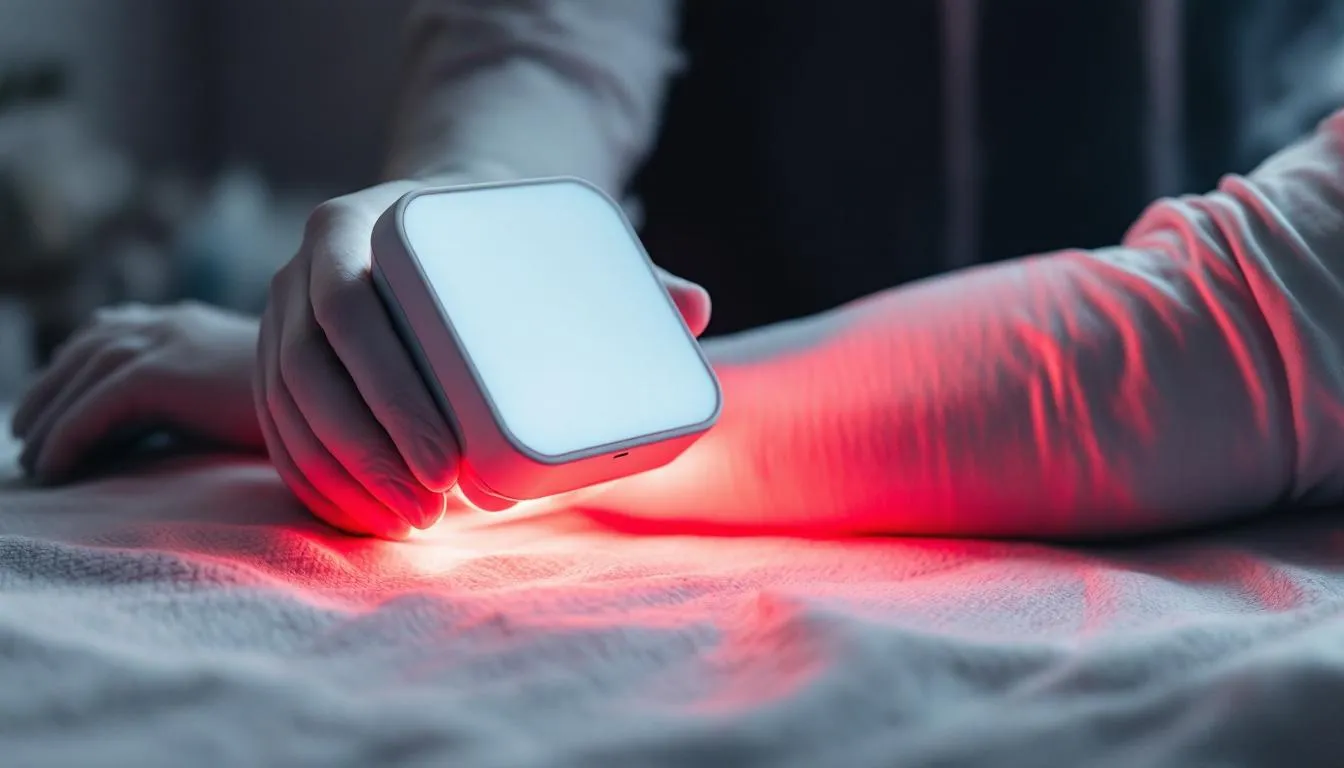
Type 1: Dedicated 670nm handheld devices
These are purpose-built for the Jeffery protocol. Small, handheld, emit a diffused beam of 670nm light at appropriate irradiance for use at arm's length. Some come with a physical spacer or tube that sets the correct treatment distance automatically.
This is the most direct match to the published research. You hold it at arm's length, point it toward your face, and look in its general direction (slightly to the side is fine, don't stare directly at the LED array) for three minutes each morning.
What to look for: wavelength accuracy documentation (ideally a spectral output report), irradiance measurement at the recommended distance, diffuser lens to reduce glare, and a simple timer.
These devices are available from specialty red light therapy manufacturers. They're not typically sold at major retail chains. You'll find them through companies that specifically market photobiomodulation products and through Amazon listings from those manufacturers.
Price range: generally $50-200 for a quality unit. Be skeptical of anything under $30, as cheap LED strips often don't hit true 670nm or maintain consistent output.
Type 2: 670nm wearable glasses or goggles
Wearable glasses with 670nm LEDs built directly into the frames. You put them on like regular glasses, they're lightweight (usually around 55 grams), and they deliver low-intensity light to the periorbital area and through your closed lids.
These are hands-free, convenient, and comfortable for 10-20 minute sessions. They're not the Jeffery protocol (the irradiance through a wearable is lower than the open-air handheld approach), but they're practical for daily use and deliver consistent periorbital light exposure.
Good for: general eye comfort, reducing digital eye fatigue, periorbital skin health (the skin around the eyes responds well to 670nm), and anyone who finds the handheld approach awkward.
Not ideal for: specifically replicating the UCL research protocol for retinal mitochondria.
Look for adjustable intensity, auto-shutoff timers (10-30 minutes), and confirmation that the emission is specifically 670nm, not a generic "red" wavelength.
Type 3: Full-face LED masks
Masks cover the entire face and deliver red and near-infrared light across the facial skin surface. They're not designed for retinal photobiomodulation. Their purpose is skin treatment, including the periorbital area for things like crow's feet, under-eye puffiness, and skin texture.
If you're using a face mask, your eyes must be closed during treatment. The light reaching your retina through closed eyelids will be a fraction of the surface dose, and the wavelengths are often not specifically 670nm (many masks use 630nm or 660nm for skin applications).
Face masks are a legitimate tool for skin around the eyes. They're not the right tool if your goal is vision improvement or retinal function.
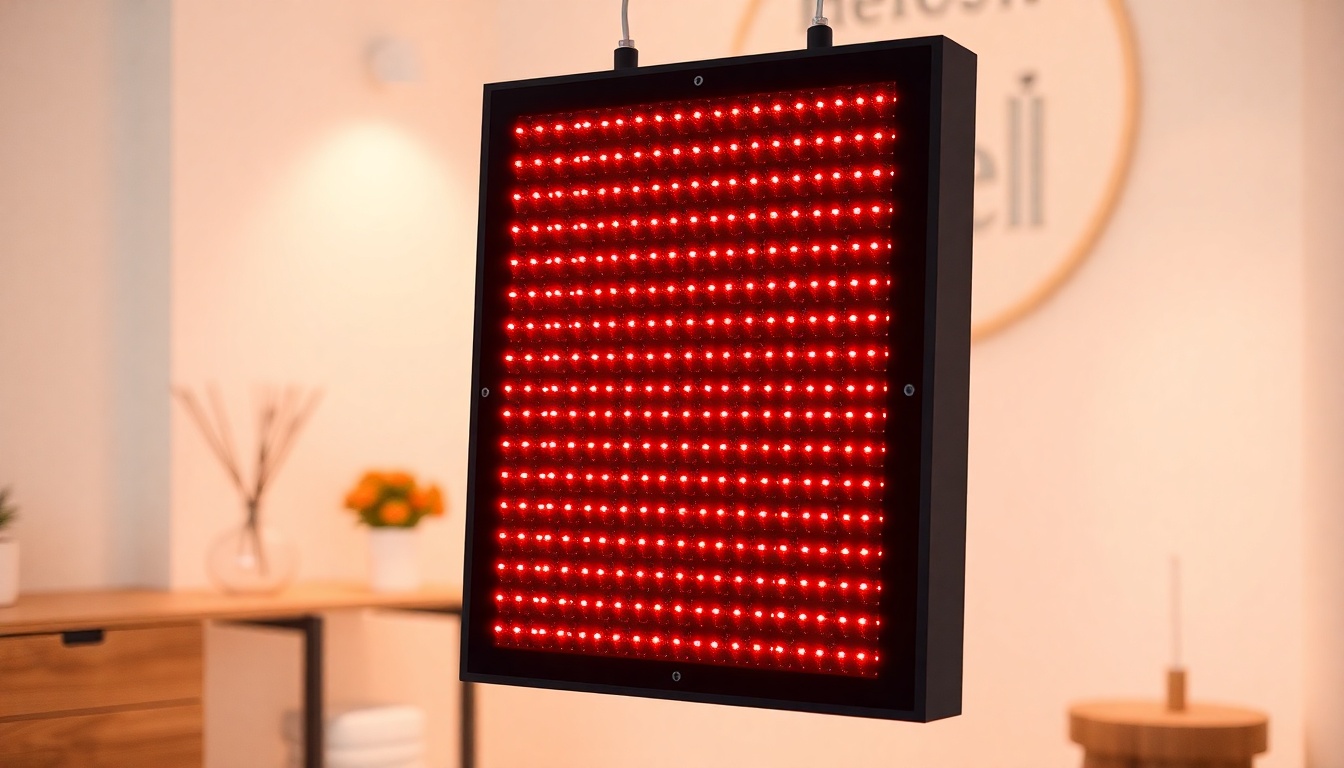
Type 4: Large panels used at distance
Full-body panels typically combine 660nm and 850nm LEDs. Some people direct these toward their face at greater distances (60-90cm or more) to get a lower-irradiance facial treatment.
For eye-directed use, you'd need to keep your eyes closed or wear proper protective goggles if facing a large panel. The risk isn't that large panels are inherently dangerous at reasonable distances, but that they produce enough irradiance that you shouldn't look directly at them.
If you already own a full-body panel, you can use it for general wellness benefits and periorbital skin. It's not the right dedicated tool for the Jeffery morning protocol.
Type 5: Clinical systems (Valeda and similar)
FDA-authorized, clinic-only, under specialist supervision. Not available for home purchase. Relevant if you have diagnosed dry AMD and want to explore this treatment option with your ophthalmologist.

Key specs: what to actually look at before buying
The red light therapy market has a lot of noise. Marketing claims run well ahead of actual device performance. Here's what to look at before spending money.
Wavelength accuracy
This is the single most important specification. A device claiming "670nm" should emit light within roughly 10nm of that target. The problem is that many consumer LED products are manufactured to broader tolerances and may actually emit a peak at 655nm or 685nm while being marketed as "670nm."
Ask manufacturers for a spectral output report from a calibrated spectrometer. Reputable companies have these and will share them. If a company can't provide wavelength documentation, that's a meaningful red flag.
670nm sits at a specific absorption peak of cytochrome c oxidase. 660nm (very common in consumer devices because it's cheaper) is close, and it's likely effective. But if the Jeffery protocol specifically used 670nm, and you want to follow that protocol, the wavelength matters.
Irradiance at treatment distance
The study used 8 mW/cm² at the treatment distance. This is measured at where your eyes are, not at the LED surface. Many manufacturers report irradiance at the LED surface or at a very short distance (2-5cm). Those numbers can be 10-100 times higher than what you'd actually receive at arm's length.
Ask for irradiance measurements at 50cm or 60cm, which is the arm's length range used in the research. A reputable company will have this data. If the only spec you can find is "1000 mW/cm² at the LED surface," that tells you nothing useful about the dose at treatment distance.
For reference: 8 mW/cm² at 50cm for 3 minutes = 1.44 J/cm². That's the Jeffery study dose. Values in the range of 1-10 J/cm² appear safe and effective based on the published literature.
Diffuser lens
A diffuser spreads the light from individual LED points into a more even beam. Without a diffuser, you're looking at discrete bright points of light, which causes glare, hot spots, and discomfort. A quality diffuser makes the device more comfortable to use and distributes the dose more evenly across the eye and surrounding tissue.
This is especially important for devices used with eyes open. Raw LED arrays at close range aren't comfortable. A diffuser addresses that.
No UV, no blue light
Confirm that the device produces zero UV output. UV light is directly damaging to the eye's lens and retina. Red light therapy devices should have zero UV emission. If a manufacturer doesn't explicitly address this, ask directly.
Blue light (400-500nm) is also worth avoiding in devices used near open eyes. Blue light in high doses is associated with retinal stress via different mechanisms than UV. Quality 670nm-specific devices won't emit meaningful blue light because they're using LEDs with a narrow spectral output.
Safety certifications
Look for IEC 62471 photobiological safety classification. This is the international standard for LEDs and lamps. Products classified as Risk Group 0 (Exempt) or Risk Group 1 (Low Risk) under IEC 62471 are appropriate for consumer eye-adjacent use.
CE marking indicates compliance with European Union safety standards. FDA registration as a medical device is a higher bar (the device has been reviewed by FDA, not just self-certified). Most consumer-level 670nm devices won't have FDA clearance as medical devices, but IEC 62471 testing is achievable and worth looking for.
Build quality and consistency
LEDs degrade over time. The question is how quickly. Cheap LED arrays can lose 20-30 percent of their output within months of regular use, meaning the dose you're actually delivering drops steadily. Quality LEDs maintain their output over thousands of hours.
This is hard to verify without long-term independent testing, but it's a reason to favor established manufacturers with a track record over the cheapest option on Amazon. At $8-12 per month of use over a quality device's lifetime, the cost per session is low.
Where to actually buy: your purchasing guide
Let me walk you through what to look for in each major channel.
Specialty red light therapy brands
These are companies focused specifically on photobiomodulation products. They typically manufacture or source devices with documented wavelength accuracy, publish irradiance data, and have customer support that can answer technical questions. For 670nm eye devices specifically, look for brands that explicitly reference the Jeffery research or the UCL studies in their product documentation, since that indicates they understand the application.
When browsing:
- Look for spectral output data (a graph or table showing actual wavelength emissions)
- Look for irradiance measurements at realistic treatment distances (40-80cm)
- Check whether they mention IEC 62471 compliance
- Avoid brands whose only "evidence" is vague wellness claims without wavelength specifics
Amazon and major retail
Amazon has a wide range of 670nm devices, from very cheap to mid-range. The challenge is that product quality varies dramatically and specs are often unreliable. Sellers can and do list incorrect wavelength specifications.
If you're buying on Amazon, prioritize:
- Sellers with a brand website and technical documentation you can verify
- Products with verified purchase reviews specifically mentioning eye use or the 670nm protocol
- Return policies that let you send it back if the quality is disappointing
Avoid extremely cheap devices (under $30 for a dedicated eye device) and anything with suspiciously broad wavelength ranges listed (like "630-700nm"), which suggests a cheap multi-wavelength LED array rather than a true 670nm-specific emitter.
Direct from manufacturers
Many of the best 670nm devices come from companies that sell direct to consumers, bypassing major retailers. Red Light Man (UK-based), GembaRed (US), and similar specialty manufacturers sell devices specifically designed for photobiomodulation research protocols. They typically provide more technical data than retail-channel products.
The trade-off is that you pay closer to full price without Amazon discounts, and return processes can be slower. But for a device you're going to use near your eyes, the additional transparency is worth it.
What to avoid
- Devices described only as "red light therapy glasses" without wavelength specifications
- Products whose primary marketing is about tanning or skin beauty, not vision or eye health
- Devices with no documentation of irradiance at treatment distance
- Any device that claims laser output for home eye use. Glen Jeffery himself has warned against using laser devices for this protocol. LEDs only.
- Devices with no return policy or warranty
How to use 670nm red light for eyes: protocols
Having the right device is half the equation. Using it correctly is the other half.
The Jeffery morning protocol (for vision and color contrast)
This is the protocol from the 2021 UCL study.
Wavelength: 670nm (dedicated handheld device) Irradiance: 8 mW/cm² at treatment distance Duration: 3 minutes Frequency: 2-3 times per week (the one-week lasting effect means daily use isn't required) Timing: Morning only. Within the first 2-3 hours after waking. The study used 8am-9am. Distance: 50-80cm (arm's length). Follow the device manufacturer's recommendation. Eyes: Open, but don't stare directly at the LED array. Look at a spot slightly to the side, or toward the edges of the device. A diffuser makes this more comfortable.
That's the whole protocol. Three minutes. It's simpler than most people expect.
Don't be tempted to do longer sessions on the theory that more is better. The evidence doesn't support that, and for any treatment close to the eyes, staying within tested parameters is sensible.
Wearable glasses protocol (for periorbital use and eye comfort)
Wavelength: 670nm wearable glasses Irradiance: Typically 4 mW/cm² (manufacturer-dependent) Duration: 10-20 minutes Frequency: Daily or several times per week Timing: Morning is preferable; morning use aligns with the circadian window Eyes: Closed or naturally open; glasses are designed for low-irradiance wear
This protocol is gentler and more convenient. It doesn't precisely replicate the Jeffery study parameters, but it delivers consistent morning light exposure to the periorbital area and, at low dose, through the eyelids.
Treatment distance reference
| Device type | Recommended distance | Notes |
|---|---|---|
| Handheld 670nm device | 50-80cm (arm's length) | Follow manufacturer spec |
| Wearable glasses | On face | Designed for direct wear |
| Full-face mask | On skin | Eyes must be closed |
| Large panel | 60-90cm+ | Keep eyes closed or wear goggles |

Safety: what the research shows and what to watch for
The safety profile of 670nm red light at therapeutic irradiances is reassuring. But there are genuine contraindications worth knowing.
What the research shows
The Jeffery 2021 study (8 mW/cm², 3 minutes, multiple sessions) showed no adverse events. The AMD pilot study (40 mW/cm², 2 minutes daily, 12 months) showed no adverse events in the healthy aging group. The LIGHTSITE III trial (660nm at 65 mW/cm², among other wavelengths) showed no phototoxicity over 24 months. The myopia RLRL trials (650nm, 6 minutes daily, 12 months in children) showed no severe adverse events, no scotoma, no structural damage on OCT.
The mechanism of 670nm at these irradiances is photochemical, not thermal. The light doesn't heat retinal tissue. It drives a biochemical reaction. At doses used in research, it's well below retinal damage thresholds.
That said, "well below damage thresholds in research protocols" is not the same as "do whatever you want with any device." The safety data applies to specific irradiances, wavelengths, and durations. It doesn't automatically extend to much higher irradiances or much longer sessions.
Absolute contraindications
Don't use red light directed at your eyes if you have:
Wet (neovascular) AMD. The published evidence is for dry AMD only. Wet AMD involves abnormal blood vessel growth, and there's no safety or efficacy data for photobiomodulation in wet AMD. Talk to a retina specialist before doing anything.
Active uveitis or intraocular inflammation. Light can worsen active inflammatory conditions in the eye.
Recent intraocular surgery. Wait for your surgeon's clearance. At minimum, two weeks post-surgery for minor procedures; longer for major ones.
Active retinal detachment. Not a situation for home experimentation.
Photosensitive epilepsy. Any intermittent or bright light source is contraindicated.
Strong cautions: photosensitizing medications
This is the one most people miss. Certain medications increase photosensitivity and can cause photochemical damage at lower-than-normal light doses. If you're taking any of the following, consult your prescribing doctor before using light therapy near your eyes:
- Antibiotics: tetracycline, doxycycline, ciprofloxacin
- Cardiac medications: amiodarone (particularly high risk: 10-75% of patients develop photosensitivity reactions)
- Acne treatments: isotretinoin (Accutane)
- Psychiatric medications: some phenothiazines, lithium at high doses
- Antifungals: voriconazole
- Others: some diuretics, St. John's Wort, certain oral contraceptives
Photosensitizers work by accumulating in tissue and absorbing light energy that then triggers oxidative reactions. The risk is real and underappreciated. Check your medications.
When to stop and see an ophthalmologist
- Any new visual disturbance (floaters, flashes of light, sudden blur) after a session
- Pain or significant discomfort during or after use
- Any worsening of existing visual symptoms
- Headache associated with the sessions
These symptoms don't necessarily mean the device caused a problem. But they're reasons to get your eyes examined before continuing.
The morning timing question
Let's spend a moment on the timing discovery, because it's counterintuitive and often overlooked.
The Jeffery 2021 paper found that morning sessions produced a 17-20% improvement in color contrast. Afternoon sessions produced zero improvement. Same wavelength. Same irradiance. Same duration. Different time of day.
The proposed mechanism: mitochondrial function follows a circadian rhythm. Cytochrome c oxidase activity, specifically the enzyme's capacity to respond to photostimulation, appears to be highest in the first few hours after waking. By noon, that window has largely closed.
This aligns with broader circadian biology. The morning hours are when the body is most responsive to light signals of all kinds. The circadian system is set by morning light. The retina is particularly active in processing light information first thing in the morning, when light adaptation from sleep is still happening.
Practically: set your 670nm device somewhere visible near where you have your morning coffee. Three minutes while you're waking up. That's the protocol.
If you've been using a red light device in the evenings and noticed no eye-related effect, this might explain why.
670nm for eyes vs. other red light applications
It's worth distinguishing what 670nm does for eyes specifically versus what red light therapy does more generally.
The photobiomodulation mechanisms that drive benefits in joints, skin, muscles, and hair all rely on the same cytochrome c oxidase pathway. But the application for eyes has specific characteristics.
For joint pain and inflammation, you're typically using higher irradiances at close distance to penetrate deep tissue, and sessions run 10-20 minutes. For eyes, you're using lower irradiances at greater distance, and sessions run 3 minutes. Different dose entirely.
For skin treatments (wrinkles, collagen, texture), devices combine red (630-660nm) and near-infrared (830-850nm) and are used directly on the skin surface. Eye-directed devices keep light at a distance and prioritize the specific 670nm wavelength.
For hair loss, near-infrared penetrates the scalp. For eyes, visible red at 670nm reaches the superficial retinal layers. Red light therapy for hair loss uses laser helmet devices at scalp surface level, completely different application and protocol.
The similarity is in the cellular mechanism. The specifics of device type, wavelength, irradiance, distance, duration, and timing differ considerably by application. Eyes have their own protocol.
Near-infrared and eyes: a word of caution
Near-infrared light (810-850nm) appears in some "eye health" devices alongside 670nm, often marketed as offering deeper penetration into the optic nerve and posterior eye structures.
The science supports some of this: NIR does penetrate deeper and is included in clinical systems like the Valeda device for AMD. But there are two important cautions.
First, you can't see near-infrared. That means you have no direct sensory feedback about how bright or intense the beam is. With 670nm red, you can see the light and adjust your distance or look away if it's uncomfortable. With 850nm NIR, you may be receiving significant irradiance without realizing it.
Second, the clinical evidence base for retinal NIR use is mostly clinical-device-specific. The Valeda protocol uses 850nm at 0.6 mW/cm², an extremely low irradiance, combined with calibrated clinical equipment. Consumer NIR devices aren't calibrated to those specs.
If you're specifically pursuing the Jeffery color-contrast protocol, you want 670nm, not NIR. If you're interested in broader eye health support, a device that includes both 670nm and low-irradiance NIR from a reputable manufacturer with documented specs can be reasonable. Just make sure the NIR irradiance is documented and conservative.
What to expect: realistic results and timeline
Managing expectations matters here. The Jeffery study showed 17-20% improvements in color contrast within a week of a single session. That's genuinely notable. But it doesn't mean everyone will notice dramatic changes, and it doesn't mean every visual function improves.
What 670nm has been shown to improve
- Color contrast sensitivity (the ability to distinguish similar colors), especially along the red-green and blue-yellow axes
- Dark adaptation speed (the time it takes to adjust to low light from bright light)
- Rod function in the periphery of vision
What it hasn't been shown to improve in healthy adults
- Acuity (the sharpness of 20/20 vision, which is limited by optical factors like lens shape)
- Reading distance affected by presbyopia (age-related changes in lens flexibility)
- Floaters
- Conditions caused by structural damage already present
Timeline
The published research documents improvements within a week of starting. Some people notice changes sooner. The effect from any single session lasts approximately 5-7 days, which is why 2-3 sessions per week is the recommended maintenance frequency.
If you do three weeks of morning sessions and notice no change in your color vision or low-light adaptation, a few possibilities: the device you're using may not be emitting accurate 670nm, you may be using it at the wrong time of day, or your visual decline may be driven by factors beyond mitochondrial function (like lens changes or structural pathology). An eye exam is a sensible baseline.
Related guides
If you're building out your eye health routine or evaluating devices more broadly, these resources may help.
- Do you need eye protection for red light therapy? covers when goggles are and aren't required for general red light sessions
- Red light therapy goggles: what to buy reviews protective eyewear for use during full-body panel sessions
- Red light therapy eyes open or closed explains when each approach applies and why
- Red light nm ocular eye shield: review covers a specific protective shield product for high-irradiance panel use
- Full block red NIR light glasses: review looks at glasses designed to block all red and near-infrared light from the eyes
FAQ
What is 670nm red light used for in the eyes?
670nm red light is used to stimulate mitochondrial function in retinal cells. The retina is the most metabolically active tissue in the body and relies on cytochrome c oxidase (CcO) for energy production. 670nm light activates CcO, increasing ATP production in photoreceptors and supporting vision functions including color contrast, dark adaptation, and low-light vision. The primary human research comes from UCL professor Glen Jeffery, whose team demonstrated a 17% average improvement in color contrast vision in adults after 3 minutes of 670nm exposure.
What kind of device do I need for 670nm eye therapy?
The most appropriate device is a dedicated 670nm handheld unit designed for use at arm's length (50-80cm). Look for true 670nm emission (not generic "red"), a diffuser lens for comfortable viewing, documented irradiance at treatment distance, and no UV or blue light output. Wearable 670nm glasses are a hands-free alternative with slightly different use-case (more periorbital than direct retinal stimulation). Full-face masks and large panels are not designed for this specific application.
Can I use any red light for this, or does it have to be specifically 670nm?
The published research specifically used 670nm. Adjacent wavelengths like 660nm are close and likely effective (660nm activates the same cytochrome c oxidase absorption peak), but 670nm is the precise wavelength from the human trials. If you have a 660nm device, it's reasonable to use it. If you're buying specifically for this purpose, buy 670nm.
Does this work for everyone?
The Jeffery 2021 study found significant improvements in adults over 40. Younger participants showed no measurable improvement, which aligns with the hypothesis that youthful mitochondria don't have the same deficit to correct. The effect appears most pronounced in people with measurable age-related mitochondrial decline, typically starting in the mid-40s.
How long before I notice a difference?
The Jeffery study documented improvements within a week of a single 3-minute morning session. Color contrast is the most clearly measurable outcome. Some people notice subjective changes in low-light vision or visual clarity within 2-4 weeks of regular use. Results vary based on device quality, protocol adherence, and individual physiology.
Can I use 670nm red light for AMD?
For dry AMD, there's emerging evidence, including the LIGHTSITE III clinical trial showing the FDA-authorized Valeda system slowing progression and improving vision scores. That's a clinic-based treatment. Home use of 670nm for AMD should be discussed with your ophthalmologist. Don't use light therapy for wet (neovascular) AMD without specialist guidance.
Is it safe to look into the device?
At the irradiance used in the Jeffery protocol (8 mW/cm² at arm's length), it's not harmful to look toward the device. Don't stare directly into the individual LEDs at close range. Use a device with a diffuser, maintain proper distance, and look slightly to the side of the device or at its edge. If it's uncomfortable, move further away.
What time of day should I use 670nm for eyes?
Morning. This is one of the most important findings in the research. The Jeffery 2021 study found that morning sessions (8am-9am window) produced significant improvements, while afternoon sessions produced zero improvement. The mechanism appears to involve the circadian rhythm of mitochondrial function. Use it within the first 2-3 hours after waking.
Can I use this if I take certain medications?
Some medications cause photosensitization, which can make the eye more vulnerable to light-induced damage. Tetracycline antibiotics, doxycycline, amiodarone, isotretinoin (Accutane), and certain psychiatric medications are among the most significant. Check with your prescribing doctor before using light therapy near your eyes if you take any photosensitizing medication.
Where is the best place to buy a 670nm device for eyes?
Specialty photobiomodulation brands that sell direct-to-consumer offer the most technical transparency. Amazon has options, but quality is inconsistent and you need to verify wavelength specs independently. Look for brands that provide spectral output documentation, irradiance measurements at treatment distance, and IEC 62471 safety classification.
Helpful resources
- UCL Institute of Ophthalmology research on photobiomodulation and aging vision
- Scientific Reports (2021): "Weeklong improved colour contrast sensitivity after single 670nm exposures associated with enhanced mitochondrial function" by Jeffery et al.
- LIGHTSITE III trial results: LumiThera Valeda system for dry AMD, 13-month and 24-month outcomes
- FDA De Novo Authorization DEN230083: Valeda Light Delivery System for dry AMD
External resources
- UCL Institute of Ophthalmology research portal
- American Academy of Ophthalmology for information on AMD treatment options
- LumiThera for information on the Valeda clinical system
The bottom line
The science behind 670nm red light and vision health is more solid than most people realize. It's not fringe. A respected UCL research team showed measurable improvements in color contrast vision in adults using a three-minute morning protocol. The dose is low. The irradiance is modest. The results lasted a week from a single session.
What you need to make it work: a device that genuinely emits 670nm (verify the specs), used at arm's length in the morning, for three minutes, two to three times per week. That's it.
The market has no shortage of red light devices. Most of them are not specifically designed for this protocol. The ones that are will tell you the wavelength, show you the irradiance at treatment distance, and have documentation you can actually check.
Buy from a company that can answer technical questions. Look at the wavelength data. Use it in the morning. And give it a month before drawing conclusions.
The retina runs on energy. At some point in your 40s, the supply starts lagging behind the demand. 670nm light is a precise, low-risk way to give those mitochondria a boost. That's the whole story.
SeekRedLight Editorial Team covers the science of photobiomodulation to help you make sense of a market full of claims and a body of research worth understanding.