Red light therapy beds near you: the complete guide
Looking for red light therapy beds near you? Learn where to find them, what to expect at your first session, how much they cost, and whether in-clinic or at-home is better.
You've heard about red light therapy. Maybe a friend swears by it for their joint pain. Maybe you stumbled across before-and-after photos of skin transformations. Or maybe your doctor mentioned it as a drug-free option for something you're dealing with. Whatever brought you here, you're now wondering the same thing most people wonder at this stage: where do I actually find a red light therapy bed near me?
It's a reasonable question, and the answer is more nuanced than a simple Google Maps search. Red light therapy beds vary wildly in quality, power, and wavelength output. The facility you choose matters as much as the technology itself. And depending on your goals, you might find that visiting a local provider makes perfect sense, or you might realize that buying a home device is the smarter long-term move.
This guide covers everything. Where to search, what questions to ask, what your first session will look like, how much you'll pay, and how to tell a quality facility from one that's just cashing in on the wellness trend. We'll also dig into the science a bit so you understand what those LEDs are actually doing to your cells.
Let's get into it.
What is a red light therapy bed?
A red light therapy bed, sometimes called a photobiomodulation bed or a full-body red light panel, is a device that exposes your skin and underlying tissues to specific wavelengths of red and near-infrared light. Think of it like a tanning bed, but instead of UV rays that damage DNA, you get therapeutic wavelengths that support cellular function.
The two wavelength ranges that matter most are 630-680nm (visible red light) and 800-880nm (near-infrared light, invisible to the naked eye). Together, these ranges cover what researchers call the "therapeutic window," where light can penetrate tissue, reach mitochondria, and trigger a cascade of biological responses.
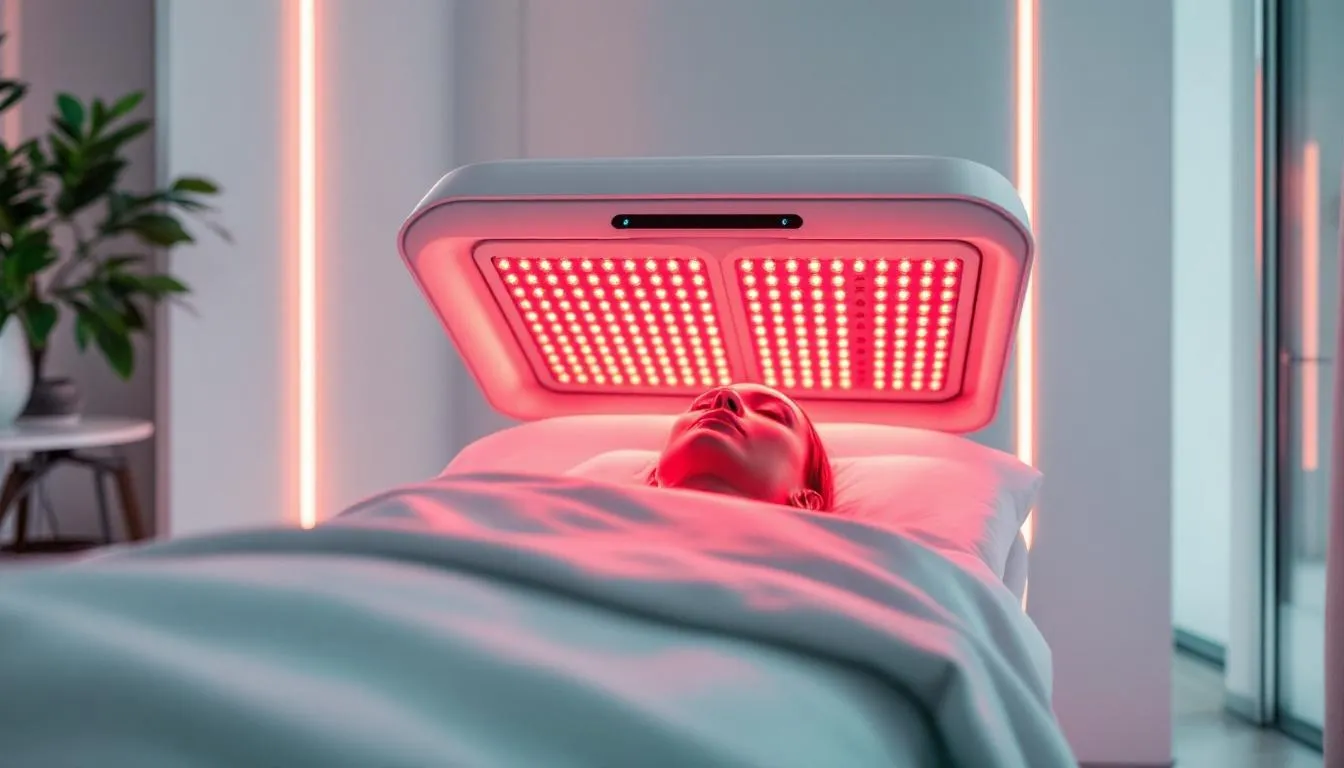
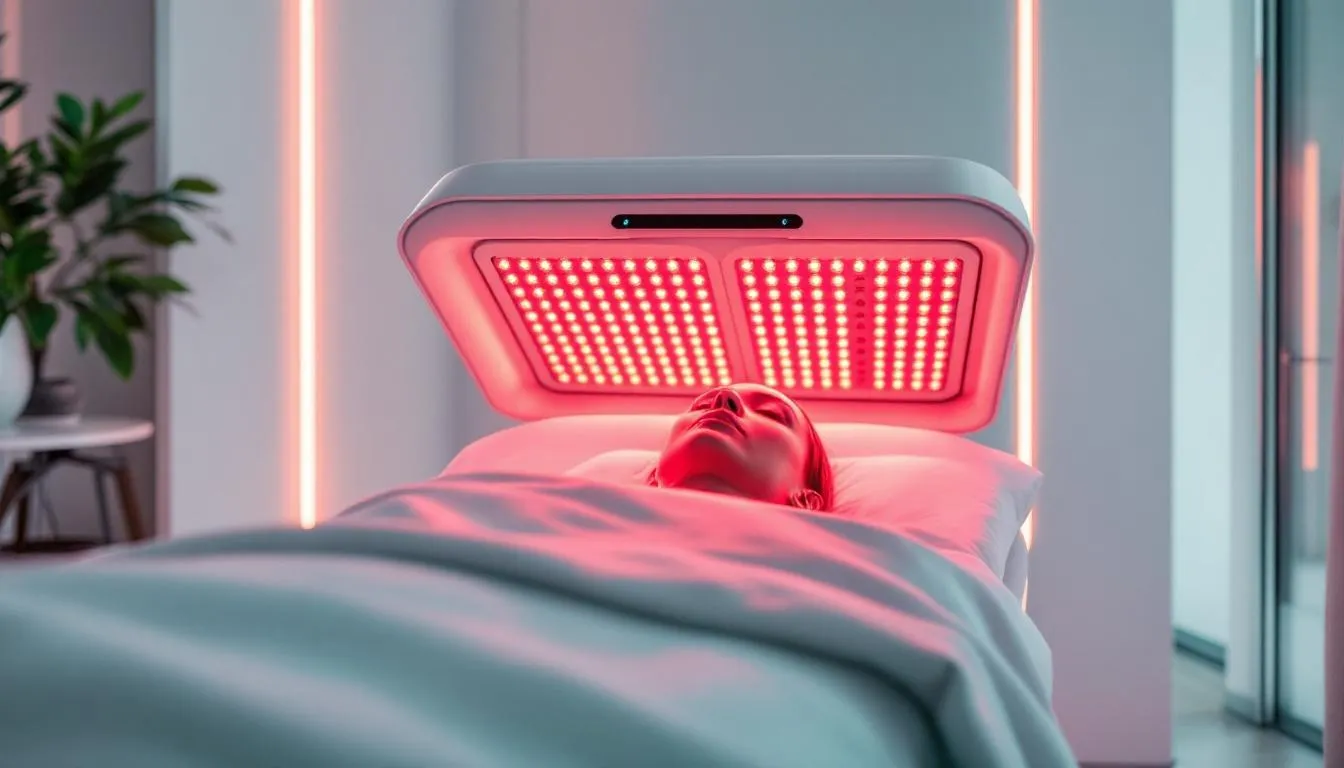
At a good facility, the bed will look something like a clamshell or a flat panel that lowers over you. Some are stand-up booths. Some are simple panels mounted to a wall. The form factor varies, but the core technology is the same: densely packed LEDs emitting therapeutic wavelengths across your body simultaneously.
This full-body exposure is one of the key advantages of going to a clinic over using a small handheld device at home. When you're lying inside a proper full-body bed, you're getting red and near-infrared light hitting hundreds of square centimeters of skin at once. That's a fundamentally different proposition from waving a small wand over one spot for 10 minutes.
How red light therapy beds actually work
Understanding the mechanism helps you evaluate whether a particular facility is worth your money. You don't need a biology degree for this. But the basics matter.
When red and near-infrared photons hit your skin, they penetrate into tissue, where they're absorbed by a protein inside mitochondria called cytochrome c oxidase. This protein is part of the electron transport chain, the cellular machinery that converts oxygen and nutrients into ATP, which is the energy currency your cells run on.
Here's the interesting part. When cytochrome c oxidase absorbs these specific wavelengths, it functions more efficiently. It produces more ATP. Cells that are running low on energy, because of injury, age, inflammation, or chronic stress, suddenly have more fuel to do their repair work. That's the core mechanism behind most of the clinical applications of red light therapy for joint pain, skin improvements, hair regrowth, and inflammation reduction.
Near-infrared light penetrates deeper than red light. Red light (630-680nm) tends to work primarily in the skin layers, making it the right choice for conditions like hyperpigmentation, acne, and superficial wound healing. Near-infrared light (800-880nm) reaches deeper into muscle, joint, and even bone tissue, making it better suited for muscle recovery, joint pain, neuropathy, and inflammation in deeper structures.
A quality red light therapy bed delivers both. This is what you should be looking for when you evaluate a facility.
Where to find red light therapy beds near you
The good news: access to red light therapy has expanded dramatically. You don't have to live in a major city to find a provider. The bad news: not all providers are equal, and some facilities are using underpowered devices or marketing misleading claims. Knowing where to look and what to ask will save you money and frustration.
Tanning salons
Tanning salons were early adopters of red light therapy. They already had the infrastructure, the booth layouts, the appointment systems, and the clientele interested in appearance-based wellness. Many offer red light therapy as an add-on service or standalone session.
This is convenient, but it comes with a caveat. The red light devices in some tanning salons are older, lower-powered, or primarily designed for cosmetic appearance rather than therapeutic doses. That doesn't mean they're useless. But you want to ask specifically what device they're using and what the irradiance output is. An older 30-watt device with a small footprint will deliver a very different experience than a modern, full-power therapeutic bed.
If you live in Chicago or the surrounding area, tanning beds with red light therapy in Chicago covers specific facility options and what to look for locally. And our broader overview of red light tanning beds explains how these hybrid devices work.
That said, don't dismiss tanning salons outright. Many have upgraded to professional-grade equipment. Some even offer the Beauty Angel series or Ergoline beds with specific red light output. Just do a little homework first.
Fitness centers and gyms
Planet Fitness added red light therapy beds (their "Total Body Enhancement" booths) to many locations, which introduced millions of people to the therapy. If you have a membership, it might already be available to you at no extra cost. Our guide to red light therapy at Planet Fitness walks through exactly what to expect from these booths and how to use them effectively.
Beyond Planet Fitness, higher-end gyms and athletic performance centers sometimes offer more advanced red light therapy setups. CrossFit boxes catering to performance athletes, functional fitness studios, and recovery centers near gyms have all added red light beds in recent years. If you belong to a gym, just ask. You might be surprised.
The advantage of gym-based red light therapy is convenience. You can do a session before or after your workout, when you're already there. The disadvantage is that gym facilities are shared spaces with heavy foot traffic, and session quality depends heavily on the specific equipment installed.

Medical spas (medspas)
Medical spas occupy a middle ground between traditional day spas and clinical settings. They're staffed by or supervised by licensed medical professionals, and they tend to have better equipment than generic beauty businesses. If you're looking for red light therapy for a specific skin condition, post-procedure healing (like after microneedling), or anti-aging purposes, a medspa is often a good starting point.
The staff at medspas can usually answer more detailed questions about the device they're using, wavelength output, and whether the treatment is appropriate for your specific situation. They're also more likely to have the full-body panels or beds rather than just hand-held or spot-treatment devices.
Pricing at medspas tends to be higher than tanning salons or gyms, but so is the quality of guidance you'll receive. If you're dealing with a specific condition rather than just general wellness, this trade-off often makes sense.
Chiropractic clinics and physical therapy offices
Chiropractors and physical therapists were among the earliest adopters of therapeutic photobiomodulation. Many clinics have had professional-grade devices for years, long before red light therapy hit the mainstream wellness market.
The advantage here is significant. These providers understand the therapeutic applications of the technology. They can help you design a treatment protocol for your specific issue, whether that's joint pain, neuropathy in your feet, tendonitis, plantar fasciitis, or post-surgical recovery. They're not just pointing you at a bed and starting a timer.
The trade-off: sessions may not be covered by insurance (though some HSA/FSA plans do cover red light therapy costs), and you'll likely be getting targeted panel treatment rather than full-body exposure. That's fine if you have a specific area to treat. If you want full-body wellness maintenance, it may not be the right fit.
Dedicated red light therapy and wellness centers
A new category of standalone wellness centers focused specifically on red light therapy, infrared sauna, contrast therapy, and similar modalities has emerged in recent years. These are often the best option for serious users.
These facilities invest in high-end equipment because it's their whole business model. They train staff specifically on photobiomodulation protocols. They tend to have full-body beds with proper irradiance levels, multiple wavelength options, and staff who can actually explain what's happening during your session.
Search terms like "wellness center red light therapy near me," "photobiomodulation clinic near me," and "infrared therapy center near me" will turn these up. If you find one, ask about the specific devices they use, whether they offer full-body exposure, and what protocols they recommend for different goals.
How to search effectively
Google Maps is your starting point, but it's not enough on its own. Here's a more systematic approach:
Search variations to try: "red light therapy near me," "red light therapy bed [your city]," "photobiomodulation near me," "full body red light therapy [your area]," "infrared light therapy clinic near me."
Check Yelp reviews and Google reviews specifically for comments about equipment quality and results. Negative reviews that mention weak light, underpowered devices, or lack of visible effect are useful warning signs.
Call before you visit. Ask directly: what device do you use? What's the irradiance output? What wavelengths do you offer? A facility worth your time will either know the answers or be willing to find out. One that gives you a vague non-answer is a red flag.
SeekRedLight provides detailed guides on specific conditions and devices to help you go into those conversations prepared. Check the articles hub for condition-specific guidance before you call.
What to expect at your first session
First-time red light therapy sessions can feel anticlimactic. That's normal. But knowing what to expect helps you get the most out of it.
Before your appointment
Arrive with clean skin. Lotions, sunscreens, and skin products can block light penetration. Some products are photosensitizing, meaning they can cause skin reactions when exposed to certain wavelengths. When in doubt, go in with freshly washed skin and no products.
Wear or bring minimal clothing. Light doesn't penetrate fabric effectively. For full-body treatment, you want as much skin exposed as possible. Most facilities have changing rooms and will explain the process.
You'll also want to know what to do about your eyes. Red and near-infrared light, at therapeutic intensities, isn't safe to look into directly. Any good facility will provide goggles. Our guide on red light therapy goggles explains the different options and what protection you need. And if you're curious about the broader question of eyes open vs. closed during treatment, that's covered here.
Do you need eye protection for red light therapy? The short answer is yes, always. Any provider that doesn't emphasize this is cutting corners.
During the session
Most sessions run 10-20 minutes for a full-body bed. Some facilities offer longer sessions, but research suggests that more time doesn't always mean more benefit. There's an optimal dose range, and exceeding it by a lot can produce diminishing returns. Think of it like sunlight: 10-20 minutes is beneficial, 4 hours is damaging.
You'll lie or stand inside the bed or booth while the LEDs run. You may feel mild warmth, particularly from near-infrared wavelengths, but nothing intense. Red and near-infrared light is invisible and silent. There's no UV. There's no tanning effect (unless the device includes UV, which some hybrid tanning beds do, so always ask). There's no heat damage.
What you feel depends on the device and your sensitivity. Many people feel relaxed during and after sessions. Some report a mild energized feeling afterward. Most people feel nothing unusual during the session itself, which surprises them.
That doesn't mean nothing is happening. The photobiomodulation cascade is occurring at a cellular level, and its effects accumulate over time and multiple sessions.
After your session
Post-session care is simple. You don't need to avoid sunlight afterward. You don't need to rest. Most people continue their day normally.
Some users report mild, temporary redness in the treated areas immediately after. This is vascular response, normal, and resolves within 30-60 minutes. It's not a burn or damage.
You can apply skincare products after your session. In fact, some users apply serums or moisturizers immediately post-session because the skin is in an activated state. If you're using retinol or other actives with red light therapy, there are some timing considerations to be aware of.
How much does a red light therapy bed session cost?
Pricing varies significantly based on facility type, location, and device quality. Here's a realistic breakdown.
Single sessions at tanning salons typically run $15-40. At medspas and dedicated wellness centers, expect $40-100 for a full-body session. Medical clinic sessions (chiropractor, physical therapist) often run $50-150, though some of that may be bundled with other treatment.
Membership packages change the math considerably. Most facilities with regular red light therapy clients offer monthly memberships ranging from $40-150 per month for unlimited or limited sessions. If you're using red light therapy 3-4 times per week (a common protocol), a membership that gives you unlimited access for $80/month works out to roughly $5-7 per session. That's a very different proposition than paying $50 per session.
Session packages (buying 5 or 10 sessions upfront at a discount) typically save 15-30% over single-session pricing. Most providers offer these.
Worth noting: if you're using red light therapy for a medical condition and your doctor or physical therapist is providing it as part of treatment, some costs may be reimbursable through HSA/FSA accounts. It's worth checking your plan details.
The ongoing cost question matters because red light therapy isn't a one-time event. To see meaningful, lasting results, you need consistent sessions over weeks and months. This is where the economics of in-clinic vs. home device start to shift, which we'll get to shortly.
What conditions can red light therapy beds help with?
Full-body red light therapy has been studied for a wide range of conditions. The evidence is strongest in certain areas, and it's worth being realistic about what the research actually shows versus what some providers overclaim.
Skin health is probably the best-documented application. Red light at 630-680nm stimulates fibroblast activity, increases collagen production, and reduces inflammation. This translates to real improvements in skin texture, wrinkle depth, acne, hyperpigmentation, and post-sunburn healing. If you want to see what's been documented in the literature, before and after photos for face treatments give you a realistic baseline.
Pain and inflammation are where near-infrared light particularly shines. The deep tissue penetration of 800-880nm wavelengths means the light can reach inflamed joints, muscles, and nerve tissue. Studies have shown reductions in pain and inflammation markers for joint pain, tendonitis, plantar fasciitis, neuropathy, and general muscle soreness post-exercise.
Hair loss is an interesting application. Low-level light therapy (LLLT) is FDA-cleared for androgenetic alopecia (pattern hair loss) in both men and women. Full-body beds aren't specifically designed for scalp treatment, but dedicated scalp devices and targeted panels can deliver the right protocols. Our full guide covers red light therapy for hair loss in depth.
Fat loss and body contouring is a more contested area. There is research suggesting that red light can disrupt lipid storage in fat cells and support lymphatic drainage, which is why you see facilities offering red light body contouring treatments. The evidence here is moderate. It's not magic, and it doesn't replace diet and exercise, but it may provide a modest supplemental benefit.
Headaches and mood are increasingly being studied. Some evidence supports benefits for headaches and general mood, possibly through effects on serotonin, adenosine triphosphate production, and inflammation in neural tissue.
Cellulite is another area where the research is mixed but not empty. Red light therapy for cellulite works better for some people than others, and it's typically more effective when combined with other approaches.
The key thing to remember: whatever condition you're treating, the protocol matters. Wavelength, power density, exposure time, and frequency of sessions all need to be dialed in for your specific goal. A generic 10-minute full-body session is a starting point, not a complete treatment plan.
Red light therapy beds near you vs. buying a home device
This is the question that most people eventually face. Going to a facility has real advantages, but so does owning a device. The right answer depends on your goals, frequency of use, and budget.
The case for in-clinic sessions:
Full-body clinical beds deliver exposure that small home panels simply can't replicate. If you're treating a systemic condition or want comprehensive full-body treatment, stepping into a professional full-body bed beats holding a small panel over one spot. The dose delivered in 10-15 minutes in a full-body clinical bed can take 40-60 minutes to replicate with a mid-sized home panel.
You also get professional guidance, at least at better facilities. Staff who understand the therapy can help you choose session length, frequency, and positioning for your specific goals. That's valuable when you're starting out.
Clinics also let you try before you commit. A few sessions give you a feel for how your body responds, what protocols work, and whether this is something you want to incorporate long-term, before you spend $500+ on a home device.
The case for a home device:
The math changes dramatically over time. If you're doing 3-4 sessions per week at $30-50 per session, you're spending $360-800+ per month. A quality home panel costs $200-600 and delivers indefinite sessions at no additional cost. Within 2-3 months, a home device typically pays for itself.
Consistency matters enormously in red light therapy. The protocols that produce real results involve 3-5 sessions per week over months. That's much easier to maintain when the device is sitting in your home and a session takes 10 minutes without travel time.
Home devices have also improved substantially. The best consumer panels now deliver therapeutic irradiance levels comparable to professional equipment. They're not full-body beds, but high-quality panels from reputable brands deliver real doses of real photons.
Our guide to red light therapy beds for home use covers the options in this space if you're interested in exploring it.
The hybrid approach:
Many serious users do both. They start at a clinic to understand the therapy and see initial results. Then they buy a home device for their regular sessions and return to the clinic occasionally for full-body treatment or when they want to intensify a protocol. This gives you the best of both worlds without committing to expensive clinic memberships indefinitely.

What to look for in a quality red light therapy facility
Not all providers are created equal. The wellness industry has seen an influx of businesses cashing in on red light therapy's growing popularity without necessarily investing in quality equipment or staff education. Here's how to separate the good from the mediocre.
The device matters
The first question to ask any facility is: what device do you use? A reputable provider will know. They'll be able to tell you the brand, the model, the wavelengths, and ideally the irradiance output (measured in mW/cm²).
Any irradiance below 20 mW/cm² at skin distance is likely too low to produce meaningful therapeutic effects in a typical session length. Good clinical devices deliver 40-100+ mW/cm² at the skin surface.
Wavelengths should include both the red range (630-680nm) and the near-infrared range (800-880nm) for comprehensive treatment. Some devices only emit one range. That's not a dealbreaker, but it limits the application.
Ask whether the device has been tested by a third party for actual output. Some brands self-report inflated specs. Third-party measurement gives you more confidence.
Staff knowledge
Staff should be able to explain the basics of how the therapy works without making wild overclaims. If the person at reception tells you that red light therapy "cures everything" or promises specific dramatic results after a single session, that's a red flag. Real photobiomodulation is beneficial but nuanced. Hyperbolic claims suggest the facility is primarily interested in selling sessions rather than providing genuine therapy.
Good staff will ask about your goals, any medications you're on (some drugs are photosensitizing), and any contraindications that might apply (such as pregnancy or active cancer treatment). If no one asks about your health history at all, the facility isn't taking the clinical aspects seriously.
Hygiene and maintenance
Red light therapy beds are shared equipment. Ask how often they clean the devices and what protocol they use. Surfaces that contact skin need thorough disinfection between clients. This is basic but frequently overlooked at lower-end facilities.
Device maintenance also matters. LEDs degrade over time. A facility using a 5-year-old device that's never been serviced is delivering a different therapeutic dose than one using well-maintained equipment. This is hard to verify from the outside, but newer devices and active replacement programs are good signs.
Red flags to watch for
Be cautious if a facility: can't tell you what device they use, makes claims about curing diseases, doesn't provide eye protection, doesn't ask about your health history, has no posted protocols or guidance, or charges per session with no information about recommended treatment frequency.
Red light therapy is genuinely therapeutic, but it requires the right dose delivered properly. A facility that doesn't take this seriously is wasting your time and money.
How often should you use a red light therapy bed?
Frequency recommendations vary depending on your goal and what the research supports for specific conditions. But some general principles apply.
For general wellness and skin health, 3-5 sessions per week is a common starting protocol. After 8-12 weeks of consistent use, many people drop to 2-3 sessions per week as a maintenance dose. Our full deep-dive on how long to do red light therapy covers dosing in detail.
For acute conditions (post-surgery recovery, injury healing, active inflammation), daily sessions are often recommended initially, tapering off as the condition improves. If you're going to a chiropractor or physical therapist for this kind of targeted protocol, they'll typically map out a specific schedule.
For chronic conditions (joint pain, neuropathy, chronic inflammation), consistent 3-4x per week use over months tends to produce the best outcomes. The effects of photobiomodulation are cumulative. You're not flipping a switch. You're gradually shifting cellular function in a positive direction.
One thing worth knowing: can you overdo red light therapy? Yes, in theory. Very high doses or extremely long sessions can produce diminishing returns or even temporary setbacks, a phenomenon called biphasic dose response. But with standard 10-20 minute sessions in a typical facility, you're unlikely to overdose. The more common problem is underdosing, either from underpowered equipment or sessions that are too infrequent to produce lasting effects.
Tips for maximizing your sessions
Getting more out of each session isn't complicated, but a few practices make a meaningful difference.
Skin prep: Clean, dry skin with no products maximizes light penetration. Avoid heavy moisturizers or oils before your session. You can apply your skincare products after.
Positioning: For full-body beds, try to position yourself so all target areas are directly exposed. If you have a specific area of concern (a bad knee, a scarred shoulder, a problem skin area), make sure that area is closest to the light source.
Clothing: The less the better, as long as you're comfortable and the facility's guidelines allow it. Light doesn't pass through most fabrics effectively. A session where you're wearing a thick cotton shirt is a significantly less effective session for your torso.
Eye protection: Always wear the goggles provided or bring your own quality eye protection. Eye protection for red light therapy isn't optional at therapeutic intensities. If you want to learn more about what goggles actually block, our guide to red light goggles covers the options, and for those wanting maximum protection, full-block red NIR light glasses are an option worth knowing about.
Consistency: Show up. The biggest determinant of results is consistency over time. Skipping weeks undercuts the cumulative effect you're building.
Hydration: Drink water before and after sessions. Near-infrared light can produce mild heating effects, and staying hydrated supports the cellular processes you're trying to enhance.
Special considerations before starting
A few situations warrant extra thought before you start booking sessions.
Medications: Some medications are photosensitizing, meaning they make your skin more reactive to light exposure. Common examples include certain antibiotics (tetracyclines), retinoids, and some antidepressants. If you're on any medication, ask your prescribing doctor whether red light therapy is compatible.
Pregnancy: The research on red light therapy during pregnancy is limited, primarily because pregnant women are excluded from most clinical trials. The consensus is cautious: it's likely safe, but not definitively proven. Red light therapy during pregnancy covers this in depth. If you're pregnant or trying to conceive, discuss with your OB before starting.
Active cancer: Red light therapy can stimulate cellular activity, including in fast-dividing cells. While it doesn't cause cancer, using it over an active tumor site is generally not recommended. Anyone undergoing cancer treatment should clear it with their oncologist first.
Recent surgery: The timing of red light therapy after surgical procedures depends on the procedure. Post-surgery red light therapy can accelerate healing in many cases, but timing and placement matter. Your surgeon should weigh in.
Tattoos and dark pigmentation: Very dark skin and tattooed areas absorb more light, which can cause localized heating. This isn't typically a problem at standard doses, but it's worth monitoring. Reduce session time initially if you have extensive tattoos over treatment areas.
Making the most of your search
Finding a red light therapy bed near you is step one. Getting results requires a bit more thought. Here's a quick decision framework:
If you're completely new, start with 3-5 sessions at a local provider. This lets you experience the therapy, gauge your response, and decide whether a longer commitment makes sense before spending significant money.
If you're targeting a specific condition, look for a facility with medical-grade equipment and staff who can guide protocols. A chiropractic clinic or medspa with specific experience in photobiomodulation is often better than a general tanning salon for condition-specific goals.
If you're committed to consistent use, run the numbers on a home device vs. clinic membership. For 3+ sessions per week, a quality home panel typically becomes more cost-effective within a few months.
If you're in a major city, you likely have good options across all facility types. If you're in a smaller market, your options may be limited to tanning salons and gyms, in which case evaluating the specific equipment those facilities use becomes more important.
SeekRedLight is built to help you navigate exactly these decisions. Whether you're looking for device comparisons, condition-specific protocols, or help understanding wavelengths and dosing, the guides here give you the information to make good decisions rather than marketing-driven ones.
The long view on red light therapy
Here's what often gets lost in the "where can I find red light therapy near me" conversation: this is a long-term practice, not a quick fix.
The people who get the best results with red light therapy are the ones who treat it like exercise or nutrition. Consistent, regular sessions over months and years produce cumulative benefits that occasional or sporadic use doesn't. The biology supports this. Mitochondrial function improves gradually. Collagen synthesis takes months. Anti-inflammatory effects build with repeated exposure.
That doesn't mean you won't notice anything early. Many people report improved energy, better sleep, reduced soreness, or skin improvements within the first 4-8 weeks. But the full picture takes longer to develop.
This is why the economics of your setup matter. If you're paying $50 per session 3x per week, the cost eventually becomes a barrier and you'll inevitably cut sessions. If you've found a $60/month membership or bought a home device, the barrier is gone. You do your sessions because they're convenient and affordable.
Plan for the long game when you're making your initial decision. The right facility or device isn't just the one that seems best for a single session. It's the one you'll actually stick with consistently over the next 12 months.
Frequently asked questions
How do I find a red light therapy bed near me?
Search Google or Google Maps for "red light therapy near me," "full body red light therapy [city]," or "photobiomodulation clinic [city]." Also check Yelp and local wellness directories. Tanning salons, Planet Fitness locations, medspas, chiropractic offices, and standalone wellness centers are the most common places to find clinical red light therapy equipment.
How much does a red light therapy session cost?
Single sessions typically run $20-100 depending on the facility type and location. Tanning salons are usually the most affordable ($20-40), while medspas and dedicated wellness centers often charge $50-100+. Monthly membership plans at $40-150/month significantly reduce the per-session cost if you're going regularly.
How long does a red light therapy session take?
Most full-body sessions are 10-20 minutes. Some facilities offer 8-minute express sessions or up to 30-minute extended sessions. The optimal duration depends on the device's irradiance output. Higher-powered devices achieve therapeutic doses faster. Ask the facility what their recommended session length is for your specific goals.
Is red light therapy at a salon or gym good enough?
It depends on the equipment. Some tanning salons and gyms have invested in professional-grade, high-irradiance red light therapy beds that deliver real therapeutic doses. Others have older, lower-powered devices that produce minimal effect. Ask about the specific device, its wavelength range, and its irradiance output before committing to sessions.
Do I need eye protection during a red light therapy session?
Yes. Any reputable facility will provide protective goggles or ask you to keep your eyes closed behind opaque covers. Therapeutic intensities of red and near-infrared light can cause retinal damage with direct exposure. Never skip eye protection. Our guide to red light therapy goggles covers your options if you want to bring your own.
How often should I go to a red light therapy bed?
For most goals, 3-5 sessions per week is the recommended starting frequency, tapering to 2-3x per week for maintenance after 8-12 weeks. How long to do red light therapy covers the research-backed frequency recommendations in detail. Consistency over weeks and months is more important than maximizing any single session.
Can I do red light therapy at home instead of going to a clinic?
Yes. Quality home devices are now available at prices from $100-600 that deliver genuine therapeutic irradiance. Red light therapy beds for home use reviews your options. For frequent use (3+ sessions per week), a home device typically becomes more cost-effective than clinic sessions within 2-3 months.
Is red light therapy safe?
Red light therapy at therapeutic wavelengths (no UV) has a very good safety profile. The main risks are eye damage from direct light exposure (prevented by proper goggles) and skin sensitivity from photosensitizing medications. Red light therapy safety covers the key precautions. People who are pregnant, undergoing cancer treatment, or taking certain medications should check with their doctor first.
Related guides
- Red light therapy beds for home use
- Red light therapy at Planet Fitness: what to expect
- Red light tanning beds: how they work and what to expect
- How long to do red light therapy: dosing guide
- Do you need eye protection for red light therapy?
Sources
- PubMed: Photobiomodulation Research Database
- FDA: Light-Emitting Diode Devices for Photobiomodulation
In case I don't see you, good afternoon, good evening, and good night. May your sessions stay consistent, your doses stay optimal, and your cells keep doing exactly what they're supposed to do. Explore SeekRedLight for comprehensive guides and tools to optimize your red light therapy journey, from your very first session to your hundredth.